Summary

... Read More
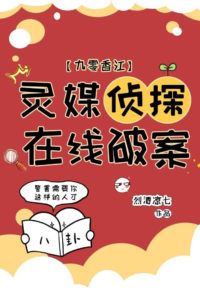
Bai Sheng, a former entertainment industry insider and aspiring writer, finds himself transmigrated into the body of a cannon fodder character from a third-rate web novel titled After I Broke the Engagement, I Became Long Aotian. In the original story, Bai Sheng is the vicious, arrogant young master whose engagement to the male protagonist, Wen Xiao, is broken. Following the breakup, Bai Sheng’s career collapses, and he meets a tragic end, homeless and miserable. However, the transmigration occurs during a critical moment when Wen Xiao arrives at the Bai residence to formally cancel the engagement. Instead of reacting with the rage and emotional breakdown expected by the plot, Bai Sheng remains calm and detached. When Wen Xiao delivers his customary speech about destiny and independence, Bai Sheng simply instructs his butler to physically remove the intruder. This deviation shocks not only the Wen family representative but also Bai Sheng’s own family, including his father, mother, and second sister, Bai Ran, who are accustomed to his previous disruptive behavior.Bai Sheng recognizes the absurdity of his situation, particularly noting that despite being a male character in a traditional power-fantasy novel, his role as the antagonist requires a specific set of tropes that no longer serve him. He decides to alter his fate by avoiding the typical path of self-destruction. The narrative highlights his strategic approach to the entertainment industry, where he is currently blacklisted due to false rumors orchestrated by his rival, Liu Jin, a clone-like actor who steals his identity and style. Rather than engaging in public feuds, Bai Sheng chooses to focus on his craft, preparing for an upcoming audition for a major drama adaptation of The Nation in Peril. The role of Bai Yinwen, the second male lead, is pivotal to the story’s emotional core and has been a source of contention between Bai Sheng and Liu Jin.At the audition, Bai Sheng confronts Liu Jin, who attempts to provoke him with fabricated victimhood. Bai Sheng remains unflappable, dissecting Liu Jin’s tactics with cold precision and leaving the younger actor emotionally unraveling. During the performance, Bai Sheng delivers a standout portrayal of Bai Yinwen, capturing the character’s essence with such authenticity that the director, Kong You, immediately declares him the definitive choice for the role without needing to see other candidates. This success marks a significant turning point, as Bai Sheng begins to dismantle the negative public perception surrounding him through talent rather than scandal.Meanwhile, Wen Xiao returns home to face disciplinary action from his elder brother, Wen He, a ruthless figure who has previously suppressed Wen Xiao’s independent streak. Wen He becomes aware of Bai Sheng’s unexpected competence and the deviation from the original narrative script. As Bai Sheng rises in the industry, he attracts the attention of both the Wen family and the broader entertainment world. His interactions with Wen He introduce a new dynamic, as the cold-headed elder brother sees potential in Bai Sheng beyond his role as a rejected fianc. The story follows Bai Sheng’s journey from a destined villain to a respected actor, navigating political maneuvering, familial expectations, and the lingering shadows of his original storyline.

Latest Release
DateGroupRelease
2026-09-25knoxt c5
2026-09-25knoxt c4
2026-09-25knoxt c3
2026-09-25knoxt c2
2026-09-25knoxt c1

Community Reviews

Rating(3.7 / 5.0, 22votes)
5 stars
4(18%)
4 stars
8(36%)
3 stars
10(45%)
2 stars
0(0%)
1 stars
0(0%)

Popular reviews

... Read More
Let's talk about the central metaphor here because it's brilliant. Bai Sheng literally lies flat on his bed "like a corpse" — the text even describes him turning over "like a salted fish." This is direct reference to the Chinese internet concept of tang ping, of opting out of the rat race. But here's the thing: he can't even do that properly because he's trapped in a novel that REQUIRES him to be the villain. His salted fish state IS his rebellion. The engagement itself is a symbol of familial obligation versus personal autonomy — the Wen and Bai families use marriage as a business deal, and Wen Xiao breaking it is actually portrayed sympathetically as an act of independence. Meanwhile Bai Sheng is paralyzed because his entire identity as a "vicious cannon fodder" was assigned to him by someone else's narrative. Who gave him the right to define him? The hidden safe room behind the door is another layer — the family's paranoia about public perception, the idea that even in private they're never truly safe from external judgment. And that opening image of sunlight and blooming flowers while servants gossip? It's almost cruel in its contrast with the protagonist's existential crisis. The world keeps being beautiful whether or not you've realized you're a fictional character.
... Read More
This chapter is essentially a masterclass in stacking conflict without letting any of it resolve. And I mean that as the highest compliment. Let's count the active threats: 1. The internet harassment - organized, large-scale, possibly engineered by Liu Jin and Liu Tao 2. The lost role - he's been replaced in a major production, which damages his career 3. The family secret - eldest brother Qingsong's 'accident' feels suspicious 4. The arrival of Wen He - the cold, ruthless older brother who terrifies even the male lead 5. The engagement to Wen Xiao - strained, possibly toxic, definitely unresolved Each of these conflicts is at a different stage of escalation, which creates this wonderful sense of layered tension. The internet drama is already active, the family issue is fresh and raw, Wen He is literally hours away from arriving, and the engagement situation is a ticking time bomb. What's really clever is how the author makes you care about the outcomes without over-dramatizing. Bai Sheng isn't some invincible protagonist - he's a lazy person who just wants to survive. The stakes feel real because they're personal: his reputation, his family, his career, his safety. The car accident subplot is particularly chilling. Something happened to Qingsong, and the timing (right when Bai Sheng is asking about him) feels intentional. Is this connected to the larger conspiracy? Is someone targeting the Bai family? And that ending - Wen He arriving, Bai Sheng's unfinished message, the half-blocked contact list. It's like the author is saying 'the storm is coming, and you're not ready.' Which is exactly the feeling I had when I put this down. I need to know what happens next.
... Read More
"What's wrong with the second male lead and the male lead? Aren't they just ordinary close friends?" Bai Sheng says this completely deadpan and I lost it. Not because the line itself is funny—though it kind of is—but because it captures something so true about how we read these relationships. Everyone in the novel world thinks Tuoba Jun and Bai Yinwen are in love. The text even says that except for the original author, literally everyone agrees on it. But read their actual story: Tuoba Jun uses all means necessary, steps on corpses to reach power. The only person he ever trusts completely is Bai Yinwen. He gives him everything—his trust, his sword, his loyalty. And when everything burns down, Bai Yinwen refuses to surrender. He ends his life right in front of Tuoba Jun with that meteorite iron saber. And Tuoba Jun never speaks another word about it, never shows his sword again, and eventually destroys himself. That is not friendship. That is grief so complete it becomes suicide by slow motion. Bai Yinwen wasn't just a confidant—he was the anchor. And when that anchor snapped, Tuoba Jun had nothing left to hold onto. The fact that Bai Sheng reads this and genuinely doesn't see the romance is both hilarious and heartbreaking. Maybe because he understands something deeper: that some bonds transcend labels. Whether it's love, brotherhood, or something unnamed, the result is the same—Tuoba Jun's entire world collapses and he can't survive without it.
... Read More
This section opens with chaos and ends with stillness, and I keep coming back to how deliberate that feels. i Sheng forced to mediate again, people arguing, Bai Sheng leaving a joyful family gathering under armed protection—by paragraph three the energy is frantic. Then he enters the company building and the pace slows almost imperceptibly. The receptionist's gaze lingers on him. His zipper worry. The elevator ride. These are tiny moments that should be skipped but aren't, and they create this strange breathing room before Fang Yuan finally drops the script on him. And then the script description takes over like a mini-novel within the chapter. Nearly a million words compressed into paragraphs. Political intrigue, bloody rain, meteorite iron swords, a suicide under a Qiong flower tree. The embedded story moves at its own accelerated pace while the framing story stays deliberately slow. By the time we're back to Fang Yuan doing his exaggerated impression of a rich young master and Bai Sheng just sitting there silently processing, the contrast hits differently. The pacing here does something clever: it lets you breathe between the emotional set pieces instead of overwhelming you with them. But that Liu Jin mention at the end? That's the author leaning in close and whispering something menacing right as you were settling into a comfortable rhythm. Perfect note to close on.
... Read More
Let's talk stakes for a second, because they are CLIMBING. On the surface level, Bai Sheng just won his audition. That should be the high point, right? Wrong. The author immediately undercuts it by having Liu Jin appear, freshly defeated, still fuming. The external conflict is clear: Liu Jin wants Bai Sheng destroyed, and he's not above using rumors and public opinion as weapons. "Nine out of ten people want to throw rotten eggs at you"—that's not a threat, that's a statement of fact in this world. But the REAL stakes hit when the black car pulls up and the window rolls down just enough to reveal those cold eyes. Mr. Wen He isn't just some random rich guy. He's Long Aotian's older brother. Which means he's connected to the romantic subplot, connected to the family drama, and clearly holds power that Liu Jin can't even touch. The fact that Bai Sheng refuses to go to him on his terms—"I'll be waiting here"—means he's setting his own boundaries in a world that keeps trying to control him. What makes this scene so tense is the asymmetry. Liu Jin is loud and visible, his anger almost comical. But Mr. Wen He says NOTHING and yet his presence alone shifts the entire energy of the scene. The contrast between the two antagonists tells you everything about the world: there's street-level drama (Liu Jin) and there's the elite-level game (Wen He), and Bai Sheng just got pulled into both simultaneously. Who is this man in the car, and why does he want to see Bai Sheng? That unanswered question is doing a LOT of heavy lifting.
... Read More
Okay I need to talk about the Liu Jin interaction because the emotional whiplash in this passage is actually masterful. First, there's Bai Sheng's genuine relief after the audition. He's walking behind Fang Yuan like he's floating, still processing that he actually PASSED. That quiet moment of disbelief—"Just like that, the audition was passed?!"—it's so human. You can feel how much this role means to him, how carefully he guards this news because one wrong move could ruin everything. Then Liu Jin appears and the mood swings hard. But here's what I loved: Bai Sheng doesn't get angry. He gets... amused. He watches Liu Jin unravel and internally notes that this kid's attacks are basically self-inflicted damage. The fact that Bai Sheng is actually *enjoying* himself now, compared to how volatile he used to be, tells you everything about his emotional growth. And then the fat orange cat comment. I literally said out loud "he compared him to a meme" and laughed. The sheer casual cruelty of it, delivered with what the text calls an "affectionate" look—Bai Sheng is roasting this guy like he's an annoying little brother. And Liu Jin BREAKS. He takes off his hood and just CRIES in the basement parking lot. The image is almost too much: this guy who came in full of threats, reduced to sobbing because someone called him an internet emoji. But the real emotional beat comes at the end, when that car window rolls down. All the humor drains out of Bai Sheng's face instantly. The shift from laughing at Liu Jin to facing whatever's in that car—I could feel the temperature drop through the page. What's waiting for him there? Because whoever Mr. Wen He is, he's clearly not someone you joke around with.
See all reviews

Custom lists

See all custom Lists