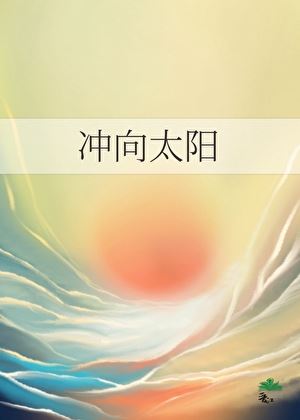
Rushing Toward the Sun
+Add to Custom List
Genres:
Novel Info

Summary

... Read More
Luo Xiaowen is a fourth-grade student living in Linzhou City during the autumn of 2037. His ordinary life is interrupted when a massive metallic spacecraft, dubbed the Lead Sphere, appears above Earth and subsequently occupies the moon, severing all communications. Three months after the initial sighting, the spacecraft sends a signal announcing a diplomatic inspection tour of Earth. Luo Xiaowen becomes one of only three students from his school to volunteer for this historic event, witnessing fifty humanoid aliens land on his playground.The alien delegation, led by Yu Wensi, tours global landmarks with unsettling knowledge of human history and culture. During a meeting on the Himalayas, Yu Wensi reveals her true nature: she is not an extraterrestrial from deep space, but a human from thirty thousand years in the future. She explains that in 2043, scientists discovered the sun was cooling rapidly, leading to a cascade of disasters. By 2070, Earth became uninhabitable. Humanity’s final hope was the Solar Ignition Plan, which failed catastrophically. A seed ship carrying genetic material escaped but was eventually found by ancient alien civilizations who experimented on its inhabitants. These subjects, including Luo Xiaowen’s ancestors, were modified to lack pain perception. Yu Wensi’s people are the descendants of those experiments who escaped centuries later, traveled through a black hole, and arrived in the past.Yu Wensi clarifies that the future history Luo Xiaowen knows is malleable. The Lead Sphere Spaceship divides into factions, with some wanting to control Earth and others seeking cooperation. They vote to share their technology rather than conquer. A month-long cohabitation agreement allows the future humans to live among contemporary Earthlings. Aiwen Lingling, Yu Wensi’s daughter, transfers into Luo Xiaowen’s class. Initially isolated due to fear and prejudice, she bonds with Luo Xiaowen after he defends her. A lab accident where she shields another student from fire without feeling pain reveals her genetic modifications and deepens their friendship.As the cooperation unfolds, the Solar Crisis Base is established in the Sahara Desert ten years earlier than in the original timeline. Luo Xiaowen and Aiwen Lingling grow up together, attending separate universities focused on aerospace engineering before reuniting at the base. They witness multiple unmanned test failures as meteors increasingly obstruct paths to the sun, suggesting the solar system is resisting change. With the sun’s temperature dropping below freezing and humanity facing extinction, the base shifts to manned missions. Aiwen Lingling, utilizing her unique physiology that allows survival in extreme pressure, volunteers to pilot these suicide missions.From 2063 to 2069, thousands of pilots fly into the sun to reignite it. Aiwen Lingling loses her mother and eventually herself in the process. In 2069, the final launch includes the Lead Sphere Spaceship, stripped of its interior to carry massive nuclear fusion devices. Aiwen Lingling commands the vessel, ensuring the mission succeeds. The sun stabilizes, and Earth begins a slow recovery. Decades later, the surface temperature rises enough for life to return. Luo Xiaowen, now retired and raising an adopted daughter named Xinxin, visits the memorial park dedicated to the space heroes. There, he discovers a red gladiolus blooming from a crack in the monument where Aiwen Lingling is remembered, symbolizing the successful rebirth of Earth.

Latest Release
DateGroupRelease
2026-10-03marinetl c5
2026-10-03marinetl c4
2026-10-03marinetl c3
2026-10-03marinetl c2
2026-10-03marinetl c1

Community Reviews

Rating(0 / 5.0, 16votes)
5 stars
0(0%)
4 stars
0(0%)
3 stars
0(0%)
2 stars
0(0%)
1 stars
0(0%)

Popular reviews

... Read More
That poem. Let me just say that poem first and then I need to unravel everything. "Lying stiff in a lonely village, I do not grieve for myself; Still I think of guarding the frontier for the nation." Lu You, Song Dynasty. A man on his deathbed, dreaming of war, of defense, of borders. And his students recite it to aliens who understand it better than they do. This isn't accidental. I don't care who wrote this—the symbolism is intentional and it's everywhere. The frontier motif repeats like a heartbeat. The aliens came to the moon—Earth's frontier. They observed from orbit—crossing the boundary between known and unknown. The three exploratory satellites failed trying to reach the moon, trying to cross that same threshold. And Han Liang, standing on the Himalayas, asking about the people who went to visit their ship, is literally standing at the edge of everything humanity knows. "Guarding the frontier for the nation"—but what is the frontier now? It's not a border on a map. It's the boundary between species, between time periods, between reality and what comes next. The aliens aren't invaders in the traditional sense. They're visitors. They follow the rules. They show restraint. But they also demonstrate the ability to destroy an asteroid larger than the moon with a laser. That's the frontier: the edge where power meets courtesy, where understanding meets fear. And then the ultimate reveal—the humans from three thousand years in the future. The frontier isn't just spatial, it's temporal. We're not meeting aliens. We're meeting our own descendants, or some version of humanity that has moved beyond what we recognize. The "alien" is us, changed by time. The imagery throughout reinforces this: lead (heavy, protective, suffocating), the moon (distant, watched but unreachable), snow and ice (preservation, stasis, the frozen moment before revelation). Even the school itself—a place of learning, of children being prepared for a future they can't imagine—is the perfect setting for a story about humanity encountering its own future. I'm still sitting with this. The poem wasn't background flavor. It was the thesis statement.
... Read More
That line about the number six and the black hole changed how I think about this entire book. Yu Wensi explains it to Han Liang like this: if original history was a closed loop — Earth's crises, the captive era, the spaceship escape all forming the number 6 — then passing through the black hole meant jumping outside the circle and beginning to draw a new arc. A new circle. I keep coming back to this because it reframes everything. The butterfly effect paradox the characters worry about? The author essentially says: yes, history is already changed, but that's not a bug, it's the whole point. The Seed Ship wasn't just escaping extinction, it was escaping fate itself. And then there's the sun — literally dying in the original timeline, cooling to minus ninety degrees, humanity forced underground eating oatmeal and nutrient paste. But now the sun's core is cooling five years EARLIER than the records predicted. The future is rewriting itself in real time. Even the name Aiwen Lingling feels symbolic — half Chinese, half English, a bridge between two eras and two species of humanity. She's literally shaped by Earth's records yet fundamentally alien. The scar on her arm from the fire is another symbol I can't shake. It represents the inherited trauma of fifteen hundred years of captivity, visible but invisible at the same time because she can't feel it. Pain as memory. Scars as history written on the body.
... Read More
Let me just say this: the ending of this excerpt absolutely wrecked me and I am not okay. You spend the whole chapter breathing easy, watching this friendship develop, seeing Aiwen get invited to play badminton and jump rope, the rooftop scene with the rice balls, the sky sparkling above them, and then she drops the bomb: we already held the vote yesterday. She smiled and said, "I like this world. I don't want to change it." The Control Faction lost. The Friendly Faction won. But here's what keeps me up at night — the author planted this dread from Chapter 1. When Yu Wensi told Han Liang "we're not necessarily going to help you," I should've known. The tension between factions within the Lead Sphere Spaceship was there, simmering the whole time. Control Faction vs Friendly Faction vs Neutral Faction. Three thousand humans, divided, and they had to decide whether to conquer or cooperate with the very people whose planet they were about to colonize. And the vote happened OFFSCREEN. While they were being nice and friendly and eating rice balls with Luo Xiaowen's mom. That is such a bold storytelling choice. The author could've given us the dramatic voting scene, the political maneuvering, the tension of the count. Instead, we find out after the fact, through one girl's quiet confession. It makes the stakes feel more real because life doesn't give you climaxes for everything. But it also means the danger isn't over — the Neutral Faction still exists, the Control Faction still lost, and what happens when they realize they've been outvoted? The author left me staring at the ceiling.
... Read More
I need to talk about Luo Xiaowen. Like, I genuinely thought he was just going to be some generic protagonist placeholder until that scene in class where the teacher asked if anyone wanted to sit with Aiwen Lingling and literally every kid looked down except him. The text says his desk mate whispered "You're crazy" and I literally exhaled because YES that moment hit so hard. He didn't have to do it. He could've stayed silent, stayed safe, stayed normal. But he remembered she was his neighbor, right? That tiny detail — the fact that he'd seen her walking to the bus stop with that little girl — that's what pushed his hand up. And then later when he's obsessing over her scar and asking why it doesn't hurt, that's when everything clicks. He's not just being curious, he's trying to understand the weight of what her people survived. The moment she tells him about the Domestication Era and how her ancestor was experimented on... you can feel him shrinking inside. He wanted to express concern but didn't know how. I love that about him — he's not performative, he's genuine, awkward even. And their friendship developing naturally, going to school together, her visiting his home, the rooftop scene with the sweet glutinous rice balls... that's the kind of quiet bonding that makes you believe these two could actually survive whatever comes next.
... Read More
Let me tell you about pacing for a second because this section is a MASTERCLASS. Chapters 20 and 21—I went from whatever tension was building before to THIS quiet, almost holy moment, and the shift hit me so hard. The author could've padded this out with internal monologues or flashbacks or explanations about Aiwen Lingling's backstory, but no. Instead we get this compressed scene: gaze follows, flower appears, name is read, heart responds, thematic statement lands. Four beats. That's it. Four beats and the entire emotional weight of the chapter series crystallizes. It's the narrative equivalent of a camera slowly zooming in on something until you can't look away. And then—done. No fanfare, no extra paragraph wrapping it up neatly. Just 'Earth was welcoming a new spring' and we're left sitting with that image. The pacing here is deliberate and confident. The author knows exactly when to slow down and when to let silence do the work. This is why I keep coming back to this story. Every chapter feels intentional, every scene earns its place, and moments like this one prove that sometimes the most powerful thing an author can do is trust the reader to feel without being told exactly what to feel.
... Read More
Think about the stakes in this scene for a second. A monument. A name carved in stone. Death. That's the external conflict—and underneath it, the internal one: do we remember or do we let go? Does grief consume or can it coexist with beauty? Luo Xiaowen is standing at a grave marker and the universe answers him with a FLOWER. Not a dramatic sign, not a vision or a ghost, just a tiny red gladiolus choosing to live in the most hostile conditions imaginable. That's the whole thematic battle right there. Life versus stone. Memory versus time. The flower doesn't defeat the monument—it grows THROUGH it, alongside it, because of it even. And that's what makes the stakes so unbearable and beautiful. We're not just watching characters mourn; we're watching them discover that mourning and hope can occupy the same space. The author makes you care because the answer isn't given—it's grown. One fragile petal at a time. I'm still thinking about this scene days later, and I think that's the highest praise I can give. The stakes were personal, intimate, universal, and the resolution was a single word: yes.
See all reviews

Custom lists

See all custom Lists