Mr. Gu’s little stand-in - Reviews

Mr. Gu’s little stand-in
+Add to Custom List
Sort
Add review
... Read More
Let me talk about the settings in this section because they're doing so much heavy lifting. The coffee shop where Shen Yu meets Zhang Yang is one of my favorite scenes. It's bright, colorful, almost mundane compared to the darkness of the Gu villa. Zhang Yang has 'an apron around his waist that is covered with various colors of paint, and a drawing board on his back.' He's young, fashionable, an Alpha who is sunny and cheerful—and he's embarrassed by his own online username. This scene feels like a different genre entirely. It's warm. It's real. The detail about the two girls nearby covering their faces and laughing when Shen Yu says 'stubborn little Corgi' out loud—that's the kind of specific, lived-in detail that makes a fictional world feel actual. Then there's the welfare home flashback, and the author paints it with such tenderness. The children lining up for cake. Shen Yu hiding behind a tree in his bear costume, too shy to join them. Gu Yingyi noticing him through the headgear and saying 'There's still a child there, give it to him.' The lighting, the quietness of that afternoon, the way Shen Yu 'stared at Gu Yingyi's tall back'—this scene is cinematic. I could see it as a film. The hospital scene is where the atmosphere shifts dramatically. 'The doctors in white coats and masks turned into demons with scalpels in Shen Yu's eyes.' The back door entrance, the secret operation, the instruments—this is claustrophobic and terrifying. The author doesn't shy away from the physical horror: 'the gland also had to be cut open for surgery.' This is body horror dressed as medical drama, and it's effective. And then the detention center. Shen Yu taking the wrong bus, arriving at noon hungry, being turned away by the police on duty. The cold institutional feeling of this place contrasts sharply with the warmth of the welfare home and the brightness of the coffee shop. Three worlds, three emotional tones, and Shen Yu is moving between them all alone. The villa itself—now sealed by police tape—has become a character too. It was where Shen Yu knitted dolls, where he waited for Gu Yingyi, where he cried. Now it's just a sealed building, a memory without access.
... Read More
I've been thinking about the conch shell motif in this batch and it's way deeper than I expected. Shen Yu hears his grandmother tell him there's a song inside the conch shell, and when he listens, he finds nothing. "Grandma, how can you lie? There is no song in the conch shell." But wait—there IS a song. The conch carries the sound of the sea, the memory of water and waves and vastness. The song isn't in the shell itself; it's in what the shell has touched, what it has held. This is Shen Yu. He seems empty on the surface—simple, foolish, unable to navigate the adult world—but inside him is this vast ocean of emotion, loyalty, and love. He just doesn't have the vocabulary to express it in ways people expect. His "song" is in his actions: burying a shell for next time, picking the ugly one because it's lonely, trusting completely despite being hurt. And then there's the hermit crab. Shen Yu chases it with genuine joy and wonder. The crab carries its home on its back, constantly moving, always looking for the next shell to fit into. Isn't that exactly what Shen Yu is doing? Searching for a place to belong, a shell that fits. Gu Yingyi becomes that shell—imperfect, sometimes rough, but ultimately the one Shen Yu chooses to carry his world inside. The buried shell is the most powerful symbol though. Shen Yu buries one in the sand and promises to dig it up next time. It's an act of faith. He believes there will be a next time. He believes in returning. In a story where everything feels precarious and dangerous, this small act of hope is revolutionary. The sea itself is another recurring symbol—the waves, the salt breeze, the boundless horizon. It represents freedom and possibility, everything Shen Yu has never had, everything Gu Yingyi is learning to want.
... Read More
This batch is a masterclass in pacing control, honestly. Let me break down why. The chapter opens with this intensely charged, almost violent intimacy scene—Gu Yingyi's anger, Shen Yu's submission, the raw physicality of it all. It's heavy. It's uncomfortable. And then—bam—the very next scene is morning sunlight, sea breeze, seagulls. The tonal shift is so sharp it's like the author is breathing for the first time after a breathless sprint. That contrast is genius. It lets the reader catch their breath while also making the tenderness of the morning scene hit harder because we know what happened the night before. Then we get the beach sequence, which is essentially a long, languid scene of Shen Yu being Shen Yu—picking shells, chasing crabs, playing with a rubber duck. It feels like filler on the surface, but it's actually doing crucial work: establishing normalcy, letting us see Shen Yu's childlike joy, and building the threat of Zhou Chenghai's appearance like a slow-approaching storm. The Zhou Chenghai encounter is where the tension spikes again. A predatory Alpha touching Shen Yu, the omegas circling like vultures, Gu Yingyi's cold dismissal—it's all so efficiently written. Three paragraphs and I'm on edge. Then the Gu Jianqiu business subplot kicks in with the construction site sabotage. This is where I'll admit the pacing got a tiny bit sluggish for me—the phone call and the assistant's report felt like they could've been tightened. But it does serve a purpose: showing Gu Yingyi's strategic mind at work, his power even in exile. The batch ends on this bittersweet note with Shen Yu burying a shell in the sand as a marker for next time, and Gu Yingyi giving this noncommittal "let's talk about it later." The emotional resonance of that ending—hope mixed with uncertainty—is what keeps you turning pages. The author knows exactly when to pull the emotional trigger and when to let a scene breathe. Nearly perfect control, with one minor stumble in the business subplot.
... Read More
Okay so I need to talk about this one moment with the conch shells because it completely shifted how I see Gu Yingyi's entire character arc in this batch. On the surface, Shen Yu just wants to take all the shells home and Gu Yingyi keeps saying no-no, only one, no more. It's such a small thing, right? But then Shen Yu picks the ugliest one, the one with the missing corner, and says this line that absolutely wrecked me: "The other conches are all pretty, they are friends. This one is the same as Yuyu. If Yuyu leaves it behind, it will be lonely." And Gu Yingyi just... stops. He's stunned. He can't even process this. The fool's cognition is simple yet rich. He gives life to dead objects and classifies shells into friends of the same kind. And in that moment, Gu Yingyi sees himself reflected in this broken shell, and something cracks open in him. He lets Shen Yu pick two more. Not because he's soft—he immediately tells himself he doesn't want to feel soft—but because he can't help it. This is the same man who, hours earlier, pressed Shen Yu's neck and told him his face was disgusting. The whiplash is real. But that's the whole point, isn't it? Gu Yingyi's cruelty and his tenderness come from the same place: he's terrified of wanting someone, terrified of being vulnerable, and Shen Yu's innocence keeps disarming him whether he likes it or not. The way Shen Yu hides behind Gu Yingyi when Zhou Chenghai touches him—that's not just physical protection. It's trust. Absolute, unguarded trust. And Gu Yingyi, who just yesterday called him disgusting, becomes the shield without even thinking about it.
... Read More
The stakes in this novel are terrifying because they're so personal. Shen Yu isn't fighting for power or revenge or some grand destiny — he's fighting to keep a sick dog and to be loved by a man who sees him as a replacement for someone else. But that's what makes the conflict so visceral. Every scene raises the question: how much more can this gentle, simple person take before he breaks? And the answer, apparently, is a lot — because by the end of these chapters, he's already been physically violated, emotionally manipulated, threatened, and abandoned, and he's still making noodles and waiting for his husband to come home. The external conflict is clear: the Shen family's scheme to maintain their marriage alliance with the Gu family by substituting Shen Yu for his dead twin brother. But the internal conflict is what really gets under your skin. Shen Yu genuinely loves Gu Yingyi — he's waited all afternoon, he's worried about his husband's injury, he's trying to be a good wife. His conflict is between his desire to please the man he loves and the reality that this man despises him. The suspense is maintained brilliantly because we know something terrible is coming — we see Gu Yingyi's disgust, we see the father's threats, we see Shen Yu's growing isolation — but we don't know exactly when and how it will all collapse. And that final scene, with Gu Yingyi looking at the sleeping Shen Yu with disgust and walking away without a second thought, sets up the central question: how does a man who can't even form a complete lie survive in a world built on deception? The stakes aren't just about romance or marriage — they're about whether Shen Yu will retain his humanity in a system designed to crush it.
... Read More
I need to talk about the emotional manipulation in this story because WOW. The author absolutely DESTROYED me with the scene where Shen Yu makes noodles for Gu Yingyi. Let me paint this picture for you: it's 11 PM, Shen Yu has been waiting on the sofa for HOURS, his eyes are red like a rabbit, he's starving, he cooks himself some simple egg noodles because the refrigerator is empty, and then he falls asleep waiting for a husband who came home, saw him, and looked at him with PURE DISGUST. The description of Shen Yu sleeping on that sofa — loose pajamas, one corner rolled up showing his thin white waist, feet curled up because he's cold, saliva on his chin — it's so tender and heartbreaking. This is a man who just wants to be loved and he has no idea he's being used as a substitute for a dead man. And the dog! The abandoned Shiba Inu that Shen Yu rescued and now his own father uses as leverage to control him. "Remember my words or I will throw your dog away" — that line broke me. Shen Yu has never lied in his entire life but he's forced to lie for his father's scheme. When he says to the dog on the balcony, "if husband doesn't hate you, you can come into the house" — he's already trying to accommodate everyone else's feelings while his own don't matter at all. The CP chemistry here is basically non-existent because one person is in love with a ghost and the other doesn't even understand what love is supposed to feel like. But that's what makes it so emotionally complex — it's not a sweet romance, it's a tragedy wrapped in an omega/alpha framework.
... Read More
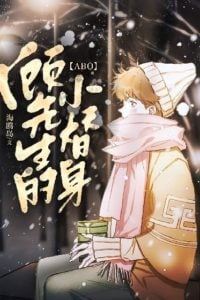
I need to talk about the stakes in this section because they just escalated in a way I didn't see coming. Up until the police raid, the conflict was intimate and personal: Gu Yingyi vs. Shen Yu, husband vs. wife, abuser vs. victim. The mark removal surgery was the peak of that conflict—physically painful, emotionally devastating, irreversible. Shen Yu's gland is damaged. His ability to conceive is reduced. He will have nausea and anorexia as sequelae. This is body horror with emotional consequences, and it raises the stakes to a level where Shen Yu's very future is compromised. But then the police arrive, and the conflict explodes outward. 'Mr. Gu is suspected of possessing prohibited items and has been detained according to the law.' What prohibited items? What is Gu Yingyi actually involved in? This is a genre shift—from domestic drama to something with political or criminal undertones. The stakes just went from 'will Shen Yu survive this marriage' to 'what is this world actually like, and how dangerous is it?' The detention center scene is where the tension really bites. Shen Yu, who was detained as a child for accidentally pushing a classmate down the stairs, now comes back voluntarily to visit his husband. The memory of that childhood detention—'very cold there, he didn't have enough food, and he was bullied by other detainees'—mirrors what Gu Yingyi might be going through right now. Shen Yu's fear is personal and specific. But here's what keeps me up at night: the power dynamics. Shen Yu is an omega with low IQ, no family support, a damaged gland, and a husband in detention. Aunt Chen is the only person who could help him, and she's rushing to her son's surgery. Who is Shen Yu supposed to turn to? The narrative has systematically removed every safety net. And yet—Shen Yu cooks a meal. Takes the wrong bus. Arrives hungry at the detention center. This is not a passive character. This is someone who acts despite having no power, no resources, no guarantee of anything. That's what makes the conflict so compelling: we're not just worried about what will happen to Shen Yu; we're fascinated by what he'll do next. The sealed villa door is the perfect ending image. Everything Shen Yu knew is behind that tape, and he's standing outside it, hungry, with nowhere to go. What happens next?
... Read More
The stakes in this chapter went from social embarrassment to life-and-death tragedy, and I need to process this. On the surface, the conflict is simple: Shen Yu gave a taboo gift and humiliated his husband at a banquet. But underneath that, the real conflict is about identity, fate, and blame. Shen Yu didn't choose to look like his dead brother. He didn't choose to marry the man who loved his brother. He didn't choose to take the place of someone who was supposed to be the center of someone's universe. And yet every conflict in this story traces back to him. Zhang Fu's gambling debt created the kidnapping. The kidnapping created the mistaken identity. The mistaken identity created Shen Chao's death. Shen Chao's death created Gu Yingyi's obsession with Shen Yu. Shen Yu's existence created the entire tragedy. It's a chain of cause and effect that leads to one conclusion: Shen Yu is the only person in this story who didn't ask for any of it, and he's the one paying for everything. The stakes just became infinitely higher. Before this chapter, Shen Yu's conflict was about surviving his husband's cruelty. Now it's about surviving the revelation that his husband sees him as a murderer. When Gu Yingyi says "You killed him," he's not just accusing Shen Yu of negligence—he's accusing him of existing. And the worst part? Shen Yu doesn't even understand what he's being accused of. He's choking and crying and saying "I didn't steal anything" like this is about property, when it's actually about the fundamental right to take up space in the world. What happens now? I genuinely don't know, but I know I have to keep reading.
... Read More
Let me be honest: the pacing in these first seven chapters is absolutely masterful and I stayed up way too late reading it. The author starts with a massive information dump right at the beginning — the twin brother, the kidnapping, the substitution, the marriage of convenience — and instead of boring me, it hooked me immediately because it establishes the central tragedy in three sentences. Then we cut to the wedding night and the pacing slows down to make you FEEL every uncomfortable moment. Shen Yu waiting all afternoon, the clock ticking to 1:40 AM, the door kicking open — the author uses time as a tool to build dread. And then the morning after, the father's visit, the threat about the dog, Shen Yu cooking noodles and falling asleep on the sofa, and Gu Yingyi coming home to look at him with disgust. The chapter ends on this devastating note and I was FURIOUS. What I really appreciate is how the author doesn't rush the emotional beats. Shen Yu's simplicity isn't played for laughs — it's treated with genuine tenderness. His father's cruelty isn't over-the-top villainy, it's cold and practical, which makes it more realistic and more horrifying. The scene transitions are smooth too. We go from the wedding night trauma to a relatively calm morning with Aunt Chen, then to the father's visit which escalates tension, then to the quiet domestic scene of Shen Yu cooking and waiting — and then BAM, Gu Yingyi comes home and the reader's heart gets crushed again. The author knows exactly when to give you breath and when to squeeze.
... Read More
#FARM Wish this novel picked up and on ASAP. It would be a delightful addition in my Farming novel reading list. Pretty please with cherry on top. ??
... Read More
this is an awesome vrmmorpg novel ive read in here! one of my fav so far! i love everything about t! five stars for me! couldn't wait to read more!
... Read More
I love the character design and all, but I can't seem to get into the story. I don't think I'll keep reading it, but who knows. Updates are not the most stable, and there are a bunch of grammar mistakes. With so many, it's hard for the story to flow, for me at least. I have a couple of complaints.1. Ranking system is too complicated in terms of name.2. Organs. I think you should put the name of the actual organ, because I have no idea what is what3. You deviate from the plotline too much. I get that it may be necessary for the story, but it really doesn't let the story continue. It just gets interrupted and it gets hard to get into it. Maybe put a bit of the plot and then a shorter version of the side character story. Once in a while is okay, but you do it too many times.4. Grammar is iffy.5. Goes really fast.

Leave a comment

You must be logged in to leave comments. or
