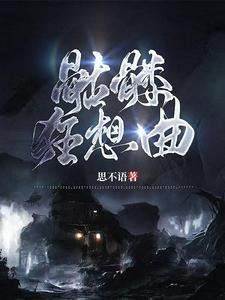
Rhapsody of the Skeleton
+Add to Custom List
Novel Info

Summary

... Read More

Yun Ming awakens in the Death Bone Sea, transformed into a fragile gray skeleton surrounded by an ocean of bones and dense mist. A mysterious inner voice urges him to walk forward, but doing so causes excruciating pain, and skeletons that stop moving disintegrate. Yun Ming discovers that colliding with other skeletons releases light particles called essence souls, which strengthen his body. By deliberately destroying weaker skeletons to absorb their essence souls, he rapidly increases his power, eliminates the pain of movement, and escapes the bone sea just as the mist thickens and the guiding voice fades.

Upon exiting, Yun Ming finds himself on a battlefield where gray skeletons are forced by pale white skeletons to attack a human military camp. The gray skeletons serve as cannon fodder against human soldiers and arrows. Yun Ming survives the initial slaughter by using a shield and, during a close-quarters fight with a human recruit, kills him with an arrow. This act releases a living soul, which Yun Ming absorbs, granting him significant strength. He then retreats to a nearby forest, where he hunts animals to gather more living souls, eventually absorbing enough to ascend from a gray skeleton to a white skeleton. This transformation grants him the ability to speak and sharper bone claws for combat.

After ascending, Yun Ming returns to the battlefield and is recruited by Tang Ming, a jade skeleton who offers protection in exchange for loyalty and soul tribute. Yun Ming participates in a deadly gambling deathmatch in Three Territories City, a skeleton stronghold. To survive and gain resources, Yun Ming kills his opponent, a tiger-shaped white skeleton, and continues to win matches through tactical combat. During the tournament, political instability erupts when three general skeletons besiege the loyal general Akeleize. The conflict escalates into chaos, with the city being shrouded in black mist and crossbows firing on fleeing skeletons.

Amid the turmoil, Yun Ming encounters Tang Ming, who is severely injured after killing Meng Naier, a rival jade skeleton. Yun Ming sees an opportunity and attacks Tang Ming, absorbing his essence soul to ascend to a jade skeleton himself. He takes Tang Ming's soul orbs and bone ring, effectively replacing his former master. Yun Ming then joins Weisenter, a battle skeleton, and they flee the collapsing city together, heading back toward the Skeleton Continent.

During their journey, Yun Ming learns about the skeletal hierarchy, including war bones, strong bones, and lord bones. They pass through a boundary into the Skeleton Continent, a land characterized by black rotten soil and bone forests. There, they encounter a human village where skeletons and humans live in proximity. Yun Ming observes the social dynamics between the two races, noting that while skeletons dominate militarily, humans sustain themselves through agriculture and trade. The story concludes with Yun Ming integrating into this new world, having risen from a mindless gray skeleton to an ambitious jade skeleton capable of independent action.

Latest Release
DateGroupRelease
2026-10-01lightnovelasia c297
2026-10-01lightnovelasia c296
2026-10-01lightnovelasia c295
2026-10-01lightnovelasia c294
2026-10-01lightnovelasia c293
2026-10-01lightnovelasia c292
2026-10-01lightnovelasia c291
2026-10-01lightnovelasia c290
2026-10-01lightnovelasia c289
2026-10-01lightnovelasia c288
2026-10-01lightnovelasia c287
2026-10-01lightnovelasia c286

Community Reviews

Rating(4 / 5.0, 24votes)
5 stars
6(25%)
4 stars
11(46%)
3 stars
7(29%)
2 stars
0(0%)
1 stars
0(0%)

Popular reviews

... Read More
This whole Hank situation had me simultaneously amused and genuinely touched. Here's this guy who literally used Yun Ming as a human shield during the confrontation, totally scheming the whole time, and yet he still drags out his most precious Soul Orb as payment. That moment when Yun Ming feels 'a little embarrassed' about accepting such a valuable gift instead of just some Soul Water? That's character writing at its finest. And then Hank's pitch—'I want to follow you, be my boss from now on'—is equal parts transactional and pathetic in the best way. Yun Ming clearly regrets taking him on (he talks too much, everyone), but then Hank casually drops that he's 'well-informed' and suddenly it's a strategic alliance. Old Snail Head's cryptic 'he will definitely help you in the future' line is doing SO much work here. I keep thinking about what that means. Also the dynamic between Jin Shan and Yun Ming—three days of forced cohabitation and Yun Ming has already 'gotten used to it and was too lazy to tell him' to shut up? That's not acceptance, that's survival mode.
... Read More
'There are stray bones coming to our village. The village chief asked me to find... Lord.' A Qing's breathless warning cuts through Yun Ming's soul-water relaxation like a knife. Suddenly, we're not in a quiet village anymore—we're facing a wolf-shaped war bone and hundreds of subordinates. The stakes skyrocket. These villagers aren't just dealing with occasional gray bones; they're about to be attacked by a full-scale military force. And Yun Ming? He's the only thing standing between them and annihilation. The internal conflict here is huge too. Yun Ming just spent days learning that skeletons are the dominant species, that humans are terrified of them, that he could crush this village in seconds. But he also felt no anger when the kid attacked him. Now he has to choose: does he defend the people who fear him? Does he reveal his true allegiance or his true mercy? The external conflict is equally tense—who is this wolf-shaped war bone, and why target this village? Is it about the soul orbs? The Soul Well? Yun Ming's presence? We're left hanging as the chapter ends, with the battle about to erupt. My heart's racing just thinking about it. Will Yun Ming hold back and risk the village, or go all out and expose himself? The suspense is unbearable.
... Read More
The pacing in these chapters is absolutely masterful. Let me start with the Anderson and Anna scene — it opens with action, tension, and emotional weight all in one. Yun Ming attacks Anderson, Anderson fights back bravely, and then — wham — Yun Ming uses some kind of draining ability and Anderson drops dead. The transition from combat to tragedy happens so fast that you barely have time to process before the emotional fallout hits. Then there's the Tang Ming interrogation scene, which serves as a brilliant structural pivot. It slows things down after the intense river battle, but it's not boring — it's tense in a different way. Yun Ming is lying to his lord about seeing the two humans. The reader knows he's hiding something, and that creates dramatic irony that's incredibly engaging. When Tang Ming says "In the future, without my order, you are not allowed to act on your own," it's both a plot development and a character moment that reveals the power dynamics at play. The journey to Three Territories City is handled efficiently — "After walking for two days and two nights, Yun Ming finally stood below a bone city." One sentence bridges the gap, and it works because we've already invested in the destination. The training montage structure is particularly well done. It moves through time progressively: five days before, two days before, one day before, the day of. Each segment shows Yun Ming improving, getting closer to revealing Tang Ming's bone technique, and the stakes feeling higher. By the time the actual match begins, we've earned the excitement. The deathmatch sequence itself has excellent rhythm. First the tiger-shaped white bone — fast, almost comedic in its speed. Then the wolf-shaped white bone with the bone spur technique — here the author deliberately slows things down, showing Yun Ming adapting, thinking, improvising with the bone frames. This contrast between quick victory and hard-fought struggle keeps the action from becoming monotonous. The ending cliffhanger — the crowd's mockery, the next opponent approaching — is perfect. It leaves us wanting more without feeling unresolved. The structure of these chapters follows a classic tournament arc but with enough twists and character depth to feel fresh.
... Read More
I need to talk about the pacing of this section because the author is playing with rhythm like a musician and I am here for it. The chapter opens at a medium pace — Yun Ming assessing the stray bones, observing their weaknesses, making his decision. It's deliberate. You can feel him sizing them up. Then the fight hits and suddenly everything accelerates. Two jade bones go down fast. Then four more. The wolf-shaped battle bone charges — and it's over. The action sequence is efficient, almost brutal in how quickly it resolves. No drawn-out duels, no dramatic last-second saves. Just competence. And then — the author hits the brakes so hard I nearly fell out of my chair. We cut to the aftermath. Silent mourning. Burial rituals. A conversation about death and hope and what it means to be alive in a world where skeletons are the dominant species. This is the kind of quiet moment that makes or breaks a battle scene, and this one absolutely makes it. Then Weisenter arrives and the pacing shifts again — exposition mode. But here's the thing: the lore dump about the three lord bones, the territory politics, the soul orb mechanics... it doesn't feel random. It's triggered naturally by Yun Ming asking about Lord Ka Ye, which feels like a genuine question a character would ask after surviving a fight. The author slides the worldbuilding in through dialogue instead of dumping it as narration, which is honestly a masterclass in pacing. By the time we reach Yun Ming and Weisenter riding off toward Ka Ye City, I was fully hooked and ready for whatever comes next.
... Read More
The scene where Yun Ming first enters Three Territories City is one of those moments where the worldbuilding absolutely shines. "The tall city walls were entirely pale, and there were many skeletons walking back and forth on them. At the corners of the walls, there were also many piles of broken bones." That's it. That's all the description we get, and it paints such a vivid, horrifying picture. Pale walls, skeletal patrols, and — casually mentioned — piles of broken bones at the corners. It's the casualness of the violence that makes it so effective. The division of the city itself is brilliant worldbuilding. Inner city for generals, riders, and strong bones. Outer city for everyone else, further divided into three zones for the three different forces. "Except for troop movements, skeletons were strictly prohibited from moving around at will." This creates immediate tension — you know that restrictions lead to rule-breaking, and rule-breaking leads to conflict. The author doesn't need to spell it out; the world itself generates the drama. The gambling fight arena is another standout scene. The bone platform where five beast-shaped war bones sit on huge bone chairs — fox, wolves, tigers — this imagery is almost cinematic. And the detail about the bone pile "as high as half a city wall" nearby? Chilling. It's not just that people die in this arena; it's that their bodies accumulate over time, becoming part of the landscape. The training scenes with Tang Ming are also remarkably well-structured. You can see Yun Ming's progression from being unable to land a hit to forcing Tang Ming to reveal his bone technique. "Tang Ming slowly reached behind him and pulled out a bone whip from his spine." This visual of a weapon emerging from the skeleton's own body is both grotesque and fascinating — it extends the biological logic of this world in a really satisfying way. The desert-like environment leading up to the city — "the plants on the road gradually became scarce... the color of the earth under his feet slowly turned black" — creates a beautiful sense of journey and transition. You feel like you're traveling alongside Yun Ming, watching the world change around you. Even the smaller details add depth: the soul orb exchange where light flashes and a gray ball appears, the bone tokens with claw patterns, the specific ranks and hierarchies. Every element feels purposeful and interconnected, building a world that's both alien and internally consistent.
... Read More
Okay so first things first — the stray bone village attack sequence is absolutely peak tension-building. Let me just say: Yun Ming refusing the wolf-shaped battle bone's "offer" and then casually demolishing eight jade bones in what, like, five minutes? That was not just satisfying, that was *chef's kiss* storytelling. The author sets up this massive threat — hundreds of stray bones, an upper war bone leading them — and then systematically dismantles every single one of our expectations about who wins. But here's what really got me: the structural shift after the fight. We go from pure action to this quiet burial scene, and suddenly the whole tone changes. The villagers throwing their dead into the soul rift instead of burying them properly? That detail hit me like a truck. It's such a small worldbuilding moment but it tells us SO much about this world — that death isn't actually the end here, that people have this twisted hope that even being a gray bone is better than dying as a human. And then Yun Ming's little reaction — suppressing those thoughts, telling himself his only goal is to survive and grow stronger — that's the kind of emotional restraint that makes a character feel real. Then WHAM, Weisenter returns and drops the entire political backstory on us: three lord bones, a betrayal between Kester and Dadalong, Ka Ye's cunning trap strategy, the whole messy web of alliances and wars. It's a lot to take in, but it works because we're already emotionally invested from the fight. The author knows exactly when to shift gears and when to let us breathe.
See all reviews

Custom lists

See all custom Lists