Summary

... Read More

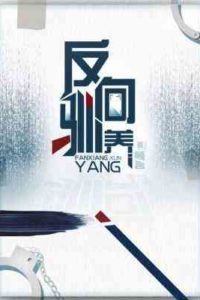
Lu Ye is a police officer who has recently been transferred back to his hometown in the New City District. He is pragmatic, observant, and accustomed to dealing with criminals and social disorder. His life is relatively routine until he is tasked with picking up his niece, Lu Mingming, from an art training center. There, he encounters Qi Yanbai, a young, handsome, and exceptionally gentle art teacher who is adored by his students. Qi Yanbai appears to be the epitome of kindness and professionalism, maintaining a flawless public persona. Lu Ye finds him pleasant but notes an unsettling perfection in his demeanor, feeling that Qi Yanbai lacks any visible negative emotions or flaws.

The two men’s paths cross again one night when Lu Ye responds to a report of prostitution at the Twin Apartments where Qi Yanbai lives. The investigation reveals a misunderstanding; Qi Yanbai is simply an artist working on an oil painting. During the encounter, Lu Ye notices a cut on Qi Yanbai’s finger and offers him a bandage. This brief interaction leaves a profound impression on Qi Yanbai, who has been suffering from severe creative blockage and psychological oppression stemming from his father’s harsh criticism of his artistic abilities. That night, Qi Yanbai dreams of his father rejecting his work, only to be rescued by a surreal version of Lu Ye. Upon waking, he sketches Lu Ye’s portrait and feels a sudden, intense surge of creative freedom and obsession. He resolves to pursue Lu Ye, viewing him as the key to breaking his artistic and emotional shackles.

Qi Yanbai’s pursuit is subtle yet persistent. He uses his connection with Lu Mingming to maintain contact with Lu Ye, eventually inviting him and the child to lunch. During their time together, Qi Yanbai displays warmth and attentiveness, though Lu Ye remains guarded, sensing that Qi Yanbai is too perfect to be entirely genuine. Despite his suspicions, Lu Ye begins to let his guard down, adding Qi Yanbai on social media and engaging in casual conversations. Qi Yanbai carefully navigates their relationship, presenting himself as a vulnerable, socially inexperienced friend who relies on Lu Ye’s protection. This dynamic feeds into Qi Yanbai’s growing fixation, as he desires to possess Lu Ye completely, shifting from admiration to a darker intent to control and keep him.

The relationship deepens when Qi Yanbai falls victim to a phone scam and reports it to Lu Ye at the police station. Lu Ye assists him, showing a rare moment of softness and concern for Qi Yanbai’s naivety. The encounter ends with Qi Yanbai hugging Lu Ye, an intimate gesture that further entangles their bond. However, Qi Yanbai’s internal world remains hidden. He continues to hide his true nature, which includes a history of psychological trauma and a growing capacity for violence and manipulation. His artistic blockage is replaced by a new, darker inspiration drawn from his obsession with Lu Ye. He discards his old tools, symbolizing his rejection of his past self in favor of this new, dangerous path.

As the story progresses, Qi Yanbai’s behavior becomes increasingly erratic. He starts feeling watched and suspects he is being followed by a suspicious man. This paranoia reflects his unstable mental state and the hidden dangers he harbors. Meanwhile, Lu Ye continues his police duties, handling various cases while maintaining his friendship with Qi Yanbai. The narrative establishes a tension between Lu Ye’s professional skepticism and his growing personal attachment to Qi Yanbai, while Qi Yanbai’s internal monologue reveals a descent into obsession and potential danger. The core conflict lies in the disparity between Qi Yanbai’s gentle exterior and his turbulent, possessive interior, setting the stage for a psychological drama where the line between love and control blurs.

Latest Release
DateGroupRelease
2026-08-11shanghai fantasy c35
2026-08-11shanghai fantasy c34
2026-08-11shanghai fantasy c33
2026-08-11shanghai fantasy c32
2026-08-11shanghai fantasy c31
2026-08-11shanghai fantasy c30
2026-08-11shanghai fantasy c29
2026-08-11shanghai fantasy c28
2026-08-11shanghai fantasy c27
2026-08-11shanghai fantasy c26
2026-08-11shanghai fantasy c25
2026-08-11shanghai fantasy c24

Community Reviews

Rating(4 / 5.0, 3votes)
5 stars
1(33%)
4 stars
1(33%)
3 stars
1(33%)
2 stars
0(0%)
1 stars
0(0%)

Popular reviews

... Read More
There's this recurring image of light and performance running through these chapters and I can't stop thinking about it. The afternoon sunlight pouring through the training center's floor-to-ceiling windows, casting a 'warm glow' over Qi Yanbai's white shirt—this is the image Lu Ye carries with him. It's almost sacred, almost cinematic. But then we see Qi Yanbai alone in the dark apartment, staring at a painting that's 'brilliantly illuminated by a slanting light' but has 'excessive use of heavy colors' that make it 'gloomy.' Same light, different mood. The performance versus the private self. The church square in Qi Yanbai's painting is interesting too. Churches are places of revelation, of truth being laid bare. But this one is viewed from an upward angle, radiant but surrounded by darkness. Is Qi Yanbai the kind of person who needs to maintain a saintly appearance while something darker simmers underneath? Or is the painting a plea—for light, for salvation, for being seen? Then there's the convenience store scene with Lu Ye. He's wearing sunglasses indoors, headphones on one ear, looking like 'a member of some passing motorcycle gang.' He's performing a certain kind of masculinity—tough, detached, cool. But then he's buying menthol cigarettes and talking about bus routes and lending fifty yuan to a kid. The performance cracks, and the real person shows through. The twin apartment building on Wuwei Road is another symbol. Shiny exterior, crumbling interior. Developers who took money and vanished. People who live there can't afford better but want to appear decent. It's a physical manifestation of the theme running through everything: appearances versus reality. And I have a feeling the plot is going to exploit this gap in interesting ways.
... Read More
I'm obsessed with how the author sets up this contrast between Lu Ye and Qi Yanbai without them even properly meeting yet. Think about it: we see Qi Yanbai first through Lu Ye's eyes, and that's everything. Lu Ye is this pragmatic cop—cynical about the 'Paris Academy of Fine Arts' claim, making jokes about Brazil, rolling his eyes at teacher birthday gift culture. He's grounded, a little world-weary, clearly someone who's seen stuff. And then he sees Qi Yanbai and even HE has to admit the guy looks attractive. The sunlight, the white shirt, the way he gently smooths out wrapping paper—it's like the narrative itself softens for a moment. But then we cut to Qi Yanbai alone, and WHOA. The gentle teacher mask drops. He's staring at his painting with 'a blank expression, not hiding the complex and disdainful look in his eyes.' That single detail just completely recontextualizes everything. Is he performing kindness? Is he trapped in this role? The painting itself—gloomy, heavy colors, a church square lit from above—feels like a window into his actual headspace. And Lu Ye's relationship with his niece is genuinely sweet. The way he teases her about money, the patience when she gets defensive about Teacher Qi, the casual affection—it shows us who he is before the plot does. He's not just a cop; he's a family person, someone who cares. That makes whatever's coming for him hit harder. I keep wondering: what happens when these two worlds collide? Because they're clearly going to.
... Read More
Okay so I need to talk about how this opening chapter structure is actually really clever and I didn't expect that. We start with this seemingly mundane errand—Lu Ye picking up his niece, buying cigarettes, all this slice-of-life stuff—and then BAM, it pivots to a police call about prostitution. The transition from the warm, almost nostalgic afternoon scene at the art training center to the grim Wuwei Road apartment building is jarring in the best way. It's like the story is telling you: hey, this guy's normal life is about to get interrupted by his actual life. The way the author plants details is subtle. That bit about the municipal bureau conducting a surprise drug raid the night before? That's not just world-building filler. It explains why Lu Ye, who literally just got transferred back yesterday, is already on duty. The author doesn't dump exposition—we learn about his transfer through his internal monologue and casual conversation with Officer Li Zhiwen, which feels natural. And the twin apartment building backstory? Flooded with exposition through Li Zhiwen's explanation, but it serves a purpose: this place has a history of crime, high turnover, shady developers who vanished with money. This is clearly where the story's going to hit. What I love is the pacing. The first half lulls you into this cozy vibe—kids, birthdays, a handsome teacher—and then the second half drops you into a world of vice and decay. The plot doesn't rush, but it also doesn't drag. Every scene earns its place. The author is playing the long game here, and I'm already hooked.
See all reviews

Characters

See all characters

Custom lists

See all custom Lists