Summary

... Read More

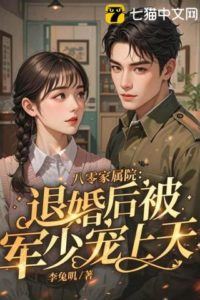
In the summer of 1980, Bei Qinghuan, a twenty-one-year-old woman who had recently returned to Hai City from five years of rural labor, faced a precarious future. Her father, a former factory director, had died nine years prior, leaving her mother, Yan Guifang, a widowed semi-disabled worker with limited income. Bei Qinghuan had no job and relied on traditional acupuncture skills inherited from her maternal grandfather. Her family had arranged her engagement to Qin Zhenghua, the son of Mei Suqin, a woman who had used Bei Qinghuan’s father’s connections to secure her own husband’s position at Factory 3508. However, the Qin family had grown distant and snobbish since Bei Qinghuan’s father’s death, and Mei Suqin had recently approached the family with an unexpectedly rushed proposal for marriage, offering only a sewing machine and a bicycle as betrothal gifts.

The central conflict emerged when Bei Qinghuan discovered she could hear the unspoken inner thoughts of others. During Mei Suqin’s visit, she heard the woman’s internal monologue revealing a sinister plot: the Qin family did not want Bei Qinghuan for marriage but for her valuable medicinal formulas and her kidney. Mei Suqin was suffering from Lupus Erythematosus, a terminal condition that would lead to kidney failure, and she intended to harvest Bei Qinghuan’s organ. Additionally, Mei Suqin referenced a past life where Bei Qinghuan had been exploited, killed, and robbed, indicating a reincarnation or supernatural awareness within the Qin family. Armed with this knowledge, Bei Qinghuan realized the engagement was a trap designed to steal her family’s heritage and her life.

Bei Qinghuan decided to break off the engagement immediately. She visited the Qin household to return the betrothal gifts and formally end the relationship. During the confrontation, she deliberately provoked Mei Suqin by lying that her mother had already sold the precious medicinal formulas to pay for medical bills. This caused Mei Suqin to lose her composure, revealing her desperation and anger. The argument escalated until Mei Suqin physically attacked Bei Qinghuan, scratching her face. Bei Qinghuan used the assault as justification to publicly sever ties, throwing the marriage agreement and gifts back at the family before leaving. In the chaos, a silver bracelet belonging to Bei Qinghuan was knocked loose and picked up by Jing Xiao, the young and stern Military Representative of Factory 3508, who had previously interacted with her.

Following the breakup, Bei Qinghuan’s path crossed with Jing Xiao more frequently. She had initially mistaken him for a subordinate due to his youthful appearance and military attire, but he was actually the powerful representative in charge of the factory. Their interactions were marked by tension and mutual curiosity; Jing Xiao found her blunt and unpretentious nature refreshing compared to the sycophantic women who usually pursued him. Meanwhile, Bei Qinghuan sought to establish her own independence. She consulted her childhood friend Ye Xiaoyun, a nurse at the factory clinic, and attempted to offer acupuncture services to Jing Xiao for his rain-induced arm pain, though he initially rejected her proposals with disdain.

The story direction shifts toward Bei Qinghuan’s determination to build a new life free from the Qin family’s exploitation. She plans to open her own acupuncture treatment room, a venture that Mei Suqin’s inner thoughts had previously claimed led to Bei Qinghuan’s downfall in a past timeline. By knowing the future pitfalls, Bei Qinghuan aims to avoid the mistakes of her previous existence. She also seeks to recover her stolen silver bracelet from Jing Xiao, which becomes a subtle bond between them. As she navigates the complex social hierarchy of the factory compound and confronts the lingering threats from the Qin family, Bei Qinghuan moves from a vulnerable returnee to a proactive woman claiming her destiny, with Jing Xiao emerging as an unexpected ally and romantic interest.

Novel Items

More
Betrothal Gift
Offered by the Qin family as part of the betrothal gifts for the wedding between Bei Qinghuan and Qin Zhenghua. Mei Suqin proposed this as part of the wedding arrangements.
Item
Gu Yizhi's bicycle used to transport An Ruoyan to the county bus. He rides it himself and she sits on the back.
Food
Lu Shili bought two big tins of malted milk powder at the cooperative.
Food
Homemade pickled cucumbers belonging to Bei Qinghuan. Yan Guifang instructed her to add some to the lunch box along with braised pork and rice to take as a gift to Representative Jing.
Skill
A traditional medical skill passed down from Bei Qinghuan's maternal grandfather. Bei Qinghuan considers using these skills to open an acupuncture room near her home through the neighborhood committee if she cannot find other employment.
Document
Part of Bei Qinghuan's dowry, mentioned in Mei Suqin's inner thoughts. Mei Suqin secretly calculated that the medicinal formula could sell for a fortune, which was one of her motivations for pushing the wedding forward.
Latest Release
DateGroupRelease
2026-08-11shanghai fantasy c137
2026-08-11shanghai fantasy c136
2026-08-11shanghai fantasy c135
2026-08-11shanghai fantasy c134
2026-08-11shanghai fantasy c133
2026-08-11shanghai fantasy c132
2026-08-11shanghai fantasy c131
2026-08-11shanghai fantasy c130
2026-08-11shanghai fantasy c129
2026-08-11shanghai fantasy c128
2026-08-11shanghai fantasy c127
2026-08-11shanghai fantasy c126

Community Reviews

Rating(4.2 / 5.0, 15votes)
5 stars
5(33%)
4 stars
8(53%)
3 stars
2(13%)
2 stars
0(0%)
1 stars
0(0%)

Popular reviews

... Read More
I need to talk about the objects in this chapter because they're doing SO much heavy lifting. First: the silver bracelet. Bei Qinghuan goes home and rummages through chests and cupboards, finding 'a piece of slightly musty woolen fabric, a child's silver bracelet, and lastly, a marriage certificate.' Three objects. Three different kinds of value. The fabric is practical — warmth, utility. The bracelet is sentimental — a child's keepsake, something preserved from the past. The marriage certificate is legal and social — an arrangement, a contract, a future she didn't entirely choose. The fact that she finds them in this order and then 'seems to relax' suggests that holding onto these objects, these pieces of her history, is what grounds her before she has to face whatever comes next. Then there's the saline bottles. She asks Ye Xiaoyun if she can take three empty ones, and later we learn she's washing them at a public restroom faucet to save water for her family. This is such a small detail but it tells you everything about her situation. She's a barefoot doctor with real skills returning to the city, and she's counting empty medical bottles as a resource. She's not above recycling. She's not above scraping by. And yet — and this is the thing that hits me — she's also planning to open an acupuncture treatment room. She's thinking about her future while washing trash in a public restroom. The contrast between where she is and where she wants to be is the whole story right there. And Mei Suqin's oral ulcers and Watermelon Frost — 'who has oral ulcers for three hundred days a year!' Ye Xiaoyun's theory that she's secretly reselling the medicine is a small but perfect detail. It paints a picture of a woman who is performing illness, using her body as a tool for gain. Meanwhile, Bei Qinghuan is about to marry into that family. The thematic echo is almost too on the nose, but I'll take it.
... Read More
I need to stop and appreciate the visual of those military green trucks rolling out of the 3508 Factory. The author paints this whole scene—tall pine trees lining the road, seven or eight trucks fully loaded under tarpaulins, the security guard stopping Bei Qinghuan. It's so specific and grounded. You can practically hear the engines rumbling and feel the dust. And then Jing Xiao in that front passenger seat, military cap, stern expression, saluting the guard. The contrast between his composed exterior and the moment he catches Bei Qinghuan's eye-roll is everything. The sunlight, the greenery framing her—that's a movie shot right there. The factory compound itself feels so alive. The gatehouse with its mail sorting, the residential area with its thirty-square-meter apartments, the Supply and Marketing Cooperative with its cigarette counters. This isn't just a backdrop; it's a character. Everyone's job, their housing, their social standing—it all ties into this industrial factory town ecosystem. The toilet scene had me laughing out loud. Bei Qinghuan following a stranger just to use gossip as a cover to ask about Tao Su. The image of her pretending to be enthusiastic with a complete stranger while internally panicking—comedy gold. And Qiao Meiyang's reaction, puffing out her chest like she's the top busybody in the entire supply and marketing system, vowing to find out if Tao Su has a mole on her butt. That woman is a force of nature. The period details are what really make this world breathe—the cold drink subsidy for outdoor workers, the housing allocation system, the fact that being a section chief in the technical department was something to brag about. This isn't generic historical fiction; it's specific, textured, and real.
... Read More
This chapter is a pacing rollercoaster and I need to talk about it. It opens with a heavy family exposition dump—Yan Guifang's infertility, the pregnancy scandal, Bei Qingming pushing her down the stairs, the housing sacrifice, the years of silence between father and son. That's a LOT to absorb in one go. But the author does something smart: they don't just info-dump it. It comes through Bei Qinghuan's own reflections as she's walking to the gatehouse, thinking about her grandfather's visit and how her birth was never wanted. The exposition is filtered through her emotional state, which makes it feel organic rather than forced. Then—bam—right after that weighty family history, we get the military truck scene with Jing Xiao. The eye-roll moment, her chasing the truck shouting about her bracelet, his amused imitation. It's light, almost comedic. The author knows when to let the reader breathe. The Qiao Meiyang sequence is pure comedic relief. After the Tao Su mystery deepens and the family drama weighs on her, we get a nosy coworker who wants to help find a girl with a mole on her butt. It's funny, it's fast, and it resets the tone perfectly. And then the money order. Six hundred and twenty-four yuan. The chapter ends on this note of possibility and excitement—her hands shaking, the editor's letter, the certificate. The pacing here is deliberate: heavy → light → funny → hopeful. It's a well-structured chapter that knows exactly when to push and when to pull back. The only question I have is whether the Tao Su thread will get resolved soon or if the author is building toward a bigger reveal. Either way, I'm not letting go of this book.
... Read More
The dialogue in this chapter is genuinely funny and I want to highlight a few moments that made me actually laugh out loud. First, Bei Qinghuan sprinting after the truck yelling 'My token of love! Hey, you, what's-your-name, stop! Give me back my token of love!' and then realizing how that sounds. The internal monologue where she processes that she just sounded like she was breaking up with her boyfriend on a moving truck—brilliant. Then she corrects herself to 'The bracelet! My bracelet, you have to give it back to me!' and Jing Xiao's reaction of deliberately mimicking her eye-roll. The chapter title 'Do You Even Hear What You're Shouting!' is basically the author winking at the reader. The Qiao Meiyang dialogue is a masterclass in comedic voice. 'As long as she's in our supply and marketing system, just tell me her approximate height, weight, and age, and I guarantee I can even find out if she has a mole on her butt!' This woman has a specific rhythm—enthusiastic, invasive, proud of her invasiveness. You can hear her voice distinctly from every other character. Liu Fang's dialogue is more grounded, more casual. His complaint about the heat and the cold drink subsidy feels like real working-class banter. And Bei Qinghuan's quick pivot from envy to gossip mode—'By the way, I remember you said you were classmates with Qin Zhenghua?'—shows how she reads a room and adapts her voice instantly. The narrative voice itself is sharp and wry. Bei Qinghuan's internal commentary is where the real humor lives. She's self-aware, slightly sarcastic, and never takes herself too seriously even when the situations are tense. That voice is what keeps the whole thing feeling fresh.
... Read More
Okay so I have to talk about how this chapter handles the Bei family backstory because honestly it was a lot to unpack in one sitting. Let me just say—Bei Qinghuan's birth was treated like a catastrophe by everyone involved. Her mother Yan Guifang was supposedly infertile, everyone knew it, and then boom, pregnant within two months of marriage. The whole family erupted. Bei Qingming, the eldest grandson, actually pushed her down the stairs nearly killing both of them. And the grandfather? Still wants her to show respect to the brother who tried to murder her as a fetus. Make it make sense. But what I found really interesting is how the plot threads are weaving together. There's the main thread of her trying to escape the engagement with Qin Zhenghua, then there's this mysterious Tao Su person that Mei Suqin apparently hates so much she threw a scene at the grandfather's house. Who is Tao Su? Why is she worse than Bei Qinghuan? The author is playing with us here and I am HERE for it. Also the money order moment—six hundred and twenty-four yuan from her first picture-story book. That's a plot bomb dropped right when we need it. It changes everything about her options. She was considering opening an acupuncture clinic, but now? She has capital. The stakes just shifted. The subplot with Jing Xiao is also interesting—he's this military correspondent type who saw her roll her eyes at him and instead of being offended, he mimicked her. That's not how a typical gruff male lead would react. He found it amusing. There's something there. And the Qin Zhenghua scene where he's standing behind the cigarette counter looking proud of himself while she walks past completely unnoticed—chef's kiss. The author doesn't even need to describe Bei Qinghuan's feelings, the image says it all.
... Read More
I am not okay with how good this scene is. Bei Qinghuan literally makes sweet and sour marinated fish with her mom, packs a lunchbox, goes to Qin Zhenghua's house to deliberately provoke him, then runs to eavesdrop on their family argument while eating the fish she made. The imagery alone is cinematic. Picture this: dark evening, street lamps lit up in the compound, her squatting by a window like a little spy, holding a lunchbox straight out in front of her like a gecko pressing its ear against the glass. And she's eating the best part of the fish—licking the sauce first, then the meat, gently spitting out the bone—while Qin Zhenghua is screaming inside about Tao Su. The contrast between her calm enjoyment of the fish and the chaotic drama unfolding behind that wall is almost comedic. But underneath it all, there's this deep sense of justice being served. She's been wronged, manipulated, looked down upon, and now she's literally feasting while her enemies destroy themselves. The Tao Su revelation is the emotional climax here. Qin Zhenghua finally admits he's been sending his salary to another woman, that he wants to marry a country girl, that he finds Bei Qinghuan 'uncomfortable' because they grew up together. It's disgusting but also liberating for Bei Qinghuan. She doesn't need to marry this man. She never did. And the best part? She's not crying about it. She's eating fish. That's the kind of emotional independence I want in my protagonists. The brief romantic hint at the end with that magnetic voice asking 'For me?' is giving me chills though. Who is it? Is it Representative Jing? The Correspondent? I need answers.
See all reviews

Characters

See all characters

Custom lists

Oops…There is nothing here.