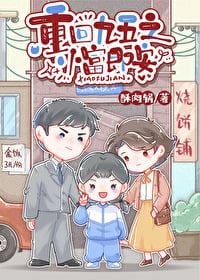
Returning to 1995: Contentment with Modest Prosperity
+Add to Custom List
Novel Info

Summary

... Read More

Jian Li, a twenty-eight-year-old office worker, dies from overwork and unexpectedly reopens her eyes to find herself back in the summer of 1995. She is now twelve years old, a second-year middle school student living in a cramped apartment in Taoxiang with her parents, Jian Feng and Wang Mengmei. The family belongs to the working class, struggling financially as the state-owned cotton mill where her father works faces imminent collapse. Jian Li retains all her memories from her previous life, including the knowledge that her family will soon face devastating financial ruin due to her father’s poor decisions and the betrayal of his childhood friends.

In her past life, Jian Li suffered from severe obesity caused by hormone medication prescribed for a benign cyst. The weight gain ruined her confidence, caused her grades to plummet, and led to a lonely adolescence. She died exhausted and regretful, having never achieved her dreams. Now reborn, she is determined to change her fate. She decides to approach her health gradually, avoiding the extreme dieting that damaged her body before. Instead, she focuses on sustainable exercise and better eating habits, aiming to lose weight without harming her health. She also plans to improve her academic performance and guide her family away from the financial pitfalls that destroyed them previously.

The core conflict begins immediately with her father’s soft-hearted nature. Jian Feng is a kind man who cannot refuse requests from his childhood friends, despite the family’s own poverty. His friends, particularly Liu Xiangdong and Zhao Xiaopeng, take advantage of his generosity. Liu Xiangdong has been borrowing money under the pretense of paying for his mother’s medical care, but the funds are misused. When Liu’s mother passes away, Liu attempts to manipulate the funeral arrangements to extract more favors from Jian Feng, including asking him to carry the coffin and cover expenses. Jian Li witnesses these events and realizes that her father’s blind trust is leading the family toward disaster.

A key turning point occurs during the funeral banquet. Jian Li overhears Liu Xiangdong begging Jian Feng for a job for his wife, despite Liu having received a significant insurance payout and gift money from the funeral guests. Jian Li intervenes, publicly reminding Liu of the factory’s insurance policy and the debt he owes her family. She pressures Liu into repaying the six hundred and thirty-eight yuan he borrowed. This bold move shocks her parents, who are unused to her assertiveness, but it successfully recovers the money. Wang Mengmei is initially angry at her daughter’s behavior but soon realizes the wisdom in the action.

Following the debt recovery, Jian Li takes charge of the family’s financial situation. She notices her mother’s pancake stall is underperforming due to its poor location in the fruit and vegetable section. Jian Li encourages Wang Mengmei to diversify the menu by adding stuffed pancakes and salted duck eggs. The new items prove popular, significantly increasing daily revenue. When market officials arrive to register vendors, Jian Li persuades her mother to move the stall to the cooked food section, a decision that promises even greater profits. Meanwhile, Jian Li begins a strict study and exercise regimen, determined to excel in school and transform her physique.

The story also explores the deteriorating relationships between the families. Wang Mengmei becomes increasingly aware of the true nature of their so-called friends. She refuses to let Liu Xiangdong’s wife take advantage of her anymore, leading to a complete breakdown in relations with the Liu family. Jian Li supports her mother’s decisions, helping to establish boundaries that protect the family’s limited resources. As the cotton mill’s decline accelerates, Jian Feng faces the prospect of layoffs, but Jian Li is prepared to help him navigate the coming challenges. The narrative follows the family’s efforts to survive the economic transition of the 1990s, with Jian Li using her future knowledge to steer them toward stability and success.

Jian Li’s rebirth is not just about personal redemption but about saving her family from the cycle of poverty and betrayal. She recognizes that her father’s kindness, while noble, is a vulnerability that others exploit. By intervening in critical moments, she aims to teach him to be more discerning. The summer of 1995 becomes a pivotal period of change, as Jian Li balances her academic goals, physical health, and family responsibilities. The story highlights the harsh realities of life in a transitioning Chinese city, where state-owned enterprises fail and individuals must adapt quickly to survive. Jian Li’s determination to rewrite her family’s destiny drives the plot forward, setting the stage for future challenges and opportunities as the new millennium approaches.

Latest Release
DateGroupRelease
2026-08-11shanghai fantasy c70
2026-08-11shanghai fantasy c69
2026-08-11shanghai fantasy c68
2026-08-11shanghai fantasy c67
2026-08-11shanghai fantasy c66
2026-08-11shanghai fantasy c65
2026-08-11shanghai fantasy c64
2026-08-11shanghai fantasy c63
2026-08-11shanghai fantasy c62
2026-08-11shanghai fantasy c61
2026-08-11shanghai fantasy c60
2026-08-11shanghai fantasy c59

Community Reviews

Rating(3.4 / 5.0, 27votes)
5 stars
6(22%)
4 stars
7(26%)
3 stars
6(22%)
2 stars
8(30%)
1 stars
0(0%)

Popular reviews

... Read More
This section is a masterclass in how a protagonist with foreknowledge can pivot a plot in real-time. The whole Qian Ping storyline hinges on Jian Li remembering what happened in her previous life—her cousin got swindled into going to America with some shady 'fellow countryman' and came back in days, then vanished from the family entirely. That memory isn't just backstory; it's the lens through which every interaction in this chapter becomes charged with dramatic irony. We know something Qian Ping doesn't, and that tension is delicious. Jian Li's questioning of the scheme is where the plot really clicks into gear. The aunt is so blinded by the dream of America—two thousand dollars a month, free healthcare, houses after one year—that she never stops to think about the basic logic. And then Jian Li drops the killer line: 'How can there be twenty plates to wash at every meal in the US? Where would all those plates come from?' This isn't just a funny observation; it's the narrative equivalent of a lightbulb going on. Wang Yunyun has her epiphany right after—'These were all loopholes!'—and suddenly the reader is watching two girls connect dots that an entire generation of desperate parents couldn't see. The pacing here is tight. You go from the aunt's bombshell announcement to Qian Ping's arrival on her bicycle, from the playful summer vibes to the serious conversation about running away, all in one flowing sequence. The transition feels natural because Jian Li controls the tempo—she's always one step ahead, planting seeds of doubt, then stepping back to let them grow. The ending with the watermelon scene is a nice breath of normalcy after the tension, a reminder that these are still kids at heart even while navigating life-altering decisions.
... Read More
'Sis, are you silly? Come with me. Come to our place, you can have half of my bed.' I have to stop and just sit with that line for a second. Jian Li doesn't hesitate. She doesn't say 'let me think about this' or 'maybe we can find another way.' She immediately offers her home, her bed, her mom as a buffer against her own aunt. This is a girl who has seen her cousin destroyed by this exact situation in another lifetime, and she's not letting it happen again. The sisterhood between Jian Li and Qian Ping is the emotional backbone of this whole section. They played together as kids—'mostly Qian Ping accommodating them,' Jian Li notes—but now the roles have shifted. Qian Ping, the one who was always the responsible older sister, the top student, the obedient one, is the one who needs saving. And Jian Li, the rebellious niece who probably drove her mother crazy, is the one making the plan. What kills me is Qian Ping's response: 'Even if I wanted to hide, I have no place to go.' She's been so isolated by her mother's pressure and her own studiousness that she genuinely doesn't have a single friend or relative she could run to. That line hit me like a punch. All those years of being the perfect daughter, the top student, and she has nowhere to go when everything falls apart. And then there's Wang Shuai, the miser cousin who shows up only for the popsicle, who swears loyalty and then lights up at the prospect of making money together. It's funny, but it's also touching in its own way—these kids, however flawed, have each other. Jian Li's plan isn't just about saving Qian Ping from America; it's about building a coalition. 'We'll make more money together'—that's the real promise, not the fake two thousand dollars a month.
... Read More
There's something so vivid and specific about the details in this text that makes the world feel completely alive. Let me paint you a picture: Wang Menglan arrives with expensive 'San Zhu Oral Liquid' and chrysanthemum crystals—these aren't just props, they're status symbols in a rural Chinese village where imported medicines are luxuries. Her gold chain sways as she talks about America, and Jian Li is watching her like a hawk, taking in every detail. The contrast between the two sisters—Wang Mengmei, tall and slender from city life, and Wang Menglan, small and frail from years of hunger, now plumping up with newfound wealth—is painted in just a few strokes. You can see them. The Qian family brothers building houses, Wang Menglan cooking for workers at construction sites, the whole picture of a rural family riding the wave of China's economic opening in the 1980s. But the scene that really stays with me is the watermelon moment. 'Don't use a kitchen knife to cut the watermelon!' Jian Li stops her grandmother, refusing to have watermelon with a garlic aftertaste. This is such a small, seemingly trivial detail, but it's incredibly telling. It shows a girl who has lived through this before and knows exactly what she wants to preserve—the simple pleasures, the clean iron sheet for cutting watermelon, the ritual of summer eating. Her grandmother complains she's 'too particular' and 'restless,' but Jian Li doesn't care. 'Complaints didn't cost her anything.' The setting is so richly textured—the heat of August, the bicycle arriving late, the truck selling watermelons, the village sales point for ice cream. You can smell the summer, feel the humidity, taste the watermelon. This isn't just a backdrop; it's a character in its own right.
... Read More
I thought the biggest conflict in these chapters would be the business failures — the crabs running out, the crayfish not selling. And those were tense enough, right? You feel Jian Li's frustration when she's sitting with half a watermelon fanning herself, wondering what to do next. The stakes feel real because she's putting in real work and getting real results or real failures. But then the parents show up and the whole dynamic shifts. This is where the conflict gets personal. It's not about market forces or supply chains anymore — it's about who has the right to what the kids earn. And Jian Li can't fight this head-on. She can't tell those parents "your kid worked hard, leave them alone." So she does what she can: she adjusts the accounts. She protects who she can protect. Wang Yuandong's reaction is interesting too — he brushes off the complaining parents but clearly disapproves of their greed. He's not a warrior like Jian Li, but he's not an enemy either. He's just a guy trying to keep the peace, and the fact that he notices Jian Li got sunburned and her hands were stung by wasps shows he cares, even if he doesn't always know how to show it. The stakes here aren't life-or-death, but they're meaningful. It's about dignity, about the right to your own labor, about what happens when the people closest to you don't respect that. And Jian Li handling it the way she does — quietly, strategically, without making a scene — is honestly more impressive than any dramatic confrontation would have been.
... Read More
Okay first of all, Wang Shuai needs to be promoted to chief philosopher of this novel. The kid literally just learned a passage about nobility and bloodline and immediately applies it to insect commerce: "Cicadas or crabs... aren't they all meat!" I laughed out loud. This is a child who has discovered economics through a single line of text and is now changing the world. Jian Li's dialogue is sharp and practical — she never wastes words. When the toothless kid shows up with scorpions and she screams, her follow-up questions are all business: where did you find them, how many, what size. Even her fear doesn't slow her down into rambling. She processes, decides, acts. The grandmother's voice is an absolute gem. Every line she speaks is loaded with subtext. "A little boss? She's just a slippery one." That's not an insult, that's a love language in grandmother code. And then immediately pivoting to asking about filial duty savings? That's a woman who has been playing family chess for sixty years and is not about to let anyone checkmate her. Wang Yunyun's dialogue is quieter but distinctive — she speaks less but when she does, it matters. "I haven't done anything, so don't count my share of the money" followed by showing up anyway and going to the library? That's a character who knows her worth without having to announce it. And the vendor's line about crayfish — "Who would want to spend money on this?" — is such a perfect realistic moment. She's not being mean, she's just stating the market truth. The dialogue in this novel never feels written. It feels overheard.
... Read More
The pacing in these chapters is honestly ridiculous in the best way. Let me walk through it: crabs are going great, five buckets a day, profit is rolling in, everyone's happy — and then WHAM, the crabs run out. Not gradually, not with foreshadowing, just straight up gone. Wang Shuai comes back looking like a "withered eggplant" and that's it, the crab arc is over. Then crayfish. And this is where the author could've dragged things out with failure after failure, but no — one scene, one conversation with the vendor, and crayfish are crossed off the list. Efficient. Brutal. I love it. And then the pivot to cicada shells and scorpions comes from literally nothing — a chubby kid shows up with a bag, and suddenly there's a new business model. The transition from "we're catching crabs" to "we're running a wild animal procurement empire" happens so smoothly that I didn't even notice I was reading about a bug-collecting operation until it was already established. The Wang Shuai math mistake scene is the perfect comic relief beat in the middle of all this business growth. Five plus seventeen equals twenty-three. Of course he gets chased around the yard by his dad. And then the multiplication table memorization arc — a few days of practice and he's got it? That's some serious narrative compression, but it works because the emotional payoff (him looking at Jian Li with tearful eyes when she mentions deducting money) lands perfectly. The ending with the 350 yuan total and the 22 jin weight loss is such a satisfying bookend. A month of work condensed into a few numbers, and suddenly you feel the entire summer pass by.
See all reviews

Characters

See all characters

Custom lists

See all custom Lists