Summary

... Read More

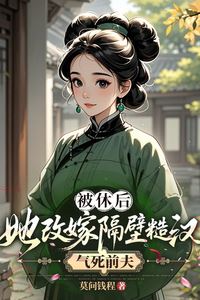
Si Yin lived a miserable life defined by her devotion to Lu Shishen, a man who betrayed her with his widowed sister-in-law, Si Wei. After thirty years of servitude and abuse, Si Yin signed divorce papers and died, only to awaken in her eighteen-year-old body on her wedding night. She had been reborn, finding herself in the bed of Lu Shiyuan, her late cousin and the aloof military officer she had originally been forced to marry before choosing Lu Shishen. In this second chance, Si Yin resolved to abandon her past regrets and live for herself, rejecting the toxic dynamics that had destroyed her previous life.

Upon waking, Si Yin discovered that Si Wei had also been reborn, having stolen Lu Shishen half a month earlier to secure her own future. The Si family, prioritizing wealth and status, had swapped the marriage arrangements, forcing Si Yin to marry Lu Shiyuan while Si Wei wed Lu Shishen. In her previous life, Si Wei had mocked Si Yin, predicting she would become a jinxed widow after Lu Shiyuan died in battle six months later. However, Si Yin now possessed foreknowledge of the future. She understood that Lu Shishen’s eventual wealth was built on medical prescriptions and business acumen that she herself had developed in her past life. Determined to change her fate, Si Yin decided to keep Lu Shiyuan as her husband, recognizing his potential and the substantial assets he would leave behind upon his death.

The early days of her new marriage were fraught with tension. Lu Shiyuan, initially cold and distant, had refused to consummate the marriage after Si Yin’s apparent rejection on their wedding night. However, Si Yin approached him with a pragmatic request: she wanted to have a child to secure her position and inherit his assets. Despite his initial resistance, Lu Shiyuan began to show unexpected kindness. He supported her ambition to open a clothing store, providing her with his salary passbook and financial backing. This generosity contrasted sharply with Lu Shishen’s stinginess in her previous life, where Si Yin had worked menial jobs to support her husband and his family.

Si Yin’s business venture proved to be a resounding success. Leveraging her knowledge of future fashion trends, she opened a stylish clothing store that attracted numerous customers. Her first day of business yielded a profit of over five hundred yuan, a significant sum in the early 1980s. This financial independence allowed her to support her foster family, whom she had neglected in her previous life. She visited her foster parents in their rural village, reinforcing their home against potential snowstorms and ensuring their well-being. This act of redemption brought her emotional closure and strengthened her resolve to build a better future.

Family dynamics shifted as Si Yin refused to tolerate the disrespect she had endured before. She confronted Wang Meijuan, her mother-in-law, who looked down on her rural background, and stood up to Si Wei’s manipulative behavior. Lu Shiyuan, initially perceived as indifferent, consistently defended Si Yin against criticism and supported her decisions. His actions, such as cooking for her and accompanying her to her foster parents’ home, indicated a growing attachment. Si Yin recognized that Lu Shiyuan’s cold exterior masked a considerate and protective nature, qualities that made him a suitable partner for her new life.

As Si Yin’s clothing store flourished, she continued her education, planning to take the college entrance exam. Her determination to succeed in both business and academics set her apart from the societal expectations placed on women of her time. Meanwhile, Lu Shishen and Si Wei’s relationship remained superficial, driven by Si Wei’s knowledge of future events rather than genuine affection. Si Yin observed their interactions with detachment, no longer seeking validation from Lu Shishen. The narrative highlights Si Yin’s transformation from a submissive wife to an independent woman who controls her destiny, supported by a husband who is gradually revealing his deeper feelings.

The story progresses with Si Yin balancing her growing business with her studies, all while navigating the complex relationships within her family. Lu Shiyuan’s support extends beyond financial assistance; he respects her autonomy and encourages her ambitions. This partnership contrasts with the dysfunctional dynamics of Lu Shishen and Si Wei, whose relationship is marred by selfishness and manipulation. Si Yin’s journey is one of self-discovery and empowerment, as she builds a life free from the regrets of her past. Her success in business and education serves as a testament to her resilience and strategic thinking, setting the stage for further developments in her personal and professional life.

Latest Release
DateGroupRelease
2026-08-11shanghai fantasy c63
2026-08-11shanghai fantasy c62
2026-08-11shanghai fantasy c61
2026-08-11shanghai fantasy c60
2026-08-11shanghai fantasy c59
2026-08-11shanghai fantasy c58
2026-08-11shanghai fantasy c57
2026-08-11shanghai fantasy c56
2026-08-11shanghai fantasy c55
2026-08-11shanghai fantasy c54
2026-08-11shanghai fantasy c53
2026-08-11shanghai fantasy c52

Community Reviews

Rating(4 / 5.0, 6votes)
5 stars
2(33%)
4 stars
2(33%)
3 stars
2(33%)
2 stars
0(0%)
1 stars
0(0%)

Popular reviews

... Read More
Let me just say this: the conflict in these chapters operates on at least four simultaneous levels and the author never lets up. Level one: the immediate marital conflict. Si Yin and Lu Shiyan are technically married but functionally strangers. She wants closeness (or at least the appearance of it); he gives her distance. But then he gives her his passbook. Then he almost kisses her and pulls away. Then he says 'I won't touch you again' and storms out. The romantic tension is suffocating and I love it. Level two: the family conflict. Lu Shishen and Si Wei are the antagonists here, and they're deliciously awful. Si Wei's internal monologue—'So what if they slept together? Si Yin would still end up alone!'—reveals a woman who genuinely believes Si Yin is doomed regardless of what happens. That's not just petty; that's a worldview. And Lu Shishen's reaction to Si Yin's breakfast clapback—'Who gave you the courage to get mad at my wife!'—shows a man whose entire identity is built on dominance that's suddenly being challenged. Level three: the social conflict. The gossiping neighbors, the judgment about 'losing face,' the implication that Si Yin schemed to trap Lu Shiyan. This is the world pressing in on them, telling them their marriage is illegitimate, that she's not worthy. And Lu Shiyan's response—'Do you want me to send you for tea?'—is a threat wrapped in bureaucratic language. He's not just defending his wife; he's weaponizing the state against her detractors. But then Chapter 6 does something I did NOT see coming. It takes us from breakfast comedy to the most devastating revelation in the entire passage: Si Yin's memories of her foster family's destruction in her previous life. Her foster father dying wanting to see her one last time. Her elder brother paralyzed in a mine collapse. Her younger brother dying in prison. The entire family destroyed because she chose the wrong people. The stakes just shifted from 'will these two figure out their marriage' to 'if Si Yin makes the wrong choices again, people will die.' That's not romantic tension—that's existential terror. And the author drops it on us like a freight train after a scene where a guy drinks from a girl's milk cup and everyone's mad about it. I am not ready for what happens next.
... Read More
Can we just take a moment to appreciate that Si Yin is one of the most sharply written female leads I've encountered in this genre? Her dialogue is SO distinct and I love her to pieces. Let me just dump some of my favorite lines because I need you to understand: When Lu Shishen tells her to 'get up early to help your sister-in-law,' she doesn't just push back—she goes FULL CANNON: 'As the saying goes, the eldest sister-in-law is like a mother—you should respect me like a mother, not expect me to serve you like a maid!' She then turns it on him: 'If you truly cared about your wife getting up early to cook, then get up and help her yourself.' And then the mic drop: 'What do you mean by let me help? Luckily, I'm a woman. If it were a man, you'd have him worry for you too… tsk~' She's literally hinting at him getting cuckolded and she's SO CUTE about it—'her gaze at Lu Shishen shining with green mischief.' This woman is a menace and I am HERE FOR IT. And Lu Shiyan's dialogue is perfectly calibrated to match. He says almost nothing but when he does, it lands. 'I won't touch you again.' 'Don't call me brother.' 'If you lose, you lose. Learn from it, summarize your mistakes, and start over.' Each line is cold, economical, and reveals something about his character without him having to explain anything. The breakfast scene between Lu Shiyuan and Si Wei is also genius dialogue writing. Lu Shiyuan casually drinking from Si Yin's milk cup after she finishes it—no words needed. The reader understands immediately: this is a man who is germophobic but makes an exception for Si Yin, which simultaneously infuriates Si Wei and tells us everything we need to know about their dynamic. Si Wei's 'face turned green with anger' says more than any internal monologue could. And the narrative voice itself has this wonderful texture—it's witty without being precious, observant without being clinical. When Si Yin thinks 'Some people look cold but are the most considerate; some look gentle but are the coldest,' that's not just observation, that's the narrator winking at us while Si Yin figures it out for herself. The author's voice is confident, funny, and emotionally precise. I'm not reading a novel, I'm having a conversation with someone who gets it.
... Read More
I need to talk about how this author controls pacing because it is ABSOLUTELY MASTERFUL and I am not okay. Let's look at the structure: Chapter 4 starts with the shopping trip—a warm, almost comedic scene. Then they return to the compound and immediately hit the gossiping neighbors. That's a tonal pivot so sharp it's like stepping off a curb you didn't see. Lu Shiyan shuts them down with one line and suddenly we're in serious territory. Then Chapter 5 opens with Si Yin going to the study at night to ask for money. This is where the pacing does something really clever—it slows down. We get this intimate, quiet scene between two people who are technically married but have never actually spoken to each other as anything other than strangers. She asks for five hundred. He gives her a thousand and his entire salary passbook. The scene breathes. It doesn't rush. It lets the weight of what's happening sink in. And then—BAM—she almost calls him 'brother' and the mood shifts again. Then she says 'I want to have a son with you' and he slaps her hands away and storms out. The emotional whiplash is intentional and it works because the author has earned it through the preceding quiet scene. Chapter 6 is where the pacing really flexes. Breakfast the next day—Si Wei and Lu Shishen being disgustingly clingy, Si Yin clapping back with such sharp wit, Lu Shiyan defending her, Lu Shiyuan drinking from Si Yin's milk cup (which somehow says more about character dynamics than any exposition could). Then Wang Meijuan's internal monologue about her 'outstanding elder son' being 'taken by a countryside girl' while her head throbs. The chapter moves at a breaking pace but never feels chaotic because each beat serves character or plot. And the chapter ends on this devastating note—Si Yin's thoughts drifting to her foster family, the life she ignored in her previous life, the cascade of tragedies that followed from her choices. The chapter goes from comedic breakfast banter to existential grief in roughly three paragraphs and I was NOT prepared for that. The author is playing 4D chess with pacing and I'm just over here losing my mind.
... Read More
Okay I need to talk about this scene where Lu Shiyan hands Si Yin his salary passbook and it just wrecked me. Like, think about it—she goes in asking for a small loan, expecting maybe a polite refusal or at best a hesitant 'sure, five hundred.' Instead he opens a SAFE and produces his entire salary passbook. That's not just generosity, that's TRUST. Raw, unfiltered trust from a guy who literally told her 'I won't touch you again' two nights ago. And the contrast with her previous life? Devastating. She was working herself to the bone—cleaning public toilets, moving corpses at hospitals—just so Lu Shishen could eat well and compliment the food. No dowry. No household allowance. Not even five yuan from her own foster parents except what her foster mother gave her at the train station. Everyone in that house treated her like she didn't exist as a person who needed anything. Meanwhile Lu Shiyan says 'Take a thousand' and when she asks if he's worried she'll lose it, he just says 'If you lose, you lose. Learn from it, summarize your mistakes, and start over.' That's not just support—that's someone who genuinely believes she can succeed. He's not enabling her; he's investing in her. The detail that killed me was when she almost called him 'brother' and he said coldly 'Don't call me brother!' She was so grateful her brain short-circuited and went straight to the wrong familial title. And then later when she grabs his shirt and blurts out 'I want to have a son with you!'—she's using his mother as a shield, trying to appear demure about it, but it comes out so raw and honest. And his ears turn faintly red. The man is completely flustered and would rather die than admit it. I kept re-reading that moment where she lets go of his arm the second they reach the bedroom and steps back to a 'safe distance.' She's so traumatized by her previous life's marriage that even when Lu Shiyan is being genuinely kind, her body still braces for impact. That's not a romance beat—that's a trauma response. And I loved it because it's REAL.
... Read More
Let me just say this: the department store scene is one of the most vividly rendered moments I've read in this novel and I need the author to do MORE of this. You have Si Yin—this country girl who has apparently never been inside a proper department store—standing there while Lu Shiyan casually points at dresses and shoes and says 'pack them up. How much is it?' The sales clerk, who had been lazily swatting mosquitoes because she assumed the village girl would only look, suddenly transforms into someone treating Lu Shiyan like 'their provider.' The shift in attitude is SO sharp you can practically see it happen in real time. And then Lu Shiyan doesn't just buy her clothes—he picks out daily necessities AND a ladies' shoulder bag because he assumes she might be nervous on her first trip. He carries everything himself. Doesn't let her lift a finger. The whole scene has this warm, almost golden quality to it, like a film where the lighting just shifts when the right person walks into frame. But then—AND THIS IS THE BRILLIANT PART—they walk back into the compound and immediately run into the gossiping neighbors. The warmth of the department store collides with the cold judgment of the outside world in one devastating beat. 'How could the Lu family marry off their eldest son to a country girl? Aren't they worried about losing face?' And Lu Shiyan's response is so casually devastating: 'Spreading false rumors about a soldier's family is illegal. Do you want me to send you for tea?' The contrast between the bright, generous interior of the store and the dark, whispering compound outside creates this incredible tension. You can feel the world of the novel expanding beyond just the romantic leads—there's a whole social ecosystem of judgment and expectation surrounding them. And the 1980s setting isn't just backdrop; it's actively shaping every interaction. The fact that 'trading was still considered disreputable' even though 'the government encouraged individual businesses' tells you everything about the era's social complexity. I also loved the visual of Lu Shishen and Si Wei returning from their date, him leaning close whispering in her ear, her 'lightly punching his chest'—all of this painted in quick brushstrokes but so alive. The world feels tangible.
... Read More
I keep coming back to the salary passbook scene and I think it's the single most thematically dense moment in these chapters. On the surface, it's a romantic gesture—a man giving his wife financial access. But dig deeper and it's about something much more profound. The passbook represents TRUST, and trust is the currency this novel is really trading in. Si Yin's entire previous life was defined by financial abandonment—no dowry, no household allowance, no spending money from her own parents, working menial jobs to survive while her husband ate well. Money wasn't just absent; it was weaponized. Every yuan she didn't have was a reminder that she didn't belong. When Lu Shiyan hands her his passbook, he's not just giving her access to money—he's giving her access to a life where she's trusted, where she's considered a partner rather than a burden. His line 'My father's salary passbook is also kept by my mother! It's a family tradition!' is doing heavy thematic lifting here. He's telling her: you belong in this family's patterns. You are not an outsider. And then there's the milk cup scene—Lu Shiyuan drinking from Si Yin's cup despite being severely germophobic. In a story where everything is about boundaries and who gets to cross them, that small act of drinking from someone else's cup is almost shocking in its intimacy. It's a silent declaration that says 'you are inside my boundaries' without a single word of explanation. The department store itself is a symbol. It's a space where Si Yin is being treated with generosity for the first time in her life, but it's also a space where the outside world is watching and judging. The bright interior versus the gossiping neighbors outside mirrors the central tension of the novel: can love and trust survive in a world that's determined to tear them apart? Even the rumor mill—the neighbors whispering 'the country girl schemed to sleep with the eldest son'—is doing thematic work. It shows us how society polices women's bodies and ambitions, how a woman's agency is always interpreted as manipulation. Si Yin's desire to open a clothing store, to be independent, to build something of her own—is this seen as ambition or scheming depending on who's telling the story? The novel is asking: what does it mean to be trusted? What does it mean to be seen? And what happens when a woman who has spent her entire life being treated as invisible finally gets handed the keys?
See all reviews

Characters

See all characters

Custom lists

See all custom Lists