Relying on beauty to commit crimes in the Escape Game - Reviews

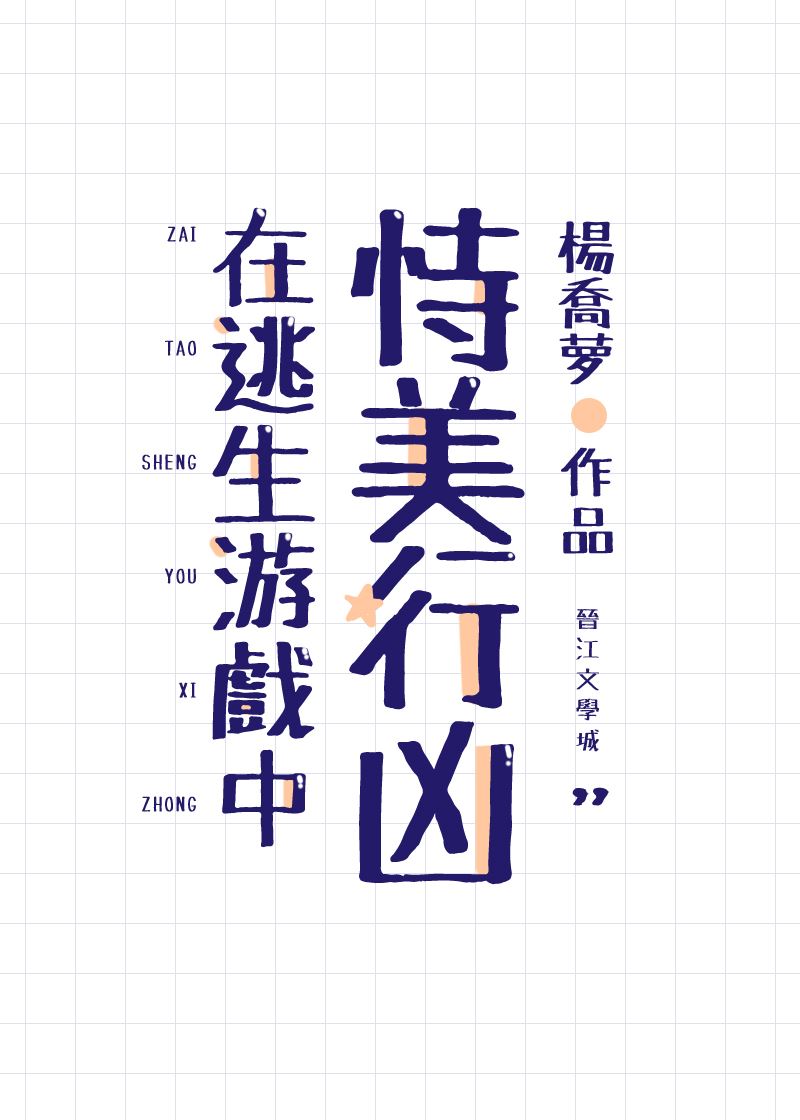
Relying on beauty to commit crimes in the Escape Game
+Add to Custom List
Sort
Add review
... Read More
"Stop." Two words and I was already emotionally compromised. That's all it takes from Duan Zhen—just a calm, authoritative gesture to protect someone who just showed up riding dolphins in broad daylight. But honestly, the real character work here is Li Xi. This dude is operating on pure instinct and social engineering. When the other mermaid offers him a spot in the harem as a parting gift, Li Xi just keeps smiling internally while having absolutely zero interest. He's patient enough to endure nonsense conversations, smart enough to extract exactly what he needs, and disciplined enough not to let his facade crack. The moment he says "I like him" about Duan Zhen though—that's when you can tell it's not entirely acting anymore. The narration specifically notes his expression softening, and he's conjuring up Duan Zhen's figure in his mind. Whether Li Xi realizes this about himself yet is another question. What I do know is that their dynamic in this chapter is gorgeous in its quietness. No grand declarations, no dramatic confessions. Just Duan Zhen noticing blood, sensing Li Xi is near, and immediately creating space for him at the shore while simultaneously shielding him from arrows. The humans are staring at Li Xi's beauty like it's a spectacle, and Duan Zhen is the only one treating him like a person. That contrast says everything.
... Read More
I need to talk about Hest and Moduna because the author just slipped in TWO DEMON KINGS into this scene like it's no big deal and I am SCREAMING. One second you've got this aching emotional moment with Li Xi being sad about Zizhuo, and then BAM—whoosh—suddenly we're in completely different genre territory. These twins appear like they materialized out of the air itself, clinging to Li Xi's arm, speaking in that overlapping twin cadence that feels so distinctly inhuman. The author doesn't over-explain them. They just show up, banter, and drop two sentences of exposition—died at sixteen, reincarnated as demons, wiped out a royal empire—and somehow that's MORE effective than three pages of backstory would have been. Their visual design is also chef's kiss: golden hair, green eyes, identical outfits, and that whole 'childish faces with ancient evil behind the eyes' thing. Hest especially, climbing onto Li Xi's shoulder, making mournful movie-face because the streaming service postponed new releases. The contrast between their demon king status and their teenager energy is so perfect. And then Moduna's quieter, more controlled—his line about 'just a little longer' while smiling at the corner of his mouth sent chills down my spine. These two are clearly planning something, and I can't wait to see what happens when they actually get involved. The author is playing 4D chess while I'm over here screaming about fictional boys.
... Read More
I need to talk about this moment where Duan Zhen realizes he's been used as someone's weakness. The text says it plainly — "For the first time, he was someone's Achilles' heel, and it didn't feel good. In fact, it felt terrible." And that line hit me in the chest because throughout the series we've seen him as competent, almost invincible in his own right, but here Li Xi's protective instinct actually becomes a tactical liability. The enemies are deliberately revealing themselves to make Duan Zhen hesitate. But then—here's the thing that made me sit up—he doesn't crumble. He adapts. He suggests sending Dan Zuo away so he can stay behind as bait, and when that's rejected, he basically takes charge of the crisis management. The moment he steps out of Li Xi's protective barrier and directly confronts Clemens with those hostages? That's a character who refused to be defined by his vulnerability. Meanwhile, Li Xi's entire arc in this chapter is fascinating. He starts off possessive ("Is he really trying to steal you from me?" about the mind transmission sphere), gets angry at the situation, creates an entire ice ecosystem just to give his friends a fighting chance, and then is genuinely shocked when Duan Zhen confronts a demon lord solo. Their dynamic shifted something fundamental in these pages.
... Read More
On the surface this is a tag game with supernatural creatures. But read between the lines and there's a whole conversation about trust, identity, and who gets to define reality. The lookalikes are the most obvious symbol — five people watching from above who look exactly like the players below. How do you know who's real? The text says "you have known each other long enough to distinguish the real from the fake" — implying that true knowing transcends appearance. But the game mechanics actively punish that trust, forcing players to question every encounter. Then there's the castle itself. Li Xi built it, set the rules, and got trapped by them. It's a perfect symbol for how systems of control inevitably ensnare their creators. The restrictive rules he designed become his cage. He can't even appear in his own game. The architect becomes a prisoner of his own architecture. And Moduna crushing the water ghost while saying "behave" — that single act encapsulates the power dynamic of the entire story. The ghost was toying with prey, and Moduna didn't even acknowledge Duan Zhen was there. Just crushed the spirit and left. To the powerful, the struggle of the weak is invisible. "I hope not" — Li Xi's final line. Hope and dread intertwined. He hopes they pass, but part of him hopes they fail. Because if they fail, the game resets, and he gets to keep watching.
... Read More
Awww. Poor Li Xi. We already knew something terrible happened to him when he was a noble—he's clearly carrying trauma—but this chapter just layered it on so nicely. He's jaded, he's sarcastic, he makes self-deprecating jokes about being a failed demon king, and underneath all of that he's this lonely guy who doesn't remember why he should trust anyone but somehow does anyway. The scene where he says "Even a gemstone is more famous than me" and then talks about how his stint as demon king was a failure? That's not humble. That's someone who expected to be loved for who he is and got hated instead. He's carrying resentment and grief and he's pretending it's just a joke. And Duan Zhen—he doesn't fall for the performance. He sees past the sarcasm and the lazy smiles and says "I want to save you" like it's the most obvious thing in the world. That's the kind of emotional clarity that cuts through all the fantasy world-building and gets straight to the heart of what matters. The author knows how to make you feel this ache without being melodramatic. It's in the small things—the strand of hair sticking up, the cleaning spell being two tiring casts, the way Li Xi can't suppress a laugh even when he's being genuinely affectionate. These characters are so alive and so hurt and so tender with each other. I'm not okay.
... Read More
'No, we are the prey.' Four words from Duan Zhen and suddenly every metaphor this story has been building crystallizes into something razor-sharp. Think about what the system really is here. It's a god that creates props from nothing, assigns tasks through wristbands, moves people between worlds, and apparently has physical form hidden somewhere deep underground. Li Xi put it best: 'if the system could truly create something out of nothing like a deity, it wouldn't need to seize their game world.' The system isn't omnipotent. It's a parasite wearing a god's skin. It needs to hunt because it can't create meaning on its own. And now in this new world, the characters aren't just metaphorically prey—they're literally put into a hunting ground where nobles come to kill for sport. The irony is so thick you could cut it. The system that hunts players across dimensions has dropped them into a world where hunting is the entire point. There's also this recurring motif of bodies being used as vessels. Clemens wounded Li Xi before, the world-transition energy tears open old wounds, and now Li Xi's caught by someone whose identity remains hidden. Bodies matter in this story—not as individuals but as containers for power, control, manipulation. The wristbands are the ultimate symbol of this: technology masquerading as freedom while quietly dictating every move. But what really haunts me is the image of the prey never reappearing. 'The prey captured by the nobles has never reappeared.' Where do they go? Are they absorbed into the system? Used as fuel? Or do they simply cease to exist? The story keeps asking what happens to people the system decides to discard.
... Read More
Oh my god, Li Xi. The man is carrying so much and pretending it's nothing. Here's this character who just woke up, and without hesitation he's throwing on a black robe and heading to the rooftop to save a city full of people. When Duan Zhen tries to stop him, his response isn't gentle—it's almost cruel. 'You want me to watch them die?' But then he pauses. He remembers Duan Zhen is new. He softens. That shift from cold heir to concerned leader in two sentences? Chef's kiss. And then the collapse. Of course. All that power comes from somewhere, and he's been running on empty this whole time. Duan Zhen watching him is everything. The way he observes Li Xi's movements—neat hair, no wrinkles, confident steps—it shows he's learning this character. But there's also genuine care there. When Li Xi falls, Duan Zhen catches him. No hesitation. The dynamic between them feels like mentor and student, but with layers. Li Xi assumes Duan Zhen doesn't understand the rules. Duan Zhen is figuring things out while respecting boundaries. It's respectful but not distant.
... Read More
Okay so let me just start by saying I SCREAMED when I realized what Li Xi's eyes were made of. That line about the Duke's mansion spending months searching for Senafel? I went back and reread it immediately because something about it felt off. Like, sure, it's a gemstone that grants wishes—classic fantasy MacGuffin—but the way Duan Zhen brings it up casually in conversation while walking behind Li Xi? That's not an accident. The author is feeding us clues in plain sight. And then the whole 'slaughtered the royal family' reveal hits like a truck. Li Xi's response is so understated—'Because he killed my father and slaughtered the entire Philotte family'—like he's talking about a minor inconvenience, not genocide. That contrast between the scale of the act and the casualness of the delivery is what makes this book so good. The plot doesn't over-explain; it trusts you to sit with the discomfort. The structure here is interesting too. We start with Duan Zhen observing Li Xi's indifference to life, then move into the conspiracy with Soren, then drop the Senafel bomb, then reveal the eyes. Each beat builds on the last without padding. It's tight. I swear the author knows exactly when to cut the scene short for maximum impact. The chapter ends on 'He was still suspicious of Li Xi's identity' and I had to immediately open the next one. No chill. Absolutely no chill.
... Read More
There are so many vivid sensory moments in this batch that I keep coming back to. The very first image of Duan Zhen shirtless after a shower, the lingering scent of shower gel on his skin, Li Xi using magic to calm himself down—this is worldbuilding through atmosphere, not exposition. We learn about this world's magic system through Li Xi casually casting spells to cool off and clean himself, and somehow it feels completely natural. The heart-shaped eggs scene is iconic. Duan Zhen eating them with 'thoughts of danger swirling in his head' while Li Xi is over there quietly casting calming spells? The contrast between Duan Zhen's internal chaos and Li Xi's flustered composure creates this incredibly intimate domestic tableau. It's domestic fluff AND character development simultaneously. But what really makes the world feel alive is the variety of settings. We move from a bedroom with a wardrobe to... somewhere Li Xi has been living for半个月 searching worlds... to Hewlett's tired, grumpy space where negotiations happen... back to Duan Zhen's room with the sofa and the shower. Each location has its own texture. The communicator scene especially stood out—the faint crackle of electrical currents, the distance between them suddenly collapsing when Li Xi teleports back. The author never over-describes but the spaces feel tangible. And the visual of Li Xi burying his face in Duan Zhen's lap, using magic to dry his wet hair, then kissing him—this is the kind of scene that reads like a camera movement in a film. The droplets of water, the towel around Duan Zhen's waist, the hand slipping under clothes. Cinematic without being pretentious about it.
... Read More
Okay so first of all CAN WE TALK ABOUT CLEMENS? I genuinely thought this chapter would escalate with him making massive trouble based on how the previous one ended, and instead... he's just gone? Turns out it was a clone all along, which actually makes perfect sense when you think about it. Li Xi himself acknowledges this—"Clemens had disappeared at some point. It was probably not his real body, just a clone sent to block them." But here's the thing that actually bothered me: the explanation was so flippant. Like, we got one paragraph of "oh well he's a clone bye" and then the story just moves on? I want MORE of this. I need to understand the rules of this game world better. What counts as a clone? Can Li Xi do this too? He literally admits he could do the same thing but chooses not to because "using a clone felt disrespectful" when dating Duan Zhen—bro, that is such a weird priority to have and I am HERE FOR IT. Other plot moments that hit: the magic circle destruction at the start was such a small detail but it actually mattered a lot. Li Xi casually rubbing it away and then slamming the door closed, relying on nobody noticing—that's the kind of quiet competence that tells you everything about how this guy operates. He's always thinking three steps ahead. And Bai Hua's team getting teleported out as "failed participants" once the monsters disappeared? That's a plot mechanic I need to pay more attention to. So the mission completion triggers different outcomes for different teams based on their objectives? The world-building here is sneaky.
... Read More
Okay so this chapter basically shifts gears hard. We go from the relatively straightforward 'find the spy' setup into a full-on role-playing scenario inside the abandoned hospital, and honestly? It's a smart move by the author. The narrator voice at the beginning drops just enough worldbuilding to set the mood without spoon-feeding everything—which is exactly how you keep tension alive. The detail that the patients who got 'cured' came out as completely different people is genuinely unsettling. And then adding the midnight cries, howls, chewing sounds, and that white-gowned woman? Classic horror framing, but it works because the story has already established that Clemens loves this kind of psychological messiness. What I found most interesting structurally is how Duan Zhen presents the mission and the characters immediately have questions about opposing tasks. Li Xi asking 'Aren't our enemies here the monsters?' is such a natural reader-proxy moment, and Duan Zhen's explanation about monsters blending with humans raises the stakes without info-dumping. The hospital transformation from supposedly miraculous to utterly abandoned mirrors the bigger story arc too—nothing in this world is what it seems. And that line about the doctor muttering 'I really don't understand why the director put you two together' when referring to Li Xi and Bai Hua? Chills. Because clearly someone is orchestrating this, and the director isn't Duan Zhen. Who is, though? Also, the pacing here is brutal in the best way. You get the setup, the lore dump that doesn't feel like a dump, the atmosphere shift, and then BAM—hospital doors, costume changes, and already the first conflict with the doctor. I stayed up way too late reading this section.
... Read More
I went into this chapter expecting romantic tension between Li Xi and Duan Zhen (which was absolutely delivered on, bless) and instead got hit in the face with Bai Si/Cheng Hui's entire backstory. And I'm not mad about it. Honestly? It was the most emotionally honest moment in the whole chapter. The way the narrative handles this is brilliant. You have Li Xi being petty and jealous in the foreground—grabbing Duan Zhen's hand, playing with his fingers, making excuses—while Bai Si is having this raw, unfiltered breakdown in the background. She's clinging to Duan Zhen's hand crying about being hypnotized and controlled by Bai Hua for years, and then she looks up and sees how handsome he is and has this moment of clarity where she warns herself (and everyone) not to date based on looks alone. "In the future, when dating, don't just focus on appearance. You must understand each other before starting." I SCREAMED at my phone. This woman just survived psychological torture and her takeaway is essentially anti-gold-digger advice. And the timing—she says this RIGHT after Duan Zhen hands her a tissue with that serious, frowning expression. The contrast between her emotional devastation and his awkward sincerity is both heartbreaking and kind of funny. But here's what actually got me: Li Xi watching all of this happen. He's standing there, genuinely displeased that Bai Si touched Duan Zhen, but he also asks this innocent question—"Isn't Bai Hua your captain? Why are you so happy that he died?" Like he's genuinely trying to process Bai Si's emotions while simultaneously plotting how to reassert physical contact with Duan Zhen. His emotional landscape is a war zone and I would pay money to see it mapped out.

Leave a comment

You must be logged in to leave comments. or
