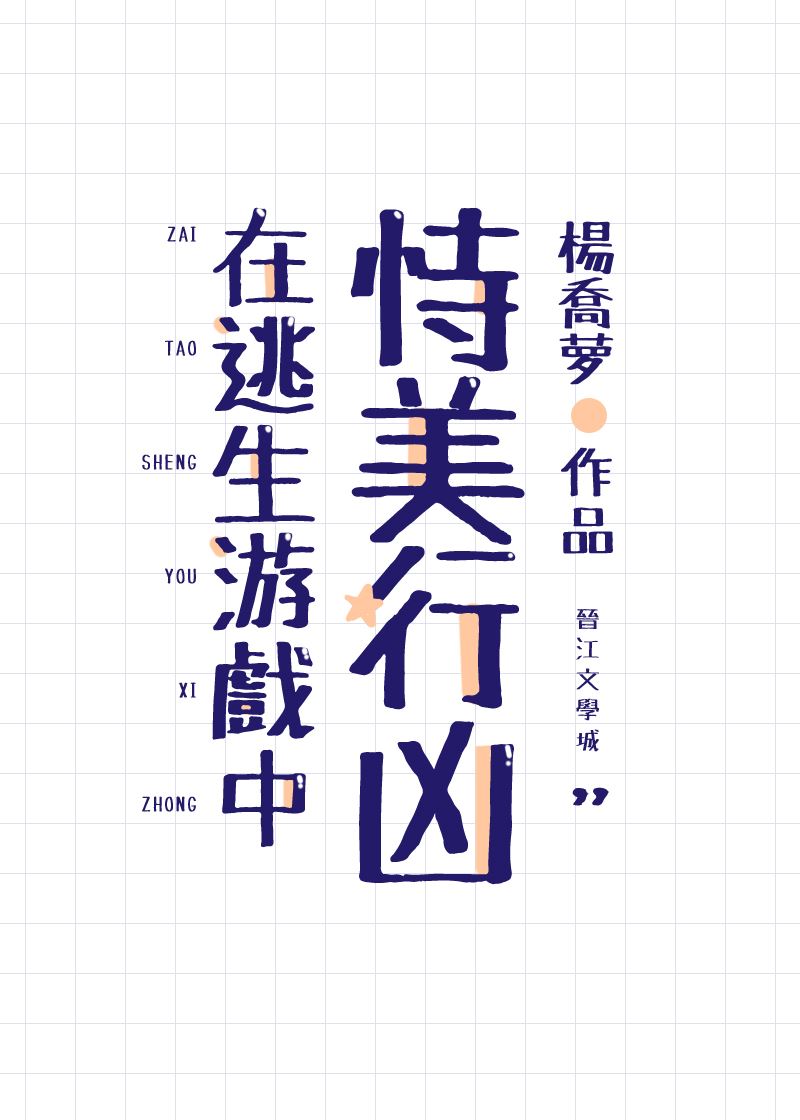
Relying on beauty to commit crimes in the Escape Game - Reviews

Relying on beauty to commit crimes in the Escape Game
+Add to Custom List
Sort
Add review
... Read More
I need to process what I just read. Li Xi is this incredibly powerful figure — he created a whole castle dimension, he's clearly a demon lord or something similar, he could probably level the building with a thought. And yet when Hest threatens Dan Zuo, his response isn't grand magic or dramatic threatening monologue. It's... he pulls out a piece of mint candy and slowly eats it to calm himself down. Think about what that says. This person who holds immense power still has to self-soothe. Still has triggers. Still has someone he'd burn the world over. The candy is such a quiet, intimate detail that somehow communicates more than any dramatic declaration ever could. And then the narration reveals his original plan: minor battles, find an elevator to the top, declare victory. Simple. Clean. But the twins messed it up, and now he's trapped in his own design. He's not even allowed to play because he built the game wrong. The irony is almost painful. "Duan Zhen and Dan Zuo were essential, one for breaking free from the main system quickly, the other as his boyfriend, both irreplaceable." TWO reasons. One functional, one emotional. And the way it's written — almost clinical, like he's listing variables — makes it hit harder. He wouldn't even admit to himself how much Dan Zuo means to him. I'm not okay.
... Read More
Something about the imagery in these chapters has been stuck in my head since I finished reading. Not the action — the IMAGES. The little ghost with completely black eyes, no whites at all. That's such a specific visual choice. It's not just 'scary ghost eyes' — it's eyes that have been REDUCED to pure void. And then the snake-headed woman statues, the ribbon-limbed people, creatures that blur the line between human and something else. The entire setting — this castle full of sculptures that look alive, passages that breathe, walls that produce faces — it all points to this idea that the boundary between object and organism is collapsing. Nothing is just furniture here. Everything could be watching you. I keep thinking about the phrase 'fused world' that Duan Zhen uses. Fused. Not merged, not combined — FUSED, like metal welded together under heat and pressure. Two worlds forced into one, and the result is this grotesque landscape where ghosts live in wardrobes and demons walk hallways and the architecture itself is hostile. And what about the tunnel that smells like something decomposing inside the walls? The bubbles bursting like boiling chemical liquid? It's as if the building is digesting them. The repeated imagery of enclosure — wardrobes, bathrooms, tunnels, sealed doors — it all creates this sense of being INSIDE something that might be ALIVE. That's not accidental. The author is building a world where nothing is safe because nothing is inert. Every surface could betray you. Every silence could be pretense. And the characters know it but keep moving forward anyway. That's the real theme here: not survival, but the refusal to stop moving even when the environment itself is your enemy.
... Read More
I've been turning over this line in my head for hours: "Death is not necessarily the end." On the surface, Li Xi says it almost dismissively. But the subtext is enormous. If death isn't the end inside the illusion, then what IS the end? What are they actually fighting against? The mission is to "break through the illusion and complete the mission" but the cost—the life force being absorbed, the dead captain, the growing strength of the formation—suggests this is about something deeper than just escaping a fantasy world. Li Xi also says something that really bothered me: "Those self-righteous people, in Li Xi's eyes, were no different from the Demon King, or even dirtier." This blurring of moral lines is central to everything. The people who set up this illusion, the people who trap others for their own purposes—they're morally equivalent to the villain everyone hates. The novel keeps asking: who's the real monster here? And then there's the name itself. The place they're trapped in is called the "hunting ground." Humans are hunting. But who is being hunted? The crew? The readers? Or is the whole thing a metaphor for the characters being trapped in a narrative they can't control? The repeated motif of illusions versus reality keeps coming up. The world looks real—lush leaves, fresh air, breathing room—but it's constructed on suffering. Isn't that how manipulation works in general? Something beautiful that feeds on your pain? I keep thinking about the ending: the sky tears apart, everything dissipates into light, and the system announces [Mission completed] in the most bureaucratic tone possible. After all that death and danger and emotional chaos, it's just... done. Like a checkbox. That anti-climactic finish feels intentional. Maybe the point is that survival itself is mundane. You make it out alive and what do you get? A system notification.
... Read More
The underground passage. That's what I need to talk about. Because the author did SOMETHING with that scene that I can't stop thinking about. 'The passage was very dark, and even the flashlight couldn't penetrate too far.' This one line. Just one line. And suddenly you're standing in that tunnel with them, can't see anything, can only hear footsteps and breathing. Then Li Xi ahead 'seemed like a shadow, elusive, and no matter how hard Duan Zhen tried, he couldn't get closer.' He's physically running toward him and still can't close the distance. That's not just atmosphere—that's HORIZON. The author is telling us something about Li Xi's nature without saying a word about it. And then the black mud. Not some grand monster reveal, not some dramatic transformation scene—just 'a humanoid creature opened its mouth wide, and in an instant, it seemed to turn into a black mud, engulfing him whole.' Two seconds. That's all it takes to lose a character. No warning, no fanfare, just darkness swallowing a person and then melting back into the ground like it never happened. The stone wall pressing against Duan Zhen's back later—'The stone wall was cold'—after everyone's gone. The coldness of that wall versus the warmth of the sunlight outside, the contrast between what they had and what they lost in one passageway. This world FEELS alive in the most terrifying way.
... Read More
The stakes escalation in these chapters is relentless and I'm here for it. We start with what seems like a low-key world-building detour—Li Xi chatting with a friendly mermaid about beauty standards and royal succession—and then suddenly there's blood in the water. Not metaphorical blood, actual fresh mermaid blood, and Li Xi literally licks his lips at the scent before immediately recognizing it would be stupid to kill in enemy territory. That moment tells you everything about where his priorities sit. The conflict between mermaids and humans has already started before Li Xi even arrives, which means the main system isn't waiting for participants to figure things out—it's actively pushing them toward collision. And then Li Xi surfaces and the humans immediately reach for weapons. Archer aiming, someone shouting, Duan Zhen holding them down. This is a room full of people with long-range combat abilities who just saw a beautiful creature emerge from the sea, and their first instinct is to shoot. The tension between Li Xi's mermaid form and the humans' fear/hostility is practically crackling. What makes this scene work so well is that the author doesn't over-explain anything. We don't get exposition about why the factions are fighting, we don't get a briefing on who started it. We just get bloody water, nervous archers, and two protagonists who clearly care about each other standing on opposite sides of a conflict they didn't create but are now trapped in. The question hanging over everything is: what was the main system's endgame for pushing integration so aggressively?
... Read More
Let me just talk about the worldbuilding in this chapter because it is WEIRD and I love it. We have a city that looks medieval— stone and wooden buildings, horseback riding, ducal mansions, fans and handkerchiefs covering faces— and yet there are ELECTRIC LIGHT SWITCHES. Duan Zhen finds a switch on the wall and the ceiling glows. There's a 'night pearl' on the ceiling that responds to it. And earlier, weapons that EMIT LIGHT during attacks. This is not a consistent technological era. This is something else entirely. The author is building a world where magical technology exists alongside feudal social structures, and the contrast is fascinating. The streets are CLEAN. That's a detail worth noting— in a medieval-looking city, clean streets imply infrastructure, plumbing, organized civic management. This isn't a dusty backwater kingdom. This is an advanced society pretending to be primitive, or perhaps a society that chose this aesthetic deliberately. And the most chilling image: 'the entire city seemed to be engulfed in darkness, with no glimmer of light visible' outside. Inside the mansion there are electric night pearls, but the city itself goes BLACK. What's happening out there? Is it a curfew? A spell? Something worse? The author's note mentioning this is 'batch 51' and that Li Xi's background will be revealed suggests this worldbuilding is part of a much larger puzzle. Every strange detail is a clue. The glowing weapons, the controllable night pearls, the dark city— they're all connected to whatever game Li Xi is playing.
... Read More
"Cold?" "It's okay." Two words. Two actual words from Duan Zhen and I'm already screaming internally. This man notices that the temperature dropped and his FIRST instinct is to ask if Li Xi is cold, not 'are we safe' or 'where's the enemy.' And then Li Xi secretly gives him a warmth gem? Like they're doing this quiet intimate thing in the middle of a deadly abyss and I cannot handle it. But the real moment— THE moment—is when Li Xi gets grabbed by the tentacle. Duan Zhen's entire world stops. His mind goes blank, he follows that sapphire-blue tail without thinking, and then he SHIELDS Li Xi with his own body facing the octopus mouth. This isn't calculated heroism, this is pure instinct. And Li Xi's internal reaction? He actually felt a bit repulsed by the wriggling tentacle but immediately followed up with 'Before Li Xi could be too happy about it'?? He was HAPPY about the embrace! The subtext is SCREAMING at me. These two are absolutely into each other and the author is just casually building to something huge.
... Read More
Okay so let me just say this scene with Duan Zhen tending to Li Xi's wounds is EVERYTHING and I need a moment. The fact that Duan Zhen — usually so rational, so composed — just literally acted on instinct and threw his body in front of an octopus to protect someone else? That's not a plot point, that's a confessions. And then Li Xi, this guy who apparently became a Demon King and has every reason to be cold and distant, is over here flapping his tail like a caught fish because SOMEONE TOUCHED HIS WAIST. I cannot get over the contrast. He tries to play it cool, says 'A kiss would make the pain stop' like it's no big deal, but then the SECOND Duan Zhen actually gets close he turns into the most embarrassing mess ever. The author wrote 'he was, in reality, a simple child' and I am HERE for it. He's this powerful demon king figure but the moment genuine tenderness happens he short-circuits completely. And Duan Zhen noticing all of that, feeling like he's 'bullied someone' just by applying medicine… man. Those two are going to be the death of me.
... Read More
The imagery in this section is actually cinematic. Let me paint it for you: the castle collapsing with a roar, dust and debris everywhere, Xia Qirong throwing explosives like a flower girl (funny detail but also weirdly beautiful in context), and then this transparent barrier forming around Li Xi so that nobody gets hurt. It's chaos contained, destruction controlled. And then — and this is the part that stuck with me — "countless spirits escaped the ruins, reaching for the sunlight before gradually dissolving." That line. That single line does so much worldbuilding. These aren't just bad guys getting defeated. These are SENTIENT BEINGS who were trapped in this system, and their release is treated with a kind of reverence. It's gorgeous and sad and quietly profound. The contrast between the violence of the battle and the gentleness of the spirits reaching for sunlight is exactly the kind of visual storytelling that makes a novel feel alive beyond its plot mechanics. And Clemens's entrance — smooth golden hair, gentle smile, red eyes reflecting sorrow — that's a different kind of visual tension. Beauty masking danger. The author knows how to make a setting feel like a character.
... Read More
Can we talk about how vividly this place comes alive? The description of the city—black curtains on shops with faint golden reflections of sunlight, alchemy stores with carved signs in local language, the vastness of it all—is just *cinematic*. I could see this in my head like a movie set. Every detail was placed with care. The fact that it's a tourist attraction now, built over ruins where Li Xi's family once lived, is such a haunting layer. The author didn't even have to say it outright—they just let us sit in that space with Li Xi and feel the weight of it. An empty city would remind him of pain, so he rebuilt it as something alive, something with "liveliness." That's not just worldbuilding, that's emotional architecture. And the alchemy explanation! "The idea of turning stones into gold is just a myth; if someone had that technology, why bother opening a shop?" This small detail tells us so much about the economy and culture of this world. These people aren't chasing fairy-tale wealth—they're running actual businesses, creating real goods, existing in a world that operates on its own logic. The way Li Xi describes watching the construction, making sure "they build it beautifully enough"—like a ghost haunting his own hometown's rebirth. There's something so poetic and devastating about that image. He's the demon king who rebuilt everything but can't live in it. The fear of him runs so deep that even in peace, he remains apart. This author doesn't just build worlds, they build souls into the architecture.
... Read More
The pacing in this passage is absolutely masterful and I want to discuss it because most writers would have rushed this scene. Let me walk through the rhythm. We start with dialogue—quiet, almost casual. Li Xi asking if Duan Zhen wants a relationship, the author's note breaking the fourth wall for a second. Then the physical escalation begins: Li Xi leans in, pins him down, gets closer. Nose almost touching. Sweet scent. Every beat is smaller and more intimate than the last. Then—STOP. Li Xi launches into this incredibly vulnerable backstory about his two hundred years of loneliness. The pacing literally SLOWS DOWN here. Long sentences, heavy emotional weight, the kind of passage that makes you put the book down and just breathe. And then, right when we're saturated with emotion, Li Xi breaks it with "Can't you give me even such a short period of time?" Tiny sentence. Desperate. And Duan Zhen's arm wraps around him. One physical action that says more than any dialogue could. Then the kiss sequence itself—stumbling, awkward, funny (the romance manual references!), then intense, then Duan Zhen flipping the script entirely. The author controls this like a conductor. Every paragraph shifts the energy. The only moment I wanted to skip was the author's note, which broke the immersion, but honestly it worked as comic relief before the emotional gut-punch. The chapter ends on a perfect cliffhanger—not a danger cliffhanger, but an emotional one. Where do they go from HERE?
... Read More
The light imagery in this chapter is loaded. Multiple times. First, Duan Zhen sleeps with the light on—that's his safety zone, his comfort mechanism. Then the undead are destroyed by Li Xi's light. But that light costs him everything. He collapses after using it. There's a theme here about power having consequences. Li Xi can save the city, but he pays for it. The light that destroys darkness also drains the one who wields it. And the half-transparent hand reaching through the wall—that's violation. The boundary between safe and dangerous dissolving. Walls aren't walls anymore. Nothing is secure. But then the light returns as protection. It's the same force, just redirected. That duality matters. Light isn't inherently good or bad—it's about who controls it and what they're willing to sacrifice.

Leave a comment

You must be logged in to leave comments. or
