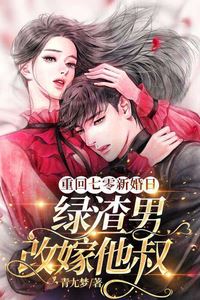
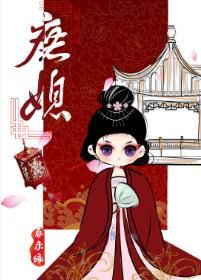
Rejected Marriage Proposal I Married a Cold-Faced Officer and Had Two Kids in Three Years
Novel Info

Summary

... Read More

Xu Nuo is a pediatrician from the twenty-first century who transmigrates into the body of a rural girl with the same name after the original host dies from a head injury. The original Xu Nuo was sold by her greedy second uncle and aunt for a fifty-yuan bride price to marry a mentally disabled man, while her cousin Xu Shan stole her childhood engagement contract and fled to Beijing to impersonate her. The contract promises Xu Nuo a marriage with Lu Cheng, the son of a high-ranking military general. Upon arriving in Beijing, Xu Nuo is nearly abducted by human traffickers but is rescued by Lu Chen, the cold and disciplined eldest son of the Lu family. She reveals her true identity to the Lu household, exposing Xu Shan as an imposter and reclaiming her rightful place.

The Lu family is initially divided by the deception. Lu Huaizheng, the patriarch, insists on honoring the engagement made by the previous generation, viewing it as a debt of gratitude owed to Xu Nuo’s mother, who once saved the life of Lu Cheng’s mother. Lu Cheng, however, is deeply resistant. He finds Xu Nuo’s rural background embarrassing and has no romantic interest in her. He attempts to drive her away through neglect and humiliation, hoping she will voluntarily break off the engagement. Xu Nuo, pragmatic and independent, is indifferent to his hostility. She views the marriage as a means to secure a city household registration and a stable livelihood, not as a romantic destiny.

A significant turning point occurs when Xu Nuo uses her medical knowledge to save Lu Cheng’s young daughter, Yi Yi, from acute laryngitis and airway obstruction. Her competence earns the respect of the family, particularly Cheng Wanying, who begins to see Xu Nuo as a worthy daughter-in-law. Meanwhile, Lu Chen’s perception of Xu Nuo shifts. He witnesses her resilience, intelligence, and moral character, including an incident where she saves a drowning girl by the river. Lu Chen, who has long been rumored to be indifferent to women, finds himself increasingly drawn to her, marking a subtle but profound change in his demeanor.

Xu Nuo faces bureaucratic hurdles in her job search, as she lacks the necessary urban registration to work in a hospital. She decides to leverage the engagement to obtain her city status, a decision that aligns with her goal of self-sufficiency. Lu Cheng, frustrated by her lack of interest in his social circle and her refusal to be manipulated, continues to act coldly. However, the family dynamics are shifting. Lu Huaizheng is pleased with Xu Nuo’s grace and capability, while Lu Chen begins to spend more time interacting with her, often under the guise of duty or casual assistance.

The narrative explores the tension between duty and desire within a military family. Xu Nuo’s modern sensibilities clash with the traditional expectations of the era, yet she navigates these challenges with wit and determination. She refuses to be a victim, standing up to her abusive relatives and her dismissive fiancé. The story sets the stage for a complex romantic development, as Lu Chen’s initial detachment gives way to genuine interest, while Lu Cheng remains stuck in his stubborn rejection of the arranged match. The central conflict revolves around Xu Nuo’s struggle for autonomy and identity in a new time and place, and the evolving relationships that challenge her emotional defenses.

As the story progresses, the romantic focus appears to shift from Lu Cheng to Lu Chen. The misunderstandings and rumors within the military compound suggest that Lu Chen’s growing closeness to Xu Nuo is noticeable to others, even if he remains stoic. Xu Nuo’s decision to stay in the Lu household, despite Lu Cheng’s hostility, indicates her strategic intent to build a life on her own terms. The engagement contract, once a symbol of obligation, becomes a catalyst for unexpected connections and personal growth for all parties involved.

Latest Release
DateGroupRelease
2026-08-11shanghai fantasy c35
2026-08-11shanghai fantasy c34
2026-08-11shanghai fantasy c33
2026-08-11shanghai fantasy c32
2026-08-11shanghai fantasy c31
2026-08-11shanghai fantasy c30
2026-08-11shanghai fantasy c29
2026-08-11shanghai fantasy c28
2026-08-11shanghai fantasy c27
2026-08-11shanghai fantasy c26
2026-08-11shanghai fantasy c25
2026-08-11shanghai fantasy c24

Community Reviews

Rating(3.8 / 5.0, 9votes)
5 stars
2(22%)
4 stars
3(33%)
3 stars
4(44%)
2 stars
0(0%)
1 stars
0(0%)

Popular reviews

... Read More
Second Aunt Liang Xiulan needs her own villain Hall of Fame. The woman opens with this absolutely unhinged pitch—"You won't find a marriage this good even if you search with a lantern!"—while everyone in the village knows the groom wets the bed and ate sheep droppings. The audacity. The sheer, unbridled confidence with which she lies. And then she gets a broom to the forehead and deserves every bump. But what makes the dialogue work isn't just the humor—it's the distinct voices. Xu Lao'er is all gruff practicality: "Like she gets a choice?" Liang Xiulan is performative sweetness masking venom: "We're all family." And Xu Nuo? Her voice shifts depending on who she's talking to. With her aunt and uncle, she's fake-sweet, playing the obedient granddaughter while secretly plotting her escape. When she asks for fifty yuan, she weaponizes their own greed against them. "You two sold me for five hundred yuan but can't even spare fifty?" That line is a knife. She doesn't yell, she doesn't cry—she just states a fact so absurd that they have to pay up. The traffickers' dialogue is also sharply written. The mother-in-law instantly switching to tears and blaming her son, the son slapping himself and confessing to crimes he didn't even commit—it's so perfectly practiced that you know these two have done this before. And Xu Nuo's reaction, that moment of genuine surprise: "Human traffickers could pull this kind of act?"—it breaks the fourth wall of her own world in the best way. The author's voice is wry, observant, and never takes itself too seriously. Which makes the serious moments hit even harder.
... Read More
I have to appreciate how the author handles pacing here. We start with a quiet family dinner—mother and son talking about the engagement, the backstory unfolding naturally through conversation. It's slow, intimate, almost domestic. Then suddenly Lu Cheng drags Xu Nuo out on this awkward "date" that's really just him trying to avoid her. The pacing shifts again when Lei Ming appears. The gossip, the teasing, the dramatic "Hah! Hohoho! Hahahahaha!"—it's lighter, faster, almost comedic. And then just when you think this is going to be a rom-com setup, BAM. Drowning girl. Life-or-death moment. The tension spikes so suddenly your heart stops. What I love is how the author uses scene transitions to control emotional rhythm. The department store is almost boring—just shopping and awkward conversation. But that boredom is necessary. It lets you breathe before the river scene hits. And the rescue itself? It's over quickly, but the aftermath lingers. Lu Chen's warning, Xu Nuo's realization that she almost died, the unspoken tension between them. The chapter ends on a question mark essentially—what happens now? What did Lu Chen's expression mean? Is he interested or annoyed? The author leaves you hanging just enough to make you open the next chapter immediately. Honestly, the pacing here is textbook perfect. It knows when to slow down for emotional beats and when to accelerate for drama. No filler, no dragging. Every scene earns its place.
... Read More
The stakes in these opening chapters are deceptively simple but brilliantly escalated. Xu Nuo is sold for 500 yuan to marry a man who can't tell sheep droppings from black beans. That's the baseline disaster. But the real tension comes from the fact that she's not just fighting the marriage—she's fighting the people who sold her, who lock her door at night, who plotted to starve her into compliance. Every scene raises the temperature. The croton seeds scene is peak conflict storytelling. She doesn't just escape—she makes sure they can't chase her. Three rounds of diarrhea, barely able to stand, and by the time they recover she's already on a train to Beijing. That's not just clever, that's strategic. And the stakes are real: if she gets caught, the marriage happens, and her life is over. She knows this. The reader knows this. The author never lets us forget it. Then there's the traffickers at the station—a completely different kind of threat, and Xu Nuo handles it with the same fierce intelligence. She uses the fruit stall owner as an accidental hostage-taker, creates chaos, and vanishes. But the real conflict is just beginning. She's running toward something, not just away. Lu Chen is waiting at the station, and the childhood engagement hangs over everything like a sword. Will he believe her? Will the Lu family accept her? What happens when Xu Shan's betrayal is discovered? The suspense is relentless, and the author never gives us a moment to breathe. I stayed up way too late reading this.
... Read More
Okay can we just talk about Old Madam Lin for a second? I know this is only chapter 1 and she's already dead, but the way she clung to Xu Nuo's hand, gasping out the same instructions over and over like her life depended on it—because it literally did—that hit me right in the chest. The original Xu Nuo was soft, timid, easy to push around. But this bond with her grandmother? That was real. And now the transmigrator Xu Nuo feels that same bond as her own, and she's honoring it by fighting back. That's not just plot convenience, that's emotional truth. And then there's Lu Chen. I only caught a glimpse of him at the train station in chapter 3, but already the electricity is there. Xu Nuo sprinting toward him like a lifeline, the way his eyes studied her—calm, assessing, not dismissive like everyone else. She asked for Lu Huaizheng and he didn't deny knowing him. That pause, that slight shift in his eyes? The author didn't need to write a single romantic line and I already felt something. This is going to be a slow burn, I can tell. The military compound setting, the arranged engagement, the power imbalance—all the classic ingredients, but executed with this sharp, unsentimental prose that keeps it from getting saccharine. What really got me though was Xu Nuo's internal calculation when she decided to stop fighting the traffickers. She realized yelling was useless, so she switched tactics entirely. That's not coldness—that's survival instinct honed by a lifetime of being powerless. And the fact that she still bit the man's hand and caused chaos? She didn't surrender. She adapted. That's the emotional core of this story: a girl who refuses to be a victim, even when the world keeps trying to make her one.
... Read More
That marriage contract. Old Madam Lin keeps referring to it as "the thing"—that thing holds your whole future. It's mentioned like a sacred object, a talisman, and when Xu Shan steals it and runs to Beijing, the theft isn't just plot mechanics. It's symbolic: the original Xu Nuo's voice, her future, her agency—all taken by the cousin who was bolder, faster, more ruthless. The transmigrator Xu Nuo wakes up to a life that was already stolen from her, and her entire arc is about reclaiming what was taken. But here's what's interesting: she doesn't actually need the contract. She knows Xu Shan already used it. And yet she goes to Beijing anyway. Why? Because the contract represents something bigger than a marriage arrangement—it represents the promise her grandmother made, the connection to a family she never knew, the possibility of a different life. The fact that she's going to find the Lu family even without the physical proof shows that her determination isn't about the paper. It's about ownership of her own destiny. The forced marriage to the fool is the inverse symbol—another kind of theft, this time of her body and her future, orchestrated by people who see her as a commodity for 500 yuan. Every time someone tries to control her, she finds a way to turn their own weapons against them. The croton seeds, the fifty yuan extortion, the staged suicide threat—these are all acts of reclamation. The story isn't just about a girl escaping an bad marriage. It's about a girl who refuses to be someone else's plot device.
... Read More
Okay, so let me just say—this plot twist with Lu Cheng claiming Xu Nuo is his brother's fiancée instead of his own? Absolute genius. Like, think about it. He's trying to avoid the engagement, but he can't just openly reject it because of the family obligation. So he drags his brother into it? That's either really clever or really messed up, and I love it. The backstory about the mother saving Cheng Wanying at the train station is heavy. A pregnant woman nearly getting hit by a train, saved by a stranger who later nursed her back to health after a miscarriage scare. That's the kind of life-debt that explains why the engagement can't be broken. It's not just some random promise—it's literally a debt of blood. Makes the whole situation so much more layered. And then the river scene! Xu Nuo almost gets dragged into the water saving a stranger, and who shows up to save her? Lu Chen. The cold-faced brother she's supposedly engaged to. The irony is delicious. Now there's a whole tangled mess of relationships developing. Is Lu Cheng trying to push her away, or is he just embarrassed? And what's with Lu Chen's expression when he grabs her hand? Something's going on there. The author really knows how to stack conflicts. Family duty vs personal desire, public perception vs private truth, and now a rescue scene that could go either way romantically. I'm hooked.
See all reviews

Characters

See all characters

Custom lists

See all custom Lists