Summary

... Read More

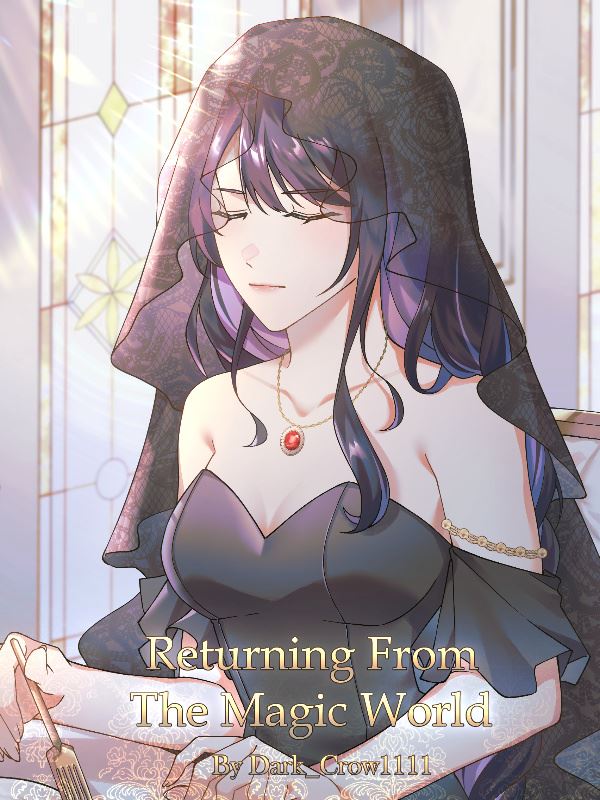
Song Zhimian, a strategic consultant from the modern era, transmigrates into the body of a neglected noblewoman in the Dayu Dynasty. The original host, the legitimate eldest daughter of the Zhongyong Hou Mansion, died of rage after discovering her father’s treachery. Song Kaishan, the Marquis, had colluded with a prince to murder his own brother, Song Kaiyuan, and his entire family in Beidi. To secure his position, Song Kaishan forced his daughter to marry a violent widower who had already killed four wives. Upon waking, Song Zhimian found herself in a dire situation with no allies, only a young maid named Cuiguo, and a stepmother, Madame Ding, who was plotting to steal her mother’s substantial dowry.

Realizing that suicide would only benefit her abusers, Song Zhimian resolved to survive and exact revenge. She identified two critical pieces of information: the imperial palace was recruiting Female Officials, and the Directorate of Supervision was managing fundraising efforts for the war in Beidi. Understanding that her father’s influence would likely block her application for a palace position, she chose a different path. She visited the Directorate of Supervision and donated her remaining silver and a valuable jade hairpin. When she claimed to have a donation worth over ten thousand taels that required the Minister’s personal attention, she caught the interest of Ye Yunshu, the formidable Minister of the Supervisory Department, who was present with Prince Qi.

Song Zhimian revealed a hidden ledger in a wooden box containing the complete inventory of her mother’s dowry, valued at one hundred thousand taels. She offered to donate the entire dowry to the war effort in exchange for Ye Yunshu’s protection. Ye Yunshu agreed to help her within the bounds of the law. Meanwhile, Madame Ding and Song Zhiqing believed Song Zhimian was merely trying to build a reputation and planned to let her marry the widower, intending to intercept or steal the dowry en route. They were unaware that Song Zhimian had already secured imperial backing.

The Directorate of Supervision, led by Wen Shaoqing, arrived at the mansion to bestow an imperial plaque praising Song Zhimian’s righteousness. During the inventory of the dowry, it was discovered that most items had been stolen or misappropriated by the household, including the coffin Madame Gu had prepared for herself. Ye Yunshu’s subordinates demanded that Song Kaishan compensate for the missing items in silver, giving him three days to pay eighty-six thousand five hundred taels. Panicked, Song Kaishan was forced to borrow money from his political benefactor, the Prince, and his own family, severely damaging his financial stability.

Song Zhimian’s actions disrupted her family’s plans completely. The imperial plaque and the public donation of her dowry made her a celebrated figure, complicating her father’s ability to force her into the unwanted marriage without political repercussions. With the dowry gone and her family in debt, Song Zhimian had effectively severed their control over her assets while placing herself under the protection of the imperial court. She awaited the next phase of her strategy, knowing that her path to freedom was now intertwined with the political machinations of the Directorate and the Prince.

Novel Items

More
Document
A detailed record of Xia Xing'er's dowry brought by Chunliu. Shows that over three years, 45,843 taels, 2 mace, and 45 wen in cash alone were used to subsidize the General's Manor. The shops, estates, and items her parents privately gave her remain untouched. Xia Xing'er uses this to plan reclaiming her belongings.
Money
The Gu family discusses setting aside 1,000 yuan as Ruoyan's dowry. Gu Yizhi initially refuses and wants to handle it himself, but his mother and sisters-in-law insist. His sisters-in-law each received only fifty yuan when they married.
Military_installation
A military camp commanded by Song Kaishan in the capital. It gives him significant power and connections, including control over the city gate guards and the ability to arrange for bandits to rob the dowry.
Honor
A posthumous title granted to Song Kaiyuan by the Prince's petition. It was part of a bargain where the Prince ensured Song Kaiyuan would receive imperial honors so that the rewards would fall to Song Kaishan's branch of the family.
Jewelry
A crystal clear and flawless white jade hairpin with a lotus-shaped carving at the top, worth a thousand taels. Gu Nanyin bought three of them — one for Qin Xue, one for Qiuzhi, and one for Baishao. It was the first time Qin Xue ever received a personal gift, deeply moving her.
Artifact
A jasper incense burner being examined by the female chief clerk at the Directorate of Supervision. It was appraised at five hundred taels of silver.
Latest Release
DateGroupRelease
2026-08-11shanghai fantasy c10
2026-08-11shanghai fantasy c9
2026-08-11shanghai fantasy c8
2026-08-11shanghai fantasy c7
2026-08-11shanghai fantasy c6
2026-08-11shanghai fantasy c5
2026-08-11shanghai fantasy c4
2026-08-11shanghai fantasy c3
2026-08-11shanghai fantasy c2
2026-08-11shanghai fantasy c1

Community Reviews

Rating(3.7 / 5.0, 18votes)
5 stars
3(17%)
4 stars
6(33%)
3 stars
9(50%)
2 stars
0(0%)
1 stars
0(0%)

Popular reviews

... Read More
Let me just say this—this author knows how to pace a chapter like a boss. The structure from Chapter 6 to Chapter 7 is a masterclass in tension building, and I want to break down why it works so well. It starts almost peacefully. Song Zhimian sleeps soundly behind a bolted door. The next morning, magpies appear—everyone's happy, Song Kaishan is overjoyed, Madame Ding is making pleasant comments about the Marquis's promotion. The pacing here is deliberately slow, almost deceptively calm. You think everything is fine, right? Then—BAM—the steward runs in saying the Directorate of Supervision has arrived. The shift in tone is instantaneous. Song Kaishan's expression darkens. His internal monologue reveals the true terror of dealing with the Directorate of Supervision versus the Censorate. The pacing accelerates from there. The reveal about the plaque, the crowd's speculation, the question of how much she donated—each beat raises the stakes higher. When Wen Shaoqing announces the hundred thousand taels, the entire scene explodes. And the chapter ending? Chef's kiss. Song Kaishan orders Madame Ding to replace valuable items with worthless ones to make up the numbers. The text cuts off mid-sentence about jade ornaments and dec—leaving us hanging. That cliffhanger is exactly what makes you immediately open the next chapter. The pacing never drags. Even the exposition about Dayu's laws regarding dowries and the deceased mother's property is delivered through dialogue, not narration. Every scene advances the plot or deepens character. Nothing feels wasted.
... Read More
This book is obsessed with the dowry list and I think that's the point. On the surface, it's just property — farmlands, estates, jewelry, headpieces. But the dowry represents so much more. It's the mother's legacy, the only thing standing between Song Zhimian and total destruction. It's also a symbol of the legal system in this world — Madame Ding literally says, "The laws of Dayu stipulate that a husband's family cannot privately seize a married woman's dowry." The law exists, but it's only as strong as the woman who can enforce it. And right now, Song Zhimian has no power to enforce anything. The dowry list is also tied to the aunt's promise — "I will definitely check every single item against this list." Two women, separated by death and distance, both fighting for the same girl's future through the same piece of paper. And then there's the deeper symbolism: the dowry is what makes Song Zhimian valuable in this world. Not her beauty, not her status as legitimate daughter, but the material wealth her mother left her. Her father sells her to a widower. Her stepmother plots to steal her inheritance. Her sister covets what she cannot have. She is, in every sense, a commodity. But the moment Song Zhimian decides she'd rather destroy the dowry than let them have it — that's the moment the symbolism flips. The dowry becomes her weapon instead of her cage. "She would rather destroy it than let that ungrateful father and his insane family have a single cent." That line changed everything for me.
... Read More
Okay, I need to talk about Madame Ding because WOW. This woman is genuinely terrifying and I love how the author writes her. She's not some cartoonishly evil stepmother — she's calculated, cold, and genuinely thinks she's being smart. The moment where she casually explains her plan to let bandits rob Song Zhimian's dowry while sipping tea? Chilling. And then she says to her daughter, "You and your brother will split it equally. I won't shortchange either of you." Like she's discussing a business transaction, not the destruction of an innocent girl's life. Meanwhile Song Zhiqing is just... happy about it. She's not even a villain in her own right, just a spoiled, jealous little girl who thinks winning means someone else loses. The contrast between these two is fascinating — Madame Ding is the real threat, the one with actual power and cunning, while Zhiqing is just along for the ride. And Song Kaishan? The father? He's the worst kind of man — willing to sell his own daughter to a violent widower just to stay in favor with the Prince. The author really makes you understand that in this world, family is just another currency. "Your father commands the Xunfang Camp. Finding someone in the capital would be easy for him." That line from Madame Ding really drives home how trapped Song Zhimian is. She's not just emotionally isolated — she's physically trapped too. No wonder the original host literally died of rage.
... Read More
Let me be honest — the first chapter is a LOT of exposition. Song Zhimian wakes up, processes her transmigration, learns about the world, the family dynamics, the political situation, the murder of her aunt's family, the impending marriage... it's a lot to take in at once. But here's the thing: it doesn't feel boring. It feels urgent. Because she's processing it in real time, and so are we. The author makes a smart choice by having the original host literally die from the emotional overload — that's a brilliant narrative device because it means the new Song Zhimian has to start from zero, which creates immediate tension. Then chapter two shifts gears completely. We go from internal monologue and backstory to active scenes — Song Zhimian going to confront Madame Ding, the carriage ride, the teahouse. The pacing accelerates naturally because she's no longer just absorbing information, she's making moves. I particularly appreciated how the author handles the reveal about the dowry. We don't get it all at once — first Madame Ding mentions it casually, then Song Zhiqing notices it, then we get the full picture of the theft plot. It's layered information delivery that keeps you engaged. The chapter ends on a note that makes you want to keep reading immediately. Song Zhimian just gave the coachman FIVE taels instead of two — that's a small detail but it tells us everything about how her priorities are shifting. She's thinking several steps ahead now.
... Read More
Okay so this whole sequence is just *chef's kiss* plotting. Song Zhimian sits there looking like the calmest person in the room while her father and stepmother are absolutely sweating bullets, and I love it. The setup is so elegant — she lets them think they've won by forcing her into this marriage, but really she's been three steps ahead the entire time. The moment Wen Shaoqing pulls out that dowry list with the official seals is pure satisfaction. Like, Madame Ding's face must have been priceless when she realized the government already had a publicly registered inventory. And the coffin detail? That's the kind of thing that makes you go 'wait, they stole a COFFIN?' which is both horrifying and kind of darkly funny. What I find really clever is how the plot threads connect. Song Zhimian knew her dowry wouldn't survive intact — either it would get 'lost' en route or her father would redirect it to curry favor with someone. So instead of fighting to keep it, she weaponizes the donation itself. By making it official through the Directorate of Supervision, she turns her own loss into a weapon against her family. The math is brutal: 86,500 taels, three days to pay. Her father has to go BORROW from the Prince. The whole power dynamic of the household just flipped in one afternoon. And the ending with Ye Yunshu and Prince Qi Xiao Huaijin discussing it? That's the narrative equivalent of a wink to the audience. 'She needed to step out, I needed the fundraising done, everyone wins.' It's rare to see a plot this tight where every character's motivation aligns without anyone actually losing. The only people losing are Song Kaishan and Madame Ding, and honestly? They deserve it.
... Read More
I'm not okay. I'm genuinely not okay after reading about the Third Madam. This woman never even appears in the story — she's dead — but she's the most alive character in these chapters. The author does this incredible thing where she only shows us the aunt through memories and a single promise, and yet that promise carries more emotional weight than any scene could. "Mian-er, don't be afraid. Your aunt is here for everything! I will protect you!" And then the dowry list. Oh god, the dowry list. This woman spent her last moments thinking about making sure her niece got what was hers. She knew her brother-in-law was dangerous. She knew the system was rigged. And she still made a plan. Song Zhimian breaking down over this memory — I felt that in my chest. The way the author writes it, it's not just grief for the aunt who died. It's grief for every woman who tried to protect someone in a world that didn't care. "If one item is missing, I'll make sure your father and that woman lose face." This woman was fighting from beyond the grave. And now Song Zhimian has to carry that same fire. The transformation from "I want to die" to "I will destroy them" happens so quietly but it hits like a truck. I kept re-reading that whole section about the aunt's family being murdered — father and son killed, entire household wiped out, and the brother who benefited from it all just... smiled and took the rewards. It made me so angry I had to put the book down for a minute.
See all reviews

Characters

See all characters

Custom lists

Oops…There is nothing here.