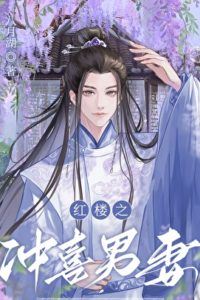
Red Chamber: The Cleansing of Male Wife
+Add to Custom List
Genres:
Novel Info

Summary

... Read More

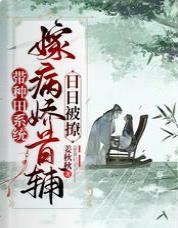
Ye Xiangwan, a modern man from Huaxia, dies and transmigrates into the body of an orphan with the same name. Upon waking, he finds himself in a bridal sedan chair, dressed as a bride in a ghost marriage ritual. The Jia family, a powerful noble household, brought him in to marry their unconscious Second Young Master, Jia Lian, whose birth chart was deemed necessary to suppress a fatal ill fortune. Ye Xiangwan, initially confused and disgruntled by his role as a male wife, discovers he has awakened a System known as the Wool-Scraping General Store. This system grants him a newbie gift pack containing a Power Pill that significantly increases his physical strength, unlimited dental hygiene supplies, a medical kit, and the ability to understand animals. Armed with these advantages and a pragmatic mindset focused on survival and profit, Ye Xiangwan navigates the treacherous hierarchy of the Rongguo Estate.

The core conflict arises immediately upon Ye Xiangwan’s arrival. He is subjected to the disdain of the household’s servants, particularly a maid named Ningbi, who resents his elevated status despite his humble origins. Ye Xiangwan asserts his authority by punishing Ningbi for her insolence, establishing a firm presence in the Second Master’s courtyard. Meanwhile, Jia Lian, who has been unconscious for weeks, suddenly awakens after Ye Xiangwan pinches his face. Jia Lian, a man from a past life who remembers his family’s downfall due to debt and scandal, is horrified to learn he has married a man. He attempts to seek a divorce from the Matriarch, Lady Jia, but is refused because Taoist Tianquan’s prophecy dictates that Ye Xiangwan’s presence is essential for his continued health and fortune.

Jia Lian’s resistance is further complicated by his lingering affection for his past-life love interest, Feng Jie, and his desire to maintain his dignity as the head of the household. He clashes with Ye Xiangwan, who is equally unwilling to submit to a husband he finds frivolous and flirtatious. Their relationship is marked by physical confrontations where Ye Xiangwan’s enhanced strength easily overpowers Jia Lian’s weak constitution. Despite their mutual animosity, they are forced to coexist. Jia Lian tries to assert dominance by flirting with his maids, but Ye Xiangwan intervenes, leading to a tense negotiation where they agree to respect each other’s boundaries in public while maintaining a cold distance in private.

A key turning point occurs when Ye Xiangwan decides to leverage his system’s gifts for financial gain. He sells his modern toothpaste to Jia Lian for a high price, exploiting the latter’s curiosity and desire for novelty. Jia Lian, in turn, attempts to resell the product to the Matriarch, Lady Jia, to curry favor and potentially gain leverage. Ye Xiangwan joins him, and together they successfully pitch the toothpaste to Lady Jia and her favorite grandson, Baoyu. This collaboration marks a shift in their dynamic, as they realize their complementary skills: Ye Xiangwan’s access to modern goods and Jia Lian’s social standing within the estate. They agree to split the profits, forming a tentative business partnership.

The story direction moves toward Ye Xiangwan’s long-term goal of escaping the doomed Jia family. He is aware of the family’s impending ruin and intends to accumulate wealth to leave the estate as soon as possible. However, he must first deal with his original family’s relatives, who sold his former home and abandoned him, and navigate the complex political intrigues of the Rongguo Estate. As he integrates into the household, Ye Xiangwan uses his system to improve his status and gather resources, while Jia Lian attempts to alter his fate by avoiding the mistakes of his past life. Their forced marriage becomes a strategic alliance, blending Ye Xiangwan’s modern pragmatism with Jia Lian’s knowledge of the household’s internal dynamics, setting the stage for their future endeavors within the declining noble family.

Latest Release
DateGroupRelease
2026-08-11shanghai fantasy c136
2026-08-11shanghai fantasy c135
2026-08-11shanghai fantasy c134
2026-08-11shanghai fantasy c133
2026-08-11shanghai fantasy c132
2026-08-11shanghai fantasy c131
2026-08-11shanghai fantasy c130
2026-08-11shanghai fantasy c129
2026-08-11shanghai fantasy c128
2026-08-11shanghai fantasy c127
2026-08-11shanghai fantasy c126
2026-08-11shanghai fantasy c125

Community Reviews

Rating(3.7 / 5.0, 10votes)
5 stars
2(20%)
4 stars
3(30%)
3 stars
5(50%)
2 stars
0(0%)
1 stars
0(0%)

Popular reviews

... Read More
Okay so let me just say—this chapter is a masterclass in how to weave comedy, character, and rising tension into one seamless package. The whole toothpaste scheme is genuinely hilarious. Jia Lian telling Granny Jia the box cost ten taels when we all know he's inflating it, and then Granny Jia—bless her shrewd old heart—pretending to believe it and handing over fifteen taels anyway. Ye Xiangwan's internal reaction, "She hadn't expected Jia Lian to be so shameless—he was practically doubling the price!"—that's the kind of line that makes you snort-laugh. And then the split: Jia Lian, ever the negotiator, gives her eight out of fifteen, proud of himself for being generous. Classic him. But then—BAM—the system shop reveal. Condoms. Lubricating balm. Women's underwear. Ye Xiangwan's reaction is priceless: "What kind of cursed luck is this?!" The system's explanation about contraceptives being useful and these products being historically profitable is such a dry, matter-of-fact delivery that it completely undercuts the absurdity. And honestly? It works as a plot device. It's not just comedic relief—it's setting up Ye Xiangwan's economic independence arc, which is clearly the larger storyline. Then the Yingchun visit, the Jia Cong visit with Nursemaid Li's obvious gold-digging, and finally—Jia Lian stumbles in drunk. The slap at the end. "Smack! Jia Lian howled in pain, clutching his face and bending over." I literally gasped. That's not just a scene ending—that's a power shift. The chapter moves from comedy to a genuinely tense, almost dangerous moment, and I was not ready for that tonal pivot. The plot here is doing a lot of heavy lifting without feeling crowded.
... Read More
Ye Xiangwan's voice is what makes this read. The way he thinks and speaks is so distinct—you immediately know it's him on every page. 'What a joke. He was now a master of this household. A maid trying to step on him to climb up the ladder and humiliate him in public? Not on his watch.' That's not just dialogue, that's a personality. And the contrast between his internal voice and his external politeness is delicious. He's smiling at Ning Bi while internally roasting her. 'Letting people take an inch would only make them grab a mile—and in the end, he'd be the one suffering for it. He wasn't doing charity work here.' The author's narrative voice has this great dry humor woven through it. When Ye Xiangwan says 'Sometimes having too many in-laws is just too much trouble' after being told he still has to visit the Old Madam—that's comedy gold delivered with perfect timing. And the dialogue between Lady Jia and Lady Wang at the end? Sharp as knives. 'Do you really expect him to live the rest of his life with a man who can't bear children?' That line hits different because it's said casually, like it's the most obvious thing in the world. The secondary characters also have distinct voices. Ning Bi's fake politeness, Qing He's cheerful deference, Hong Zhu's quiet competence, Lady Jia's grandmotherly warmth that shifts to cold fury in one breath. Every character sounds like themselves. No one sounds like the author forcing words into their mouth.
... Read More
I've read a lot of transmigration stories and I've never seen anyone handle a wedding night this way. Ye Xiangwan gets drunk, eats chicken, kicks off his shoes, nudges the unconscious groom over, and then—this is the part that got me—pinches his face and says 'damn bro, you're handsome' and leaves an oily lip mark. That's not predatory, that's just genuinely confused and drunk and weirdly wholesome in a chaotic way. He pats the guy's cheek and says 'sleep tight, g'night' and then passes out. The emotional complexity here is wild. On one hand, he's completely indifferent to this marriage. He's not romanticizing it. On the other hand, he's physically vulnerable, sleeping in the same bed as a stranger, in a body that's apparently incredibly attractive, in a household that clearly doesn't want him. And then the morning after, the maids are grooming him, calling him Second Young Madam, and he has to perform this role while internally screaming. The most emotionally charged moment for me though was Lady Jia's scene. She was genuinely warm, almost grandmotherly, giving him the red envelope, saying 'we won't let you go without food or comfort.' And then the SECOND she's alone, she's cursing her own grandson. That whiplash—how do you trust anyone in this house? The emotional tone of this story is this weird mix of dark humor and genuine loneliness. Ye Xiangwan is alone in a way that most transmigrators aren't. He didn't get a glorious rebirth. He got a ghost marriage and a house full of people who see him as disposable.
... Read More
The pacing in these first chapters is actually really well controlled. You start with immediate chaos—wedding night, drunk protagonist, unconscious groom, system binding—and then it deliberately slows down. The morning routine scene with the maids is almost mundane, but that's the point. It grounds the absurdity in daily life. Then you get the confrontation with Ning Bi, which is a quick burst of tension, and then the visits to the Master, Madam, and Old Madam. Each visit escalates slightly. The Madam refuses to see him (rejection), the Master is too 'tired' (more rejection), and then Lady Jia is warm but clearly calculating (the real threat). The structure is basically: establish the absurd premise → show the protagonist adapting → reveal the hostile environment → drop a major twist at the end. And that ending! Lady Jia's mask falls off and suddenly we understand the entire power structure. The Wang family marriage proposal is dead, Feng'er will be a concubine at best, and Ye Xiangwan is permanently stuck with Jia Lian. That's a cliffhanger that doesn't feel manufactured—it feels earned. The author knows when to speed up (the Ning Bi confrontation) and when to linger (the dressing scene, the family visits). There's no filler here. Every scene either develops character, advances plot, or builds atmosphere. Though I will say, I kind of wish we got more of Ye Xiangwan's internal monologue about his past life. What was he before? Why does he care so much about maintaining authority? Those gaps are intriguing but I want to know more.
... Read More
There's so much going on beneath the surface of this story and I love it. The ghost marriage itself is the central symbol—marriage as a ritual, not a relationship. Ye Xiangwan isn't marrying Jia Lian for love or even companionship; he's marrying him to suppress bad fortune. He's a human talisman. The red envelope Lady Jia gives him is supposed to be a welcome gift but it's really a leash. 'We won't let you go without food or comfort' sounds generous but it's a reminder that everything he has comes from their mercy. The color red throughout this text is interesting—red envelopes, red-lit rooms, the wedding night all bathed in red. In Chinese culture, red is auspicious, but here it's also the color of blood, danger, and ritual sacrifice. Ye Xiangwan's body is the site of this ritual. His masculinity is being erased and replaced with 'Second Young Madam,' but he refuses to fully accept it. The waist measurement scene—'Not even two palm-widths'—is both comedic and deeply symbolic. His body doesn't match his identity, and that dissonance is the whole premise. The system binding while he's unconscious is another layer. He didn't choose this. None of this was chosen. And yet, the fact that he's already asserting authority over his maids and navigating family politics shows he's not going to be a passive victim. The theme here is about agency in a world that keeps trying to strip it away. How much of yourself do you sacrifice to survive, and at what point do you fight back?
... Read More
I need to process what I just read because this chapter emotionally whiplashed me and I'm not mad about it. Let's start with the softest moment: Yingchun giving Ye Xiangwan that light green embroidered sachet with bamboo stalks. "Simple and refined." She's a child, she doesn't fully understand social dynamics, but she knows enough to bring a handmade gift. And Ye Xiangwan's reaction—genuinely delighted, despite having no gift to give in return—he fumbles through it, pulls out silver, and tries to make it feel like a proper exchange. The line that got me: "Yingchun felt the weight of the silver in her palm and looked at Ye Xiangwan, who had given it to her despite his reluctance." She sees through it. She knows he's performing, but she also knows he's trying. "Her eyes reddened with emotion." A child feeling seen and valued by someone who barely knows her. That hit harder than it should have. Then the system scene—Ye Xiangwan's frustration with his cursed luck, the system's clinical explanation, and his resigned sigh. There's something almost lonely about that moment. He's alone in this body, alone with this system, making plans no one else can understand. And then—the slap. "Beautiful? Wife? Kiss me, huh? I'll give you a kiss, you drunk, shameless fool!" The shift from comedy to genuine revulsion to violence in three lines. Ye Xiangwan doesn't just reject Jia Lian—he humiliates him. And the chapter ends on that note of tension, with Xing'er and someone outside the door reacting. I am so here for this emotional chaos.
See all reviews

Characters

See all characters

Custom lists

See all custom Lists