Summary

... Read More

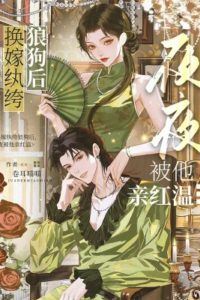
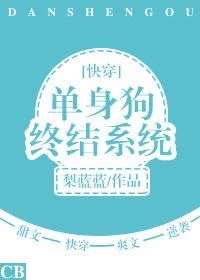
Bai Sijun is a twenty-six-year-old assistant editor at Hongtu Culture, a private publishing company. After four years of performing menial tasks such as managing office supplies and coordinating minor logistics, he passes the intermediate publishing professional exam, a milestone that qualifies him for a promotion to full editor. His personal life, however, disintegrates simultaneously. He learns via text message that his girlfriend, Xia Ai, is marrying another man introduced by their families. Their relationship had stalled due to Bai Sijun’s long working hours and emotional neglect, leaving him isolated and questioning his worth as both a partner and a professional.

At work, Bai Sijun is assigned to manage Mei Yuchen, a celebrated mystery writer who won the prestigious Starwood Award three years prior. Since then, Mei Yuchen has failed to deliver his promised manuscript, breaching his contract by two years and ignoring all communication from previous editors. The chief editor gives Bai Sijun a strict three-month deadline: if the manuscript is not produced, Bai Sijun will be dismissed. Reluctantly accepting this impossible task, Bai Sijun travels to Mei Yuchen’s suburban villa, hoping to establish a professional rapport and understand the writer’s creative block.

Mei Yuchen is elusive, arrogant, and deliberately difficult. During their first visit, he dismisses Bai Sijun’s professional overtures and instead subjects him to invasive questions about sex and intimacy, testing his boundaries and confidence. Bai Sijun, inexperienced and eager to prove himself, attempts to educate himself on literature and human nature by reading works like those of Junichiro Watanabe. His persistence eventually yields a response; Mei Yuchen invites him to the villa again, revealing a complex personality that oscillates between hostility and unexpected kindness. The dynamic shifts when Mei Yuchen calls Bai Sijun late at night during a rainstorm, only to reveal it was a test of Bai Sijun’s dedication. Although Mei Yuchen mocks his effort, he subtly offers comfort regarding Bai Sijun’s fears about his career, hinting at a deeper connection.

A significant turning point occurs when Bai Sijun stays overnight at the villa. The next morning, he discovers Mei Yuchen has been typing furiously in his study. Mei Yuchen reveals he wrote ten thousand words overnight but shows Bai Sijun an explicit erotic story centered on male homosexuality, which was inspired by watching Bai Sijun shower. This revelation shocks Bai Sijun, exposing Mei Yuchen’s sexual orientation and challenging Bai Sijun’s own heteronormative assumptions. Despite the awkwardness, Bai Sijun remains professional, though he flees the situation in panic upon returning to the city.

Back at work, Bai Sijun faces a crisis when a book signing event for another author, Qi Jun, is jeopardized because wet books were moved to a leaking warehouse. Taking responsibility, Bai Sijun spends the night sourcing replacement inventory and writing a compelling introduction. The event is a massive success, leading to his official assignment as Qi Jun’s editor and securing his job. Empowered by this victory, Bai Sijun re-engages with Mei Yuchen via WeChat. Mei Yuchen agrees to discuss his new project but asks Bai Sijun to share personal stories for inspiration. Bai Sijun opens up about his father, who abandoned the family for a new life in Russia. As he reveals these private details, a tentative trust forms between the two, suggesting a shift from a purely transactional editor-author relationship to one involving personal intimacy and mutual understanding.

Latest Release
DateGroupRelease
2026-09-26knoxt c5
2026-09-26knoxt c4
2026-09-26knoxt c3
2026-09-26knoxt c2
2026-09-26knoxt c1

Community Reviews

Rating(4 / 5.0, 232votes)
5 stars
76(33%)
4 stars
80(34%)
3 stars
75(32%)
2 stars
1(0%)
1 stars
0(0%)

Popular reviews

... Read More
Mei Yuchen's dialogue in this section is absolutely chilling in its precision. 'Come over.' That period. Bai Sijun literally analyzes it—'no room for refusal, no room for negotiation. It was like a command.' And yet, here's the thing: it's also efficient. It's also honest. Mei Yuchen doesn't preface it with small talk or softeners because he doesn't need to. He wants Bai Sijun there, and he says so. Compare that to Bai Sijun's internal monologue about WeChat punctuation—how he changes a period to a comma, adds 'Your editor,' hesitates, overthinks. Their communication styles are fundamentally different. Mei Yuchen speaks in imperatives; Bai Sijun speaks in qualifiers. That gap is where the entire dynamic lives. But then Mei Yuchen does something rare for him—he asks a question that isn't practical. 'What about your own story?' And when Bai Sijun shares about his father, Mei Yuchen doesn't offer sympathy or advice. He just says, 'Really? I feel like she might still miss him.' Four words. No pity. Just an observation that cuts straight to the truth of the situation. And Bai Sijun's line—'Maybe because the women in Russia are prettier than my mom'—that self-deprecating joke masking genuine hurt? That's voice. That's a character who deflects with humor because the alternative is sitting with the feeling that his father chose someone else over them. Every line here sounds like the person speaking it. No one sounds like everyone else.
... Read More
Let me just say — the phone call from Mei Yuchen is one of the funniest and most relatable scenes I've read in a while. Bai Sijun is out having a nice lunch with a new junior, everything is going smoothly, and then POOF — his entire Saturday gets hijacked by a lazy-voiced author who can't be bothered to order takeout himself. What I love about this plot beat is how it mirrors real life. You know that moment when you're already deep into something pleasant and someone just… drains your autonomy? That's exactly what happens here. And Bai Sijun's reaction — the internal screaming, the "Was this person limbless?" energy — is SO accurate. But here's the thing that made me actually respect the writing: Bai Sijun doesn't stay angry. He rationalizes. He walks himself through Mei Yuchen's possible perspective — that Mei might have waited since morning, that he might have felt abandoned — and then decides he's overthinking it. The whole spiral from "I'm not going" to "I'm already there at noon with groceries" happens so naturally. It's not that he caves because he's weak; it's that he caves because he's human and maybe, just maybe, part of him wanted an excuse to go. The curry scene is also brilliant plotting. A simple kitchen moment where he cuts his finger, and suddenly the whole power dynamic shifts. Mei Yuchen drops his teasing act and becomes genuinely concerned. The expired band-aid detail is chef's kiss — it's domestic chaos at its finest. Someone keeps expired medical supplies in their house but apparently never checks them. This is a man whose idea of self-care is existing lazily on a sofa. So the plot arc here goes: interruption → internal conflict → action (leaving Liang Ru) → physical mishap → caretaking → resolution (delicious curry). Four beats compressed into maybe two pages, and each one serves character development. Nothing is wasted.
... Read More
Okay so this chapter had me literally screeching because LIANG RU SAW IT FIRST. Not Bai Sijun — not even after all those late nights and whispered conversations — but the intern who was there for twelve seconds and went 'yeah he's looking at you like you're the only person in the room.' And the funniest part is Bai Sijun being all defensive like 'I didn't notice' when honestly the narration itself is dripping with observations about how Mei Yuchen behaves only around him. The man asked to NOT go home. That's not subtle. That's not 'just hanging out.' That's a man who has crossed some internal line and is too stubborn to admit it even to himself. Meanwhile Mei Yuchen is over there giving 8/10 ratings to mediocre books but can't even be straightforward about wanting to spend time with someone. Classic. I love that their dynamic is all filtered through these tiny moments — the earlobe pinch, the 'Thinking of you' text that gets deleted and re-sent indirectly, the way Liang Ru has to basically spell it out. Nobody in this story can just say what they feel, and that's somehow what makes it so electric.
... Read More
Okay so this chapter starts at a totally different energy than where we left off and honestly it works. We get the Bai Sijun-meets-chief-editor scene which is basically exposition dressed as dialogue. It moves fine, gives us the reveal about Mei Yuchen's condition, sets up the conflict with Publisher A still pending — all necessary stuff. I don't mind it because the revelation about Mei Yuchen insisting on Bai Sijun being the editor is genuinely surprising and fun, so the exposition doesn't drag. Then Qi Jun calls and WHAM. The shift from the relatively warm, slightly comedic tone of the Mei Yuchen conversation to this cold phone call with Qi Jun is jarring in the best way. The author basically goes from "aww Mei Yuchen is being petty for love" to "something is wrong" in one transition and I was NOT prepared. "Congratulations, Editor Bai." Just three words but Bai Sijun immediately feels something off. The pacing here is masterful — the author doesn't tell us what Qi Jun's tone actually sounded like, they just show Bai Sijun's instinctive wrongness about it. That's trust in the reader. And then the ending. Bai Sijun literally crawls to Mei Yuchen clutching him saying "hold me." After that phone call. After whatever Qi Jun said or didn't say. The emotional whiplash from the warmth of Mei Yuchen's protectiveness to this sudden vulnerability — the chapter ends on that note and I am NOT OKAY. What happened on that call? Why did it upset Bai Sijun so much? And why does he immediately go to Mei Yuchen like a wounded animal seeking shelter?
... Read More
Okay, we need to talk about the sensory writing in this chapter because the author is absolutely working with a palette I didn't know they had. The movie theater scene is the crown jewel here. Let me paint it for you from the text: the faint glow of the screen, the buttery shimmer on that last piece of popcorn, the darkness compressing everything down to just two people in a pool of dim light. The director's terrible film doesn't matter — the whole point is that it gives Mei Yuchen an excuse to fall asleep on Bai Sijun's shoulder, and suddenly the movie screen becomes this ambient nightlight for something way more interesting happening in the dark. "The popped corn was plump, shimmering with buttery light under the faint glow of the screen, looking very sweet." This description is doing SO much work. It's not just set dressing. The sweetness of the popcorn mirrors the sweetness of the moment, the buttery light becomes this almost romantic visual texture, and that single piece of unpopped kernel that Mei Yuchen goes digging through — that's a detail so specific and human it makes me laugh out loud. Of course he would rummage through the trash-level unpopped corn just to find that one perfect piece, and then offer it away. The bathroom scene afterward is also remarkable in how it contrasts. Bai Sijun splashing water on his face, the heat slowly leaving his skin, the clinical white lighting versus the warm amber of the theater. He's trying to physically cool down his own reaction. 'It must be because his skin was too thin, and Mei Yuchen's skin was too thick.' I CANNOT — this is such a Bai Sijun conclusion. He'll analyze cinematic lighting and butter sheen all day but the moment something actually happens he's reduced to blaming his own complexion. And then the exit scene with those girls waiting outside — the transition from the private darkness of the theater to the public space with its social performative energy. Mei Yuchen standing out like a lighthouse in that crowd, 'unmistakable presence.' The author really understands how space works in these characters' lives. The underground parking lot leading to the ten-minute drive home — these transitional spaces matter too. They're where the characters are alone together without an audience, where the real conversations (or lack thereof) happen. The whole chapter is built on this architecture of shifting environments: the watch store (cold, transactional), the theater (dark, intimate), the bathroom (sterile, solitary), the mall exit (public, performative), the car (confined, quiet). Each space changes the temperature of their interaction.
... Read More
Okay I need to talk about what just happened because my brain is still reeling. Bai Sijun drops off his ex at his apartment, tries to do the noble thing and leave, but the whole time he's clearly stressed because he abandoned Mei Yuchen yesterday over that Qi Yun situation. So he goes back to Mei Yuchen's place at 11pm, rings the doorbell, gets nothing, and just... waits. He waits. Like a devoted puppy. That alone tells me everything about where his heart is. Then Mei Yuchen comes back from the hospital. Plastic bag. Familiar bag. Bai Sijun tugs it and the pill bottle rolls out. Sleeping pills. A term he's never seen before. His immediate thought goes to Mei Yuchen's earlier question — "Why do so many writers commit suicide?" — and suddenly he's feeling cold all over. The parallel is almost too on the nose, isn't it? But then Mei Yuchen laughs. He laughs at him. As if asking if he thinks he's going to kill himself is itself the joke. The fact that it's not about suicide but about two years of insomnia adds this whole new layer — he's been suffering silently, writing alone in that villa, not reaching out, just enduring. And Bai Sijun's response? "Then I'll accompany you to sleep." Said so nervously it almost sounds accidental. The plot doesn't give us a clean resolution though — Mei Yuchen doesn't immediately agree, instead calling him out on the woman at the hospital. The tension between these two keeps building and building and I am HERE for it.
See all reviews

Custom lists

See all custom Lists