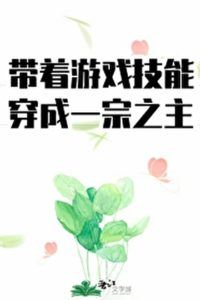
“Recognized by My Commander Father, Plus an Officer Brother and a Military Doctor Sister”
+Add to Custom List
Genres:
Novel Info

Summary

... Read More

Yu Yuanyuan, a twenty-five-year-old surgeon, dies from overwork and transmigrates into the body of He Daya, a tragic background character in an 1980s-era novel. The original host was kidnapped as a child and sold to Wang Cuihua and Zhao Jianlin, a stingy couple who already had a sickly eldest son and were desperate for a child to bring them luck. He Daya’s innate good fortune cured the eldest son and helped the mother conceive a second son, Zhao Xiaofeng, but the family treated her as a slave, blaming her for their misfortunes and exploiting her luck while denying her basic care. After falling into a lake and being rescued by neighbors, the original He Daya died from neglect and abuse. Yu Yuanyuan awakens in this new body and immediately recognizes her dire situation: she is pregnant with a child that was secretly taken away after birth, and her adoptive parents plan to marry her off for bride price once her reputation is sufficiently ruined.

Armed with her medical knowledge and a mysterious spatial dimension containing medical supplies, spiritual spring water, and stored food, Yu Yuanyuan begins to change her fate. She drinks the spiritual water to restore her weakened body and secretly stocks her space with household items. When Wang Cuihua demands payment for the medical fees incurred after the lake incident, Yu Yuanyuan refuses to pay and instead drugs her adoptive family with sleeping pills. She then empties their house of all valuables, including money, food, and cooking utensils, leaving them destitute. The next morning, Wang Cuihua discovers the theft and falsely accuses the neighbors who had helped He Daya, causing a public scene that damages her reputation in the village. When the neighbors refuse to pay the demanded compensation, Wang Cuihua’s family is left with no resources and no food.

Yu Yuanyuan uses the chaos to her advantage. She secretly reports the human trafficking and child abduction to the local Public Security Bureau officers who arrive to investigate the theft. She reveals that she is not their daughter but a bought child and that her baby was sold. The officers take her statement and promise to investigate, though Yu Yuanyuan knows the case is old and evidence may be scarce. Realizing she needs an introduction letter to leave the village and find her biological parents in the capital, she approaches the village chief, Zhao Guoxun. She learns that his elderly mother is bedridden and near death from chronic weakness. Yu Yuanyuan offers to cure the old woman in exchange for the letter.

She gathers herbs and uses her spiritual spring water to brew medicine that significantly improves the village chief’s mother’s condition. In return, Zhao Guoxun agrees to help her, though he is cautious about Wang Cuihua’s potential retaliation. Meanwhile, Yu Yuanyuan’s personality shifts dramatically; she stops acting timid and begins to assert dominance over her abusers. When Wang Cuihua tries to force her to cook and accuses her of madness, Yu Yuanyuan threatens her with an axe, forcing the woman to prepare meals for her. She exposes the family’s hypocrisy, revealing that Wang Cuihua had secretly eaten the meat meant for Zhao Xiaofeng. The adoptive family, confused and terrified by her sudden strength and defiance, attempts to restrain her, but Yu Yuanyuan easily repels them, signaling her transition from victim to someone who will no longer tolerate abuse as she plans her escape and reunion with her true family.

Latest Release
DateGroupRelease
2026-08-11shanghai fantasy c89
2026-08-11shanghai fantasy c88
2026-08-11shanghai fantasy c87
2026-08-11shanghai fantasy c86
2026-08-11shanghai fantasy c85
2026-08-11shanghai fantasy c84
2026-08-11shanghai fantasy c83
2026-08-11shanghai fantasy c82
2026-08-11shanghai fantasy c81
2026-08-11shanghai fantasy c80
2026-08-11shanghai fantasy c79
2026-08-11shanghai fantasy c78

Community Reviews

Rating(4.5 / 5.0, 8votes)
5 stars
5(63%)
4 stars
2(25%)
3 stars
1(13%)
2 stars
0(0%)
1 stars
0(0%)

Popular reviews

... Read More
I've been thinking about this story on a deeper level and there's so much going on beneath the surface. The introduction letter — that stupid piece of paper — it's not just a plot device, it's the symbol of freedom itself. In this era, you can't go anywhere without it. It's the difference between being trapped and being free. And the only person who can issue it is the village chief, which means Yuanyuan can't just run — she has to negotiate, she has to earn it, she has to prove her worth. That's the whole story right there. She's not waiting to be rescued, she's building the tools to rescue herself. Then there's the ax. The author specifically mentions that the thieves didn't steal the ax. Think about that — all this time, that blunt, useless-looking ax was sitting in the corner, and now it's the most important thing in the room. It's the symbol of the violence that was always there, waiting. Wang Cuihua has been wielding psychological violence for years, and now Yuanyuan is holding the physical equivalent. And the name — Zhao Erya. The second daughter. Cheap name, easy to raise. That philosophy of naming kids so they're worthless so they'll survive — it's brutal and it says everything about how the original owner of this body was treated. But then there's the village chief's mother, the woman who survived childbirth complications because of love and care. Two different women, two different fates. One survived because someone fought for her, the other nearly died because nobody cared. Yuanyuan is choosing to be the person who fights — for herself, for the chief's mother, and eventually, I think, for the original Erya's memory too.
... Read More
Let me tell you about the pacing in this chapter because it's actually really clever. The first few days are quiet — Yuanyuan just lives normally, eats her secret meals in her space, puts on makeup to look sickly, and waits. No action. Just... waiting. And you know what, it works. It makes you feel the weight of those days with her. Then she goes to the village chief and the whole negotiation scene unfolds. It's not rushed — she has to convince him, explain her situation, make her offer. The chief is skeptical, he's worried about Wang Cuihua causing trouble, he's torn. And then she cures his mother. That's the first major turn. After that, the mountain sequence picks up the pace — rabbit, herbs, lingzhi, and then the boar. The boar scene is where the tension peaks, and honestly I was holding my breath. She uses her wits instead of brute force, slips into her space at the last second, tranquilizes the beast. Then she comes back down, gives the medicine, gets an egg from the chief — this small moment of warmth — and then WHAM, she walks through her own gate and Wang Cuihua is already screaming at her. The chapter ends on that cliffhanger with the ax raised and I literally had to put the book down. But what I love most is how the author controls the rhythm. The quiet days of waiting, the tense negotiation, the action on the mountain, the domestic moment with the medicine and the egg, and then the explosion at the end. It's like a symphony — everything builds to that final note. And the fact that Wang Cuihua's insults escalate from 'you didn't cook breakfast' to 'I'll sell you tomorrow' — that's not random, that's the author showing exactly how far gone this woman is, and making Yuanyuan's retaliation feel completely justified.
... Read More
There's this one scene where Yuanyuan climbs the mountain and I just... stopped reading for a second because it was so vivid. The author describes her spotting a gray wild rabbit darting through the bushes, the sound of leaves crunching under her feet, the way she follows her instincts and finds that patch of wild lingzhi mushrooms hidden high up where most people wouldn't even recognize them. Five small ones and one large one — I could practically see the scene in my head like a movie. And the wild boar encounter! The description of its long tusks, the sound it makes, how her hair stands on end — it's terrifying and thrilling at the same time. But what really makes the worldbuilding work is all the small details about this era. The introduction letter system — you can't travel anywhere without one, and only the village chief can issue it. That's such a specific historical detail that grounds the whole story. The fact that there's no paternity testing, no effective police force for a case from ten years ago. The candlelight glowing from the chief's house — that tiny detail about Wang Cuihua and Zhao Jianlin borrowing a candle, the faint glow in the dark courtyard, it just makes the whole village feel lived-in. Even the cosmetic powder Yuanyuan uses to make herself look paler and more worn out — it's such a small thing but it tells you everything about how she's performing weakness. The space itself is interesting too. It has fields, medicinal herbs, a spring well with miraculous water, and storage for game. It's not just a magic cheat — it's a whole ecosystem. The author really thought about how this power would work in practice.
... Read More
Okay, I need to talk about this whole Yu Yuanyuan vs. Wang Cuihua dynamic because my heart is literally racing every time I think about it. "Only bought ones are treated like trash!" — this line absolutely destroyed me. Not because it's sad (though it is), but because Yu Yuanyuan says it with such cold precision. She's performing vulnerability, yes, but she's also genuinely hurt. The original owner of this body endured years of abuse, and now this new consciousness inhabiting that body is weaponizing all that pain. That's not manipulation in the malicious sense — it's survival. She's using every tool she has to escape a nightmare. And then there's the soldier. I'm not even going to lie, I got chills when he grabbed her hand and said "She really looks too much like him!" This is the moment where everything shifts. The entire story has been building toward this — Yu Yuanyuan's hope of finding her biological family, the original owner's lost sibling. It's not a romantic subplot, no, but it's deeply emotional in a different way. The idea that someone out there might be looking for her, might recognize her face, it's devastating and beautiful. What really got me though was Wang Cuihua's breakdown. When she sat on the ground crying and accidentally said "I should never have brought you home" — that's not acting. That's a mother who knows she's been exposed saying something true in a moment of desperation. Yu Yuanyuan immediately seized on it, but you can feel the weight of it. This woman raised a child she bought, abused her, starved her, and now that child is turning the whole thing against her. There's no redemption arc here, no softening. Just consequences. I keep thinking about that scene where Yu Yuanyuan deliberately doesn't pull away when Wang Cuihua pinches her. She lets it hurt. She shows the police the red mark. That's not just strategy — that's a child who has been hurting for years finally being heard. And I just... I couldn't stop reading. I had to know what happened next. The emotional stakes here are so high because we're not just watching a legal case, we're watching a person reclaim her life.
... Read More
I need to talk about the dialogue in these chapters because wow. Just wow. The exchange between Yu Yuanyuan and Wang Cuihua is absolutely razor-sharp. Let me just drop this on you: "Just now, I asked the police to find my foster father, and you panicked. If you didn't do this, then why were you so anxious?" That's Yu Yuanyuan turning Wang Cuihua's own guilt against her in real time. It's not a monologue, it's not a speech — it's a conversation, and it's devastating because it's so natural. These two women are going back and forth like boxers, and every line lands. Wang Cuihua's voice is equally distinct. When she sits on the ground and starts her performance — "All these years, I really raised an ungrateful child!" — you can hear the fake tears, the exaggerated despair. But then she slips: "I should never have brought you home!" And suddenly the voice cracks. That's when you know the character is real, because even a skilled performer can't control every word. The police dialogue is surprisingly good too. The veteran officer's cautious, measured responses contrast perfectly with the emotional chaos around him. "We haven't decided your guilt yet, but your actions make us seriously suspect that you've done this!" That's official-speak that still carries weight. And the junior officer's reaction to Wang Cuihua trying to push Yu Yuanyuan — "Committing violence right in front of us—this is too much!" — it's almost funny in its exasperation. But the best dialogue moment has to be Yu Yuanyuan's explanation to the soldier: "I was very young when I was kidnapped, but I remember having a sister." She's improvising, building on what she knows from the book, and doing it seamlessly. The dialogue feels spontaneous, like we're watching her think in real time. The author's voice throughout is restrained but powerful. No purple prose, no over-explaining. Just characters speaking, and the story happening between their words.
... Read More
Let me just say this — the way this author builds the world in these chapters is absolutely phenomenal. I don't usually get this invested in setting, but the rural Chinese village here feels so alive I could walk through it. The opening scene with the police arriving and the villagers gathering — I could literally see this. The way everyone pretends not to care at first, then gradually draws closer as things get more interesting. "Many villagers thought something had happened, but most assumed it was related to a previous theft case and didn't follow along." That detail! That's the kind of specificity that makes a setting feel real. These people have their own lives, their own gossip, their own assumptions. They're not just background extras. And the fields! "Zhao Dahai was still in the fields, which were far away—about a 40–50 minute walk, with a small mountain village in between." This isn't just geographical information — it's isolation. This family is cut off. No one around to help, no one to witness what's happening inside those walls. The physical distance of the father from the domestic abuse is almost symbolic, isn't it? He's absent, and when he returns, it's too late. The police station scene was another highlight. The soldier in the green uniform standing at the entrance, the junior officer's deferential attitude toward him, the cold institutional feeling of being led inside. The author doesn't overdescribe — just enough to paint the picture and let you fill in the rest. "From a distance, Yu Yuanyuan saw a man in a green military uniform standing there. He probably wasn't from the police station; likely a soldier passing by on duty." That uncertainty, that moment of not-knowing, it creates this tension where the setting itself becomes part of the mystery. What I love most is how the world feels layered. There's the surface world — a village dealing with petty theft, gossiping neighbors, a mother being taken away. But underneath, there's the deeper world of human trafficking, stolen children, families shattered. The author lets both exist simultaneously, and the contrast is devastating.
See all reviews

Characters

See all characters

Custom lists

See all custom Lists