Reborn to Escape: A Quiet Life Beyond the Capital - Reviews

Reborn to Escape: A Quiet Life Beyond the Capital
+Add to Custom List
Sort
Add review
... Read More
I need to talk about the cherry scene because it is THE moment. Qingqing carefully removes the pits one by one and gently pushes the cherry flesh into Lin Heng's mouth. She says: "Eat. I already removed the pits. Be careful not to choke." And he just... sits there caught completely off guard, wondering what the hell is happening, and then when she turns back to drive the carriage, he quietly chews it and swallows. This is the most tender thing I have ever read and I am not being dramatic. It's so simple—fed fruit, removed pits, a command that's actually care in disguise—but it says everything about their dynamic. She's practical, he's bewildered, and somehow that's more romantic than any love confession could be. Then later, when they're sharing that one bed in the dark and he's lying there watching her breathe, the text goes: "Her breathing was soft and steady, like the gentlest melody carried on the night breeze, bringing an indescribable sense of peace." And I just—how is a author supposed to write something this soft and have it hit this hard? Lin Heng has spent his whole life worrying about his master's safety, watching stewards and marquises' moods, surviving in a world where everyone had an agenda. And now here is this woman who feeds him cherries without being asked, who talks happily about household registration like it's the most normal thing in the world, who lets him hear her breathe in the dark. The contrast between his past life and this moment is devastating. He's not just falling for her—he's falling into a life he never thought he'd have. "A life like this isn't so bad"—those opening lines hit completely differently once you've read the rest of the chapter. He's not just surviving anymore. He's home.
... Read More
The setting in this passage is genuinely beautiful and I think it deserves more credit than it gets. The author doesn't just describe a village—they build a world that feels lived-in and breathing. The opening image of Peach Blossom Village 'nestled against an endless range of mountains' with 'rolling peaks [resembling] a magnificent ink-wash landscape painting' immediately sets a tone of poetic tranquility. But what I love most is how the domestic details make the world feel real. The courtyard with its thick peach tree bearing small green peaches, the outhouse turned storage, the well water, the kitchen cabinet, the wardrobe, the storage chest—the author lists these objects the way Qingqing buys them, and by the end you can literally picture the space. There's a scene where Qingqing renders lard, scalds bowls with hot water, seasons the iron woks with pork fat, and stores everything in a cabinet she bought from a town carpenter. These aren't just decorative details—they're the texture of a life being built from nothing. And the forest behind the house! Qingqing going in with a bamboo basket and small shovel, coming back with mushrooms, wood ear fungus, bamboo shoots, wild greens, and eventually apricots from the orchard. The world feels abundant and generous, like nature itself is rewarding her labor. The peach tree in the courtyard becomes this recurring visual anchor—under it they eat, under it he rests, under it she watches him. It's become the heart of their home.
... Read More
Let's talk stakes because this is where the text really earns its tension. On the surface, Qingqing's goal seems simple: help Mo Xiang succeed, get her freedom, disappear into the countryside. But the deeper conflict is so much richer than that. Qingqing is fighting against her own nature. She's spent her entire previous life being loyal, being useful, being the person who holds everything together while Mo Xiang reaps the rewards. The idea of stepping back, of letting Mo Xiang fail, of choosing herself—that's genuinely terrifying for her. She doesn't know who she is outside of service. That's the internal conflict, and it's what makes her external mission so complicated. The external stakes are clear: if Mo Xiang doesn't seduce the Heir, she fails. If she fails, Qingqing never gets her freedom. But there's also the question of what happens if things go differently this time. What if Mo Xiang succeeds but in a way that still endangers Qingqing? What if the Heir sees through the plan? What if someone else gets hurt in the crossfire? "I only ask that you set me free. I want to return to my hometown and live a simple life. Would that be possible?" That conversation in the carriage is where the stakes become personal. Qingqing isn't asking for wealth or power or revenge. She's asking for the most basic thing: to exist outside of someone else's shadow. And the fact that Mo Xiang agrees so easily, so generously, makes it hurt more. Mo Xiang has no idea what she's promising. She has no idea that this simple request for freedom is the most dangerous thing Qingqing could ask for, because it means Qingqing is already mentally leaving her. The tension isn't just about whether the plan will work. It's about whether Qingqing can survive the moment when Mo Xiang realizes her maid is no longer loyal. Because that moment is coming. It has to.
... Read More
The stakes in this chapter are absolutely massive, and I need to talk about how the author layers them. On the surface, it's a misunderstanding. He finds out her past, he gets angry, they have a fight. Simple, right? Wrong. Because underneath that is the question of whether their marriage can survive the truth. And underneath THAT is Qingqing's trauma from her previous life—being forced to drink poisoned wine, losing her child, watching her son call another woman 'Mother.' Every conflict in this chapter is amplifying a deeper, older wound. Lin Heng's internal conflict is equally devastating. He's an orphan who never knew parental love. The thought of becoming a father makes him both excited and terrified. 'Could he become a good father?' This isn't just about whether he'll stay with Qingqing—it's about whether he can trust that a happy ending is possible for someone like him. The external stakes are real too. They just earned their first real money, they're building a life in Peach Blossom Village, they have legal documents and a home. Everything they've worked for is suddenly threatened by a single piece of paper from her past. And the cliffhanger? She's running through the courtyard crying, convinced he's abandoned her, while he's actually out hunting because he decided to stay. The dramatic irony is agonizing. We know something terrible is about to happen when they reunite, and we can't look away.
... Read More
Okay so let me just say this upfront: the opening murder scene is GORGEOUS. Like, genuinely stunning. You have Qingqing on her knees begging for her life, Mo Xiang sitting there all cold and composed, and then—BAM—lightning strike and she's back in time. I literally gasped out loud. The way the author handles the rebirth mechanic is so much cleaner than most of these novels I've read where the protagonist just randomly wakes up without any explanation. Here, it's earned. We see the death, we feel the betrayal, and then the transition back is almost gentle. "Ah!" The figure on the bed suddenly jolted upright, clutching her head as a sharp pain tore through it. That single exclamation mark does so much work. It's not a dramatic scream of horror—it's confusion. And that's what makes it real. Qingqing isn't immediately thrilled about being reborn; she's disoriented, scared, trying to process what just happened. I love that the author doesn't skip over the psychological impact. But here's where I have to be honest with myself: the plot so far is pretty straightforward. Rebirth, revenge-adjacent motivation, the big banquet scene approaching. It's not reinventing the wheel, but it's spinning it really well. The tension around whether Qingqing will actually stick to her plan or if something will go wrong is doing its job. I want to keep reading to see if the author can surprise me beyond the basic rebirth framework.
... Read More
So I've been thinking about this cherry tree scene and honestly it's one of the most important moments in the entire passage, even though it seems like just a little detour. "This is my first time seeing a cherry tree!" Qingqing says, and it hits different when you remember that in her previous life, she was trapped in the Ding'an Marquis Manor, controlled by everyone, never free to even look at a tree without someone telling her she couldn't. Now she's driving her own carriage, stopping whenever she wants, picking fruit with her own hands, washing her feet in a stream like some kind of wild creature finally let out of a cage. The cherry blossoms have already fallen by the time she arrives at Peach Blossom Village. She'll have to wait until next year to see them bloom again. But she thinks: "She had a lifetime ahead of her to wander through mountains and rivers." That line. That absolute, unshakable belief that she has TIME now. In her previous life, time was something that was taken from her. Now it's hers to spend however she wants. And Lin Heng watching her from behind the carriage curtain—her humming, her bare feet in the water, her carefree laughter—is him seeing a version of her that no one else has ever witnessed. The woman who drugged him and called him husband is also the woman who laughs at fish. She contains multitudes, and the fact that he's the one witnessing this softer side while pretending to sleep? That's the beginning of something real between them, whether either of them admits it yet or not. The poison in his body is another symbol I can't shake. He was poisoned by the steward, abandoned to die, and she literally saved him from that fate. But then she poisoned him again—with the aphrodisiac. Two different poisons, two different intentions. One destroys, one... complicates everything.
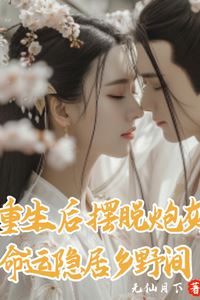
... Read More
I need to talk about Mo Xiang because THIS WOMAN. She's sitting there in the carriage being all sweet to Qingqing, promising her freedom, saying she'd even let her become the Heir's woman if she wanted. And I'm sitting here like—do you know what you're going to do to this girl in twelve chapters? The tragedy is that Mo Xiang genuinely believes she's being kind. She's not a cartoon villain cackling away. She's a woman who grew up unloved, unwanted, fighting for every scrap of recognition in a family that sees her as disposable. And Qingqing is the only person who's ever been loyal to her. That's why the betrayal cuts so deep later—it's not just political, it's personal. "Qing is always the thoughtful one." Mo Xiang smiled warmly. "Thank you, Qingqing. If everything succeeds and I marry into Ding'an Marquis Manor, you may ask me for anything you want." I literally had to pause and stare at the wall after reading that. The dramatic irony is absolutely brutal. Qingqing's internal monologue while Mo Xiang is being sweet is just... chef's kiss. The contrast between Mo Xiang's genuine warmth and Qingqing's cold calculation is what makes their relationship so compelling. It's not a simple master-servant dynamic anymore—it's become this twisted codependency where Qingqing needs Mo Xiang to succeed so she can escape, and Mo Xiang needs Qingqing's loyalty so she can climb higher. They're both using each other, but one of them doesn't know it yet.

Leave a comment

You must be logged in to leave comments. or
