Reborn Noble Daughter: The Regent’s Wife is Abusing Scum Again - Reviews

Reborn Noble Daughter: The Regent’s Wife is Abusing Scum Again
+Add to Custom List
Sort
Add review
... Read More
I need to vent about Gu Yuanyao because this man is making me so angry. Like, he comes home from being publicly humiliated in court — suspended, salary docked, everyone mocking him — and his first thought isn't to figure out WHO did this or WHY. His first thought is to go comfort Concubine Yun and believe her tears. The scene where he embraces her and says "I should have strangled her at birth" referring to Gu Nanyin — this is the emotional core of everything wrong with this family. He genuinely believes Gu Qinglian is the innocent victim, the gentle daughter who only accidentally pushed someone, while Gu Nanyin is the vicious one who retaliated disproportionately. And Concubine Yun? She's performing so well. The text says she "concealed the triumph in her eyes" while crying on his chest. This woman is a method actor. But here's what actually broke my heart — Gu Qinglian herself. She's not even a real schemer. She's just a spoiled, impulsive girl who got in over her head. When she sees her mother's plan, she feels "both anticipation and worry." She's not the mastermind, she's just along for the ride. And Gu Yuanyao is so blind to this that he's willing to sacrifice his legitimate granddaughter's reputation to protect the concubine-born daughter who caused all this trouble. The contrast with Gu Nanyin is brutal. She sees everything clearly — she identifies Concubine Yun as the real strategist, she predicts exactly what will happen in court, she even warns the Regent about the Crown Prince. And yet she's the one being painted as the villain. Meanwhile the "gentle" Gu Qinglian gets away with everything because her mother and father are protecting her. This family dynamic is so toxic and the author writes it with such sharp emotional precision.
... Read More
There's something really interesting about the white jade hairpin with the lotus carving. A lotus — a flower that grows pure and beautiful from muddy water. That's basically Gu Nanyin's entire arc in this section. She was poisoned by the person she trusted most, but she emerged clean while Gu Qinglian became the mud. The whole concept of sisterhood in this novel is completely deconstructed. Gu Nanyin gave Gu Qinglian everything — half of whatever she received, gifts from maternal grandparents, genuine affection. And Gu Qinglian repaid that by trying to murder her. Meanwhile, the maids who have nothing but loyalty receive a thousand-tael hairpin and are brought to tears. Reputation is another huge theme here. Gu Qinglian wanted fame in the capital, and Gu Nanyin literally gave it to her — just not the kind she wanted. "Who in the entire capital doesn't know of Gu Qinglian?" The Minister's residence is now a laughingstock. Every version of the story makes Gu Qinglian the villain. Her desire for recognition becomes her destruction. And the concubine moving from the best courtyard to Jicao Pavilion — that spatial movement symbolizes the entire power structure of the household being turned upside down. The lawful wife never argued, but the concubine FLED because she was guilty. Status and morality are completely intertwined here.
... Read More
Okay so let me just say this plot is absolutely delicious. Gu Yuanyao trying to use his own daughter as a spy to take down the Regent and curry favor with the Crown Prince? The man has no shame, no morals, absolutely zero parental love. And the worst part is he genuinely thinks this will work, like Gu Nanyin is some naive little girl who'll just happily pass along secrets without noticing. Meanwhile Gu Nanyin is over there like... did you really just walk into my room and lay all your cards on the table? The irony is so thick you could cut it with a knife. And then the grandmother subplot is just as good. The Old Madam trying to summon Gu Nanyin for some disciplinary confrontation, completely unaware that she's about to walk into a hornet's nest. She thinks she has authority here, but the power dynamics have completely shifted. Gu Nanyin doesn't even show up — she's already out. And then Qin Xue handles the whole situation with a sword to the grandmother's neck. That reveal that Qin Xue is actually a subordinate of the Regent? Chef's kiss. The grandmother had no idea she was dealing with someone connected to the most powerful person in the kingdom. The plot keeps layering these schemes on top of each other — father's political maneuvering, the grandmother's petty family drama, Concubine Yun and Gu Qinglian's schemes in the background. It's all connected but nobody's talking to each other, which makes it so much fun to watch. Gu Nanyin is completely aware of all of it and just... doesn't care. She's waiting for them to make the first move so she can crush them. The tension is building beautifully.
... Read More
Let me just say — the pacing in these chapters is absolutely masterful. The author starts intimate, right in Concubine Yun's courtyard, with her dismissing all the servants and revealing the stacks of banknotes. This is a small, personal scene. Very contained. Then it expands outward like ripples in water. First the rumors spread through the capital's teahouses and taverns. The public sphere. Then the noble families react. Then the court. By the time we reach the imperial court scene, the stakes have escalated from "one girl's reputation" to "a minister's career and political survival." And the author doesn't rush this escalation — each layer gets its own breathing room. The court scene itself is where the pacing really shines. You've got multiple factions: the impeaching ministers, the Crown Prince trying to play peacemaker, the Regent dropping his verdict like a hammer. The Emperor is just... there, going along with whatever his son and the Regent decide. The power dynamics shift in real time, and the author captures this perfectly with small details — like Prime Minister Su and General Su exchanging glances but staying silent, or the Crown Prince's internal monologue about wanting to kill the Regent once he becomes emperor. What I love most is how the author uses scene transitions to maintain tension. Instead of resolving the court conflict, the chapter ends with Concubine Yun proposing the Crown Prince marriage. This takes the political tension and redirects it into a new, even more dangerous direction. The reader is left wanting more, which is exactly what good pacing does. It doesn't give you closure, it gives you momentum.
... Read More
Okay so let me just say this first: the Regent Yuan Jue is the most quietly devastating character I have ever encountered in a novel. Like, three chapters in and I already want to adopt him. The man says exactly one sentence — "As long as you were happy" — and then he stabs himself. In his past life. And then when she's reborn and they're talking, he says it AGAIN. "As long as you're happy." THREE TIMES. The man is a walking, talking monument to selfless devotion and he doesn't even know it. But what got me was the relationship dynamics. Gu Nanyin in her past life treated him like garbage — called him a demon, looked at him with pure contempt, married into his manor under duress. And he still loved her. Still sent imperial physicians when she fell in the water. Still came to her bedside the moment he heard she was feverish. The contrast between how she saw him ("a demon who killed without blinking") and how he actually was (the most gentle, self-sacrificing person in the room) is just... chef's kiss. And Gu Qinglian — oh my god, Gu Qinglian. The way she played the humble, sweet younger sister for YEARS while secretly plotting to destroy her. "All these years of playing humble and submissive in front of you — I've had enough." That line gave me actual chills. She's not just a villain, she's a person who spent so long feeling inferior that she decided the only way up was to tear everyone else down. Tragic and terrifying at the same time. The mother-daughter relationship between Gu Nanyin and Madam Gu also hit different. In the past life, Nanyin thought her mother was narrow-minded for warning her about Qinglian. Now she realizes her mother was the only one who actually cared. The scene where Nanyin hugs her and says "Mother, I was wrong" — I literally teared up. That's the kind of emotional beat that makes a rebirth story worth reading.
... Read More
The pacing here is absolutely relentless and I loved every second of it. We go from Gu Yuanyao's political scheme — using his daughter to spy on the Regent — to Gu Nanyin's brutal takedown of him, to the daily humiliation of Gu Qinglian in the Silent Grass Pavilion, to the grandmother's failed confrontation, and then the Qin Xue reveal. That's four distinct dramatic beats in what feels like one sitting, and none of them drag. What I appreciate most is how the author layers the tension. Each scene ends on a note that makes you want to keep reading. Gu Yuanyao ends up trembling with rage, pointing at his daughter. Then we cut to the teacup shattering in the Silent Grass Pavilion — instant mood shift but same energy of conflict. Then the grandmother's scheme falls apart when Gu Nanyin refuses to show up. And then the grandmother shows up anyway, only to be held at swordpoint. The chapter transitions are sharp — no lingering, no filler. We go from the father-daughter confrontation straight into the sister rivalry, straight into the grandmother conflict. It's like the author knows exactly when to cut away and when to push harder. By the time Qin Xue reveals she's a Regent subordinate, I was fully invested. The pacing never lets you breathe, but in a good way — like being on a rollercoaster that just keeps going up.
... Read More
Can we just appreciate how DANGEROUSLY good Gu Nanyin is at talking? Every line she speaks is calculated, sharp, and absolutely devastating. When Liu Wan'er tries to defend Gu Qinglian, Gu Nanyin doesn't even raise her voice. She just asks: "Why do you think the concubine willingly moved to the worst courtyard in the estate?" And that single question dismantles Liu Wan'er's entire argument. No shouting, no drama, just cold logic that leaves no room for rebuttal. And then her exchange with Gu Qinglian later — "Did those twenty lashes not wake you up? Now you remember we're sisters?" — I literally said YES OUT LOUD. The way she flips Gu Qinglian's own manipulation against her is chef's kiss. But what I love most is how each character has a distinct voice. Gu Qinglian's dialogue is all demands and entitlement — "You've gone too far," "Couldn't you have defended me?" She never once says sorry. Liu Wan'er's voice is hesitant, easily swayed, full of doubt. And Gu Nanyin? Her words are precise surgical instruments. Every sentence cuts. The shopkeeper trembling beside them while Qin Xue talks about buying entire streets — that side character's fear says so much without a single word of dialogue. The author really knows how to let characters speak through their actions too.
... Read More
There are some really interesting symbolic threads running through this section that I think deserve attention. The water motif comes up again — Gu Nanyin fell into water and came out changed. That's not the first time this story has used water as a turning point, and it feels deliberate. She was pushed in, she emerged different, and now everyone is dealing with the consequences of that transformation. The sword is another powerful symbol. Qin Xue drawing it and holding it to the Old Madam's neck — it's not just a plot device, it's a statement. The servant who was supposed to be invisible, the maid who was supposed to bow and scrape, is now the one holding power. The sword represents the complete inversion of the social order in this household. Everyone thought they knew their place, and Qin Xue just proved them all wrong. And the gate — the shut courtyard gate is such a perfect symbol for Gu Nanyin's new stance. She's not opening herself to these people anymore. The grandmother can knock all she wants, but the gate stays closed. Gu Nanyin controls access to her own life now. She decides when and if she'll show up. That gate is a boundary, and for the first time, she's the one holding the key. The whole text is really about power — who has it, who's trying to take it, and who's pretending to have it when they don't. Gu Yuanyao thinks he has power because he's a minister. The grandmother thinks she has power because she's an elder. But real power belongs to the Regent, and through Qin Xue, it's right there in Gu Nanyin's courtyard.
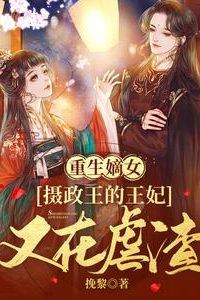
... Read More
I need to pause and talk about the hairpin scene because honestly it wrecked me in the best way. Gu Nanyin buys these thousand-tael hairpins for her maids — Qin Xue, Qiuzhi, Baishao — and puts one in Qin Xue's hair herself. And Qin Xue's eyes immediately redden. Think about that moment. This is a shadow guard who has trained since childhood, who considers herself genderless in the Prince's eyes, who has never received anything so... girlish. So personal. So tender. "This was probably the first time in her life she had ever received a gift from someone." — I literally had to put the book down for a second. It's not about the money. It's about being SEEN as a person, not just a tool. And Gu Nanyin's reaction? She's genuinely surprised. She thought she was just being nice, just buying some jewelry. She has no idea how rare this gesture is for her maids. That disconnect between what Gu Nanyin thinks she's doing and what it actually means is so heartbreaking. The friendship between Gu Nanyin and her maids feels so genuine compared to the fake sisterhood she had with Gu Qinglian. One tried to kill her after a decade of treating her like a real sister. The other cried because someone bought her a hairpin. The contrast is devastating.

Leave a comment

You must be logged in to leave comments. or
