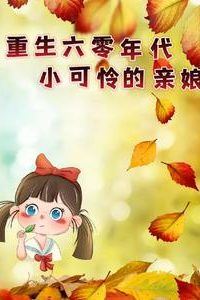
Reborn in the 1960s: The Pitiful Little Girl's Real Mother
Novel Info

Summary

... Read More

He Jingshu, a woman from the modern era, dies in an earthquake and awakens in the body of a young mother in 1964 China. The original owner of this body, also named He Jingshu, was a tragic figure. Abducted and raised by the exploitative Zhang family, she was forced into a marriage with Zhong Youliang, a soldier who had been away since before their daughter, Zhong Ling, was born. Suffering from postpartum depression and manipulated by her foster mother, Zhang Daya, the original He Jingshu had become volatile and abusive toward her innocent three-year-old daughter. After being struck on the head by her nephew Tiedan, she fell into a coma, allowing He Jingshu to take over. Upon regaining consciousness, He Jingshu immediately recognizes the trauma inflicted on Zhong Ling and vows to provide the love and stability the child never had.

The central conflict arises from the Zhang family, who viewed He Jingshu as a source of free labor and food. They regularly raided her home, stealing grain and supplies while treating her with contempt. When Zhang Daya confronts He Jingshu after finding nothing in the kitchen, the reborn He Jingshu refuses to submit. Using her knowledge of martial arts, she physically repels the aggressors, shocking the villagers who were accustomed to her meekness. When the Zhang family attempts to turn public opinion against her by claiming she is ungrateful, He Jingshu counters with a detailed ledger of the years of exploitation and theft. She demands the village leader formally sever all kinship ties with the Zhang family. Faced with the threat of legal repercussions for stealing military rations, the Zhang family is forced to sign the separation document, ending their financial parasitism.

With her abusive family cut off, He Jingshu focuses on improving her and her daughter’s quality of life. She uses the monthly allowance sent by her husband, Zhong Youliang, to buy better food, clothing, and necessities. She also negotiates with the village leader to exempt herself from field work, allowing her to dedicate her time to raising Zhong Ling. Her demeanor changes completely; she is kind, patient, and nurturing. Zhong Ling, who previously lived in fear of her mother’s unpredictable rage, begins to thrive, gaining weight and confidence. He Jingshu also mends relations with her in-laws, the Zhong family, who had been distant due to the original He Jingshu’s hostility. She earns their respect by cooking for them during the busy farming season and sharing her resources.

A pivotal turning point occurs when Zhong Youliang writes a letter, expressing his guilt for neglecting his family and his desire to meet his daughter. He Jingshu replies with honesty and warmth, bridging the emotional gap between them. She decides to take Zhong Ling to visit him at his military base. The journey is eventful; on the train, He Jingshu confronts a nosy and prejudiced woman who criticizes her for having a daughter instead of a son. He Jingshu handles the situation with sharp wit, earning the respect of fellow passengers. Upon arrival, Zhong Youliang is overwhelmed with emotion seeing his daughter for the first time. He is also struck by his wife’s beauty and composure, which contrasts sharply with his memories of her previous depression.

Life at the military base introduces new social dynamics. He Jingshu and Zhong Youliang begin to grow closer, moving from awkward strangers to a supportive couple. He Jingshu befriends other military wives, including Sister Chen and Sister Zhang, the widow of a fallen comrade. She uses her modern knowledge to improve their living conditions and helps Sister Zhang, who faces harassment from local thugs. Zhong Youliang applies to have his wife and daughter officially join him at the base, a process that requires bureaucratic approval. Meanwhile, the Zhang family, now cut off from their food supply, struggles financially and internally, regretting their loss of a provider but unable to reconcile with He Jingshu. The story concludes with He Jingshu establishing a stable, happy family unit, protected by her husband’s military status and her own resilience, while looking forward to a future where she and Zhong Ling can remain together permanently.

Latest Release
DateGroupRelease
2026-08-11shanghai fantasy c60
2026-08-11shanghai fantasy c59
2026-08-11shanghai fantasy c58
2026-08-11shanghai fantasy c57
2026-08-11shanghai fantasy c56
2026-08-11shanghai fantasy c55
2026-08-11shanghai fantasy c54
2026-08-11shanghai fantasy c53
2026-08-11shanghai fantasy c52
2026-08-11shanghai fantasy c51
2026-08-11shanghai fantasy c50
2026-08-11shanghai fantasy c49

Community Reviews

Rating(3.8 / 5.0, 11votes)
5 stars
2(18%)
4 stars
5(45%)
3 stars
4(36%)
2 stars
0(0%)
1 stars
0(0%)

Popular reviews

... Read More
I need a minute. I need a whole minute. Zhong Youliang cooking three dishes for He Yashu after everything that happened with her parents. He literally doesn't know how to cook, he's fumbling around, and he still tries because she had a terrible day. And then she tastes every single dish and says it's good. Good? I don't know what good is anymore because that scene is the softest thing I've ever read. "From now on, I'll cook for you and Lingling" — he beams. He actually beams. After a day where his wife's abusive family showed up and tried to destroy her life, he goes into the kitchen and makes three dishes with his whole heart. And the little details! He bends down to kiss her cheek before going to get their daughter. Little Zhong Ling using sweet words like they're "free money." These people are so genuinely happy together and it makes my chest hurt because we know how hard He Yashu's life has been. The contrast with the Zhang family is brutal. Here's a woman whose adoptive parents treated her like a slave, beat her, scolded her, and saw her as a meal ticket — and then here's a husband who can't even cook properly but tries anyway because he sees her tired after a morning that felt like a brawl. The author doesn't even need to write big dramatic declarations. A man in a kitchen making three slightly-burnt dishes says more than any love confession ever could. Also Little Zhong Ling saying grownups are weird for having treats and still being sad? That child has no idea she's witnessing her grandmother's heartbreak over losing decades with her biological daughter. I'm not crying, you're crying.
... Read More
Let me just say this clearly: Zhang Daya is one of the most vile characters I've encountered in fiction and I cannot stop being fascinated by her. The woman has no self-awareness whatsoever. She shows up at her daughter's military base, sees a stranger in a uniform, and immediately starts demanding help for her grandson while simultaneously calling her own daughter ungrateful. The most chilling part? She genuinely believes she's the victim. "We raised you, you cut us off, you're ungrateful" — as if sending a girl back to haul grain after she got married was anything other than exploitation. As if calling her a slave during the famine was normal parenting. This woman has rewired her entire moral compass so that abuse is love and greed is family duty. And Zhang Fugui? He's worse in a different way. He's the kind of man who's fierce at home but timid outside. He performs sadness for the crowd, wipes fake tears, plays the helpless father — all calculated moves. He knows exactly how to manipulate public opinion. When He Yuandong reveals the truth about the kidnapping, Zhang Fugui's first instinct isn't remorse, it's to argue that waiting a whole day makes it not a crime. The man has no conscience. But He Yashu? She's the most interesting character in this entire mess. Cold to her abusers, patient with her daughter, respectful to her husband, and yet there's this quiet sadness underneath when she says she doesn't want to find her biological parents. Not because she doesn't want them — but because she's already learned that family isn't about blood. She's choosing the people who chose her.
... Read More
Okay so I just finished these chapters and my brain is still spinning. The whole Zhang family showing up at the military base is one thing, but the way the author peels back the layers? Chef's kiss. First it's just greedy parents causing drama, then it turns into a full-blown kidnapping case, and THEN we learn He Yashu is the biological daughter of Commander He. That's three plot twists in five chapters and each one recontextualizes everything before it. I have to talk about the letter scene though. Zhang Fugui asking for a letter to handle "an issue" instead of admitting they were visiting family — that one moment tells you EVERYTHING about his character. He's calculating from the start, doesn't even trust his own daughter to help him. And then when the soldier asks for proper credentials, he's stuck waiting outside. The irony is delicious. But the real masterstroke is He Yuandong. The man sits there listening to Zhang Daya beg him to make He Yashu divorce her husband, and he just... lets them dig their own grave. He doesn't even need to reveal he's her father. "I've already found He Yashu's biological parents" — what a line. He lets them hear just enough to know they're doomed without giving them the full picture. That's how you write a satisfying confrontation. And then the ending of this batch where Zhao Han asks if He Yashu wants to find her real parents, and He Yashu basically says she's got everything she needs now. The author is setting up this beautiful tension between blood ties and chosen family. I'm already emotional thinking about it.
... Read More
"Mom! Dad! What are you doing?" Little Zhong Ling walked in on her parents being all romantic and I died. Absolutely died. He Yashu's face, Zhong Youliang's innocent expression, the way the narrative just goes "I forgot" like he didn't just get caught red-handed — this is the funniest scene in the entire book and I cannot stop thinking about it. But then it hits you right after. Little Zhong Ling asking about Erniu's dad, and He Yashu trying to explain that dad went to the sky to become a star, and the kid saying "I don't want my dad to be a star. If he's a star, I can't see him." And suddenly I'm a mess. She's three years old and she already understands loss because she's living it — her dad is always gone on missions, and the idea of him being unreachable in the sky is terrifying to her. The father-daughter bond throughout these chapters is just *everything*. Zhong Youliang carrying her on his shoulders, the way he gets jealous when she says she likes Grandpa He more, the scene where he's awkwardly patting her to sleep and He Yashu watches him with this soft expression. He's a soldier, he's faced danger, but watching his daughter sleep is apparently the most precious thing in the world to him. And He Yashu — she's so guarded with everyone else but with this family, she just melts. The scene where she thinks "this kind of life isn't bad" while watching her husband tend to their daughter... that's the moment I knew this story was going to make me cry. She found her light. He found his home. They found each other.
... Read More
Okay so I need to talk about this woman. Captain Wu's wife. She literally followed them around the entire market and then showed up at their doorstep like she owned the place. The audacity. I was watching He Yashu try to block the door and I was like yes, keep her out, girl. But here's what's actually interesting about this character — she's not just some random annoying neighbor. She represents this whole social pressure system that military wives live under. The expectation that you should be frugal, that you shouldn't spend money, that a good wife puts her husband's needs above everything. And He Yashu's response was chef's kiss. She didn't even raise her voice. She just looked at her and said, "Do you live by the sea or something, poking your nose into everyone's business?" I literally screamed. That line needs to be framed. The subplot with Sister-in-law Zhang was also really well woven in. Her husband died on a mission, she's alone with a kid, and the local thugs bother her. Zhong Youliang and his comrades step in. It's a small moment but it tells us everything about who these people are. Zhong Youliang isn't just a good husband to He Yashu — he's a good person to everyone. And the detail about the husband's last concern being her and their child? That hit me right in the chest. The plot moves in these quiet, domestic ways rather than big dramatic twists, and I think that's what makes it work. The stakes aren't life-or-death battles here — they're about building a life, about finding your place, about not letting annoying people ruin your day.
... Read More
I have to appreciate how distinct every character's voice is in this batch. Let me just list a few moments that sold it for me. Zhang Daya's dialogue is all caps energy even when it's not formatted that way. "You heartless girl! Your father and I raised you, and now that you're married, you cut us off?" She speaks in declarations and accusations. She never asks, she only demands. Even when she's losing, she's performing for an audience. The line "Do what you want!" when her plan fails — that's a toddler throwing a tantrum wrapped in an old woman's body. Zhang Fugui is different. His lines are quieter, more calculated. "Daughter, your dad never asked anything from you. Just help us this once, okay?" That fake kindness is so much more terrifying than his wife's shouting. He's playing the long game even while begging. He Yashu's voice is the most interesting because it's almost too controlled. "We severed ties long ago." "You don't care about us—why should we care about you?" She's not shouting back, she's just... stating facts. And that's what makes her powerful. She doesn't need to perform because she's already won. Zhong Youliang's dialogue is simple but perfect. "Wife, you tell me, I'll cook, okay?" He's not poetic, he's just present. And Little Zhong Ling? "Grownups sure were weird—having so many treats and still not satisfied." A child's voice that cuts through all the adult drama with one line. The author clearly knows these people inside out. Every line sounds like the person who said it, not like the author forcing them to say something.
See all reviews

Characters

See all characters

Custom lists

See all custom Lists