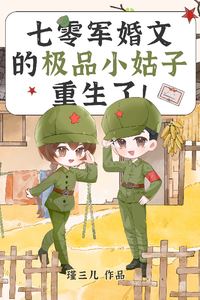
Reborn as the Villainous Little Sister-in-Law of a 1970s Military Romance Novel
+Add to Custom List
Genres:
Novel Info

Summary

... Read More

Shen Hehua is a seventeen-year-old girl living in the Lin City commune of Hei Province in 1972. In her previous life, she realized too late that she was a minor character in a military romance novel, destined to die alongside her family so that the protagonists could achieve happiness. Her third brother, Shen Jiandang, was manipulated by a female educated youth named Wu Laidi and her accomplice, Li Hao, into a scandal that ruined the reputation of his beloved, Zhao Xiaomei. The resulting pressure led to Zhao Xiaomei’s suicide, Shen Jiandang’s descent into alcoholism, and his eventual death at the hands of wild boars. After her own death, Hehua bonded with a failing System named Niu Niu, which erased her hatred and rebirthed her to the day the tragedy began, giving her the chance to alter her family’s fate.

Upon waking, Hehua immediately rushes to the river where Wu Laidi is staging a drowning incident to trap Shen Jiandang. Knowing the woman is a skilled swimmer pretending to be in distress, Hehua jumps into the water herself. She prevents her third brother from entering the river and, once close enough, strikes Wu Laidi unconscious with repeated elbow blows and slaps to vent her past-life resentment. She then drags the woman to shore while her brother subdues Li Hao, who was hiding in the grass as a planned witness. The villagers and the production team leader arrive, and Hehua carefully constructs a narrative that implicates Li Hao in the scheme without directly accusing Wu Laidi of the initial trap.

Li Hao, fearing severe punishment, confesses that Wu Laidi gave him grain to help her trap Shen Jiandang. Wu Laidi, upon waking, attempts to reverse the situation by claiming Li Hao attacked her, but Li Hao points out that his clothes are dry while she was found in the middle of the river, proving she entered the water voluntarily. Cornered, Wu Laidi admits to the plot but reveals that Li Hao also desired Zhao Xiaomei, intending to use Shen Jiandang’s marriage to her as a stepping stone. This confession inadvertently exposes the mutual affection between Shen Jiandang and Zhao Xiaomei, which had previously been hidden. The villagers, delighted by the romantic development, shift their focus from the scandal to the couple’s relationship.

The team leader punishes Wu Laidi and Li Hao with public self-criticisms, manual labor in the pigsty, and three months of monthly condemnation meetings, but spares them from legal prosecution since no physical harm came to the siblings. Hehua receives commendation for saving a life. Back home, she learns that her family is building a new house after separating from their eldest uncle’s household. She considers bringing her grandmother to live with them but is advised by Niu Niu to wait, as her grandmother needs to suffer enough to fully reject her eldest son’s neglect before she can be saved effectively.

Hehua also learns that Niu Niu requires energy from good deeds to stay active and that she must earn merit to exchange for items like a Strength Pill. The next day, while wandering the village, she encounters a group of children bullying a young boy from a politically disgraced family, forcing his head into the water. Hehua intervenes, saving the child and scolding the bullies. This incident occurs earlier than in her previous life due to the changes she has already made, signaling that the timeline is shifting. She resolves to continue protecting her family and preventing the tragedies that befell them, using her knowledge of the future and the System’s guidance to navigate the dangers of the era.

Novel Items

More
Plant
A stalk of foxtail grass that Xu Jingchu plucked from the ground and twirled between her fingers during her conversation with Lin Tingjun, making her appear casual and not sincere.
Document
A letter written in blood by Li Shu (the Empress Dowager) which she had sent to Minister Liu's residence while she was in captivity, but no one came to rescue her. She later did not reveal this detail in court to preserve her father's dignity.
Artwork
Jiang Sesè's painting that was identical in composition, color palette, and brushstrokes to Lu Zhenzhu's Metamorphosis. Jiang Sesè claimed it as her original work and used Gu Group sponsorship for its solo exhibition.
Event
The female educated youth carefully chose the perfect time, place, and circumstances to stage a drowning incident, forcing Shen Jiandang to save her. She pretended to be unconscious until they reached shore, then revealed she was faking to trap him with a witness.
Material
Grain that Zhao Qianqian plans to bring to the cowshed family in addition to the medicine and quilt they requested.
Item
Mentioned as the authority that should be contacted if Li Hao indeed attempted murder by pushing Wu Laidi into the river. Villagers suggested reporting the incident to them. Li Hao wanted to avoid being handed over to this organization.
Latest Release
DateGroupRelease
2026-08-11shanghai fantasy c15
2026-08-11shanghai fantasy c14
2026-08-11shanghai fantasy c13
2026-08-11shanghai fantasy c12
2026-08-11shanghai fantasy c11
2026-08-11shanghai fantasy c10
2026-08-11shanghai fantasy c9
2026-08-11shanghai fantasy c8
2026-08-11shanghai fantasy c7
2026-08-11shanghai fantasy c6
2026-08-11shanghai fantasy c5
2026-08-11shanghai fantasy c4

Community Reviews

Rating(3.7 / 5.0, 26votes)
5 stars
6(23%)
4 stars
6(23%)
3 stars
14(54%)
2 stars
0(0%)
1 stars
0(0%)

Popular reviews

... Read More
The cowshed. Just saying the word gives me chills. This is where the Xiao family lives — cleaning dung, doing manual labor, existing in the margins of a society that has officially declared them less than human. The Stinking Ninth Category. I keep thinking about how the author describes them in broad daylight, maintaining appearances, knowing that while regular villagers wouldn't deliberately harm one of their own, the educated youths at the production brigade's youth station were a completely different threat. There's this one detail that won't leave me — the grandmother and mother went out to graze cattle, leaving only Grandpa Xiao, Father Xiao, and two other families cleaning manure. The image of old men and fathers bent over cow dung in the daylight, while children play games learned from watching adults punish political enemies... it's cinematic in the worst way. You can see it. You can smell it. You can feel the humiliation radiating off every page. And the clinic scene! Barefoot doctor Wang Qingshan, herbs in his hands, immediately switching from concern to fury when he hears what happened. The way the author moves through these spaces — the brigade office, the clinic, the cowshed — each location tells you everything about power dynamics without a single exposition dump. The village chief's office is where decisions happen, the clinic is where bodies are treated, and the cowshed is where humanity is slowly ground down.
... Read More
I stayed up way too late reading these chapters and I have no regrets. The pacing here is absolutely masterful because the author knows exactly when to tighten the screw and when to let the reader breathe. Chapter 5 starts with Wu Laidi's dramatic awakening and immediate counter-accusation—high tension, everyone's on edge. Then Shen Hehua raises her hand like an obedient student and delivers her explanation. The tension doesn't drop; it shifts. Li Hao's dry-pants argument is the turning point where the whole tide changes. And then—just when you think it's going to resolve into a straightforward 'who's guilty' verdict—Wu Laidi flips the script again and exposes everything. The pacing accelerates from there like a car losing control. Shen Jiandang's blush, Zhao Xiaomei's running, the villagers transforming into a pack of excited matchmakers—it all happens in rapid succession and it's absolutely exhilarating. What I love is how the author uses the crowd's reaction as a pacing device. The villagers going from serious investigators to gossiping spectators mirrors the reader's own emotional journey. We're not sure whether to be tense or relieved, and the author lets us sit in that ambiguity. By the time the team leader announces his decision and the crowd starts dispersing, there's this wonderful sense of release—like a knot finally untying. The chapter ends not with a cliffhanger but with a kind of comedic afterglow, which is a smart choice because the story has earned its levity.
... Read More
Let me just say this: the System erased her destructive emotions but apparently NOT her trauma. Because Shen Hehua is out here crying tears while sprinting to the river, and the text literally says "Even after the System had erased her destructive emotions, the memory still struck her so hard that tears streamed uncontrollably down her face." That hit me right in the feels. She's remembering her third brother getting gored to death by wild boars, his body "mangled beyond recognition," and she's seventeen again and there's nothing she can do except RUN. The emotional core of this whole thing is so much deeper than a simple rebirth revenge plot. It's about a girl who watched her entire family die in multiple timelines, who was essentially trapped in a story she didn't write, and who formed a bond with a dying System just to get one more chance. The System didn't just give her a second life—it erased the hatred that would have consumed her so she could act with clarity instead of rage. But you can still FEEL the rage. It's in every elbow strike. It's in that manic grin while she's slapping the woman's face. And then there's the Zhao Xiaomei thread, which I know we haven't seen yet but the setup is already devastating. This woman who was supposed to hang herself, who wrote a blood letter, whose reputation was systematically destroyed by two people who didn't even care about her. The fact that Hehua is fighting to save ALL of them—her brother, Zhao Xiaomei, everyone—shows how deeply she cares. She's not just preventing tragedy, she's trying to rewrite an entire fate. That's not revenge, that's love. Fierce, desperate, swim-into-a-river-at-night love.
... Read More
Here's the thing that keeps me up at night about this story. Niu Niu is going into hibernation. Like, full self-preservation mode. She's weak, she's running on fumes, and the only way to wake her back up is for Hehua to earn energy by doing good deeds. But here's the catch—Niu Niu can't protect her anymore. She can't scan for dangers, can't warn about tigers and wolves and wild boars in the deep mountains. She can't even reliably locate ginseng. Hehua is on her own. And we just saw what 'on her own' looks like. She arrived at the ditch just in time, but what if she hadn't? What if the timing was off by five minutes next time? The stakes aren't just about survival. They're about responsibility. Every good deed earns energy. Every evil deed—'both of us will be erased.' The Main System isn't playing around. But the real tension isn't the system threat. It's the timing. Hehua saved the boy because she knew the plot. She knew when and where to show up. Once Niu Niu goes to sleep, that foresight is gone. She'll be navigating this world blind, making decisions without a narrator's advantage. And the world she's in? It's full of human traffickers, political persecution, child cruelty, and dangerous wildlife. The conflict isn't rising. It's already here. And Hehua just kicked a six-year-old in the backside and told him to go ahead and report her. She's not scared. But she should be... right? RIGHT?.
... Read More
The stakes in this story are set up so efficiently it's almost scary. We get the entire tragic backstory in Chapter 1—Zhao Xiaomei's suicide, the male educated youth's execution, the third brother's death by wild boars, the whole family's destruction—and by the end of Chapter 2, Hehua has already prevented the inciting incident. But here's the thing: preventing the first domino doesn't mean the story is over. It means the REAL conflict is just starting. The female educated youth is still alive. The male educated youth is still unconscious in the river. The village gossip machine is still ticking. And now Hehua has physically assaulted a fellow educated youth in front of her brother, which creates a whole new set of problems. How does she explain the elbow strikes? The slaps? The fact that she clearly KNEW this woman was faking? In an era where "reputation was almost as important as life itself," this is a minefield. What makes the conflict so gripping is that Hehua is fighting on two fronts: the external plot (stopping the trap) and the internal battle against the story's predetermined fate. The System warned her that her awakened consciousness was excluded from the story, that she could only watch tragedies repeat. Now she's actively REWRITING the narrative, and every action she takes is a rebellion against the plot itself. The wild boar death of her brother—was that fate or was it something else? The text raises this question and never fully answers it, which means every subsequent tragedy might have been manipulated by forces beyond the obvious villains. And the suspense? Insane. We know what's supposed to happen. We're watching Hehua try to prevent it in real time. Every scene is charged with the question: will she succeed this time, or does the story fight back?
... Read More
There's something deeply symbolic about the river in this story that I can't stop thinking about. The female educated youth stages her entire trap around water—she deliberately drowns herself (or pretends to) to trap Hehua's brother. Water is the weapon, the stage, the proof. And Hehua responds by entering that same water, but on her own terms. She doesn't just rescue the woman; she DOMINATES the water. The text describes her cutting through it "like a fish" while her brother watches in amazement. A fish. Not a drowning victim. A predator. The mermaid imagery is also loaded. The narrator calls her a "beautiful mermaid from Jiangnan's water towns" while also calling her brother a "big northeastern goose." This contrast between the southern woman (who uses water as a weapon of deception) and the northern sister (who uses water as a tool of protection and justice) feels intentional. The fake mermaid lures men to their ruin; the real mermaid saves them and beats up the liars. Then there's the System itself as a symbol. It's described as nearly out of energy, and Hehua's job is to earn energy for it. This feels like a metaphor for hope itself—something that's running on fumes but still worth fighting for. The System erased her hatred but not her memories, which suggests the story's thesis: you can't change the past by forgetting it. You change it by remembering everything and choosing differently. The river ditch where the trap is set becomes the place where fate is rewritten. Every elbow strike is a rejection of the predetermined plot.
See all reviews

Characters

See all characters

Custom lists

Oops…There is nothing here.