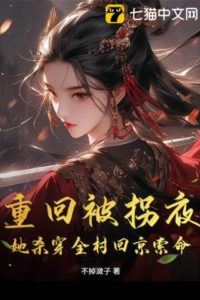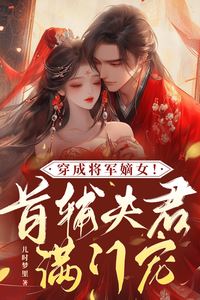
Reborn as the General's True Daughter! The Prime Minister Husband's Boundless Affection
+Add to Custom List
Genres:
Novel Info

Summary

... Read More

Mu Rong Shu, a modern medical expert trained in both traditional Chinese and Western medicine, transmigrates into the body of the fifth miss of the General Mu Rong family. The original host had been sent to Tian Men Mountain as an infant to escape a predicted short life, returning only at age sixteen. Upon her arrival at the capital, the entire Mu Rong household, led by the frail but spirited Old Madam, welcomes her with overwhelming affection. Mu Rong Shu, accepting her new identity, resolves to live a leisurely life as a pampered young lady while utilizing her medical knowledge to help her family. She discovers she possesses a portable space containing her former hospital and laboratory, which automatically replenishes medical supplies, serving as her unique advantage in this ancient world.

During a shopping trip with her mother, Song Wei, and second aunt, Rong Qing, Mu Rong Shu encounters a medical emergency. Rong Qing’s brother, Rong Yun Nan, suffers a severe asthma attack at their family’s shop. Mu Rong Shu immediately takes charge, using her modern medical knowledge to diagnose the condition and administering emergency medication from her hidden space. Her swift and effective treatment relieves his suffering instantly. Impressed by her skills, the family patriarch, Master Mu Rong, grants her access to the family’s largest pharmacy and provides generous financial gifts. Mu Rong Shu promises to cure his chronic asthma completely within a year, a feat that delights the entire maternal family.

Following this success, Mu Rong Shu returns to the Mu Rong residence and creates beauty creams for her grandmother, mother, and aunt, further endearing herself to the family. The narrative then shifts to the influential Wen family, rivals of the Mu family in both court and personal matters. The Wen family is plagued by a generational curse where each talented male heir dies young. The matriarch, Madam Wang, believes the curse can be broken when a mysterious bell carried by the youngest son, Wen Jing, rings. Earlier that day, Wen Jing fainted after his bell rang upon encountering the Mu Rong carriage. The family investigates and identifies Mu Rong Shu as the likely person responsible for breaking the curse.

Convinced that Mu Rong Shu is the key to their salvation, the Wen family decides to host a flower-viewing banquet to facilitate a meeting between Wen Jing and the fifth miss. Madam Wang visits the Empress, who is Rong Qing’s sister, to borrow rare peonies for the event. The invitations are sent out, causing confusion among the Mu family members, particularly Mu Si, who has a long-standing rivalry with Wen Ye. Despite the tension, the Old Madam insists that Mu Rong Shu attend the banquet as part of her social debut. Preparations are made for her to wear new, elegant clothing, and the family hopes the event will proceed without conflict between the two feuding branches.

The story establishes a dual conflict: Mu Rong Shu’s desire for a peaceful, comfortable life versus the growing political and familial entanglements that threaten to disrupt it. Her medical expertise draws her into the affairs of both the Mu and Wen families, while her hidden modern knowledge sets her apart from the people around her. The Wen family’s desperation to break their curse places Mu Rong Shu at the center of a supernatural mystery, while the Mu family’s doting nature creates a protective but potentially restrictive environment. As the banquet approaches, the intersection of these two powerful families sets the stage for future developments, with Mu Rong Shu navigating her new role as both a cherished daughter and a potential savior with a secret that could change the fate of the capital’s elite.

Latest Release
DateGroupRelease
2026-08-11shanghai fantasy c116
2026-08-11shanghai fantasy c115
2026-08-11shanghai fantasy c114
2026-08-11shanghai fantasy c113
2026-08-11shanghai fantasy c112
2026-08-11shanghai fantasy c111
2026-08-11shanghai fantasy c110
2026-08-11shanghai fantasy c109
2026-08-11shanghai fantasy c108
2026-08-11shanghai fantasy c107
2026-08-11shanghai fantasy c106
2026-08-11shanghai fantasy c105

Community Reviews

Rating(3.9 / 5.0, 46votes)
5 stars
18(39%)
4 stars
10(22%)
3 stars
14(30%)
2 stars
4(9%)
1 stars
0(0%)

Popular reviews

... Read More
There's this one scene at the General's residence gate where Wen Ye runs into Mu Si, and the whole thing plays out like a miniature sitcom. Mu Si immediately cancels his plans to guard his "precious treasure" Mu Rong Shu from Wen Ye's sharp tongue, and Wen Jing has to step in with polite bows to defuse the tension. It's funny, but what really makes it work is the sensory detail—the carriage arriving, Mu Si's cheerful greeting shifting to protective mode, Xiao Tao the servant hurrying to fetch Mu Rong Shu. The author doesn't over-describe, but the few details that are there land perfectly. You can picture the courtyard, the stone stools, the floral tea being served. And then there's Hui Shan Temple mentioned at the end, with the Wisdom Master's lecture and the breathtaking view behind it. The world feels lived-in, not just a backdrop. I particularly appreciated how the temple visit was set up through conversation rather than exposition—we learn about it because the characters are planning it, not because the author is info-dumping. It makes the setting feel organic.
... Read More
There's so much beneath the surface of this story, and I think the central symbol—the bell—is doing heavy lifting. It's not just a magical object that rings; it represents hope against inherited doom. The curse itself is fascinating as a metaphor. Every generation produces a brilliant heir who dies young. That's not just a plot device; it's a commentary on the cost of excellence, on how talent and tragedy seem to walk hand in hand in certain families. The bell ringing means the cycle can be broken, but the question is: at what cost? And who pays it? The flower-viewing banquet is also symbolic—it's a public display of beauty and prosperity, a celebration of life after generations of death. Peonies, the queen of flowers, borrowed from the Empress herself, tie the imperial family into this personal family drama in a way that feels almost fateful. And then there's the recurring theme of secrets—Wen Zhi keeping the curse from Wen Ye, the family hiding their pain, the political tensions simmering beneath polite conversations. The story seems to be asking: what happens when a family's darkest secret is finally revealed? Can they heal, or will old wounds resurface? The fact that Wen Ye and Mu Si can't stop fighting even when their families' futures depend on cooperation suggests that some curses aren't magical—they're human.
... Read More
Let me just say this: the Wen family dynamics in these chapters are fascinating. Wen Zhi protecting Wen Ye by not telling him about the curse? That's genuine brotherly love. And Wen Ye's reaction—crying and saying he could have shared the burden—shows how much he values family over his own peace of mind. But the thing that really got me was the Matron's reaction to the Wen-Mu tension. She literally says she'll break Wen Ye's legs if his lingering feelings for someone else ruin Jing Er's chances. I nearly fell off my chair laughing. The woman is ruthless and I love her for it. And then there's Mu Si—this guy who argues with Wen Ye constantly in court, and now they're supposed to be allies because of a potential marriage? The awkwardness is palpable. Even his own family notices how out of character his silence is at court. Meanwhile, Rong Qing's subplot about her pregnancy adds such warmth to the whole thing. She's genuinely excited for her brother, and her concern about the Emperor's complaints regarding Wen Ye and Mu Si shows how interconnected all these relationships are. The Empress herself is a character who matters—she's not just a background figure but someone whose favor could shift political dynamics. And the Matron's line about how she'd have to remind her second daughter-in-law to keep Wen Ye in line? That tells us so much about the family power structure without spelling it out.
... Read More
I need to talk about how the author builds tension here because it's masterful. We start with Wen Ye's disbelief — 'pinch me, this bell actually rings!' — and escalate from there until the entire Wen household is in chaos. But what makes it work isn't just the drama, it's the stakes. This family has been waiting years. Years of watching their youngest son suffer, years of hope crushed, years of accepting defeat. And now one bell ring has them all tears and panic and desperate hope. The doctor's diagnosis adds another layer — it's not his illness, it's excitement. His body is reacting to something positive for the first time in his life. But the real tension comes from what happens next. Wen Shou Fu immediately connects this to the Mu Rong carriage. He's not just relieved, he's calculating. This is a family that has survived on reading signs and interpreting omens. And Mu Rong Shu? She has no idea any of this is happening. She's back home thinking about beauty creams and carriage rides, while across the city a family is reevaluating their entire understanding of fate. The dramatic irony is killing me.
... Read More
Okay so let me just say this upfront: the entire plot hinge of these chapters rests on Mu Rong Shu's medical examination scene, and honestly? It works. She diagnoses both Wen Da Fu Ren and Wen Ye with treatable but deeply personal conditions, and suddenly the whole family dynamic shifts. The mother-in-law gets her confidence renewed, the husband gets put on a strict regimen, and Wen Jing becomes the enforcer. It's a clever setup because it forces characters into new relationships—Wen Jing supervising his own brother, Mu Rong Shu gaining trust and authority in the Wen household. The subplot with Liu Ru Yan's impending marriage is threaded in nicely too, giving us a secondary emotional arc that mirrors the main one. But here's what I'm wondering: is the "curse" that Mu Rong Shu supposedly broke ever going to be addressed directly, or is it just a convenient plot device at this point? The text mentions it once when Wen Da Fu Ren is thinking about how Mu Rong Shu saved Wen Jing, but that's it. It feels like a sword of Damocles that might never actually fall.
... Read More
Let me sit with this for a second. The bell. It's been broken for years. Wen Jing's family has accepted it as just another symbol of their curse, another reminder that their youngest son will never be whole. And then it rings. Not because he touched it. Not because he willed it. Because Mu Rong Shu's carriage — her very presence — passed by. I keep thinking about how the bell is described. It's attached to Wen Ye's waist, not Wen Jing's. But it rang anyway when they collided. The bell doesn't discriminate. It responds to the right person regardless of who's carrying it. That's not just plot convenience, that's thematic gold. The curse wasn't about weakness or fate — it was about proximity to the right person at the right time. And the imagery of the collision itself — two carriages, two families, one accidental moment that changes everything. The author keeps coming back to the idea that destiny doesn't announce itself with fanfare. It shows up as a bumped carriage, a ringing bell, a fainting spell. The mundane becoming the miraculous.
See all reviews

Characters

See all characters

Custom lists

See all custom Lists