Summary

... Read More

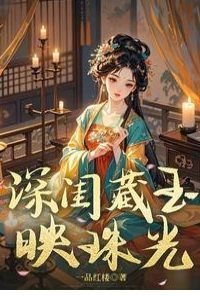
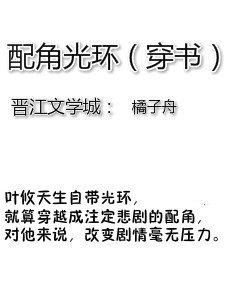
Chu Jingzhu, a wealthy socialite from her previous life, finds herself transmigrated into the body of a fictional character with the same name. In this new reality, she is married to Huo Xiao, the head of the Huo family, which is the wealthiest and most powerful clan in the country. The marriage was arranged by Mrs. Huo, the matriarch, who recognized the original Jiang Jingzhu as the kind girl who had once saved her life from a hit-and-run accident. The original owner of the body was a filial daughter who had married into the Huo family solely to secure funds for her mother Jiang Xue’s kidney transplant. Despite the immense wealth available to her, the original Jiang Jingzhu was too proud and self-sacrificing to enjoy her new status, working multiple jobs and neglecting her health until she died in a car accident shortly after her mother’s surgery.

Upon awakening in this new body, Chu Jingzhu quickly realizes she is a minor female supporting character in a novel she had read. The plot dictates that she is destined to die young, leaving behind a tragic end with no one to mourn her. Her only relative, her mother, is recovering but financially dependent on the Huo family. The original Jiang Jingzhu’s father, Chu Zhennan, is a man who abandoned his first wife and daughter for a wealthier marriage. He now attempts to re-enter their lives under the guise of charity, offering to pay for medical expenses, but Chu Jingzhu coldly rejects him. She threatens to expose his affair and illegitimate daughter, Chu Wansha, to the public, knowing that such a scandal would destroy his reputation and his daughter’s upcoming marriage alliance with the Chen family. This decisive action secures her and her mother’s independence from the Chu family.

The central conflict arises when Chu Jingzhu discovers she has only seven days to live. A system binds to her, revealing that her survival depends on establishing close physical contact with the person who possesses the strongest luck in the novel. Contrary to her expectations, this person is not the male protagonist but her own husband, Huo Xiao. The system outlines a strict timeline: a hug adds two hours, a kiss adds one day, and sexual intimacy adds fifteen days. To survive, Chu Jingzhu must navigate the cold, aloof, and workaholic nature of her husband, who has shown no interest in her since their marriage. Huo Xiao is known for his abstinent and self-controlled demeanor, having never shown romantic interest in anyone despite his status.

Chu Jingzhu begins her strategy by changing her behavior from the timid, self-neglecting original owner to a confident and affectionate wife. She discards her old, modest clothing and embraces the luxury goods provided by the Huo family, including a black card with no spending limit. She quits her part-time job, heeding the advice of Aunt Zhang, the villa’s housekeeper, who becomes a key ally. She also begins to study finance to complete her university thesis, utilizing the resources in Huo Xiao’s study. Unbeknownst to her, Huo Xiao observes her through hidden surveillance cameras, noting her serious demeanor and the subtle changes in her personality. He finds himself intrigued by her proactive approach, especially when she sends him affectionate messages and photos while he is on a business trip.

The turning point occurs when Chu Jingzhu sends Huo Xiao a photo of herself after exercising. The image triggers a significant reaction, causing his heartbeat value to rise from forty-five percent to fifty percent, indicating a shift from stranger to a friend with a strong presence. This success validates her strategy, but the stakes remain high. She must continue to deepen their emotional and physical connection before her seven-day deadline expires. Meanwhile, Chu Wansha, the illegitimate daughter, suspects that Jiang Jingzhu has received money from their father and confronts her family, leading to a tense domestic dispute that Chu Zhennan attempts to suppress to protect his business interests.

As the days tick away, Chu Jingzhu balances her academic responsibilities with her mission to win Huo Xiao’s affection. She navigates the complex dynamics of the Huo family, gaining the favor of Mrs. Huo and the loyalty of the staff. Her goal is not merely to survive but to rewrite her fate, transforming from a disposable supporting character into the beloved wife of the richest man in the country. The story follows her efforts to break down Huo Xiao’s emotional barriers, using wit, charm, and strategic intimacy to secure her future and protect her mother.

Latest Release
DateGroupRelease
2026-08-11shanghai fantasy c45
2026-08-11shanghai fantasy c44
2026-08-11shanghai fantasy c43
2026-08-11shanghai fantasy c42
2026-08-11shanghai fantasy c41
2026-08-11shanghai fantasy c40
2026-08-11shanghai fantasy c39
2026-08-11shanghai fantasy c38
2026-08-11shanghai fantasy c37
2026-08-11shanghai fantasy c36
2026-08-11shanghai fantasy c35
2026-08-11shanghai fantasy c34

Community Reviews

Rating(3.8 / 5.0, 5votes)
5 stars
1(20%)
4 stars
2(40%)
3 stars
2(40%)
2 stars
0(0%)
1 stars
0(0%)

Popular reviews

... Read More
I need to talk about this one detail because it stuck with me like a splinter. The original owner had FIVE MILLION in her Alipay account and STILL worked a temporary job for pitifully low wages. Five. Million. And the money came from Huo Xiao's secretary. She was sitting on a fortune and choosing to suffer. Jiang Jingzhu's reaction when she sees the balance: 'she resisted the urge to scold the original owner.' That's such a perfect moment of worldbuilding through character reaction. The author doesn't need to explain the whole history of their marriage—the bank account tells you everything. This woman had resources, had a husband who was providing, and still chose deprivation. Why? The text says 'self-esteem.' But it feels deeper than that. It feels like the original owner was so conditioned to believe she didn't deserve comfort that even having it didn't change her behavior. The villa itself is described as 'more European,' which the narrator notes isn't her favorite style but she'll redecorate later. That small detail—she's already thinking about making this space hers—tells you so much about who she is compared to the original owner. One person sees a prison; the other sees a blank canvas. And the phone! A niche brand, used for a long time, clearly overdue for an upgrade. The original owner had millions but clung to this cheap device. The contrast between the European villa and the outdated phone is the whole story of that character in one image.
... Read More
Okay so here's the thing that completely got me—Chu Jingzhu doesn't want to steal the male lead. Like, she's actively uncomfortable about the whole setup. The system tells her she needs to get close to Huo Xiao to survive, and her immediate reaction is basically 'I'm a good person, I don't want to be the third party in a love triangle.' That's rare. Most transmigration novels throw the protagonist right into romantic competition, but she's genuinely conflicted about it. But then the emotional layers just keep coming. She's thinking about her own parents and brother from her past life—wondering if the original Jiang Jingzhu ended up inside her body. Can you imagine carrying that kind of existential grief while also trying not to die? She says 'I don't know how sad they would be if she suddenly disappeared.' That hit me hard because it's not just about her own survival anymore; it's about two women's families both potentially losing someone. And then there's this moment with Aunt Zhang where Jiang Jingzhu just... melts. The woman scolds her gently, tells her to take care of herself, and instead of being defensive, she grabs Aunt Zhang's arm like a kid. 'I just feel that you are very kind, Aunt Zhang, and I want to be close to you.' That line just wrecked me a little. She's been through so much and still chooses warmth over walls. The Huo family backstory about the parents dying in a plane crash while accompanying each other to an award ceremony—those men in that family are all devoted to their wives apparently. That's the kind of detail that makes you believe this world has history, not just plot functions.
... Read More
Can we just take a moment for Aunt Zhang's voice because it is absolutely distinct and I love her already. She goes from scolding to soft to gossipy to sentimental in like three paragraphs and it feels completely natural. 'You are so stupid. You didn't tell us why you were feeling unwell.' That's not narration—that's a real person talking. The rhythm is right. The slight awkwardness is right. And then she drops the family secret like she's sharing tea with her granddaughter: 'I'll tell you a secret. The Huo family is full of infatuated men.' The way she 'looked around mysteriously' before whispering—that's character work through dialogue tags, not exposition. She's not just delivering info; she's performing it. Jiang Jingzhu's dialogue has a different texture. She's more measured, more strategic, but when she says 'I just feel that you are very kind, Aunt Zhang, and I want to be close to you'—that's the voice of someone who's learned to read people but is still capable of genuine warmth. The contrast between her internal calculations and her external softness is the whole joke and the whole heart of this character. The system's voice is appropriately flat and mechanical, which creates this funny tonal whiplash whenever it interrupts. 'Host 001 cannot directly detect the heartbeat value of the captured person'—that reads like a Terms of Service agreement compared to everything else. It works.
... Read More
Let me just say this: the system drop is perfectly timed. She wakes up, processes her situation, wonders about time travel mechanics, calls out to the void like any rational person would, and THEN—'Congratulations to the host for binding the female supporting system!' Boom. Right when you think she's alone, the system appears. That's good pacing. The author lets her have a moment of genuine vulnerability before giving her the tool, which makes the system feel earned rather than handed out. Then comes the real tension builder: seven days. She has seven days to live, and Huo Xiao is five days away on a business trip. Do the math with me—she has literally two days buffer before the clock runs out if something goes wrong. That's a ticking bomb under every scene. The chapter transitions are clean too. She gets the system info, formulates a plan, recovers from her fever, goes downstairs, talks to Aunt Zhang, checks the phone, learns about Huo Xiao's absence. Each beat moves the plot forward and raises the stakes. There's no filler here. Even the Aunt Zhang conversation, which could have been pure exposition, is used to establish that Huo Xiao is faithful and the family is loving—which actually raises the stakes because now we know she's not dealing with a scumbag husband, just a busy one. The cliffhanger energy is real even within a single chapter. Five days until he's back. Seven days until she dies. The math is doing the heavy lifting.
... Read More
This book has already flipped one of the most fundamental assumptions of the genre and I'm here for it. The system tells her that Huo Xiao, not the male protagonist, is 'the person with the strongest luck in this book.' The hero hasn't even grown up yet and his luck isn't the best. Huo Xiao would have been the luckiest person if he hadn't helped the hero later. That's such a rich thematic statement about what the story values—loyalty, sacrifice, quiet devotion over destined heroism. Then there's the symbol of the unused money. Five million yuan sitting in an account, untouched, while the original owner worked herself to death. That's not just a character flaw—that's a commentary on how self-worth and suffering get tangled up, especially for women who've been taught that enduring hardship is virtuous. Jiang Jingzhu's realization that she 'wouldn't treat herself like the original owner did' is a small but significant act of rebellion against that entire framework. The system itself is kind of a dark metaphor when you think about it. She has to make someone 'fall for her'—their heart has to be moved—to extend her life. Love as a survival mechanism. Connection as currency. It's almost dystopian wrapped in a romance premise. And the original owner potentially being trapped in her body? That's the kind of detail that turns a simple transmigration story into something about identity, about who gets to live and who gets to be forgotten.
See all reviews

Characters

See all characters

Custom lists

See all custom Lists