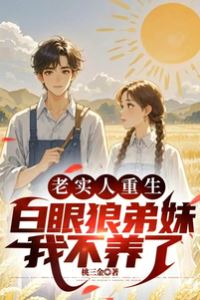
Reborn as an Honest Man I Refuse to Raise Those Ungrateful Siblings Again!
+Add to Custom List
Novel Info

Summary

... Read More

Lin Chaoyang dies in his previous life after being exploited by his younger siblings, who steal his medical funds while he is terminally ill. He awakens in his teenage body during the 1970s, retaining his memories and vowing never to be the self-sacrificing big brother again. Shortly after rebirth, he discovers he possesses a spatial ability that connects to a fully stocked modern supermarket, which he can enter at will. This supernatural asset provides him with unlimited access to food and goods, fundamentally altering his survival strategy in a time of scarcity.

The Lin family lives in extreme poverty under the care of eighteen-year-old Lin Chaoyang. His three older siblings—Lin Chaoyun, Lin Chaoxia, and Lin Chaoyu—are selfish and entitled, having grown accustomed to his labor and provisions. In contrast, the youngest brother, Lin Chaoxing, is gentle and caring, often sharing his meager food with Lin Chaoyang. Upon waking, Lin Chaoyang immediately changes his behavior, refusing to coddle the older siblings and forcing them to work in the fields to earn labor points. He sends the girls to gather pigweed and the boy to herd cattle, ending their era of idleness. He secretly consumes food from his supermarket space while maintaining a facade of poverty in front of his siblings.

Conflict escalates when Lin Chaoyun and Lin Chaoxia attempt to skip work by faking an accident. Lin Chaoyun falls from a mountain, an event that suggests she may also have been reborn, as her behavior becomes erratic and suspicious. Meanwhile, Lin Chaoyu steals grain from a neighbor to feed himself and is caught. Lin Chaoyang publicly disciplines him, beating him severely and locking him in a room to teach a lesson, further straining family relations. The siblings begin to suspect that their brother has changed due to a past-life memory, but Lin Chaoyang denies any supernatural knowledge.

A severe storm floods the village crops, threatening the community with famine. Lin Chaoyang decides to use his supermarket supplies to generate income. He disguises himself and travels to the county town, selling rice, noodles, and rapeseed oil to workers who lack ration coupons. He earns significant money, which he saves for future security. During one trip, he witnesses a human trafficker abducting a child. He intervenes, using pickled pepper brine to incapacitate the kidnapper and rallying a crowd to capture him. He hands the trafficker over to the police, saving the child who turns out to be the son of a high-ranking county official.

As a reward for his heroism, Lin Chaoyang is offered a permanent job at the Fuyuan County Coal Mine, granting him urban residency and a stable income. He also receives food rations as a gift from the county. He announces his departure to the city, choosing to take only Lin Chaoxing with him. He leaves the three older siblings behind in the village, refusing to support them any longer. Lin Chaoyun, convinced he has been reborn, accuses him of cruelty and attempts to rally village opinion against him by claiming he is hoarding food. Lin Chaoyang exposes her lies by showing the empty basket he is taking, forcing her to retreat in shame.

The older siblings, desperate and angry, plot to travel to the county and cause a scene at the coal mine to force Lin Chaoyang to share his resources. Lin Chaoyang anticipates this move and begins to establish connections at the mine to protect himself. He settles into his new life with Lin Chaoxing, determined to build a secure future while cutting ties with the siblings who betrayed him in his past life. The story concludes with Lin Chaoyang preparing to face the consequences of his siblings' retaliation while leveraging his new position and supernatural advantage to ensure his survival and prosperity.

Latest Release
DateGroupRelease
2026-08-11shanghai fantasy c51
2026-08-11shanghai fantasy c50
2026-08-11shanghai fantasy c49
2026-08-11shanghai fantasy c48
2026-08-11shanghai fantasy c47
2026-08-11shanghai fantasy c46
2026-08-11shanghai fantasy c45
2026-08-11shanghai fantasy c44
2026-08-11shanghai fantasy c43
2026-08-11shanghai fantasy c42
2026-08-11shanghai fantasy c41
2026-08-11shanghai fantasy c40

Community Reviews

Rating(4.2 / 5.0, 9votes)
5 stars
3(33%)
4 stars
5(56%)
3 stars
1(11%)
2 stars
0(0%)
1 stars
0(0%)

Popular reviews

... Read More
"If you don't know something, don't speak carelessly. No one's going to serve you these days." That line from Wu Liang is one of those sentences that does triple duty. It's practical advice for a naive newcomer. It's a window into an entire social system where service is a privilege not a right. And it's character revelation in one breath—you immediately understand that Wu Liang is someone who has learned to read a room, who knows the unspoken rules, who is genuinely trying to protect his new subordinate without making a show of it. The dialogue throughout these chapters has this same grounded quality. The logistics department women sound like actual working-class women—Zhang Qinghong immediately pulls out a shopping list when she hears Lin Chaoyang is traveling, Ye Honglian leans in with gossip energy, Wang Aixiang makes her request and moves on. They don't speak in thematic statements; they speak like people who have known each other for years and have developed their own shorthand. Even Lin Chaoyang's internal voice has a distinct texture. When he observes his sister with Tang Mao, his thoughts are clinical and observational—"From the way she was standing, it looked as if she were a young woman in love, waiting for her suitor." He's analyzing human behavior the way a naturalist might study animals. When he's in his supermarket space selecting shoes, his thoughts are practical and profit-oriented. His internal monologue shifts tone depending on what's at stake, which is a sign of a writer who understands that voice isn't just about what characters say—it's about how they think. The cashier's snap—"What, you want us to serve you too?"—is brutal in its brevity. Two lines of dialogue and you've captured an entire class dynamic. The author doesn't need to explain that these restaurant workers held power in a scarce economy; the cashier's attitude teaches you that faster than any description could.
... Read More
I keep coming back to one tiny moment and I can't shake it. Lin Chaoxing, four years old, standing there waving goodbye to his older brother as Sister Zhang Qinghong takes him. The text says he was "very mature and understanding"—but that word "mature" hits different when it's applied to a preschooler. This kid has already learned that his brother is important, that his brother's work matters, that sometimes people have to leave and there's nothing to do but wave. There's no tantrum, no clinginess, just this quiet acceptance that probably breaks my heart more than any dramatic scene could. And Lin Chaoyang—god, the man is emotionally constipated to the point of art. He observes his sister's romantic life with the detached interest of a scientist watching bacteria grow in a petri dish. Tang Mao failed the exam, Tang Mao's family is crammed into a tiny room, and Lin Chaoyang files all of this away like intelligence data rather than family concern. But then he personally ensures his four-year-old brother is safe, comfortable, and loved before he leaves for days. The emotional calculus is brutal and clear: some bonds he will protect with his life, others he will let play out naturally even if they lead to disaster. What's interesting is that the text never judges him for this. It just presents it. We're meant to understand that this is how survival works when you've lived two lives and seen what happens when you're soft with the wrong people. The tragedy isn't that Lin Chaoyang is cold—it's that the world has made coldness a rational choice. Every time I read the scene where he packs Lin Chaoxing's things and walks him to the Zhangs', I feel this ache because I know exactly what kind of world this is, and I know that a four-year-old shouldn't need to be this understanding.
... Read More
Okay so this whole sibling confrontation at the mine gate is genuinely brilliant plotting. Let me tell you why. On the surface it's a familiar drama—ungrateful siblings show up to extort money, big brother stands his ground. But the author drops this tiny, devastating detail that changes everything. When Lin Chaoyun shouts, "Are you trying to be landlords now, exploiting others?"—wait, no, that's the coworkers. Lin Chaoyun herself says things that accidentally cross a political line in this era. And then it hits her: "Lin Chaoyun's heart jumped. She had forgotten—this was an era where one careless statement could ruin you." That's the kind of plot detail that makes you sit up. These kids aren't just selfish—they're dangerously ignorant of the political climate. One wrong word and they're not just embarrassing their brother, they're risking arrest. The author doesn't even need to spell it out; we feel the terror in that single moment of realization. And the housing assignment subplot? Clever. It's not just world-building—it directly sets up future conflict. People coming to Lin Chaoyang for information, trying to buy his vote. He's becoming someone with influence, and that means more people want something from him. The mine isn't just a workplace; it's a microcosm of power dynamics. The pacing here is also worth noting. Chapters 34-40 move from establishing his new job, to the first hint that his siblings might come looking, to the full confrontation, to the aftermath where his coworkers rally around him. It's tight. No filler. Every scene pushes either the plot or character development forward.
... Read More
I need to talk about Zhang Qinghong and Ye Honglian because WOW. These two women went from "nosy coworkers" to "fierce protective figures" in about three pages and I am HERE for it. When the siblings start making a scene at the mine gate, Zhang Qinghong doesn't hesitate. She storms out and starts yelling: "How can you treat your big brother like this? He finally got a job—what are you trying to do?!" And Ye Honglian matches her energy. These aren't his blood relatives. They're coworkers who barely know him. But they see injustice and they react. That moment where they're both shouting at his siblings, defending him in front of the whole mine, gave me actual chills. Not because it's dramatic for drama's sake—but because it's so human. These women saw someone being mistreated and couldn't just stand by. Compare that to Lin Chaoyun, Lin Chaoyu, and Lin Chaoxia—his actual blood siblings. They showed up demanding food they had no right to demand, crying and shouting in public, trying to guilt him into giving them everything. And the age gap detail really stings: Lin Chaoyang is working and providing while they're fifteen and thirteen, perfectly capable of working but choosing to sit at home and wait to be fed. The Lin Chaoxing moments hit different too. That kid sitting obediently on the bed, trying to make the bed neatly, waiting for his brother without complaining even when he needed to pee—this is the sibling who actually deserves his love. The contrast between the two groups of siblings is almost cruel in how clearly it's drawn. I'm also curious about that one person in the office who gave a half-hearted clap. Who is that? The author planted that detail and I'm waiting to see where it goes.
... Read More
Can we just appreciate how distinct every character sounds in this text? Like, I could tell who was speaking without looking at the dialogue tags. Zhang Qinghong is the loud, warm, no-filter type. Her dialogue is full of action—"clicked her tongue and made a swatting motion in the air," "mock-scolded," "spat on the ground." She's physically present in every scene. When she yells at the siblings, it's raw and immediate: "You ungrateful wretch! Without your brother, you'd all be dead already!" Ye Honglian is similar in energy but slightly more measured. She's the one who delivers the practical wisdom: "It's more important to save up for your own future—find a wife someday." She's caring but also realistic. Wang Aixiang is the blurt-first-think-later one. "Then how come there's such a big age gap between you and your brother?" She can't keep a question inside her. Classic. And the siblings—oh man, the siblings. Lin Chaoyun's dialogue is manipulative even when she's crying. "Big brother, are you trying to starve us to death?!" That's not a question. That's an accusation dressed up as concern. And then her pivot when she realizes the political danger: "Big brother, we didn't mean anything by it. We just missed you." Smooth. Too smooth. She's performing empathy, not feeling it. Lin Chaoyang's own voice is restrained but powerful when it counts. Most of his dialogue is quiet—"I'm used to it," "I don't owe you anything anymore." But those quiet lines hit harder than any shout could. The author knows exactly when to make him loud (the scene at the gate) and when to let him be still. The coworker banter in the office also feels natural—teasing Zhang Qinghong about being the department loudspeaker, the easy rhythm of people who've worked together for years. It makes the mine feel like a real place with real relationships.
... Read More
Let me just say this: the state-run restaurant scene is one of the most vivid pieces of worldbuilding I've read in ages, and it's only a few paragraphs long. Wu Liang takes Lin Chaoyang to this grand-looking restaurant near the provincial station, and within minutes you understand an entire economic system. You have to order at the counter. You pick up your own food. The cashier glares at you if you ask for service. Wu Liang has to explain, in a lowered voice, "If you don't know something, don't speak carelessly." They clean up their own bowls afterward. Three yuan for a meal that most workers couldn't afford twice a month. This is 1970s China rendered in sensory detail without a single exposition dump. The grain tickets that Wu Liang carries are mentioned almost casually—"the department has already prepared them"—but they represent the entire planned economy that governs every aspect of life. The fact that Lin Chaoyang's first thought after the meal is that he'd rather eat instant rice from his supermarket space tells you everything about how alien this world is to him, even as he navigates it. But the scene that really lives in my head is the train journey. "After another full day of swaying on the train"—that single phrase contains so much. The physical exhaustion, the uncertainty of the route, the way a simple procurement trip becomes an odyssey. Qingzhou City as "the provincial capital of the neighboring province" sounds routine in the text but for anyone who's lived in this era, it represents days of travel, overnight guesthouses, the constant movement that defined work life before modern infrastructure. Every detail—the guesthouse rooms shared with mentors, the state-run restaurants, the grain exchange negotiations—builds a world that feels lived-in and real. The author doesn't need to explain the political context; the texture of daily life does it for you.
See all reviews

Characters

See all characters

Custom lists

See all custom Lists