Summary

... Read More

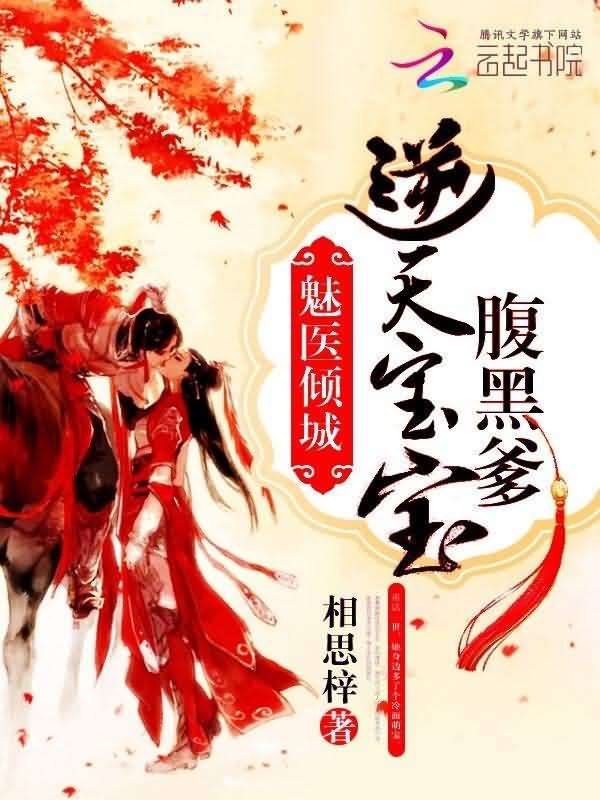
Jiang Ran, heir to a family of traditional Chinese medicine, has developed new medicines and won numerous awards, but what she wanted was cooking and eating delicacies.

After years of diligence, Jiang Ran finally won the National Food Contest, but she transmigrated into a book. She was divorced by the male protagonist of the book and eventually died on the street.

The original owner in the book has fat head and big ears, oily pox on the face, lazy and selfish.

Before she divorce by the male lead, she bullied the male lead’s parents, siblings, and after the divorce, took their son to the streets.

Jiang Ran who transmigrated in the book: “…”

So…

Jiang Ran transmigrated in the book.

In order to avoid tragic death on the street, she cook food, open restaurants, save people diligently, and treat more illnesses.

She paid off the money that the original owner owed to her in-laws and raised the son who would become the villain in the original book.

As for the husband?

“When will you come back, and ask for a divorce!”

Male protagonist:

Pei Huai is about to graduate and is going to go home.

But he found that the content of the letter sent by his younger brother and sister had changed recently.

Brother: Sister-in-law cooks so delicious! Like sister-in-law!

Sister: The clothes made by my sister-in-law are so beautiful! Like sister-in-law!

Pei Huai felt that things were not like it should be, so he decided to go home and have a look.

As soon as I entered the house, he faced a bright and beautiful face: “Husband is back? Did you come back for a divorce?”

Pei Huai said shamelessly: No, I am not!

Community Reviews

Rating(4 / 5.0, 6votes)
5 stars
3(50%)
4 stars
0(0%)
3 stars
3(50%)
2 stars
0(0%)
1 stars
0(0%)

Popular reviews

... Read More
When I initially read, I didn't pay much heed to the first 11 chapters or so, thus skipping over the kidnapping plot. It wasn't until I reached Chapter 100 that I realized its significance. Despite the excellent character development and engaging storyline, the setting leaves much to be desired. The prohibition on the protagonist's education due to their impoverished background, where only the eldest sibling can attend school for a better future, is understandable. However, the transplantee's resentment towards the original character (OC) is reprehensible. As someone from a modern era, she should empathize with the OC's struggles and depression, rather than expecting her to instantly adapt to a loving family dynamic.

The MC's behavior is despicable, especially his hatred for the OC and lack of affection towards her. His sudden change of heart when the FL (Female Lead) becomes attractive and financially successful is unjustifiable. Moreover, he never even met his own child. If the context were different, I might have enjoyed it more, as positive in-laws are rare in this genre. Overall, if one overlooks the initial chapters and the flawed characters, the writing quality and pacing are commendable. The short chapter lengths could have been improved, though.
... Read More
This narrative serves as a unfortunate illustration of deeply ingrained misogyny in some aspects of Chinese culture, showcasing issues such as:

- Exploitation through wife trafficking
- Forced into a subservient role, expected to solely cater to her in-laws
- Being deprived of educational opportunities
- Blaming the female lead (FL) for any misfortunes

Despite being transplanted into this situation, the FL paradoxically develops feelings for her captors and neglects her own family. It's truly disheartening and unsettling.
... Read More
Honestly, after reading the previous review, I had no intention of picking up the novel, but now that I've started... I'm unsure if I'll continue or quit halfway through, and I'm leaning more towards the latter.

From the very beginning, it's clear that I don't have any liking for the female lead (FL). In fact, I might say I despise her. Even if she could potentially become an incredible person, her actions right from the start are utterly unacceptable to me. The original female lead (OFL) might have had flaws, but she wasn't a villain – it's the male lead (ML) and his family who deserve the blame. OFL being kidnapped and sold is not their fault, but keeping her as a child bride is where their moral compass lost its way. They might have had legitimate reasons for not providing her with education due to poverty, but the ML marrying and then abandoning OFL is unforgivable. It was his family's decision to wed her, not hers; he could have run away if he couldn't handle her. Knowing she was lazy and贪婪, he couldn't have been coerced into the marriage.

The FL, coming from the future, seems to place the blame solely on OFL for everything that happens, without considering that at most, OFL might be responsible for 10% of the issues, while 90% should be attributed to the ML and his family, who are equally, if not more, deserving of criticism.
... Read More
I came across some negative reviews for this novel, where people were criticizing the characters, particularly the family. I'd like to express my thoughts. Although the family's actions might be controversial, they should not be unfairly labeled as child traffickers. In Chapter 423, Jiang Ran explains that what happened was an unfortunate accident – they couldn't predict or prevent it, and it's a tragic reality. They took in the young girl, who faced unimaginable hardships, and eventually selling her to the Peis was a stroke of luck compared to other possible outcomes.

The Pei family treated Jiang Ran as a daughter-in-law, despite her initial status as a child bride. They struggled financially, especially during her teenage years. Jiang Ran acknowledges their efforts to provide for her, despite their limitations. She points out that without their intervention, her fate could have been much worse.

The author's intention is not to justify human trafficking; rather, they emphasize the complexities of the situation and the emotions involved. It's easy for us to judge without experiencing similar circumstances. Empathy is crucial, but it's not enough to fully comprehend. The story shows how people acted based on the choices available to them at the time.

In Chapter 425, Wang Cuilan's perspective reveals her genuine concern for Jiang Ran's well-being. Buying her from the traffickers was a selfless act, driven by fear for her safety. While it technically counts as human trafficking, it was a desperate attempt to save her from potential harm.

So, if anyone is looking for blame, it should be directed towards the kidnappers, not the family or the male lead, whose actions were driven by a different set of circumstances.

Regarding the claim that the male lead is a rapist, it's important to note that the book states he initially didn't want to marry her but was coerced by OG Jiang Ran. This clarification is crucial in understanding his character development.

Lastly, I would advise readers to approach reviews with an open mind and read the book thoroughly, as some opinions may be influenced by biases. This novel has its merits, and I'm enjoying it, which is why I felt the need to address these points for those genuinely interested in giving it a chance.
... Read More
love every detail of this story. deserved to be recognized ...
... Read More
Please update I love this book! Well really all your books!
See all reviews

Custom lists

Oops…There is nothing here.