Rebirth: The Young Wife of the 1980s
+Add to Custom List
Genres:
Novel Info

Summary

... Read More

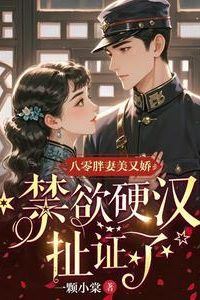
Jiang Ci was a seventeen-year-old girl in 1970s China who died at thirty-two after spending half her life in prison. In her previous existence, she had fallen down a mountain slope while picking chestnuts and was rescued by Gu Qingchuan, a young man from a family with a landlord background. Gu Qingchuan carried her for six hours to the hospital, but while she was in a coma, her grandmother and aunt conspired to frame him for harassment. They accepted 500 yuan from Gu Qingchuan’s aunt to fabricate evidence, ruining both Jiang Ci’s reputation and Gu Qingchuan’s freedom. After her release from prison, Jiang Ci reunited with Gu Qingchuan, who had become a successful businessman, and they shared ten happy years before she died of illness, regretting that she had not woken up sooner to save him. Upon opening her eyes, Jiang Ci found herself reborn fifteen years earlier, back at the moment she woke up in the hospital. Determined to change her fate, she overheard her grandmother and aunt plotting to sell her innocence for money and immediately fled the hospital to clear Gu Qingchuan’s name.

Jiang Ci rushed to the police station and provided a statement proving that Gu Qingchuan was a hero who had saved her, not a harasser. She exposed the torn blouse her grandmother had destroyed to fabricate evidence of assault. The police officer, sympathetic to Jiang Ci’s situation and recognizing the injustice, released Gu Qingchuan. Meanwhile, Jiang Ci returned home to confront her family. Her grandmother had already sold her grandfather’s prestigious job at the Qinchuan Machinery Factory to a relative for 800 yuan, intending to give it to her own grandnephew. Jiang Ci revealed the bribery and the false accusations, forcing her grandfather to cancel the sale and reclaim the job for her. She also stood up to the family’s patriarchal abuse, refusing to let her mother, Lin Wan, continue serving the household as a free maid. Lin Wan had waited seventeen years for her missing husband, Jiang Guozhu, who had abandoned her for another woman.

The family dynamics shifted dramatically when Jiang Guozhu returned with his new wife, Kang Guixiang, and four children. It was revealed that Kang Guixiang was also reborn. In her previous life, she had stolen Jiang Ci’s diary, which contained predictions of the future, and used it to manipulate events. She had caused Jiang Ci to remain in a coma, stolen her job, and driven Lin Wan to an early grave. Having experienced a second life where she became wealthy through manipulation, Kang Guixiang returned to the Jiang household with the intent to repeat her success. However, Jiang Ci’s early awakening disrupted Kang Guixiang’s plans. Kang Guixiang searched for the diary, hoping to regain control of the narrative, but Jiang Ci had already secured her position and protected her mother.

Jiang Ci discovered that the diary in her possession contained supernatural entries that predicted future events, serving as a guide for her actions. She also possessed a spiritual spring within her body that could heal ailments and improve health, which she began using to protect her mother from the heart condition that had killed her in the past life. As Jiang Guozhu attempted to reclaim his place in the family and take the job from Jiang Ci, she firmly rejected him, declaring him dead in her eyes. The conflict escalated as Kang Guixiang tried to undermine Jiang Ci, but Jiang Ci remained vigilant, using her knowledge of the future to counter every move. The story follows Jiang Ci as she navigates family betrayal, economic hardship, and supernatural challenges, determined to build a secure future for herself and her mother while ensuring Gu Qingchuan is recognized for his goodness rather than punished for his background.

The narrative explores the power dynamics within a large, multi-generational household where women are often exploited for labor and dignity. Jiang Ci’s rebirth gives her the agency to challenge these norms, asserting her right to employment and respect. Gu Qingchuan, freed from prison, begins to rebuild his life and business, eventually becoming a significant figure in the region. Jiang Ci supports him, and their relationship develops from one of gratitude and shared trauma into a partnership based on mutual respect and love. The antagonists, including Jiang Ci’s grandmother, aunt, and Kang Guixiang, face the consequences of their greed and malice. Kang Guixiang’s attempts to steal the diary and manipulate Jiang Ci fail, leading to her isolation and eventual downfall. Jiang Ci’s strategic use of the spiritual spring and the diary’s insights allows her to anticipate and neutralize threats before they materialize. The story concludes with Jiang Ci securing her job, protecting her mother, and standing alongside Gu Qingchuan as they face the uncertainties of the changing times, having rewritten their destinies through courage and foresight.

Latest Release
DateGroupRelease
2026-08-11shanghai fantasy c40
2026-08-11shanghai fantasy c39
2026-08-11shanghai fantasy c38
2026-08-11shanghai fantasy c37
2026-08-11shanghai fantasy c36
2026-08-11shanghai fantasy c35
2026-08-11shanghai fantasy c34
2026-08-11shanghai fantasy c33
2026-08-11shanghai fantasy c32
2026-08-11shanghai fantasy c31
2026-08-11shanghai fantasy c30
2026-08-11shanghai fantasy c29

Community Reviews

Rating(3.6 / 5.0, 41votes)
5 stars
10(24%)
4 stars
8(20%)
3 stars
18(44%)
2 stars
5(12%)
1 stars
0(0%)

Popular reviews

... Read More
There's this one line that I keep coming back to: "Lin Wan shivered with emotion, realizing that there wasn't a decent person in this family, and still her daughter cared for her." Just that. That's the whole emotional core of the book right there. Seventeen years of waiting. Seventeen years of raising two kids alone while her husband was supposedly dead. And the first person who stood up for her wasn't some romantic hero — it was her daughter, jumping up and flipping a table. The mother-daughter bond between Lin Wan and Jiang Ci is the most genuine thing in this story. It's not about grand gestures or dramatic confessions. It's about Lin Wan bringing her father-in-law a cup of tea even while she's furious, telling her daughter "Both of us have salaries; we won't starve" like she's already planning their escape. She's grieving but she's also strategizing. And then there's Zhong Huihui, the second aunt, who actually spoke up for Lin Wan — "Ten years ago, my sister-in-law was only twenty-seven, in the prime of her life. If the Jiang family had provided a dowry, she could have found a decent man to live with rather than facing this humiliation today!" That woman took a slap from Grandma Xu and then slapped her own husband instead of staying silent. These women are surrounding themselves with other women because the men in this family are all useless. Jiang Guozhu didn't even feel guilt when he saw Lin Wan — he was worried about her being uncomfortable around his new woman. The emotional damage this family has caused is layered and deep, and the author doesn't shy away from showing how Lin Wan's pain is real but she's not broken.
... Read More
I'm not even gonna lie, Jiang Ci is my favorite character in this entire book and I don't care who knows. The moment she kicked over that dining table — "My dad is actually alive and has taken a little wife! You all band together to bully my mom!" — I screamed. She didn't hesitate. She didn't try to be polite or play the good granddaughter. She saw her mom being attacked and she went to WAR. And the way she dismantled Jiang Guozhu later? "You weren't satisfied with an arranged marriage and didn't want to marry my mom; my beautiful mom doesn't even want you." CHILLING. She looked at this man who abandoned her family for seventeen years and reduced him to mosquito blood. But what really got me is the relationship between Jiang Ci and Lin Wan. It's not performative. Lin Wan says "Mom doesn't want to cry; I'm just angry" and she meant it. She's devastated but she's also calculating — "You need to secure your grandpa's job. Don't let that black-hearted Jiang Guozhu take advantage of us." A mom whose first instinct after learning her husband is alive and cheating is to protect her daughter's future. That's not weakness, that's steel. And Grandpa Jiang slapping Grandma Xu? That was the moment I knew the family hierarchy was about to shift. The old man finally saw through the matriarch's manipulation.
... Read More
The stakes in this chapter are SO high and I need to talk about why they work so well. Let's start with the bet. Five thousand yuan in one year. That's not a typo — that's five thousand yuan. In the context of this story's economy, where a regular hen costs one yuan thirty cents a catty, this is an almost absurd amount of money. Jiang Ci is essentially betting her entire future — her job, her home, her dignity — on a number that seems impossible. And the fact that she accepts the bet so quickly, without hesitation, tells you everything you need to know about her character. She's not doing this because she's confident she can win. She's doing it because she has no choice. Kang Guixiang's motivation is equally clear: she wants the mansion that will be worth fifty thousand yuan. She's calculated the odds, she knows Jiang Ci won't succeed, and she's adding extra conditions (forbidden from entering the Jiang home, Jiang Guozhu can't come back) to make sure Jiang Ci has no safety net even if she somehow wins. This is a woman who is playing chess while everyone else is playing checkers. But the stakes aren't just about money. They're about family. Grandpa Jiang is risking his relationship with his own son — Jiang Guozhu — over this. He's taking sides, and he's making it clear that if Jiang Ci fails, she loses everything. Meanwhile, Jiang Guozhu is caught in the middle, unable to protect either his daughter or his new wife because he's too weak to make a decision. And then there's the subplot with Gu Qingchuan. He's already in the black market, already running an underground operation, already risking prison. When Jiang Da Sheng tells him "you should earn enough quickly and marry her," it's clear that his own safety is on the line too. If he gets caught, Jiang Ci loses her ally, her love interest, and her connection to the world outside Grandpa Jiang's control. Every conflict in this chapter is layered. Money, family, love, survival — they're all tangled together and pulling in different directions. I was genuinely worried for Jiang Ci throughout this chapter. She's walking a tightrope with no net, and everyone around her seems to be either pushing her toward the edge or trying to pull her back for their own reasons.
... Read More
The scene where the whole family gathers in the main hall is incredibly cinematic. You can literally see it — the old Jiang family huddled together, the courtyard gate closing behind Jiang Guozhu and Kang Guixiang, the front door of the main hall shutting them in. The author doesn't give us a single description of the room, but somehow you feel the weight of it. This is a house where Lin Wan managed everything for ten years while being treated like free labor. Where the second and third sons are all living off her. Where Grandpa Jiang's job is the prize everyone's fighting over. And then there's Kang Guixiang glancing up at the staircase, thinking about the diary hidden in the camphor wood trunk on the second floor. That detail — the upstairs room that belongs to Jiang Ci and Lin Wan — it creates this invisible tension in the physical space. Kang Guixiang is physically present in the hall but mentally already upstairs, hunting for the notebook. Jiang Ci notices this and becomes cautious. The setting itself becomes a weapon. Every corner of this house has history — the dining table that gets kicked over, the main hall where family hierarchy plays out, the guesthouse where the usurpers wait. The world feels lived-in and oppressive at the same time. It's a traditional Chinese family home where everyone knows their place and the women are constantly being used and discarded. The author builds this atmosphere through action and implication rather than description, which is honestly more powerful.
... Read More
I need to talk about Lin Wan because this woman is carrying the entire emotional weight of this story and barely anyone else seems to notice. Seventeen years. Seventeen years waiting for a husband who went to the frontier for construction and never came back. No marriage certificate, no closure, and she still refused to terminate the pregnancy when her own family told her to. She stayed in the Jiang household, raised a daughter alone, and never once gave up on honoring a man she barely had time with. That's not just loyalty—that's a kind of stubborn grace that most novels would turn into pathetic suffering, but here it reads as something fierce. And then there's her relationship with Jiang Ci. While Grandma Xu is out here selling her own granddaughter's reputation for 500 yuan, Lin Wan is the only one who actually looks at Jiang Ci and sees a daughter worth protecting. When she says 'This family has turned heartless and callous; they were not allowed to harm her daughter'—chills. Actual chills. The dynamic between Jiang Ci and Gu Qingchuan is interesting because it's already established in the previous life. He carried her on his back for six hours, got framed, spent years in prison, then spent ten years becoming the richest person in Qin Province and giving her the happiest years of her life. That history is doing a lot of heavy lifting. In this timeline, Jiang Ci is determined to 'seek him out' but not right now—she has to handle her home situation first. There's a restraint there that feels very true to who she's become. Grandma Xu and Jiang Hongyu are basically cartoon villains at this point, but in a way that serves the story. Their cruelty is so blunt and unvarnished that it makes every other relationship feel more precious by contrast. The policewoman is the only adult who actually listens to Jiang Ci, and I'm already wondering how her own backstory—fighting her mother over a job inheritance—mirrors Jiang Ci's situation.
... Read More
This story keeps circling back to one question: what does it mean to be 'whole' when your body or your circumstances have been broken? Cui Pingzhou lost his legs in war. He lost his brother. He lost his mother. He lost his will. His body is a map of everything that was taken from him, and the gun to his forehead is the final statement — if I can't control my body, I'll control my death. That's not weakness. That's a man trying to reclaim agency in the only way left to him. Lin Wan's body is also a site of sacrifice. She's been a caretaker for over a decade. Her own marriage was ruined by family arrangement. She gave up her hospital position, her independence, her chance at a different life — all to stay beside a man who couldn't even look at her without seeing his own inadequacy. When she proposes, she's not just solving a family problem. She's saying: my body, my choice. I will stay because I decide to stay, not because I'm trapped. The engagement to Gu Qingchuan is another kind of cage — not physical, but social. Cui Yuanshan wants to use Duoduo's body as a pawn to satisfy his pride. 'I must uphold the promise made with his grandfather.' A promise. Not love. Not consent. Just face. And then there's the wild chicken soup — Xiao Ci making it for her mom, the little domestic rituals that say 'we are still a family, we still take care of each other.' Food as love language in a story where everything else is transaction and control. The deeper I go, the more I see: every character is fighting to own their own body and their own choices. Some with guns. Some with marriage certificates. Some with soup.
See all reviews

Characters

See all characters

Custom lists

See all custom Lists