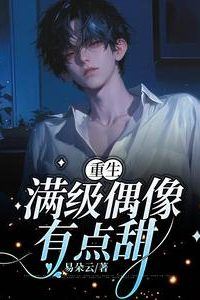
“Rebirth: The Full-Level Idol is a Little Sweet”
+Add to Custom List
Genres:
Novel Info

Summary

... Read More

Tang Qu, a celebrated Movie Emperor in his previous life, dies in a wire-suspension accident on a film set and is reborn into the body of an eighteen-year-old film student with the same name. The original owner was an orphan adopted by a couple who later had a biological child, leaving him neglected and emotionally vulnerable. Obsessed with Guan Yan, the youngest Movie Emperor in the country, the student had modeled his acting style after his idol. When Guan Yan publicly criticized him on social media for riding on his fame, the student committed suicide. Tang Qu inherits this ruined reputation and a life of financial struggle, finding himself penniless and unknown in a parallel entertainment industry where his past accolades do not exist.

Initially reluctant to return to acting, Tang Qu is forced by poverty to accept his manager Zhang Yong’s assistance. He discovers that his imitation of Guan Yan was not mere copying but an unconscious absorption of the idol’s essence, a nuance recognized by the veteran actor Old Zhang. Under Old Zhang’s guidance, Tang Qu begins to refine his craft, learning to shed the shadow of his predecessor and develop his own artistic identity. His first major opportunity arises when he auditions for the role of Qing Xuan, an immortal master, in Director Chen Ke’s highly anticipated fantasy drama Demon Soul. Despite competition from established stars, Tang Qu’s profound understanding of the character and his innate acting ability secure him the part, marking his official entry into the industry.

As Tang Qu prepares for his debut, the narrative shifts to Guan Yan, whose perspective reveals a complex inner world. Guan Yan, aware of the student’s tragic end and his own role in it, begins to observe Tang Qu with growing curiosity. Their paths cross at the premiere of Guan Yan’s new film, where Guan Yan is struck by the young actor’s mature aura and distinct presence. Later, during the production of Demon Soul, Guan Yan’s attention is repeatedly drawn to Tang Qu. The tension between the two is palpable; Tang Qu views Guan Yan as a benchmark of excellence to be understood and potentially surpassed, while Guan Yan sees in Tang Qu a reflection of his own past and a mystery he cannot ignore.

The story explores the dynamics of fame, fandom, and artistic integrity. Tang Qu faces relentless online harassment from Guan Yan’s fanbase, the Maidens’ Army, who view him as a parasite. However, Tang Qu remains composed, focusing on his work and his growth as an actor. He forms a respectful relationship with Director Chen and his co-stars, including the talented but naive male lead Yu Ting. Meanwhile, Guan Yan’s actions become increasingly unpredictable; he posts a personal selfie on social media, a rare move that shifts public attention and subtly supports Tang Qu’s visibility, though his motives remain ambiguous.

The core conflict centers on Tang Qu’s struggle to establish his own name in an industry that constantly compares him to Guan Yan. He must navigate the pitfalls of imitation, the hostility of fans, and the pressures of a competitive debut. Old Zhang serves as a mentor, urging Tang Qu to break through his artistic bottlenecks and find his unique voice. Tang Qu’s journey is one of self-discovery, as he reconciles his past life’s experiences with his new reality, aiming not just to survive but to excel on his own terms.

As filming progresses, the relationship between Tang Qu and Guan Yan evolves from distant observation to a more direct, albeit unspoken, connection. Guan Yan’s interest in Tang Qu deepens, hinting at a potential shift in their dynamic from rivals to something more complex. Tang Qu, in turn, begins to see Guan Yan not just as an idol or an obstacle, but as a fellow actor with his own burdens and complexities. The story sets the stage for Tang Qu’s rise in the entertainment industry, driven by his talent, resilience, and the unexpected influence of the very man who once destroyed him.

Latest Release
DateGroupRelease
2026-08-11shanghai fantasy c104
2026-08-11shanghai fantasy c103
2026-08-11shanghai fantasy c102
2026-08-11shanghai fantasy c101
2026-08-11shanghai fantasy c100
2026-08-11shanghai fantasy c99
2026-08-11shanghai fantasy c98
2026-08-11shanghai fantasy c97
2026-08-11shanghai fantasy c96
2026-08-11shanghai fantasy c95
2026-08-11shanghai fantasy c94
2026-08-11shanghai fantasy c93

Community Reviews

Rating(3.3 / 5.0, 38votes)
5 stars
9(24%)
4 stars
6(16%)
3 stars
10(26%)
2 stars
13(34%)
1 stars
0(0%)

Popular reviews

... Read More
Okay so this whole arc is basically a micro-war and I am OBSESSED with how the author plays both sides. Tang Qu gets the role of Qing Xuan — a character described like an Immortal Exiled from Heaven — and immediately someone tries to sabotage him with that #ThirdMaleLeadTangQuRidesTheHypeAgain hashtag. The way the narrative sets this up is so smart: we first see the negative comments piling up, the netizens calling him a wannabe, a trashy copycat... and then BAM, Guan Yan drops his selfie and EVERYTHING shifts. All those conversation topics about Tang Qu just... die. The internet moves on to him. It's like watching a nuclear bomb go off in slow motion and I couldn't look away. What really got me is the strategic layer here. Tang Qu himself notices the trending topic and tells his agent to wait — he knows someone bought it, he knows the people from the audition would be the ones who leaked it. He's not panicking, he's observing. That's such a mature move for a newcomer and it shows the author is writing him as someone who actually understands the game, not just a naive kid stumbling into the industry. And then Guan Yan's intervention — posting a selfie without telling his agent first, the agent freaking out, and then the sheer power move of redirecting ALL the attention to himself. The author doesn't even have Guan Yan say he did it for Tang Qu. He just does it and acts casual about it. The subtext is screaming but the text stays deadpan and I love it so much.
... Read More
The pacing in this section is absolutely relentless and I have zero complaints. Let me trace it: we start with Director Chen's casting deliberation — that's a relatively calm, almost clinical scene. He's reviewing Tang Qu's audition video, weighing risks, tapping his fingers on the desk. Then it cuts to Zhang Yong driving Tang Qu home, this lighter moment with some character bonding. Then BAM — Guan Yan's agent is losing his mind because his boss disappeared mid-filming. The tone shifts again, from calm to chaotic. Then Chapter 16 kicks off with Tang Qu arriving early on set, helping crew members, and by around ten o'clock everyone's assembled. We get the opening ceremony, the media frenzy, and then — the hashtag appears. #ThirdMaleLeadTangQuRidesTheHypeAgain. The tension builds from there like a pressure cooker. The negative comments pile up, the crew casts pitying glances, and just when you think Tang Qu is about to be completely overwhelmed, Chapter 17 drops Guan Yan's selfie and everything explodes in the opposite direction. What I love is that the author never lingers too long on any single beat. The casting decision is quick, the car ride is brief, the set arrival is efficient. Every scene serves the next escalation. And that ending — 'I've checked countless times! No commercial ads, just a pure selfie!' — it's such a perfect button to leave us on. The internet is going wild and we're right there in the middle of it.
... Read More
"Even from a thousand miles away, I can sense you. Keep it safe." That line from the trailer about the jade pendant. I can't stop thinking about it. In the context of the drama-within-the-novel, it's a master giving his disciple a protective talisman. But read alongside the real story, it becomes something else entirely. Tang Qu and Yu Ting are a thousand miles away from each other in terms of their public personas—one is an established, respected actor, the other is 'Yu Dui Dui,' the quiet supporting actor. Yet they sense each other. They always find their way back. And the medicine. Think about it. The bitter medicine Yu Ting refuses to take because it's unpleasant in the moment—that's exactly what their relationship feels like to the outside world. People see the bickering, the teasing, the 'terrible! Absolutely terrible!' comments. They don't see the care underneath. Tang Qu handing Yu Ting the medicine without being asked, Yu Ting showing up at his door the next day—they're both investing in something that tastes bitter to everyone else but is actually the most healing thing in the world. The jade pendant is about connection across distance. The medicine is about care disguised as scolding. Both are about love that doesn't announce itself loudly but shows up anyway.
... Read More
What strikes me most about this batch isn't the glamour of the film set—it's the incredibly nuanced web of relationships Tang Qu navigates, and how each one reveals something different about him. Let me start with Du Yan, because honestly, she's the unsung hero here. The moment she swats away Yu Ting's hand resting on Tang Qu's shoulder—"Brother Qu just got his makeup done, don't mess it up, or Director Chen will yell at you again"—you realize this woman is fiercely protective. She's not just an assistant; she's the gatekeeper of his image, his comfort, his peace. And the way she does it without any drama, just a calm but firm boundary, tells you everything about her character. Then there's Zhang Yong, the agent. I love how the text handles him. He's grinning foolishly after the Liang Cheng exchange, but then later he's the one who has to deliver the hard news about Tang Qu's past—the Guan Yan imitation thing that could torpedo his launch. The line where Zhang Yong "suddenly found it hard to speak" because "that matter was a dividing line, disrupting Tang Qu's original life and forcing him onto a path full of thorns"—chills. This is an agent who actually cares, not just about the career trajectory but about the person. And Tang Qu's response, rubbing that scar on his wrist and saying "It's fine. Overall, the benefits outweigh the drawbacks. I can accept it"—that's a man who's already survived worse. Yu Ting is fascinating too. Here's a senior actor with the highest status on set who could easily ignore the newcomer, but instead he becomes shoulder-to-shoulder buddies with Tang Qu within hours. His internal monologue scoffing at the rumors—"Who said Tang Qu was a newcomer riding on others' coattails? Did someone like him need to rely on others' fame?"—shows he's not just being nice; he genuinely recognizes talent. And that scene where Tang Qu puts the tip of his sword at Yu Ting's throat during practice? Yu Ting's eyes widening, then immediately recovering with "You're really impressive!"—that's respect earned in real time, not handed down from hierarchy. The text also quietly establishes a mentor-student dynamic with Director Chen that I think will pay off massively. Chen is the one who took a chance on Tang Qu as a substitute, and now he's orchestrating the promotional strategy with Zhang Yong. There's a scene-worldbuilding moment worth noting too—the restaurant Du Yan takes Tang Qu to, with its "elegant" decor, "unique vases and calligraphy and paintings," chosen specifically because it's "suitable for actors watching their weight." Every detail about the environment serves character. But what I keep coming back to is the quiet intimacy of the lunch scene. Du Yan working on her laptop, Tang Qu reading a novel on his phone, her noticing his "red ears and trembling shoulders" and wondering what had him so excited. It's such a small, domestic moment amid all the industry machinery. These people aren't just colleagues; they're becoming a unit. And Tang Qu, who apparently arrived in this body with a different life behind him, is finding himself surrounded by people who see him—not the rumors, not the past, but the actual person. That cold Master persona he puts on for the camera? It's nothing compared to the warmth he's finding off-camera.
... Read More
Let me just say this trailer sequence is a masterclass in pacing. The author starts with something light and warm—the behind-the-scenes footage, the radiant smiles, the daily interactions between Master and disciple. You're feeling cozy, right? You're thinking this is going to be a sweet story about their bond. And then—BAM—the screen goes black. 'Pure Profound Venerable, there's no need for you to worry about me.' The Demon Lord is Yu Ze. The disciple has become the villain. And the Master? He coughs up blood and collapses. The switch from warmth to darkness in literally three paragraphs is devastating and I was not prepared for it. But then—here's the thing that made me sit up—the Demon Lord's hands TREMBLE as he catches the Master. He carries him away. He lingers before reluctantly leaving. The trailer doesn't explain WHY Yu Ze became the Demon Lord, but it doesn't need to. The emotional beat lands perfectly because we just spent time watching how much the Master cared for this disciple. Back in the 'real world' of the story, the pacing shifts again. We get the Weibo chaos, the female lead's meltdown, the investor subplot—all of it moves quickly, almost comedically fast. Then it slows down again for the Yu Ting/Tang Qu scene. The author knows exactly when to speed up and when to linger. The trailer is the emotional core, and everything else orbits around it. Brilliant structure.
... Read More
Let me be direct: the stakes in this batch are deceptively high, and the author is playing a long game with conflict that I think most readers are only beginning to feel the weight of. On the surface, this is a story about a newcomer actor getting a big break. But dig a little deeper, and you find a protagonist who is walking a razor's edge—and he knows it. The central conflict here isn't external; it's the tension between Tang Qu's past and his future. Zhang Yong lays it out explicitly: "You'll be the focus of the first wave of promotion, but the internet has a memory. When the time comes, the fact that you once imitated Guan Yan will likely resurface." This is the sword hanging over Tang Qu's head. The promotion that could make his career is the same mechanism that could destroy it. And the author makes us feel the weight of this conflict through a single, devastating physical detail: "Tang Qu gazed ahead, his fingers rubbing the scar on his wrist, a pale pink mark that was the catalyst for his arrival here." That scar. Let me sit with that for a moment. The text never explains what caused it, but it's clearly tied to whatever happened in Tang Qu's previous life—whatever "catalyst" brought him to this body, this career, this moment. And now that same past is about to become public ammunition. The conflict isn't just "will people like him?" It's "will his history destroy him before he gets the chance to prove himself?" Tang Qu's response to this conflict is what makes him such a compelling protagonist. He doesn't panic. He doesn't beg Zhang Yong to delay the promotion. He looks at the scar, feels it, and says: "It's fine. Overall, the benefits outweigh the drawbacks. I can accept it." This is a man who has already survived something traumatic enough to change his entire existence, and a little online criticism doesn't register on his fear scale. That's not recklessness—that's someone who has already faced the worst and kept going. But the external conflicts are mounting too. The text gives us a clear picture of the hostile online reaction: "I thought it was someone else, turns out it's that person who was riding on the coattails of fame before. I didn't expect they'd actually have the nerve to step into the entertainment industry." "Truly, shamelessness knows no bounds." "Agree with the above, how can a scumbag like this have so many people chasing after their performances?" These aren't just background noise—they're active, organized attacks on Tang Qu's character and credibility. And they're coming at the exact moment he's most vulnerable: right as he's gaining traction. The internal conflict is equally important. Tang Qu is a man who apparently lived a previous life, who has memories and skills from somewhere else, who is now navigating an entertainment industry he knows intimately from his past experience. The text hints at this with lines like "From a nobody to a top star and then to an award-winning actor—this wasn't Tang Qu's first rodeo. He was confident and well-versed in the intricacies of the industry." But here's the conflict: he knows how the industry works, but he can't control how people will react to his past. His experience is both his greatest asset and his most dangerous liability. There's also a quieter conflict between Tang Qu and his own identity. The photo shoot scene shows him transforming from "a vibrant young man" into "a stern, cold Master" and back again. The photographer is stunned: "Comparing the two, he couldn't help but wonder—was this the same person?" This raises an existential question: who is Tang Qu when no one is watching? Is the cold Master persona his true self, or is the vibrant young man the real one? Or is he something entirely different—a person with multiple lives, multiple identities, multiple selves layered on top of each other? The stakes keep rising through this batch. We start with a photo shoot (low stakes—just professional recognition). We move to an advertisement invitation (medium stakes—career opportunity). We hit the viral photos (high stakes—public attention, both positive and negative). And we end with the promise of a promotional video that will expose his audition footage (existential stakes—his past, his true self, everything he's built). Each level raises the question: what happens when the spotlight gets too bright? What happens when the internet remembers what Tang Qu is still trying to move past? The author is building toward a collision, and I have a feeling it's going to hurt before it heals.
See all reviews

Characters

See all characters

Custom lists

See all custom Lists