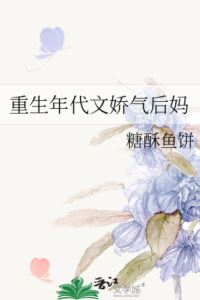
Rebirth: The Delicate Stepmom in a Period Novel
+Add to Custom List
Genres:
Novel Info

Summary

... Read More

Jiang Chunzao wakes from a nightmare of starvation and regret to find herself back in her youth, fifteen years in the past. In her previous life, she had been a spoiled only child who, after being forced to drop out of school due to a scandal orchestrated by her malicious mother-in-law, married into the Lu family with deep resentment. Consumed by bitterness, she neglected her adopted son Shitou and her biological daughter Xiao Moli, eventually abandoning them for a life of so-called freedom. Her final moments were spent alone, haunted by the hatred of her children and the indifference of her husband, Lu Lin. Upon reopening her eyes, she discovers she is back at the time when her family had just separated from the main Lu household. Realizing she has been given a second chance, she resolves to correct her past mistakes and cherish her family.

The core conflict immediately arises from the toxic dynamics of the extended Lu family. Grandma Lu, the matriarch of the main household, is greedy, manipulative, and deeply hostile toward Jiang Chunzao. She views Jiang Chunzao’s father, a wealthy butcher, as a source of income and resents the separation that cut off her financial support. Grandma Lu frequently instigates disputes, accusing Jiang Chunzao of theft and unfilial behavior. In a pivotal early confrontation, Grandma Lu bursts into Jiang Chunzao’s courtyard, accusing the children of stealing steamed buns. When she physically assaults the children and throws their food to the ground, Jiang Chunzao, unlike in her previous life, does not retreat. Instead, she fiercely defends her children, chasing Grandma Lu out with a feather duster and publicly asserting that Shitou is a legitimate member of the family. This act of defiance shocks the neighbors and marks a significant shift in the power dynamic between the two households.

Lu Lin, a dedicated army captain, returns home after receiving a fabricated letter from Grandma Lu claiming that Jiang Chunzao had beaten her to the point of being bedridden. Grandma Lu’s scheme was designed to lure Lu Lin back to punish his wife, but her plan is undermined by her own greed and the family’s awareness of her deceit. When Lu Lin arrives, he witnesses the reality of the situation: his mother is not injured but rather feigning illness to manipulate the family. Jiang Chunzao, now composed and strategic, handles the confrontation with grace. When Grandma Lu demands an apology regarding the pig’s feet sent by Jiang’s parents, Jiang Chunzao calmly offers them to her, exposing the old woman’s gluttony and hypocrisy in front of the entire village. The villagers, who previously pitied Jiang Chunzao, now view her as capable and sensible, while Grandma Lu is left humiliated.

As the story progresses, Jiang Chunzao dedicates herself to rebuilding her relationship with Shitou and Xiao Moli. She provides them with nutritious meals, including the fish Shitou catches and the pork prepared by her father, ensuring the children are well-fed and cared for. Her genuine affection begins to thaw the children’s fear and resentment. Shitou, who had grown up feeling like an outsider and a burden, starts to accept Jiang Chunzao as his mother. Meanwhile, Lu Lin observes these changes with quiet amusement and growing respect. He sees that his wife is no longer the bitter, complaining woman he married, but a loving mother and a capable manager of their household. The narrative highlights the contrast between the Lu family’s internal strife and the warmth Jiang Chunzao finds in her natal home, where her parents and brothers welcome her with open arms.

The story direction moves toward Jiang Chunzao establishing a stable and happy life for her nuclear family. She navigates the ongoing schemes of Grandma Lu and the passive-aggressive behavior of her sister-in-law Liu Hongyan with intelligence and firmness. Liu Hongyan, who had previously looked down on Shitou as a rival for family resources, is forced to reckon with Jiang Chunzao’s new authority. Jiang Chunzao also strengthens her bond with Lu Lin, who begins to appreciate the partnership they can form. The narrative explores themes of redemption, maternal love, and the redefinition of family values in a rural Chinese setting during the mid-twentieth century. Jiang Chunzao’s transformation from a selfish, resentful woman to a devoted mother and wife serves as the emotional anchor of the story, as she works to ensure that her children never experience the neglect and hardship she inflicted upon them in her past life.

Latest Release
DateGroupRelease
2026-08-11shanghai fantasy c14
2026-08-11shanghai fantasy c13
2026-08-11shanghai fantasy c12
2026-08-11shanghai fantasy c11
2026-08-11shanghai fantasy c10
2026-08-11shanghai fantasy c9
2026-08-11shanghai fantasy c8
2026-08-11shanghai fantasy c7
2026-08-11shanghai fantasy c6
2026-08-11shanghai fantasy c5
2026-08-11shanghai fantasy c4
2026-08-11shanghai fantasy c3

Community Reviews

Rating(3.5 / 5.0, 32votes)
5 stars
8(25%)
4 stars
9(28%)
3 stars
7(22%)
2 stars
8(25%)
1 stars
0(0%)

Popular reviews

... Read More
I need to talk about something that I didn't expect to be so moved by in these chapters. It's this scene where the grandma tells the kids that their mom "fought with a monster all night" and couldn't get out of bed. On the surface it's just a funny, innocent moment. But when I really thought about it, this metaphor is doing SO much work. The children see their parents as monsters who fight battles. Shitou says: "Dad fights the big monster, and Mama fights the little monster!" And then they're both so proud of their parents. This is genuinely one of the most beautiful passages in these chapters because it reveals how the children perceive the world around them. They don't understand the adult complexities—the village politics, the social maneuvering, the survival pressures. They just know that their parents are heroes who fight monsters. But here's what struck me: who is the real monster? In a literal sense, there are no monsters. But metaphorically? The village gossip, the difficult neighbors like Lu Gousheng's wife, the social pressure on a woman to maintain good relationships, the economic anxiety about the harvest—these are the real monsters. And Jiang Chunzao IS fighting them. She's fighting to rebuild her reputation, to make strategic alliances, to protect her family. The fact that her children think she's fighting a literal monster is both adorable and heartbreaking. The eggs are another symbol I want to discuss. Jiang Chunzao collecting eggs and taking them to Longshan's wife isn't just a plot detail—it's about reciprocity and community. In this rural setting, you survive through relationships. The eggs represent her effort to build social capital, to create a network of mutual support. She's not just being nice; she's strategically investing in relationships that will help her family survive. And then there's the wheat harvest itself as a symbol. The golden waves of grain, the summer breeze—this imagery of abundance and harvest is always tinged with anxiety in these stories. Harvest means work, and work means survival. The beauty of the scene contrasts with the difficulty of what's coming. It's a reminder that even in moments of peace and prosperity, there are challenges ahead. The author is weaving these symbols throughout the domestic scenes without ever being heavy-handed about it. That's what makes the writing so effective.
... Read More
Okay so I need to discuss the pacing in these chapters because the author is doing something really clever with how they control the reader's emotional experience. Let me start with the structure. Chapter 54-55 basically give us this whole sequence: Jiang Chunzao dealing with Lu Gousheng's wife, the village women carrying things home, Lu Lin showing up, and then this incredibly sweet domestic scene that goes all the way into the next morning. It's a lot of content, but it never feels rushed or dragged out. Here's why: the author uses what I call "emotional breathing room." After the tense confrontation with Lu Gousheng's wife—where Jiang Chunzao is basically using the threat of the village chief to force cooperation—the story immediately shifts to this warm, almost idyllic village evening scene. The text describes: "The smoke from cooking fires curled up into the sky in Lujiacun, and the fragrance of dinner wafted from every household." This is the author letting the reader exhale. We just had conflict, now we get atmosphere. It's a classic technique. Then the pacing picks back up when Lu Lin appears and there's that moment where he won't let go of Jiang Chunzao's hand. The tension returns but it's romantic tension, not stressful tension. And then we get the entire next morning sequence with the children, which is basically one long comedic beat that builds to the grandma's monster excuse and the kids' innocent interpretation. What I love most is how the author ends these chapters. They don't always go for big cliffhangers. Sometimes the chapter just ends with a scene that makes you want to keep reading because you're invested in the characters. The transition from the domestic sweetness to the wheat harvest announcement at the end is where the pacing really shifts. We go from laughter and warmth to something more serious, and it happens almost subtly. Lu Lin's "dark eyes grew serious" is such a small detail but it completely changes the mood. The author understands that not every chapter needs a huge plot twist. Sometimes the best pacing is just making us care enough about these characters that we WANT to keep reading. And honestly? I did. I stayed up way too late reading this.
... Read More
I need to talk about the underlying tension here because on the surface this seems like a cozy domestic story but there's actually some real stakes building up. Let me break it down. The wheat harvest is coming and every household needs to send people to the fields. Lu Lin's military leave is about to end, which means once he leaves, it's just Jiang Chunzao and the two kids handling everything alone. The text says: "He couldn't bear to let them work in the fields." This is a genuine threat to their family's survival. In this time period, in this rural setting, agricultural work isn't optional—it's literally how you eat. But what makes this scene so effective is how the author contrasts the domestic sweetness with these underlying pressures. We just spent three chapters watching this family be adorable together—kids thinking mom fought a monster, dad wiping mom down with warm water, the whole thing. And then suddenly we're reminded that this peace is fragile. Lu Lin immediately goes to call the military district to try to extend his leave. The stakes just went from "cute family moments" to "can this family survive the harvest season." There's also the social conflict we've been building throughout these chapters. Jiang Chunzao is trying to rebuild her reputation in the village. She's being strategic about relationships—like when she deliberately takes eggs to Longshan's wife as a thank-you gift, knowing that "in the countryside, relationships and mutual help are important." This isn't just about being nice; it's about survival. A woman alone with two children in this village needs allies. And then there's Lu Gousheng's wife as an ongoing nuisance. She's not a major threat, but she's the kind of low-level conflict that never goes away—the annoying neighbor who makes daily life miserable. The author is layering these conflicts: the big survival stakes (harvest, military service) alongside the daily social friction (village gossip, difficult neighbors). I'm genuinely worried about what happens next. The wheat harvest is a classic turning point in these types of stories, and I have a feeling things are about to get more complicated.
... Read More
I keep thinking about what all those things Chunzao bought actually represent. The cotton fabric isn't just fabric—it's the difference between her children and the village children having warm jackets this winter. The beef bones—she remembered a recipe from her past life and bought them on impulse. That's such a small detail but it tells us everything about who she is. She has memories of a different life, a different world, and she brings that knowledge into this harsh environment. The village women eyeing her bundles with that greedy glint in their eyes—they're not just envious, they're calculating survival. Cotton means warmth. Food means life. In this setting, material goods aren't luxuries, they're literally the difference between surviving winter and not. That's why Chunzao's refusal to share feels so charged. It's not just about being stingy, it's about the fact that in this world, giving something away means someone else might not have enough. And Lu Lin carrying both children while Chunzao walks ahead—there's something almost symbolic about that too. He's the soldier, the protector, but he's also the one holding their fragile new family together while she leads the way into this new life. The photo studio at the end, with the sun setting, captures this moment of family unity before the real struggles begin. It's a snapshot of happiness that the reader knows won't last.
... Read More
This chapter is a masterclass in how to make a seemingly mundane day feel epic. It starts so gently—mother kissing kids' faces, getting ready for a trip, the whole domestic warmth of it. And then you're on that bumpy tractor ride for an hour and suddenly you're in the county town doing all these little errands. The shopping sequence has this wonderful leisurely quality, like you're actually walking through the cooperative with her. Meat stand, fabric store, photo studio—the rhythm is almost slice-of-life. But then those village women appear at the end and the whole tone shifts. It's like the author let you relax for two hundred pages and then suddenly grabbed you by the collar. The transition from "oh look at all these nice things" to "wait these women are actually trying to steal from her" happens so fast you barely see it coming. What I love is how the author uses the return journey as the turning point. Going to town was easy—everyone was friendly, the kids were sleeping, Lu Lin was being perfect. Coming back is where everything falls apart. The village women are waiting, the sun is still hot, and Chunzao is standing alone with all her goods while these people circle her like wolves. The pacing here is brilliant because it mirrors the actual exhaustion of the trip. By the time the confrontation happens, you're tired too, and that makes Chunzao's explosion feel even more inevitable. The chapter ends on this note of uneasy resolution—she lets them help carry the stuff, but it's clearly a forced truce, not forgiveness. And that's exactly the right note to end on.
... Read More
Let me just say—the subplot with Lu Gousheng's wife is absolutely delicious and the author knows exactly what they're doing. This woman got punched by Jiang Chunzao earlier and still has a burning face, and now Lu Changshan's wife is trying to manipulate her into helping carry things. The power dynamics here are SO well written. The scene where Lu Changshan's wife threatens to take Lu Gousheng's wife to the village chief is pure comedy gold. One second she's being all tough and demanding, and the next this woman who just got punched and is still fuming completely chickens out because she's terrified of the village chief. The text says it perfectly: "As soon as Lu Gousheng's wife heard that they were going to the village chief, she immediately chickened out. Was it really worth making such a fuss over something so small?" And then she does this complete 180, putting on this fake smile and saying "Ah, Big Sister Changshan, I was just joking earlier. Of course I'll help!" The audacity is unmatched. But here's where it gets really interesting—Jiang Chunzao immediately hands her the heaviest bag (twenty pounds of cotton AND ten pounds of flour) and the thin-faced woman almost drops it. She's staggered under the weight and cursing the Jiang family ancestors in her head. This is what I love about Jiang Chunzao's character arc. In her past life she was the annoying, selfish woman everyone disliked. Now? She's strategic, she's calculating, and she's using other people's weaknesses against them without even breaking a sweat. The village gossip scene as they walk home is also brilliant world-building. The young wives whispering about how "with her around, nothing good will come of it" and the older women feeling humiliated because of Lu Gousheng's wife's reputation. The author is painting this whole picture of a village where everyone knows everyone's business and reputation is EVERYTHING. And Jiang Chunzao walking past all of this completely unbothered, focused on getting home to her family? That's growth right there.
See all reviews

Characters

See all characters

Custom lists

See all custom Lists