Summary

... Read More
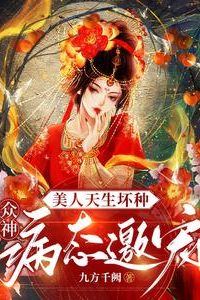
In March 1982, during the spring plowing season in a rural Chinese village, Fu Bao is born into the impoverished Shen family. She is actually a carefree lucky star deity from the heavenly realm who was demoted to the mortal world after helping the demon world's boss escape heavenly soldiers. Her mission is to live among the Shens, use her lucky star physique to dispel their bad luck, and save the family from their predetermined tragic fate before she can return to heaven.The Shen family is known as the poorest and unluckiest household in the area. Grandfather Shen has been paralyzed after falling from a hillside while collecting herbs six months earlier. Grandmother Shen, father Shen Jianlin, and mother Lin Xiujuan have four sons aged eight, six, and five-year-old twins. Despite their poverty, the family welcomes baby Fu Bao with extraordinary joy, unusual for a daughter in this patriarchal society. The villagers gossip and disdain the Shens for treating a girl as a treasure when they consider daughters a financial burden.Huo Meilan, wife of the wealthiest family in the region, arrives with her three-year-old son Huo Jinxi. She reveals that her son survived a fatal car accident after dreaming that a little girl saved him. She offers a thick red envelope as thanks and suggests matching Fu Bao with Jinxi when they grow up. Jinxi immediately claims Fu Bao as his future wife, kisses her, and declares he will wait for her to grow up. The Shen family is shocked but Jiang Meilan interprets this as a sign of fate.The family plans a grand full moon celebration for Fu Bao, but disaster strikes when Grandmother Shen's stolen wages vanish. Devastated, she locks herself in her room refusing to eat. Fu Bao, feeling compassion for her kind family, uses her limited spiritual power to enter her mental space and summon Grandpa Fuxing, the God of Luck. She promises to bring him mortal beer in exchange for help retrieving the lost money and granting her grandmother good fortune. Fuxing agrees after Fu Bao tempts him with the prospect of trying beer, a novel alcoholic beverage from the mortal world.Fu Bao grows up under the devoted care of her grandparents, parents, and four brothers who immediately accept their new sister. The family's dynamic shifts as they rally around protecting and spoiling her. The narrative establishes Fu Bao's dual nature—appearing as an ordinary infant while secretly working to reverse the family's cursed fate. Her brothers vow to work hard to support her, with one jokingly saying he will raise her like a pig, prompting affectionate scolding from the family.The story opens with contrasts between heavenly bureaucracy and mortal hardship, establishing Fu Bao's celestial origin while grounding the narrative in 1980s rural Chinese reality. The central tension involves whether Fu Bao can successfully alter the predetermined tragic endings awaiting each family member—grandfather's fatal illness, grandmother's blindness and death, father's imprisonment and murder, mother's madness and death, and the brothers' eventual misfortunes. The Huo family's intervention introduces romantic subplot elements while the spiritual quest provides the overarching framework for Fu Bao's mortal journey.
Latest Release
DateGroupRelease
2026-09-26knoxt c19
2026-09-26knoxt c18
2026-09-26knoxt c17
2026-09-26knoxt c16
2026-09-26knoxt c15
2026-09-26knoxt c14
2026-09-26knoxt c13
2026-09-26knoxt c12
2026-09-26knoxt c11
2026-09-26knoxt c10
2026-09-26knoxt c9
2026-09-26knoxt c8

Community Reviews

Rating(3.9 / 5.0, 37votes)
5 stars
12(32%)
4 stars
9(24%)
3 stars
16(43%)
2 stars
0(0%)
1 stars
0(0%)

Popular reviews

... Read More
The pacing here is wildly effective because it refuses to let you sit comfortably in either warmth or dread. We start with Jiang Meilan's amusing interaction with her suddenly eloquent son—a light, almost comedic beat that makes you smile. Then we cut to the four boys bouncing back with muddy baskets, their excitement palpable, their devotion sweet. The scene lingers on their rivalry over who Fubao laughed at, a series of escalating claims that build to a comedic peak before Old Mrs. Shen shuts it down. It's a perfect little arc of sibling jealousy, resolved with a sharp scold but ended on a note of hopeful determination: they'll keep trying to make her happy. Just when you're warmed by that, the narrative pivots hard. We're dropped into the neighbor's household, where a baby girl falls and is slapped into silence. The shift is jarring, and intentionally so. The author uses that abrupt transition to strip away any romanticization of rural family life. What follows is a quick, brutal exchange between Li Chunhua and her husband, ending with the father already plotting how to exploit the Shen family's new connections. The pacing here is almost clinical—no lyrical padding, just cold dialogue that reveals greed. Then we return to the Shen home, where Fubao is asleep, surrounded by brothers who adore her. The contrast between the two households acts as a structural counterpoint: one scene builds warmth through noise and mess, the other drains warmth through silence and cruelty. The insertion of song lyrics—Babe Pig and R.M. Drake—works as breather moments, but they also underscore the thematic divide: one hopes for kindness, the other hopes only to be loved. This chapter doesn't drag; it accelerates by alternating tones, keeping the reader off-balance in the best way.
... Read More
I need to talk about how this kid speaks because honestly it's one of the funniest things in the entire novel. Jinxi drops lines like “wife means someone you can kiss, hug, sleep together, and have a baby with her! Just like you and dad” with such deadpan seriousness that I was wheezing. He's like three years old and already more comfortable talking about intimacy than most adults in these books. And then the follow-up: “Mom, can I take Fubao home? If she's wife, should she live with me?” This kid is playing 4D chess while everyone else is still figuring out checkers. The adult dialogue is just as good though. Jiang Meilan's rapid escalation from horrified mother to “how about we tie the knot?” is peak comedic timing — she goes from scandalized to strategic in literally two seconds because she sees an opportunity. And Old Lady Shen's line “You made Fubao cry!” coming after she's been fuming the entire time? Perfect. Her tactical withdrawal with “Fubao may be going to bed” while clearly seething internally is such a realistic portrayal of Chinese family politeness masking pure rage. The narrator's voice is also doing a lot of work here — inserting phrases like “Give face means giving respect or honor or dignity” as if addressing a complete foreigner mid-scene, and the random Sarah Kay and Rudy Francisco poetry quotes dropped between scenes like they belong there. Sometimes it works, sometimes it feels like the translator is showing off. But Jinxi's whisper “I'll wait for you to grow up” into Fubao's ear after the kiss? That single line does MORE romantic tension work than entire chapters in other novels.
... Read More
This passage is a masterclass in pacing because it starts as pure slapstick comedy and gradually reveals genuine emotional weight without ever breaking tone. We open with a toddler delivering an unexpectedly vulgar definition of “wife” — immediate laugh. Then the parents' reaction shot — second laugh. Jinxi asking to “take Fubao home” — third laugh. By paragraph four I'm committed to the bit. But then the author starts weaving in smaller threads: Grandpa Shen's internal monologue about never having kissed his daughter, the grandmother's cold shoulder, Fubao's transmigrator anxiety about her mission — and suddenly this ridiculous scene has become about family bonds, loneliness, and the pressure of destiny. The structure also uses the poetry quotes as palate cleansers between emotional beats, which is either really clever or slightly pretentious depending on your mood. The kiss scene itself is the structural climax — it's placed right in the middle, acts as the point of no return, and everything after it (the fallout, the apologetic exits, the internal resignations) is just dealing with the consequences. What I appreciate most is that the author never lets the comedy get too silly. Even when Old Lady Shen is nearly exploding and Grandpa is doing “old father tears,” there's an underlying current of real love and protection that keeps everything grounded. And the ending — Jiang Meilan insisting on bringing gifts despite being told they're not necessary — that's a perfect button. It signals that the alliance is happening whether anyone wanted it to or not, and sets up the next encounter.
... Read More
Beneath the cozy domesticity lies a fierce critique of how value is assigned to children, and the novel uses symbolism with surgical precision. The red envelope, hidden under a quilt, is the central symbol: it represents not just wealth, but the Shen family's conscious decision to invest in a daughter when society would rather discard her. Old Mrs. Shen guards it like a treasure because Fubao is the treasure. Contrast this with the neighbor's baby girl, whose tears are met with slaps and called "useless." The novel doesn't preach; it shows the economic and emotional arithmetic of patriarchy. A son is an asset; a daughter is a liability. The Shen family flips that script, and the red envelope is their quiet manifesto. Then there's the pig imagery. Shen Zhile says he'll "raise her like a pig," which sounds crude, but in context, it's a declaration of nurture. Pigs are fed, cared for, valued for their growth. The neighbor's father, meanwhile, sees his daughter as a "money-losing child"—a commodity that fails to appreciate. The symbolism extends to the bird eggs and mushrooms: the boys forage for Fubao, offering gifts of labor and love, while the neighbor's husband only sees how to extract value from others. The recurring motif of hunger versus fullness ties it together. Lin Xiujuan must "be full" so Fubao can thrive; the neighbor's daughter is left hungry and crying. Even the song lyrics inserted between scenes reinforce the theme: "I hope next year you find someone who's kind to you… I hope you're loved." That hope is ironic, because the story has already shown us who is loved and who is tolerated. The Shen family's love is noisy, messy, and fiercely protective. The neighbor's household is silent, cold, and transactional. The novel suggests that love itself is a kind of wealth—one that can't be hidden in a cabinet, but must be given daily, like bird eggs and muddy hands.

... Read More
Okay so this plot has some serious potential but let's be real - the setup is basically 'girl dies, gets reborn with a mission, has to save a family from bad luck.' Classic isekai trope but with a Chinese rural twist. The author sets up this really interesting premise where Su Qinghe isn't just any reincarnated person - she's specifically chosen because she has this 'lucky star physique' that can supposedly counteract the Shen family's streak of death and misfortune. Here's what I found compelling: the foreshadowing. Early on, we get this whole catalog of tragedies - the grandfather dies, grandmother goes blind and falls, father gets framed and beaten to death in prison, mother goes insane and dies under a wheel. It's like the author is basically saying 'yeah, this family is screwed unless someone steps in.' The stakes are established immediately, which is smart narrative economy. But then there's this subplot thread about Shen Jianlin going to find work in the county. We see him working construction, earning one yuan a day, dreaming about becoming a 'big worker' making two yuan. This feels like it's setting up some kind of economic struggle that might intersect with the supernatural plot later. Will his hard work actually save them, or will fate keep intervening? The pacing is interesting too - there's this whole arc around Fubao's full moon celebration, which is this traditional Chinese custom when a baby turns one month old. The family is supposed to be celebrating but there's this undercurrent of desperation because they're so poor. Shen Jianlin even advances his salary to the foreman just to throw a proper feast for his daughter. It's touching but also kind of heartbreaking because we already know how this family is supposed to end up. I'm curious whether the task-based system mentioned early on - those 'ding' notifications giving cooking and sewing skills - will play a bigger role. Right now it feels like a background mechanic, but maybe Su Qinghe will use these skills to actually change the family's fate? The plot feels like it's building toward some kind of confrontation between destiny and human effort. What I didn't love: some of the exposition feels a bit heavy-handed. The author tells us very explicitly what the family's tragic fate is, which removes some mystery. Maybe I wanted more gradual reveal? But honestly, knowing the stakes upfront actually makes me care more about whether they can be avoided. Overall, the plot has solid bones. It's a重生文 with a mission structure, which means we know the endgame - save the family - but the question is how, and that's where the story earns its keep.
... Read More
You know what got me invested in this scene? It's not the beer. It's the money. That one line from Fubao—'let her get the lost money back'—changes everything. Suddenly this sweet little exchange has real stakes. Grandma's lost money isn't just background flavor; it's the tension sitting under the entire conversation. The author never shows us the amount, never tells us why it matters beyond the fact that it matters. But I immediately understood. This is their family. Their security. Whatever was lost could mean hunger, shame, or just the slow erosion of hope. And Fubao isn't asking for a miracle—she's asking her grandfather to use his powers to restore what was taken. That's the conflict here, and it's devastatingly simple. An immortal who can't leave his realm is being asked to intervene in mortal affairs. A young girl who has no power is negotiating with someone who has everything. The stakes feel enormous even though the scene takes place in a kitchen over a bottle of beer. What's incredible is how the author makes you care without dramatizing it. There's no shouting, no tears, no desperate pleading. Just a teenager and an old man talking about beer, and underneath it all, the quiet terror of a family that's lost something irreplaceable. I found myself holding my breath when Lao Fuxing agrees. Not because I thought he'd refuse, but because I understood what this promise means for them. If he delivers, life changes. If he doesn't... well, the author leaves that uncertainty hanging there, which is exactly what keeps you turning pages. This is masterful tension-building. The conflict isn't between heroes and villains. It's between hope and despair, between gratitude and loss, between a girl who believes things can get better and a world that keeps taking things away.
See all reviews

Custom lists

See all custom Lists