Rebirth: Marrying a Coquettish and Useless Husband - Reviews

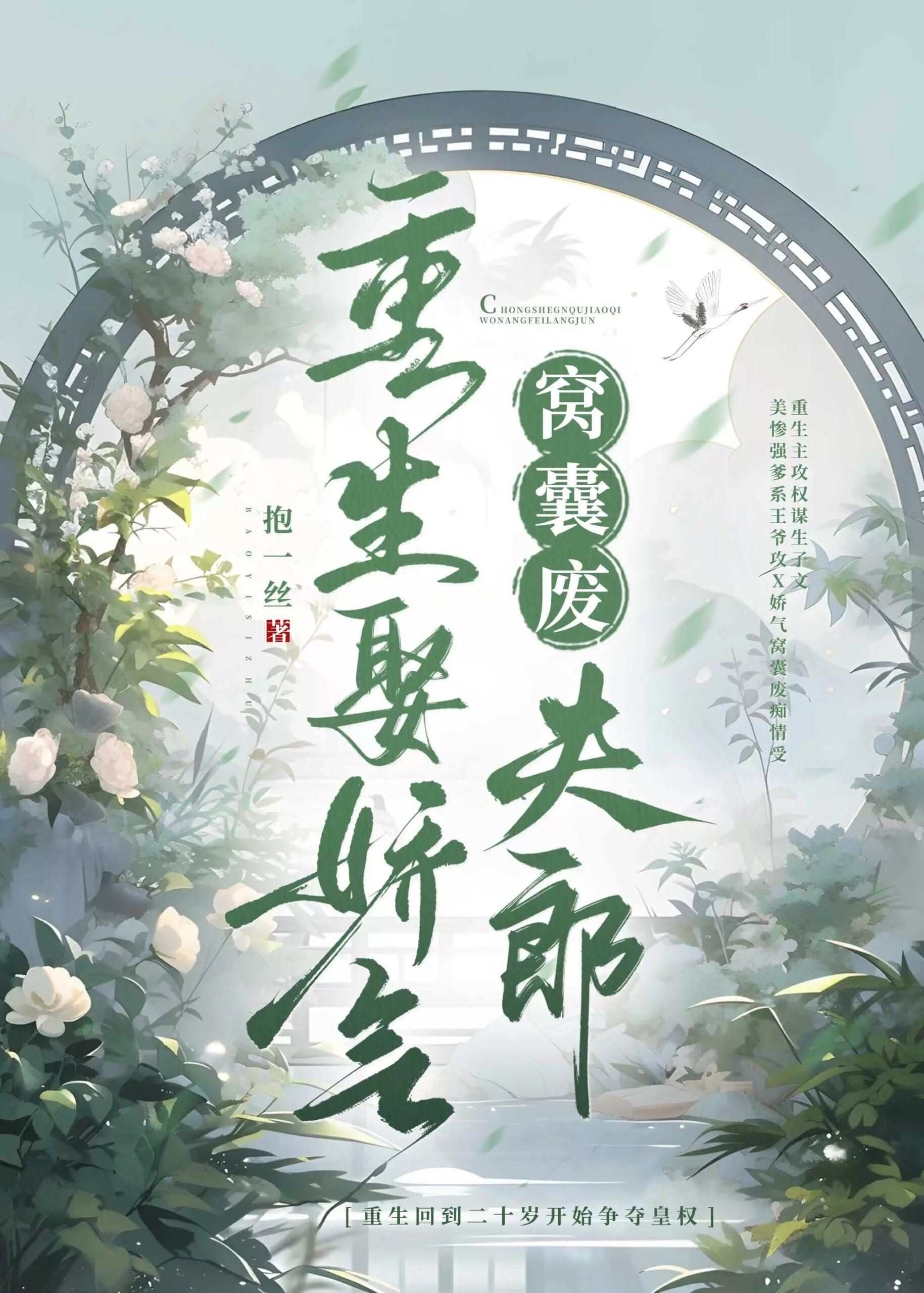
Rebirth: Marrying a Coquettish and Useless Husband
+Add to Custom List
Sort
Add review
... Read More
Okay so let me just say this plot moves at a speed that made me forget to breathe. You go from Chu Lingqiao getting yeeted out of his wine-brewing dream by ghost-masked thugs to suddenly treating two濒死 patients before dawn, then it pivots to palace politics about the imperial grandmother's birthday and the second brother's possible pardon, then back to Feng Yue sneaking home to check on Wei Xiaofeng and—what—is this a rom-com kidnapping plot or a political thriller? I cannot tell and I am here for it. The narrative structure is doing something really clever here: it alternates between emergency medical scenes, court intrigue, and domestic tension like a director switching cameras. Each section raises stakes differently. The midnight extraction creates physical urgency. The breakfast with the Empress Dowager creates political dread. Feng Yue's return to the Rain and Mist Pavilion creates intimate suspense. And then the scene where Wei Xiaofeng wakes up thinking Feng Yue is some random savior because he's wearing a mask? That's not just comedy gold, that's structural misdirection. The author is letting us in on a secret the characters don't share, which means every line of dialogue is layered. I keep flipping back rereading because the plot doesn't just move forward, it spirals. Every resolution births a new question. Who is Chu Lingqiao really? What happened in the previous life? Why does the emperor want the second brother pardoned now? And what happens when the mask comes off? This is pacing mastery.
... Read More
I'll be honest, at first I thought the jumping between Wei Xiaofeng's humiliation and Feng Yue's palace scenes felt jarring, like the author couldn't decide whose chapter this was. But rereading it, I think that's the point? These parallel storylines are building toward the same moment—the 孑儿 school opening—like two rivers converging. The pacing inside Wei Xiaofeng's scene is rapid-fire gossip, quick dialogue, escalating cruelty, then sudden collapse. Meanwhile Feng Yue's scenes move slower, more deliberate, with quiet observations and internal weight. The transition through the Ministry of Works officials discussing dikes and dams is such a brilliant pivot—it drops the reader into Feng Yue's backstory about the Jingchu floods without any exposition dump, just a casual observation that opens the floodgates of memory. And then immediately cutting back to the lighter palace scene? That contrast in tone is what keeps me turning pages. It's uneven, sure, but uneven in the way a real conversation is uneven when you're excited about different parts of a story.
... Read More
I need to talk about how each character's voice is so distinct it's almost unfair. Wei Xiaofeng's dialogue is pure golden retriever energy. 'Want to, want to eat it. I like oranges.' 'It didn't hurt, so naturally I won't blame you.' 'My maternal grandfather's family is so rich, I'll go to my maternal grandfather's house for meals!' This kid has zero filter and maximum confidence in his own nonsense, and I am OBSESSED. Even when he's nervous around Feng Yue he maintains this weird politeness that's basically 'I'm scared but also I really want to make a good impression so I'll be extra formal about it.' The voice is consistent throughout—naive but not stupid, earnest but not naive in a harmful way. Feng Yue's lines are shorter, colder, but the subtext does all the heavy lifting. 'Ge'er Wei need not be so formal. Come, sit.' That's polite on the surface but there's warmth underneath. And 'Truth and falsehood, falsehood and truth, it's best to make people unable to see clearly'—this is a completely different register. Philosophical, calculating, almost poetic in its ambiguity. The shift between these two voices within the same character is masterful. And Mu Yunhua! He's the perfect straight man. Every time Feng Yue says something slightly unhinged or secretly soft, Mu Yunhua's internal reaction is written like 'Mu Yunhua was greatly surprised' or 'Mu Yunhua was completely shocked on the spot.' He's the audience surrogate and he earns every line. The comic scene where everyone's passing around Wei Xiaofeng's secret drawing is peak ensemble dialogue. 'Could this be my second brother, Wang Taichuan?' The absurdity of it made me actually laugh out loud.
... Read More
"I also wanted to accompany Second Brother, but after all, I've grown up, and I can't act willfully. How could I be absent from the palace banquet that my father held for me?" FENG YUE. YOU LIED SO BADLY AND WE BOTH KNOW IT. I literally cannot handle the emotional complexity between these two brothers. The text tells us Feng Xiao saved Feng Yue's life when they were young, and from that moment Yue regarded Xiao as extremely important — a man of affection, loyalty, sincerity. But now? Now Yue watches his brother get slashed and feels nothing but cold calculation about wound depth and blade sharpness. Or does he? "Feng Yue clenched his fists in his sleeves. Summoning a stiff smile had already exhausted all his good mood in recent days." HE'S FUMBLING. He's trying so hard to maintain composure while his whole body is reacting. That's not hatred, that's pain. That's someone who's been holding this together for years and barely managing. And then the scene where he rebandages his brother's wound — that moment of physical intimacy between enemies-turned-brothers-strangers. "Feng Yue had him take off his upper garment so he could examine the injury." Empress Chen leaves them alone. Two brothers, one wounded, one watching, neither able to say what they actually feel. The silence between them is louder than any dialogue. But here's what got me the most — Empress Chen's reaction. She raised Second Prince for ten years, treats him like her own, but the text notes she "felt that the two brothers' relationship had become much weaker" and actually wondered if she was overthinking it. Then Yue confirms it. "Yue'er harbored grievances against Xiao'er that she did not know about." She's been blind to something real. And Wei Xiaofeng's subplot! This guy's crying on a hard bed thinking about his mother's dowry and wishing he'd been smarter/handsomer like Su Qingzhi. He's so pathetic but also so relatable. "Alas, where in this world is there regret medicine to eat?" THIS LINE. I've felt this so hard. The emotional throughline here is regret and irreparable damage. Both storylines are about people who wish they could undo choices, who feel they don't measure up, who've lost something fundamental. Yue and Xiao's bond used to be everything, now it's a wound that can't be fully healed. Also, the mother-son moments. Empress Chen's reaction to Second Prince's injury, Feng Yue telling her not to worry when clearly he's the one hurting. The way she looks at Yue's "pine-like back" and senses gloom between them. Mothers always know.
... Read More
"Second Brother, may I take a look at your injury?" "What's there to see? It's bloody. Don't scare Mother." "I'm used to seeing it on the border. As the saying goes, long illness makes the doctor. I think I'm no worse than the imperial physicians when it comes to sword wounds." THIS CONVERSATION IS SO MUCH MORE THAN IT SEEMS. On the surface, it's medical consultation. In reality, it's Yue establishing dominance, proving competence, creating space to be alone with his brother. And Xiao's response? Deflecting with humor, protecting Mother, but also... giving Yue access? He trusts him enough to remove his garment? After everything? The dialogue throughout this batch operates on multiple levels. The opening scene with Manager Luo — "Behave yourself on weekdays, don't do unnecessary things" — is institutional voice, cold and bureaucratic. It contrasts sharply with Wei Xiaofeng's internal monologue: "Oh right, there was hardly any of his mother's dowry left." That sudden shift from formal instruction to personal regret is where the voice becomes human. In the palace scenes, the dialogue is layered with political subtext. When Empress Chen asks Eunuch Yuan about succession, he answers carefully: "The Third Prince was the first among the princes to be granted the title of Prince... It is only natural to make the Third Prince the Crown Prince." But then Chen counters: "There is still an eldest prince who is the son of the Empress above him." The conversation spirals. Yuan thinks, Chen dismisses. Nobody says what they really think. Yue's dialogue with his brother is the masterclass. "I also wanted to accompany Second Brother, but after all, I've grown up, and I can't act willfully." That's a lie wrapped in filial piety. And Xiao's response — "Right, right, I was inconsiderate, only thinking about the brotherhood between you and me, but not thinking about the dangers involved" — he's performing understanding while clearly feeling rejected. "Whether he was truly sincere or deliberately sowing discord between him and the Emperor, only he himself probably knew best." This line about Yue suggests his words are weapons, not expressions. But earlier we saw him clench his fists. Is he manipulating, or is he genuinely conflicted? The eunuchs' dialogue is formal, deferential: "This old servant served..." "It is this old servant's duty." They're transparent vessels for information. But Empress Chen's voice is warmer, more anxious, more human. "Quickly, quickly prepare the carriage" vs "Don't mess with your Second Brother." Same woman, different registers. And Wei Xiaofeng's thoughts — informal, self-deprecating, repetitive. "Oh..." "Alas..." "Oh right..." His voice is the most raw, unfiltered in the entire batch.
... Read More
...…

Leave a comment

You must be logged in to leave comments. or
