Summary

... Read More

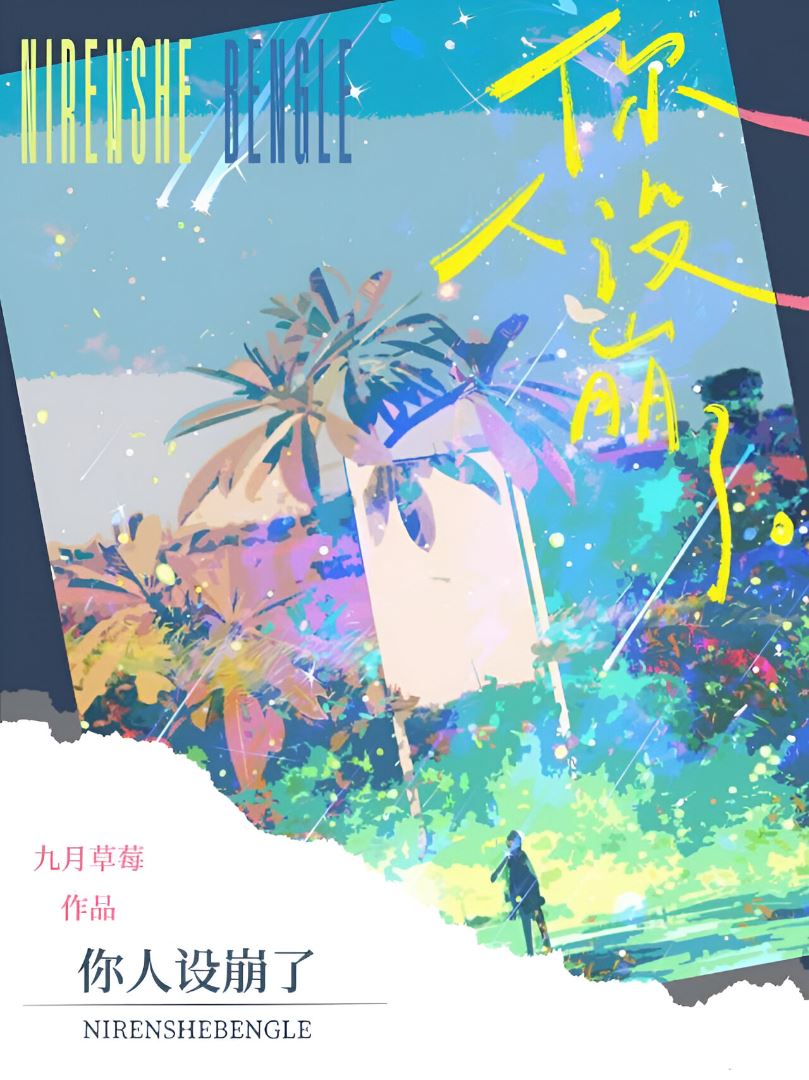
Chu Jiangyue, a college student who previously died after being betrayed and devoured by her best friend Jiang Zhenzhen during the zombie apocalypse, is reborn twenty-four hours before the outbreak begins. Upon waking in her dorm room on March 23, 2506, she is bound by the Apocalypse Hotel System, guided by a nine-tailed fox spirit. The system tasks her with establishing a hotel within a day, promising to provide all necessities in exchange for managing the establishment. Chu Jiangyue selects a grassy field near the Shengshi Huadu residential area and constructs the Jianglin Hotel, a structure that begins as a thatched hut but evolves as she completes tasks. When the apocalypse strikes at midnight, turning the population into zombies and disrupting all communications, Chu Jiangyue awakens a Wood ability a month earlier than in her past life, giving her a significant advantage.

The core conflict emerges immediately as Jiang Zhenzhen and her new protector, Cui Hao, a fire ability user, discover the hotel. In her previous life, Chu Jiangyue had trusted Jiang Zhenzhen, only to be killed by her. This time, Chu Jiangyue maintains a cold, business-like demeanor, enforcing the hotel’s rule that all abilities are disabled within its premises except for her own. She forces Jiang Zhenzhen and Cui Hao to exchange valuables for food and lodging, denying them any special treatment. The hotel becomes a sanctuary where pre-apocalypse wealth is converted into a new currency system, and survival depends on adhering to the owner’s strict rules. Chu Jiangyue also encounters Liu Yiyi, a malicious supporting character who attempts to manipulate the situation but is expelled after violating hotel conduct.

A key turning point occurs with the arrival of Shen Zhigui, a powerful lightning ability user who recognizes the strategic value of the hotel. Unlike others, Shen Zhigui approaches Chu Jiangyue with caution and respect, eventually bringing his team to stay. Their presence introduces a stronger faction into the narrative, contrasting with the incompetence of the designated male lead, Zheng Wen’an, and his entourage. Chu Jiangyue leverages her knowledge of future events, such as the impending heatwave, to manage her guests and expand her business. She distributes flyers to attract survivors and upgrades the hotel from a thatched hut to a mud-brick structure with multiple floors, electricity, and air conditioning, significantly increasing its appeal.

As the story progresses, the hotel’s role expands from a simple shelter to a central hub for survivors. Chu Jiangyue completes tasks that unlock new rooms, food items, and a fruit tree, enhancing her resources and status. The narrative highlights the shift in power dynamics, where traditional abilities are neutralized inside the hotel, making Chu Jiangyue the ultimate authority. She navigates conflicts with difficult guests, such as the greedy Jiang brothers and the scheming Liu Yiyi, by enforcing penalties like electric shocks and expulsion. Meanwhile, Shen Zhigui’s group begins to question their place in the world’s storyline, as their identities do not align with the expected male lead roles, suggesting a deviation from the original plot.

The story direction points toward Chu Jiangyue consolidating her power and using the hotel as a foundation for broader influence. The arrival of one hundred survivors brought by Shen Zhigui’s group marks a significant expansion, pushing Chu Jiangyue to manage a larger population and complete new objectives. The impending heatwave serves as a looming threat that will further test the resilience of those outside the hotel’s protection. Chu Jiangyue’s rebirth allows her to avoid past mistakes, reject manipulation, and build a secure empire in the chaos. The narrative focuses on her strategic management of resources, guests, and threats, establishing the Jianglin Hotel as a critical stronghold in the post-apocalyptic world.

Latest Release
DateGroupRelease
2026-08-11shanghai fantasy c200
2026-08-11shanghai fantasy c199
2026-08-11shanghai fantasy c198
2026-08-11shanghai fantasy c197
2026-08-11shanghai fantasy c196
2026-08-11shanghai fantasy c195
2026-08-11shanghai fantasy c194
2026-08-11shanghai fantasy c193
2026-08-11shanghai fantasy c192
2026-08-11shanghai fantasy c191
2026-08-11shanghai fantasy c190
2026-08-11shanghai fantasy c189

Community Reviews

Rating(3.9 / 5.0, 12votes)
5 stars
3(25%)
4 stars
5(42%)
3 stars
4(33%)
2 stars
0(0%)
1 stars
0(0%)

Popular reviews

... Read More
Let me just say — the scene where Boss Chu gives people exactly FIVE MINUTES to leave the hotel? That is MASTERFUL pacing. She doesn't threaten, she doesn't negotiate, she states a fact and walks upstairs to sleep. The invisible force that literally rips people out of the building when time's up? Chills. Absolute chills. The author controls the rhythm so well here. You've got the chaos of the initial arrival — people fighting over buns, Boss Chu activating her vine whip to restore order — and then this sudden, sharp pivot where she just... leaves. The tension doesn't drop; it concentrates. Those five minutes tick down and you're watching people scramble, families arguing, the stubborn ones refusing to believe it's real until they SEE someone vanish. Then the morning after — the lawn, the green grass, the wooden house appearing overnight. The pacing shifts from survival-thriller to something almost dreamlike. From chaos to order. From 50°C heat to a spring-breeze lobby. The contrast is so intentional and so effective. And then immediately — check-in tasks, new guests, the family suite drama. The story never lets you rest, just like Boss Chu doesn't let the hotel rest.
... Read More
Okay can we just talk about Xie Silin for a second because this kid is EVERYTHING. He's like the loyal sidekick who actually has a personality instead of just being comic relief. I love how he's simultaneously envious of Boss Chu's vine whip AND completely devoted to Shen Zhigui and Jiang He — like he has these two competing feelings at once and it's so human. When he jumped in to defend his 'idols' against those entitled survivors, that wasn't just loyalty, that was him finally having a moment to shine. He said: "We aren't obliged to take care of you forever." Clean. Sharp. He's growing into someone who can hold his own. And the dynamic between Shen Zhigui and Jiang He? Those two are so good together. Shen Zhigui is all action and blunt force — he's the one who physically brings people through the zombie surge — while Jiang He is this calm, almost surgical presence. When Jiang He said "Decide for yourselves. It's late—we're resting now," that wasn't just authority, that was someone who'd already calculated every possible outcome and was done with the drama. Meanwhile Chu Jiangyue is this enigmatic boss figure who just... upgrades hotels at 2 AM and nobody questions it anymore. The power triangle between them is fascinating.
... Read More
There's something deeply symbolic about an apocalypse hotel, and I think the author is playing with that idea on multiple levels without being heavy-handed about it. First, there's the obvious: the hotel as a sanctuary. In a world where everything has collapsed—communication, safety, social order—the hotel is one of the few places where rules still apply. You pay, you get food and shelter. Abilities are nullified inside. The barrier keeps zombies out. It's a microcosm of the old world, preserved and protected. But here's the thing: sanctuaries are also prisons. The guests are trapped inside with their debts and their dependencies. Chu Jiangyue holds all the power, which means she's also holding them hostage in a way. Then there's the symbolism of rebirth and cycles. Chu Jiangyue dies and is reborn, but the hotel itself undergoes a kind of rebirth—constructed from nothing, named, and then activated. The ten-minute countdown during construction mirrors a birth process. And the fact that she awakened her Wood ability a full month earlier suggests that her rebirth has altered the natural timeline of the world. Everything is out of sync, and the hotel might be the anchor that restores balance—or disrupts it further. The blood-red moon is another symbol that can't be ignored. It's a classic apocalyptic sign, but in the context of this story, it also represents the corruption of something natural and beautiful. The moon is supposed to be a source of light and guidance; instead, it signals madness and destruction. And yet, Chu Jiangyue watches it from the safety of her hotel, untouched. She's outside the cycle of corruption, which raises the question: can she remain pure, or will the power of the hotel corrupt her the way the apocalypse corrupted everyone else? Finally, there's the meta-layer of the world being a book. If this reality is based on a story, then Chu Jiangyue's rebellion against the plot is itself a thematic statement about free will versus determinism. She was supposed to be cannon fodder. Instead, she's building a hotel. That's not just a plot twist—it's a philosophical stance.
... Read More
"Only to be pushed into a horde of zombies by that very same friend, devoured until not even her bones remained!" I still can't get over this line. The fact that it's stated so casually in the opening paragraph—just one sentence, no drama, no elaboration—makes it somehow MORE devastating. It's like the author is saying: this is what happened, deal with it, now move on. But here's what actually got to me: Chu Jiangyue's reaction. She doesn't scream. She doesn't cry. She just clenches her fists and starts planning. That restraint is so much more powerful than any dramatic breakdown. You can feel the grief and rage compressed under that ice-cold exterior, and it makes every interaction with Jiang Zhenzhen infinitely more charged. The scene where Jiang Zhenzhen puts on her pitiful act, asking for food while secretly seething with jealousy—"Jiang Zhenzhen ground her teeth but couldn't refute her"—this is the kind of moment that makes you simultaneously furious and fascinated. The author doesn't need to tell us Jiang Zhenzhen is evil. We see it in the micro-expressions, the glances, the things left unsaid. And what about Chu Jiangyue's internal conflict? She clearly hasn't fully let go of the past friendship. She says she "didn't bear any deep grudge against Cui Hao" and gives him a chance to learn the system. That's not just mercy—that's a person who still struggles with her own capacity for trust, even after being betrayed. It makes her more human, more complex. I'm also wondering about the romantic subplot potential. Cui Hao's lustful glance at Chu Jiangyue is disgusting, sure, but it sets up an interesting dynamic. Will there be someone else? Someone who actually deserves her? The fact that the male lead is apparently "Brother Wen'an" from Liu Yiyi's perspective makes me wonder if there's going to be some kind of love triangle—or if Chu Jiangyue will simply refuse to play that game at all.
... Read More
I need to talk about this one family that came to check in. A man in his thirties, his wife, their child, and FOUR elderly relatives. All of them. In the apocalypse. That image just... stayed with me. The wife looked fragile, the elderly were clearly struggling, and this man was carrying the weight of everyone's survival on his shoulders. When he asked for a three-bedroom suite, he wasn't being greedy — he was doing math in his head trying to keep his whole family together. And Boss Chu's response? She felt sympathy but didn't let it override the rules. 600 copper coins per day for a standard suite. She noticed the elderly winced at the price but said nothing. "If she gave discounts to everyone pretending to be pitiful, she might as well run a charity instead of a hotel." Oof. That line cut deep because it's true — in this world, compassion without structure just gets everyone killed. But I also couldn't help but feel for those elderly people. Four generations under one roof, trying to survive, and the cost of staying together is almost unbearable. The couple who wanted to share a single room instead of paying for a double? That one made me smile. Small acts of love in a world that's trying to tear everything apart.
... Read More
I need to talk about how this novel handles pacing, because honestly, it's doing something I rarely see in rebirth/apocalypse fiction. Most novels in this genre spend three to five chapters just establishing the protagonist's suffering in their past life before they even get their system. This one? Chapter 1 opens with the death, the rebirth, AND the system binding. By the end of Chapter 1, the hotel is built. By Chapter 2, she's confronting her betrayer. By Chapter 3, she's met the vicious supporting character and learned about the world's true nature. That's incredibly fast. And yet—it doesn't feel rushed. Here's why: the author is extremely selective about what gets screen time. Every scene advances at least two plot threads simultaneously. When Chu Jiangyue confronts Jiang Zhenzhen and Cui Hao, we get character development (Chu Jiangyue's cold resolve), plot progression (the hotel's first guests), worldbuilding (the ability-nullification rule), and thematic setup (the betrayal dynamic) all in one scene. The chapter endings are also well-timed. Chapter 1 ends with the apocalypse beginning—a natural cliffhanger. Chapter 2 ends with Jiang Zhenzhen's internal monologue of hatred, which creates dramatic irony (we know she's dangerous, she doesn't know we know). Chapter 3 ends with the revelation about the world being a book, which is a genuine plot bomb. If I had one critique, it's that the transition from "rebirth preparation" to "active apocalypse survival" happens so quickly that we barely get to breathe with the protagonist. But then again, maybe that's intentional—the apocalypse doesn't give you time to process, so neither does the narrative.
See all reviews

Characters

See all characters

Custom lists

See all custom Lists