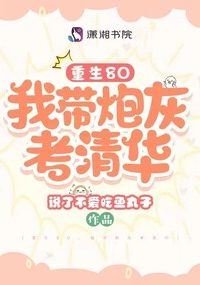
Rebirth in the '80s: Taking the Cannon Fodder to Get into Tsinghua
Novel Info

Summary

... Read More

Ning Ning, a modern PhD holder, transmigrates into the body of the heroine of an 80s melodrama titled The Era of Five Treasures: Beloved Pregnant Wife. In the original novel, the heroine endures physical and emotional abuse from the male lead, Xing Yuan, is bullied by the second female lead, and is forced into repeated pregnancies, ultimately dying after bearing five sons. Upon waking in the rural setting of the story, Ning Ning is immediately pressured by her neighbor, Aunt Chunyu, to marry Xing Yuan and produce multiple heirs. Rejecting this fate, she refuses the system’s directive to follow the plot and instead chooses to alter the destinies of four cannon fodder characters to survive. The system grants her a starter gift pack containing a crystal shoe, braised pork, a tablecloth, and a grape, while establishing a life value system where points can be exchanged for days of life.

Ning Ning’s first task is to save Lin Xiao, a childhood friend who suffers severe abuse and neglect from her patriarchal family, who value her only as a servant for her younger brother. Using the crystal shoe as a symbolic tool, Ning Ning awakens Lin Xiao’s self-worth, encouraging her to reject her oppressive role. She discovers Lin Xiao has natural athletic talent for sprinting and arranges for her to train with a local coach, aiming for a future in professional sports and university admission. Simultaneously, Ning Ning decides to take the college entrance exam herself, targeting Tsinghua University. She confronts her own family’s low expectations and her mother’s attempts to steer her back toward Xing Yuan, firmly declaring her independence and academic ambitions.

A key turning point occurs when Ning Ning intercepts Yue Chi, a brilliant neighbor and the male lead’s benefactor in the original story. Yue Chi, who is destined to be disabled while saving Xing Yuan and later commit suicide, becomes a new focus for Ning Ning. She deliberately cultivates a relationship with him, borrowing his textbooks and engaging him in intellectual conversations, effectively cutting off his support for Xing Yuan. This shift disrupts the original plot’s dependency chain. When Xing Yuan returns home to prepare for exams, he finds Yue Chi refusing to tutor him, leaving the male lead isolated and confused by Ning Ning’s sudden indifference and sharp retorts.

Ning Ning also addresses the plight of Chen Momo, the false daughter in the Chen family who is bullied by her biological sister, Chen Xinxin. Recognizing Chen Momo’s tragic trajectory, Ning Ning pursues her to offer intervention before the abuse escalates. Additionally, Ning Ning engages in small-scale commerce, buying hair accessories in bulk and reselling them in town to generate capital, demonstrating her resourcefulness and business acumen. She successfully negotiates with Lin Xiao’s parents to sever their legal ties, paying a nominal fee to free Lin Xiao from her abusive household, and brings her to live with her own doting parents.

The story progresses with Ning Ning balancing her rigorous study schedule with her mission to save the cannon fodder characters. She tutors Lin Xiao in basic literacy and academics while managing her business ventures. Her interactions with Yue Chi deepen, marked by mutual curiosity and subtle intellectual sparring, as he realizes she is no longer the naive girl he once knew. Meanwhile, Xing Yuan’s attempts to regain her attention fail, and his arrogance is repeatedly checked by Ning Ning’s wit and the withdrawal of his usual support system. The narrative establishes a new trajectory where Ning Ning leverages her modern knowledge and strategic thinking to rewrite the fates of those around her, moving away from the original novel’s abusive romance toward themes of self-reliance, education, and female solidarity.

As the college entrance exam approaches, Ning Ning’s efforts yield tangible results. Lin Xiao’s athletic potential is recognized, and her path to a sports scholarship becomes viable. Yue Chi’s fate begins to diverge from its original tragic course due to Ning Ning’s interference. The system continues to track progress, rewarding Ning Ning with life value as she completes key nodes in changing the characters' destinies. The story sets the stage for Ning Ning to pursue higher education in the capital, potentially reuniting with Yue Chi in an academic environment, while ensuring that the other characters escape their predetermined suffering. The narrative concludes with Ning Ning firmly in control of her life, having transformed from a victim of fate into an active architect of her own destiny and that of her friends.

Latest Release
DateGroupRelease
2026-08-11shanghai fantasy c101
2026-08-11shanghai fantasy c100
2026-08-11shanghai fantasy c99
2026-08-11shanghai fantasy c98
2026-08-11shanghai fantasy c97
2026-08-11shanghai fantasy c96
2026-08-11shanghai fantasy c95
2026-08-11shanghai fantasy c94
2026-08-11shanghai fantasy c93
2026-08-11shanghai fantasy c92
2026-08-11shanghai fantasy c91
2026-08-11shanghai fantasy c90

Community Reviews

Rating(4 / 5.0, 4votes)
5 stars
2(50%)
4 stars
0(0%)
3 stars
2(50%)
2 stars
0(0%)
1 stars
0(0%)

Popular reviews

... Read More
I need to talk about Yue Chi and Ning Ning because the dynamic between them is absolutely electric and I am HERE for it. So these two are having this conversation where they're basically circling each other like cats, and the text literally says: "It was like two masters playing chess while dragging along a complete novice. While the masters fought at the towers, the novice still wondered which key made the character move." Lin Xiao is the novice. We are the novice. Yue Chi and Ning Ning are operating on a completely different frequency. Ning Ning asks him directly: "I feel like you used to be closer with Xing Yuan. But these past two days, it seems you've been standing on my side instead?" And Yue Chi fires back: "Same goes for you, Ning Ning. I think you've changed since I returned as well." They're BOTH observing the same shift in each other, acknowledging it without fully naming what it means. The subtext is so thick you could build a house out of it. And then Yue Chi FANS the flames when Xing Yuan confronts them. He doesn't just stay neutral—he actively sides with Ning Ning, telling Xing Yuan "You're a man. Don't bully women." And then the absolute kill shot: "And honestly… she's right. You really didn't clean up." The pause. The gentle delivery. The way he makes Xing Yuan question his own hygiene WHILE also publicly humiliating him. Yue Chi is NOT playing the same game as everyone else. But what really got me is Yue Chi's internal monologue: "Instead of being annoyed, he found himself oddly amused. After all, even a calm, still heart sometimes needed a little stir to feel alive again." A CALM, STILL HEART. This man has been emotionally frozen and Ning Ning is the first person in forever who can make him feel something. That's not friendship. That's not casual interest. That's the beginning of something. And Ning Ning's line to him later—"A little bit of handsomeness"—when he asks why she's staring? She doesn't even pretend it's anything else. She just says it. Direct. Unapologetic. She's changed too, and they both know it. The way they look at each other now—there's history there, and there's something new forming on top of it. I'm not okay with this.
... Read More
Okay so I need to talk about the Lin household scene because honestly I was SHAKING. Ning Ning walking into that house with a broom-wielding mother screaming at her like Lin Xiao is some kind of ghost and then the FATHER spitting yellow-green phlegm on the ground—like, the author did not even spare us the olfactory experience. Disgusting. But what really got me was the stakes. This isn't just some family drama with mild tension. This is a girl being treated as livestock, calculated by weight, with a bride price being discussed like she's a cow at market. And Ning Ning—cold, calm Ning Ning—looks at the father and says the most I'll give you is TEN YUAN. Not two hundred. TEN. And then she whispers to Lin Xiao: "In my heart, you're priceless. You can't be measured in money." I literally gasped. The contrast between the father's two hundred yuan and Ning Ning's ten yuan isn't just about money—it's about VALUE. The father sees a commodity. Ning Ning sees a person worth infinitely more than anything they could put a price on. And she's not just saying it, she's offering to PAY them to let her go. That's not generosity, that's liberation with a receipt. The onlookers! The neighbors with their bowls, commenting like this is entertainment. "That girl's guts are something else." "To say such a thing is unfilial!"—unfilial?? UNFILIAL?? The man was about to SELL his daughter and someone is worried about FILIAL PIETY? The irony is so thick you could cut it with a knife. "If you agree, we'll calculate exactly how much food and clothing you've given Xiao over the years." Ning Ning's line about calculating, not counterfeiting—chef's kiss. She's turning their own greed against them, using their language of transactions to buy Lin Xiao's freedom. The stakes keep rising too: what if the father refuses? What if he goes through with the marriage anyway? I need to know what happens next and I can't—
... Read More
There's a number in this text that I can't stop thinking about. Ten yuan. That's what Ning Ning offers Lin Xiao's father to sever their ties. Two hundred yuan is what the father demands. The gap between those numbers isn't just about money—it's about the entire theme of this story, I think. Lin Xiao's father sees his daughter as a commodity. He's already calculated her worth: she cost him over ten years to raise, and now he wants a return on investment through bride price. When Ning Ning says "calculate, not counterfeit," she's not just being clever with words—she's exposing the fundamental lie in his worldview. He thinks he can counterfeit her value, inflate it to two hundred yuan, but the real calculation—the honest one—comes out to ten yuan. Ten yuan for years of food and clothing in a poor county. Ten yuan is what the world says a girl like Lin Xiao is worth. And Ning Ning's response? "In my heart, you're priceless. You can't be measured in money." Priceless. Not two hundred. Not ten. PRICELESS. That's the thematic core right there. The story is about revaluation—about taking things and people that the world has discounted and declaring them worth infinitely more. This connects to everything else too. The hair clips—cheap, glued-on, secondhand materials that Ning Ning sees as a business opportunity. The pearls have no luster, irregular shapes, uneven sizes. But Ning Ning doesn't see garbage. She sees potential. She sees value where others see waste. That's her whole thing. Even Lin Xiao herself—frail, abused, treated worse than a dog by her own family—but Ning Ning sees a champion. Coach Liu sees a champion. The system that gives Ning Ning progress points for helping her? It recognizes her worth too. The recurring motif is always the same: the world says X, but the protagonist sees Y, and Y is always the truer value. The severing ties document itself is symbolic— it's not just a legal paper, it's a ritual of rebirth. Lin Xiao severs the old definition of herself and gets to redefine who she is. The parents who raised her to be worthless get erased, and the friend who sees her as priceless gets to write the new story. That's why the scene hits so hard. It's not drama for drama's sake—it's the moment the theme becomes action.
... Read More
I have to stop and appreciate the visual storytelling here because the author really knows how to paint a scene. Let me set this up for you—the three of them walking back at dusk, first by bus then on foot, and the sky is literally painted with brilliant red clouds. Ning Ning and Lin Xiao arm in arm up front, Yue Chi trailing behind, and the fading light bathes all three of them in warmth. Wild bushes glowing under the evening sun. The author even tells us directly: "If the scene froze at that moment, it would have been a perfect countryside portrait: harmonious, tender, and almost romantic." And then—BAM—intruder. Xing Yuan appears like a bad cut in a film, shattering the entire mood. This is such a deliberate cinematic technique. The author builds this gorgeous, almost cinematic moment and then immediately undercuts it with petty male jealousy. It's like watching a beautiful painting get a bucket of paint thrown on it. The contrast itself IS the point. And the setting details! The state-owned restaurant with its four bold characters that make Lin Xiao's eyes full of "awe and fear, as though she might be sold off to pay for the meal." A single sentence that tells us everything about her life—she's so used to being treated as an economic burden that a nice meal feels like a trap. The county town with bicycles zipping past, girls in permed hair and flared pants and trendy blouses, Lin Xiao gaping like "Granny Liu entering the Grand View Garden for the first time." This isn't just backdrop, it's a window into an entire era and social world. The accessories stall scene too—rough glue spilling over cheap pearls, secondhand clips made from recycled material. Ning Ning's analysis of the profit margins (eight cents per clip) while the vendor sweats. The whole market atmosphere feels lived-in and real. This world breathes. It's not just a setting for the plot, it's a character itself. The rural county town with its gossiping neighbors, its limited funding for sports programs, its state-owned restaurants and supply cooperatives—it all feels like a specific time and place that could only exist in this era. I could practically smell the braised pork and the dust on the road. The visual of the three walking through the glowing evening light before Xing Yuan ruins it— I can't stop thinking about that image. It's haunting in the best way.
See all reviews

Characters

See all characters

Custom lists

See all custom Lists