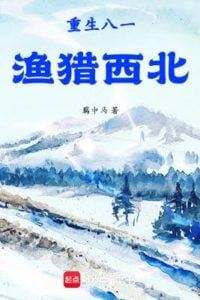
Rebirth in 1981: Hunting and Fishing in the Northwest
+Add to Custom List
Genres:
Tags:
Novel Info

Summary

... Read More

In the harsh winter of 1981 in Northern Xinjiang, Li Long awakens to find himself back in his youth, having died at age sixty-seven from a cerebral hemorrhage. In his previous life, his naive generosity and inability to set boundaries led to his older brother Li Jianguo’s early death and a lonely, outcast existence. Determined to alter his fate, Li Long immediately addresses the family’s critical shortage of coal and food. He rejects the advances of Wu Shufen, the village’s most beautiful woman who had previously broken off their engagement upon hearing of his factory dismissal, and firmly refuses to lend money to the manipulative Gu Ermao, ending a cycle of exploitation that defined his past.

Li Long’s transformation is evident as he takes responsibility for his household’s survival. He ventures into the thirty-below-zero night to hunt sparrows and guagua birds, providing his niece and nephew with their first taste of meat in months. His actions earn him the respect of his brother and sister-in-law, Liang Yuemei, who had long viewed him as a burden. Recognizing the need for sustainable resources, Li Long plans to borrow the production team’s horse and cart to haul firewood from the mountains, a task he approaches with strategic planning rather than the impulsive recklessness of his past.

He recruits Tao Daqiang, a simple-minded neighbor who was previously excluded from social circles, to assist him. Together, they break through the ice at a local pond and secure a significant catch of carp and crucian carp. During the fishing, they accidentally net a muskrat, whose fur Li Long identifies as valuable, worth five yuan—a substantial sum that could alleviate the family’s financial strain. Li Long demonstrates his newfound maturity by negotiating with the team captain, Xu Chengjun, offering two large carp as a gesture to borrow the horse and cart, paying the required work points without complaint.

Meanwhile, Gu Ermao attempts to manipulate Li Long by spreading gossip and inviting him to view a newly acquired television, hoping to lure him back into old patterns. Li Long ignores these provocations, focusing instead on his goal. He also encounters Tao Daqiang’s abusive father, who mistreats his son, reinforcing Li Long’s resolve to protect those who cannot protect themselves. Tao Daqiang, moved by Li Long’s kindness and the respect he receives while working with Li Long, chooses to stay with the Li family rather than return to his own home, where he is consistently neglected in favor of his nephew.

As Li Long prepares for his mountain trip, the family dynamic has shifted. Liang Yuemei defends Li Long against village gossip, acknowledging his growth and the practical benefits he now brings to the household. The story concludes with Li Long and Daqiang setting off at dawn, equipped with the borrowed cart and provisions, heading toward the mountains to secure firewood and potentially uncover more resources from the wilderness, marking a decisive turn from survival to prosperity.

Latest Release
DateGroupRelease
2026-08-11shanghai fantasy c20
2026-08-11shanghai fantasy c19
2026-08-11shanghai fantasy c18
2026-08-11shanghai fantasy c17
2026-08-11shanghai fantasy c16
2026-08-11shanghai fantasy c15
2026-08-11shanghai fantasy c14
2026-08-11shanghai fantasy c13
2026-08-11shanghai fantasy c12
2026-08-11shanghai fantasy c11
2026-08-11shanghai fantasy c10
2026-08-11shanghai fantasy c9

Community Reviews

Rating(3.6 / 5.0, 32votes)
5 stars
7(22%)
4 stars
9(28%)
3 stars
12(38%)
2 stars
4(13%)
1 stars
0(0%)

Popular reviews

... Read More
There are so many layers beneath this seemingly simple story about a man who goes fishing and borrows a cart. Let me unpack what I think the author is really saying. Fish as currency and as care. Every fish in these chapters carries meaning beyond food. The two carp Li Long brings to Captain Xu aren't just a gift — they're social insurance, a way of building the relationships his first life wasted. The fish Daqiang catches represent his first act of autonomy, and the fact that his father tries to take them away is the central injustice of the section. Fish = agency, and the struggle over fish is the struggle over who gets to decide. Firewood as survival and as love. Li Long going into the mountains for firewood isn't just practical — it's an act of devotion to a family that barely existed for him in his first life. The coal his brother prepared isn't enough. That detail matters. He's trying to prevent a scarcity his past self took for granted. The cart itself is a symbol. It represents mobility, connection, the ability to move between worlds — the village and the county, the pond and the mountain, Li Long and Daqiang. Borrowing it requires work points, money, a note from Captain Xu. It's not free, and that's the point. Everything worth having in this world has a cost, and Li Long is finally willing to pay it. And then there's Gu Ermao — the ghost of what Li Long could have become. A man who takes without contributing, who drifts through life, who ends up alone. Li Long walking away from him isn't just plot convenience, it's a thematic statement: second chances require choosing differently. The water rat skin Jianguo packs — small, almost trivial, but it becomes currency when they reach the county. Nothing is wasted in this world. Nothing. That's the deeper philosophy underneath everything.
... Read More
This batch moves like a freight train and I am here for it. Let me trace the rhythm here because the author is clearly playing with pace on purpose. It opens with this slow, domestic village scene — ice fishing, gutting fish, Wenyu visiting, casual family conversation. Very grounded, very quiet. Then Jianguo drops the bomb that Li Long's partner broke things off after he got fired. Quick emotional hit, then — cut to Li Long driving the cart into the mountains. The journey itself is where the pacing really shines. Fifty0 meters of getting used to the cart, then the frost-coated travel, the county stop, the department store — each beat serves a purpose. The muskrat pelt sale gives us a quick win (five yuan!), Daqiang warms up inside while Li Long handles business, then they're back on the road. No filler. And then the mountain ascent — 'both men dismounted, and Daqiang sometimes had to push from behind on especially thick patches of snow.' The physical effort mirrors the narrative tension building. They're climbing literally and figuratively. The winter den arrival feels like a reward after all that travel. And the scene plays out in real time — enter, greet, gift-giving, tea, the antler negotiation, the wolf discussion. It all unfolds naturally without any rush. The chapter ends on Daqiang's whispered line about having bullets too, which is basically a perfect hook. You want to know what happens next. The pacing never drags, never feels rushed — it just flows like the cart wheels over snow.
... Read More
I need to talk about Tao Daqiang because this character absolutely destroyed me in these chapters. Let me just say it: a grown man getting beaten with a pipe by his own father for wanting to cook fish soup with water instead of oil is the kind of detail that sits in your chest for days. The scene where Daqiang comes to Li Long's house in the dark is everything. He's pacing outside like a ghost. When Li Long calls out and Daqiang replies, his voice is described as stammering. He says he couldn't sleep and wants to stay over so they can leave together. This is a man who has never had anyone ask if he's okay, and the fact that Li Long just... lets him in without a second thought... god. And then the breakfast scene. Daqiang sees the fish soup and feels a pang of sadness and quickly goes to wash his face to hide it. HIDE IT. He's been so starved — not just for food, but for basic dignity — that even a bowl of soup reminds him of everything he doesn't have at home. What makes this hit even harder is the contrast with how Li Long treats him. Li Long doesn't pity Daqiang. He doesn't treat him like the family does. He just... includes him. Lets him come along. Shares his food. In a story full of rebirth and second chances, Daqiang is the one who needs saving most, and Li Long is doing it without even making a production out of it. I also love the sibling relationship between Li Jianguo and Li Long. Jianguo rolling up the water rat skin and packing it, Liang Yuemei making steamed cornbread, the whole family working together — it's warm in a way that makes Daqiang's loneliness ache even more.
... Read More
There's this one image that won't leave me: two sheep that froze to death, tossed in the snow behind the tent, waiting to be claimed by someone who wouldn't waste them. Li Long asking 'what did you do with the sheep that froze?' and Halimu saying 'I tossed them in the snow behind the tent — not sure if they're still there.' These people who have everything — hospitality, survival skills, knowledge of the land — still let valuable resources go to waste because of cultural boundaries around how meat should be obtained. And Li Long, the outsider, the 'good-for-nothing' who got fired, is the one who sees the value in what they discarded. He doesn't care about the cultural taboo. He sees frozen sheep and thinks 'that's food.' He sees an antler by the stove and thinks 'that's trade.' The antler itself is such a rich symbol. Three-branched, two or three kilograms, worth one yuan per kilogram. But to Halimu's family, it was just something their son found, something they were about to burn. Hidden value, unrecognized worth. Sound familiar? That's literally Li Long's entire arc in this story. And the seasonal migration — summer pastures to winter dens, the constant movement between worlds — it mirrors Li Long's own transition. He's moving between who he was and who he's becoming, just like these herders move between elevations with the seasons. The wolves are another layer. They killed three sheep and two more froze. Nature doesn't care about your plans or your culture. It just is. And the people who survive are the ones who adapt.
... Read More
Okay so this whole sparrow-catching bit with Li Qiang had me genuinely soft. The kid's got this worn, shiny-sleeved jacket and he's just rubbing his nose with his sleeve like it's no big deal, and Li Long notices it and says 'go blow your nose properly.' That's it. That's the moment. Not some grand declaration of love, just this quiet thing where an uncle who's basically a stranger in the kid's eyes suddenly sees him as a person who needs to take care of himself. And the rice paper thing! The kid thinks it's magic, right? It curls in his hand and he's so excited. Li Long could've just given it to him and moved on, but he explains the science—temperature sensitivity, softening, curling—and then adds 'you can eat this too.' The kid licks it and goes 'not as good as meat.' And then asks for meat. I love that a five-year-old's priorities are so brutally honest. But what really got me was Li Juan. Ten years old, already doing chores, already carrying guilt about the pig. She blames herself for the bad-luck pig, like it's somehow her fault. And Li Long, this guy who's been dead before and come back, who's got all this second-chance wisdom, just... sits with her. Explains that flies carry eggs, that it's random, that it's not her fault. She looks at him with glistening eyes for the first time. That's when the whole dynamic shifts. She starts seeing him differently. The sibling dynamic between Juan and Qiang is also great—she scolds him for wanting meat like she's already got that responsible-big-sister energy locked in. It's small but it tells you everything about their family roles. And Li Long's internal guilt about being a burden? Oof. He spent his first life taking everything for granted, eating his brother's food, not understanding the sacrifices. Now he's walking around with this heavy awareness of how much he cost them. He gives his ten yuan to his sister-in-law and insists. Not because he has to, but because he needs to prove to himself that he's changed. This family is already so fragile and so tender. I just want to wrap them all in a blanket.
... Read More
The sensory world-building in this section is ridiculously good and I need to talk about it. The author isn't just telling us this is rural China in some historical period — they're making me FEEL the cold. Let me start with the fish description: wild carp with red heads, red tails, two long whiskers, and shiny scales. That's not generic fish. That's specific, vivid, almost painterly. You can see this fish. And then the ice-breaking at the pond in freezing weather — you can feel your own hands getting cold reading that. The interior spaces are equally vivid. The heated kang beds, the stove, the small room near the stable where Old Luo lives with his kang and stove. The east room where the family cleans fish, the west room where they sleep. These aren't backdrop details — they're functional, lived-in spaces that tell you everything about how these people live. The 30-kilometer journey description is where the world-building really expands. West five kilometers to the commune, south three to the county, southwest ten more to Qingshui River. This is a map you can follow. The author is showing us the geography of this world with the precision of someone who knows it intimately. And the food! Guagua chicken, fish soup, fried pickles, cornbread porridge, steamed cornbread wrapped in cloth. The meal descriptions aren't just decorative — they're markers of prosperity and survival. Remember, just yesterday they hadn't even had meat, and now they're eating sparrow, guagua chicken, and fish. The contrast between scarcity and abundance in these chapters is almost visceral.
See all reviews

Characters

See all characters

Custom lists

See all custom Lists