“Rebirth: I Married My Ex-Husband's Brother and Let Him Rot in Regret”
Novel Info

Summary

... Read More

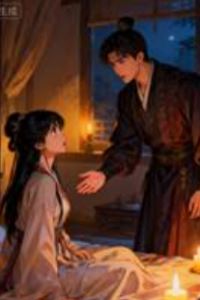
Shen Qingtan dies in the flames of a private courtyard, having been betrayed by her childhood fiancé Zhao Jue and the Marquis of Cheng'en's family. In her past life, she was raised as the beloved eldest daughter of the Marquis, only to discover upon the return of her twin sister, Shen Mingzhu, that she was actually a swapped orphan. The family kept her identity secret to secure a political marriage alliance with the powerful Zhao family, but when the swap was exposed, they blamed her for the scandal. Zhao Jue locked her away, claimed she died of illness, and eventually burned her alive to eliminate her as a threat to his claim on the Duke's title. Upon waking, Shen Qingtan finds herself back on her wedding day, sitting in a bridal sedan chair. She realizes she has been reborn and is about to marry Zhao Yi, the sickly but brilliant second son of the Duke's household, instead of Zhao Jue. Recognizing this as a second chance, she resolves to reclaim her life and exact revenge on those who wronged her.

As the sedan arrives, Shen Qingtan sees a pale hand with a distinctive mole reach out to help her down. In her previous life, she mistook this for Zhao Jue's hand and caused a scene, leading to the bride swap. This time, she recognizes the hand belongs to Zhao Yi. She calmly accepts his help, stepping into the wrong wedding with composure. Inside the bridal chamber, she reveals to Zhao Yi that she knows he is not her intended groom. Rather than being angry, Zhao Yi is intrigued by her intelligence and calm demeanor. He understands the political implications of the swap and the Duke's family's scheme to sideline him by marrying him to a woman with no backing. Shen Qingtan explains that the maid switch was deliberate, revealing her awareness of the conspiracy. Zhao Yi decides to keep the marriage, recognizing Shen Qingtan as a strategic ally and the woman he secretly desired, and informs her that the Old Madam has accepted their union.

The following morning, Shen Qingtan and Zhao Yi attend the tea ceremony with the elders. Shen Mingzhu and Zhao Jue arrive as the newly married couple of the second branch, but the Old Madam forces them to serve tea to Shen Qingtan and Zhao Yi first, asserting Shen Qingtan's status as the legitimate eldest daughter-in-law. During the ceremony, Shen Qingtan outmaneuvers the Second Madam, who attempts to insult her by wishing her no children given Zhao Yi's poor health. Shen Qingtan counters by asking the Second Madam to light a lotus lamp at the temple, a task that requires significant time and piety, effectively trapping her in a public vow. She then reveals that she and Shen Mingzhu privately agreed to swap engagements to protect the family's reputation, forcing the Second Madam to return the dowry that was originally intended for Shen Qingtan but given to Shen Mingzhu.

Shen Qingtan retrieves her dowry but discovers that the valuable items, including paintings and jewelry, have been swapped for fakes by the Second Branch. She realizes they intend to use her dowry to fund Zhao Jue's military grain procurement mission, a task that could secure his position as heir. Instead of confronting them immediately, she plays along, maintaining a facade of ignorance. She contacts her true father, Merchant Qin, who is a powerful figure in the grain trade, to gather information and prepare for a counter-strategy. Meanwhile, Zhao Jue visits Merchant Qin to secure the grain, unaware that Shen Qingtan has cut ties with him. The story follows Shen Qingtan as she navigates the treacherous household politics, strengthens her alliance with Zhao Yi, and prepares to dismantle the schemes of the Marquis's family and the Second Branch of the Zhao household.

Latest Release
DateGroupRelease
2026-08-11shanghai fantasy c50
2026-08-11shanghai fantasy c49
2026-08-11shanghai fantasy c48
2026-08-11shanghai fantasy c47
2026-08-11shanghai fantasy c46
2026-08-11shanghai fantasy c45
2026-08-11shanghai fantasy c44
2026-08-11shanghai fantasy c43
2026-08-11shanghai fantasy c42
2026-08-11shanghai fantasy c41
2026-08-11shanghai fantasy c40
2026-08-11shanghai fantasy c39

Community Reviews

Rating(4.3 / 5.0, 11votes)
5 stars
5(45%)
4 stars
4(36%)
3 stars
2(18%)
2 stars
0(0%)
1 stars
0(0%)

Popular reviews

... Read More
There's a symbolism in this chapter that I can't stop thinking about, and it's woven through almost every scene. The Cuiyu Bean Cakes. Shen Qingtan sends her maids to buy these sweet cakes specifically for Madam Shen—as a gift, as a gesture of goodwill, as a peace offering. And while those cakes are being purchased, Granny Wei is drowning in the pond. The contrast between the sweet gift and the violent death is almost too on-the-nose, but I think that's the point. The household runs on sweetness on the surface and poison underneath, and Shen Qingtan understands this better than anyone. Then there's the water imagery. Wan Feng Pavilion's pond becomes the stage for the chapter's central conflict, and water here is both cleansing and destructive. Granny Wei drowns in it. The maids almost did too. Water is the great equalizer—it doesn't care who you are, and it certainly doesn't care about household hierarchy. The fact that the person who was supposed to be the victim of the drowning ends up being the one who dies is a kind of poetic justice that the text seems to revel in. The perfume on Shen Shaoheng is another symbol worth noting. He arrives "with a heavy scent of perfume," giving him the air of a frivolous playboy. But the text tells us his father and mother were killed by bandits and he was raised by Madam Shen, who spoils him precisely because she needs him to remain useless so her own son can inherit the title. The perfume is a mask—just like Madam Shen's kindness, just like Granny Wei's loyalty. Everyone in this household is wearing something, and the novel seems to be about peeling those layers back one by one. The recurring motif of waiting is also significant. Shen Qingtan tells herself she needs to wait until her wings are strong enough. Waiting is not passivity—it's strategy. And the novel seems to be making a larger point about how power operates differently for different people, especially for women in a patriarchal household structure.
... Read More
The atmospheric writing in these chapters is *excellent*. Let me paint you the scenes: First, the Old Madam's chambers after the tea ceremony disaster. She's sipping tea to calm her anger. The simple act of drinking tea while processing family betrayal—it's so grounded, so real. You can feel the tension in that room. The Old Madam's voice growing cold as she recounts the family scandal, First Master almost choking on his tea when he realizes the depth of the Second Branch's scheming. These are tiny physical details that make the scene breathe. Then Lanxue Courtyard—Shen Qingtan sitting in a huanghuali wood armchair, the servant introductions, Mama Liu's round face and narrow eyes. The author doesn't just describe the room, they describe the *power dynamics* in the furniture. That wooden box of contracts isn't just a prop; it's the key to the entire household's运转. And the Second Branch's Mingde Hall—Zhao Jue and Second Master in the study, plotting over grain prices and dowry amounts like they're discussing weather. The casual cruelty of it. "This dowry was meant for Shen Mingzhu anyway. It's only under Shen Qingtan's name." The manor itself feels like a character. Every courtyard has its politics, every room its history. The dowry chests being moved between storerooms—hundred-plus chests crossing thresholds, changing hands, this is worldbuilding through objects. I love it.
... Read More
Okay so I need to talk about this entire sequence because the plot mechanics here are ABSOLUTELY DELICIOUS. Let me break it down because the author set up this trap so perfectly and then watched it implode in the best way possible. First, Madam Shen's plan: she uses Granny Wei as her personal knife to get rid of Shen Qingtan's two loyal maids, Liuyue and Tingsue. The setup is classic—Granny Wei lures them to Wan Feng Pavilion under false pretenses, and the expectation is that they drown. Madam Shen is practically gleaming with satisfaction by the time she's walking toward the pavilion, thinking her scheme has gone off without a hitch. But here's the thing that made me literally gasp out loud: Shen Qingtan anticipated this. She KNEW. Not fully, but she had that rebirth instinct kicking in. And instead of just defending herself, she turned the entire trap around on its creator. Granny Wei—the very person Madam Shen sent to do the dirty work—is the one who ended up dead in the pond. And Shen Qingtan's maids? They were off buying Cuiyu Bean Cakes, the exact snack Madam Shen loves, as a gift for HER. The irony is so thick you could cut it with a knife. The author also did something really clever with the timeline. Shen Qingtan says she needs to wait a year and a half before her merchant parents can return to the capital and become people Zhao Jue and the Marquis household will fear. This is such a perfect storytelling device—it gives the reader a sense of long-term stakes while keeping the immediate tension razor-sharp. We know something big is coming, but we also know Shen Qingtan is playing the long game. That dual awareness makes every scene feel charged. And the subplot with Shen Shaoheng? Disgusting but necessary. His creepiness toward Shen Qingtan establishes the household as a genuinely dangerous place for her, not just politically but personally. The author doesn't let up for a second. The plot coherence here is remarkable—every character's actions stem from clear motivations, every twist feels earned, and the revenge arc is being laid out with surgical precision. I'm hooked.
... Read More
The tension in these chapters is absolutely suffocating in the best possible way, and I need to unpack why. Let's start with the stakes. Shen Qingtan has already been through this life once and survived a miserable marriage to the Second Master Zhao. She knows what's at stake because she LOST everything the first time around. When Liuyue warns her that the marriage wasn't an accident, the reader understands immediately that this isn't just about household politics—it's about someone trying to control her fate from the beginning. That's a deeply personal, deeply violating kind of conflict. The murder at Wan Feng Pavilion raises the stakes from political maneuvering to actual survival. Someone is trying to KILL Shen Qingtan's people. And when Granny Wei turns up dead instead, the entire power structure of the household shifts overnight. Madam Shen has lost her knife. Shen Qingtan has gained the upper hand. But the conflict isn't resolved—it's escalated. Now Madam Shen has every reason to hate Shen Qingtan openly, and Shen Qingtan has to navigate this new reality while keeping her true intentions hidden. What makes the suspense work so well is that the author never lets us forget what Shen Qingtan is hiding. We know about her rebirth. We know she's waiting for her real parents. We know she's playing a long game. But the other characters don't know any of this, and that dramatic irony creates constant tension. Every conversation Shen Qingtan has is a tightrope walk—she has to appear compliant while secretly dismantling her enemies. The internal conflict is equally compelling. Shen Qingtan still cares about her mother, even knowing she's "a heart as venomous as a snake's." She has to balance genuine affection with strategic calculation, and that emotional complexity makes every scene feel real. She's not just a revenge machine—she's a daughter, a sister, a mistress of a household, and all of those identities pull her in different directions simultaneously.
... Read More
The stakes in this chapter just escalated from personal to existential, and I'm not okay. On the personal level: Shen Qingtan vs. the Second Branch over her dowry. This isn't just about money—it's about survival. In this household, your dowry is your security, your leverage, your independence. Lose it and you're completely at their mercy. But the author layers on a second conflict simultaneously: the military grain shortage. 100,000 shi of grain for the front lines, ten days to procure it, and the Second Branch was planning to steal Shen Qingtan's dowry to fund it. Now that plan has collapsed. What happens next? Does the war effort suffer? Does the Old Guogong find out? Does Zhao Jue turn on Shen Qingtan completely? The Old Madam's revelation about the family history raises the stakes even higher. This isn't just about one bad branch—it's about a pattern of greed and betrayal that goes back generations. "With parents like his—one unreliable, one scheming and competitive—how can the entire Duke's household rest in their hands with peace of mind?" And the most terrifying conflict is the one we haven't seen yet: Zhao Yi's illness. He's coughing, his lips are pale, and Shen Qingtan knows he'll be seriously ill in six months. What happens to her when her only ally in this house is gone? The author is setting up a tragedy and I can feel it coming.
... Read More
The pacing in this section is absolutely ruthless and I am here for it. Chapter 10 starts with domestic tension—the Old Madam's anger, the family history reveal, the Zhao Yi/Shen Qingtan moment in the courtyard. It's building slowly, letting you breathe. Then BAM—Chapter 11 opens with Madam Liu demanding the dowry back and the Second Madam's entire facade cracking in real time. The author does something brilliant with the dowry retrieval scene. It reads like a heist movie. Madam Liu is the mastermind, the dowry list is the blueprint, and every line of dialogue is a move on the board. The Second Madam tries to stall, tries to deflect, tries to blame Shen Mingzhu—and each time, Madam Liu has a counter. "Why not send someone to the government office to invite officials to check the dowry against the official list?" That line is a checkmate. And then—the chapter ends with the dowry being carried back to Lanxue Courtyard, and Shen Qingtan going back inside her room to wait. She already knows she won. But the real tension is building for what happens when Zhao Jue realizes his grain plan just lost its funding. The structure here is: setup (family politics) → complication (dowry theft exposed) → resolution (dowry returned) → new complication (how will they get the grain now?). Each beat lands perfectly. No dragging, no rushing. Just clean, sharp storytelling.
See all reviews

Characters

See all characters

Custom lists

See all custom Lists