Summary

... Read More
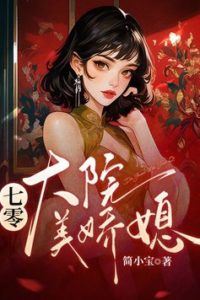
Bi Chunliu, a seventy-year-old woman with a background in martial arts, dies unexpectedly after slipping on a slow treadmill. As her spirit hovers over her body, she witnesses her nephew Liu Xu mourning her with exaggerated grief. Before she can be taken by whatever force awaits the dead, a white light envelops her, transporting her back in time to 1970. She awakens on a crowded bus, initially believing it to be an elaborate prank orchestrated by Liu Xu. However, the realistic details—the era-specific clothing, the presence of a live rooster as luggage, and the mention of the Dongfanghong-1 satellite launch—confirm that she has been reborn into her twenty-year-old body. Bi Chunliu quickly realizes she has returned to a pivotal moment in her past. In her previous life, she endured immense suffering from 1968 to 1976, losing both parents, all three of her younger siblings, and her young niece to tragedy, accident, and misfortune. Now, with the knowledge of future events, she is determined to alter her family's fate. Upon arriving at Dashi Commune, she reunites with her three younger siblings: Bi Weiguo, Bi Xiahe, and Bi Qiuguo. The siblings are close and protective of one another, a bond Chunliu cherishes deeply after years of loneliness in her past life. The core conflict emerges immediately upon their arrival at their grandmother's house. Their grandmother, Old Madam Guo, and their Third Uncle, Bi Laosan, have been pressuring Chunliu to relinquish her factory job, which was inherited from their late father. Third Uncle covets the position for himself, hoping to secure a better life in the city and escape the petty grievances of his wife, Cai Juhua, who has just gotten into a violent public fight with the brigade leader's relative over a dispute involving ox dung. The family dynamics are strained by greed and favoritism, with the grandmother doting excessively on her eldest grandson, Weiguo, while neglecting the girls. During a tense confrontation, Third Uncle attempts to manipulate Chunliu into giving up the job by promising to find her a husband in return. Chunliu, no longer the passive victim of her past life, refuses outright. When Third Uncle persists with veiled threats and manipulative arguments, Chunliu takes decisive action. She locks the door, produces a rope, and physically disciplines her uncle, demonstrating her martial arts skills and unyielding resolve. She breaks a stool with her bare hands to emphasize her strength, forcing Third Uncle to back down and abandon his claim to the job. With the immediate threat neutralized, Chunliu focuses on protecting her siblings and securing their futures. She makes a pact with her Third Aunt to ensure Guangyao, her nephew, is cared for in exchange for keeping the job for Weiguo. The chapter concludes with Chunliu reflecting on her renewed strength and the opportunities ahead. She is resolved to use her foreknowledge and physical capabilities to prevent the tragedies that befell her family, ensuring that her siblings survive and thrive in this second chance at life.

Latest Release
DateGroupRelease
2026-08-11shanghai fantasy c60
2026-08-11shanghai fantasy c59
2026-08-11shanghai fantasy c58
2026-08-11shanghai fantasy c57
2026-08-11shanghai fantasy c56
2026-08-11shanghai fantasy c55
2026-08-11shanghai fantasy c54
2026-08-11shanghai fantasy c53
2026-08-11shanghai fantasy c52
2026-08-11shanghai fantasy c51
2026-08-11shanghai fantasy c50
2026-08-11shanghai fantasy c49

Community Reviews

Rating(4 / 5.0, 4votes)
5 stars
0(0%)
4 stars
4(100%)
3 stars
0(0%)
2 stars
0(0%)
1 stars
0(0%)

Popular reviews

... Read More
I need to just sit with this opening scene for a moment because the worldbuilding is doing SO MUCH heavy lifting here and I am impressed. We start in a hospital ER—clinical, cold, the fluorescent lighting, the muffled grief of the doctor—and then Bi Chunliu gets sucked into a WHITE LIGHT and wakes up on a bus that is SO specific, SO vividly rendered that I could smell it. "Who hadn't washed their feet in weeks?!" — yes. That single line transported me instantly. The shabby old bus model, the crowd squeezed shoulder-to-shoulder swaying with every bump, the woman clutching a baby AND yelling at her man, the OTHER woman with a LIVE ROOSTER in a mesh bag on the luggage rack. This is not a backdrop. This is a fully realized world that the author has clearly researched and loves. And then the dialogue from the woman in the yellow headscarf drops us right into the socio-economic reality of 1968 China: commune life, production teams, the educated youth being sent down to the countryside, bus fares costing thirty cents, the ox cart from the brigade. Every detail is organic—nobody's just info-dumping, it all comes out naturally through conversation between strangers on a bus. The woman mentioning her brother-in-law Zhang Dazhu with a huge mole? That's the kind of specific, ridiculous detail that makes a world feel real. I believe this bus exists. I believe these people exist. The contrast between the hospital scene and the bus scene is also masterful. One is sterile and final—doctors pulling back their hands, the announcement of death, the cold reality of a body that can no longer be saved. The other is warm and chaotic and FULL of life—women arguing about husbands, sharing dog food (the romantic gesture of paying bus fare!), worrying about daughters-in-law, the smell of feet and chicken and human bodies packed together. It's the difference between death and life, and Bi Chunliu is caught right in between them. The hill they need to cross before arriving at Dashi Commune? The Tongxi Production Team? These details ground the story in a specific place and time, and they make me want to read more desperately because I need to know what happens when they get there.
... Read More
I am not okay. I am literally not okay. Let me just say that first. Everything was going fine—funny, chaotic, a bit absurd with the crying nephew and the live chicken on the bus—and then Bi Chunliu looks down and sees these two girls and her entire world stops. "That child looked exactly like her fourth sister, Bi Qiuguo, when she was little. Practically identical!" And the other one—"Just like her third sister, Bi Xiahe!" The prose doesn't even need to do much here. The author just states it plainly, and it hits like a freight train. What makes this scene so devastating is the restraint. Bi Chunliu doesn't break down. She doesn't scream. She draws two deep breaths and reminds herself NOT to take it seriously. These are actors. It's some elaborate prank by Liu Xu. She's trying so hard to stay rational, to keep her guard up, because the alternative—actually believing that she might be seeing her dead sisters again—is too terrifying to contemplate. And that suppression? That's where the real emotion lives. It's in the pinch on Qiuguo's mouth, the forced smile, the thumbs-up she gives to what she thinks are professional child actors. The tragedy is layered so beautifully here. Bi Chunliu had no children. No relatives left. She feared lingering on a sickbed in old age, and instead she died suddenly—humiliatingly, yes, but also cleanly. And now, in this impossible situation, she's being called "Big Sister" by children who look like the sisters she lost decades ago. The word itself—"Big Sister"—carries so much weight. It's familial. It's warm. It's everything she's been missing. And the girls' reactions! When Bi Chunliu starts acting strange, Qiuguo's eyes well up with tears and Xiahe worries she's gone stupid—"I heard from my classmate once, her classmate's aunt's cousin's in-law's younger brother used to be a drooling fool" — this is genuine concern from children who love their big sister. They don't know she's not really their sister. They don't know she's a seventy-year-old soul trapped in this moment. Their love is real, and Bi Chunliu has to navigate that with this impossible knowledge. I've re-read that passage three times already. Three times. The emotional complexity is staggering.
... Read More
Okay, I need to talk about Liu Xu because this guy is absolutely unhinged and I am HERE for it. Here's a woman who just died—Bi Chunliu, 70 years old, died falling off a treadmill (RIP, you magnificent warrior)—and the first person to show up at the hospital is THIS man sobbing like his heart was ripped out, crying with snot and tears, loudly announcing her cause of death to the entire ER. I literally laughed out loud. The nurse's silence? Iconic. Bi Chunliu's internal reaction? "Did he want the whole hospital to know?!" — yes, Liu Xu, that is EXACTLY the point. But here's the thing that actually got me: Bi Chunliu starts off completely dismissive of him. Calls him a brat, says he usually only gives her trouble. And yet, when she's stuck hovering near her body, she notices that despite all his flaws, he's genuinely mourning her. That moment where she sits in the corner, arms wrapped around her head, and thinks about how her life hadn't been too bad—"at least someone mourned her this much"—that hit me. It's such a quiet, tender realization from a woman who clearly never had children of her own. Liu Xu, for all his ridiculousness, showed up. He cried. He cared. And she noticed. Then the white light hits and BAM—she's on a bus in 1968, and the girls calling her "Big Sister" look EXACTLY like her long-dead sisters. The emotional whiplash here is incredible. One moment she's trying to maintain her composure and treat everything as some elaborate prank, the next she's internally crumbling because these children are living proof of a family she thought was gone forever. Her instinct to pinch Qiuguo's mouth shut when the girl starts crying? That's not just comedy—that's a grandmotherly reflex kicking in, a woman who has spent a lifetime caring for others even in the face of existential terror. The relationship between Bi Chunliu and these girls is still in its infancy, but the foundation is already there. She's trying so hard to stay grounded, to not lose her mind, while every fiber of her being is screaming. And the fact that she still has the presence of mind to compliment the girls on their "professional acting"? That's Bi Chunliu through and through—wry, resilient, refusing to let panic win.
... Read More
The dialogue in this book is genuinely exceptional, and I want to talk about WHY because it's doing something really special. First, let's address the narrative voice—Bi Chunliu's internal monologue is a COMEDY GOLDMINE. She's a seventy-year-old martial arts gym owner who just died and then woke up on a time-travel bus, and her first instinct is to mentally roast her nephew for his crying technique. "Did he once moonlight as a professional mourner? Every time she thought he'd stopped, he started up again." This is the voice of a woman who has seen enough of life to find humor in even the most absurd situations. She's not panicking (outwardly). She's observing. She's critiquing. She's giving performance reviews to what she thinks are child actors. "Such commitment to the role! So realistic! Even better acting than the drama she'd just watched." — I literally snorted. This is Bi Chunliu's defense mechanism in action: humor as armor. She's facing the impossible and she's choosing to process it through the lens of someone who appreciates good acting. That's such a specific, character-revealing choice. But the real magic happens in the bus conversation. The women on that bus each have DISTINCT voices. The woman in the yellow headscarf is warm, gossipy, slightly nosy in a loving way—"My brother-in-law has a huge mole right here—like this. You must know him then, right?" She's trying to make connection, to find common ground. The woman with the rooster is practical, hardworking, slightly bitter about her daughter-in-law's mother-in-law who "just tosses everything aside." Their conversation about marriage, family duty, and in-law dynamics flows naturally, covering ground that feels like eavesdropping on real people rather than reading fiction. The humor comes from the contrast between Bi Chunliu's internal chaos and the mundane external conversation. While she's having an existential crisis, these women are discussing whether thirty cents for bus fare was worth it and whether a daughter-in-law should be required to care for her in-laws in writing. The juxtaposition is hilarious AND touching—it shows that life goes on, that people keep living their ordinary lives even when extraordinary things are happening around them. And the author's command of register is impressive. These women speak like working-class Chinese women in the 1960s—direct, practical, slightly gossipy, deeply concerned with family obligations. There's no anachronistic modern sensibility creeping in. When they discuss the mother-in-law who refuses to help with childcare, the reaction is immediate and specific to that time and place: "After giving her three grandsons, she still doesn't care? So when she's old and can't walk anymore, will she expect no care from her daughter-in-law either?" This is a society where filial piety is everything, and the women are using gossip as a way to enforce social norms. The dialogue isn't just entertaining—it's worldbuilding, character development, and cultural exposition all at once.
See all reviews

Characters

See all characters

Custom lists

See all custom Lists