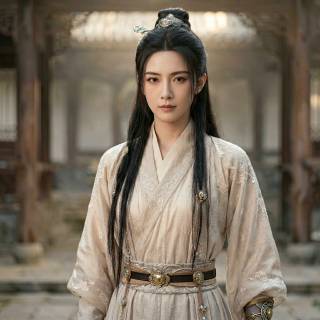
Rebirth: Capturing the Goddess Counselor First.
Novel Info

Summary

... Read More

Chen Yan was a self-made entrepreneur who rose from humble beginnings to become a wealthy media mogul in his thirties. After failing in e-commerce and rebuilding his fortune through the short video boom, he achieved significant success and social status in Hangzhou. However, his life ended abruptly when a massive truck collided with his sports car on the evening of his web drama's wrap party. Instead of dying, Chen Yan woke up in his childhood bedroom on September 4, 2013, the day before he was scheduled to leave for university. He had been reborn, returning to his youth with the memories and business acumen of his future self.

Chen Yan bid farewell to his young, vibrant parents and traveled to Hangzhou to attend Jiangnan University of Science and Technology. In his previous life, he had spent twelve years in the city, navigating its streets and building his career from scratch. Now, armed with foreknowledge of future market trends, he intended to capitalize on the emerging opportunities of the 2010s, such as the rise of social media platforms and live-streaming services. He reunited with his college roommates, Li Wenxin, Zhang Feifan, and Wang Risheng, and the four formed a close bond during their orientation week.

During the freshman class meeting, the students were introduced to their new counselor, Teacher Jiang. Chen Yan was immediately struck by her extraordinary beauty, which he remembered vividly from his past life. However, he also recalled the scandal that followed her brief tenure. Rumors circulated that an angry woman had accused Teacher Jiang of seducing a married man, forcing her to resign just days after starting her job. Chen Yan dismissed the gossip as absurd, recognizing the injustice of the situation.

Seeking to establish his new path, Chen Yan wandered through the city streets, analyzing potential business ventures. He noted the nascent stage of WeChat and the absence of major platforms like Douyin and Kuaishou. Realizing that creating a nationwide app was beyond his current resources, he decided to start small and identify niche opportunities. His thoughts were interrupted when he entered a quiet bar called Dark Night Enchantment, seeking a drink to clear his mind.

Inside the bar, Chen Yan spotted a woman in a violet silk dress who captivated his attention. It was Jiang Zhixin, the same counselor who had resigned under scandalous rumors. She sat alone, exuding an aura of elegance and solitude that set her apart from the other patrons. Despite his initial hesitation, Chen Yan approached her, driven by a desire to understand the truth behind her departure and perhaps forge a connection that had been missed in his previous life.

The encounter marked a significant turning point in Chen Yan's reborn journey. By interacting with Jiang Zhixin, he aimed to alter the course of events that had led to her resignation. His knowledge of future business successes gave him confidence, but his personal motivations were now intertwined with his professional ambitions. The story follows Chen Yan as he navigates his second chance at life, leveraging his past experiences to build a greater empire while uncovering the mysteries surrounding the beautiful counselor.

As Chen Yan settles into his university life, he balances his academic responsibilities with his entrepreneurial pursuits. He reconnects with his roommates, planning to guide them toward brighter futures than they experienced in his original timeline. The dynamics of their friendship evolve as Chen Yan shares insights from his past, subtly influencing their decisions and career paths. Meanwhile, his relationship with Jiang Zhixin develops, challenging the negative narratives that had previously defined her time at the university.

The narrative explores themes of redemption and second chances, as Chen Yan seeks to correct the mistakes of his youth and protect those he cares about. His journey is not just about accumulating wealth but also about understanding the complexities of human relationships and societal perceptions. The scandal that once ruined Jiang Zhixin's reputation becomes a central conflict, driving Chen Yan to expose the truth and clear her name.

Throughout the story, Chen Yan faces various challenges, from competitive business landscapes to personal dilemmas involving his growing feelings for Jiang Zhixin. His rebirth provides him with a unique advantage, but it also places a burden of responsibility on his shoulders. He must carefully navigate the changes he introduces to the timeline, ensuring that his actions lead to positive outcomes without causing unintended consequences.

The setting of 2013 Hangzhou serves as a backdrop for Chen Yan's ambitions, capturing the spirit of a rapidly changing society. The emergence of new technologies and social trends offers numerous opportunities for innovation and growth. Chen Yan's ability to anticipate these changes positions him as a key figure in the local business community, attracting attention from both allies and rivals.

As the story progresses, Chen Yan's influence expands beyond his immediate circle. His interactions with Jiang Zhixin inspire him to take a more active role in addressing the injustices she faced. The narrative builds tension as Chen Yan prepares to confront the forces that sought to destroy her career, using his resources and foresight to mount a defense.

The conclusion of the early chapters sets the stage for a larger saga of personal and professional triumph. Chen Yan's rebirth is not merely a fantasy of wealth but a quest for meaning and connection. His journey with Jiang Zhixin represents a chance to rewrite history, transforming a story of scandal into one of resilience and love. The reader is left anticipating how Chen Yan will balance his dual roles as a successful entrepreneur and a devoted partner, all while reshaping the destinies of those around him.

Latest Release
DateGroupRelease
2026-08-11shanghai fantasy c2
2026-08-11shanghai fantasy c1

Community Reviews

Rating(3.4 / 5.0, 27votes)
5 stars
6(22%)
4 stars
5(19%)
3 stars
10(37%)
2 stars
6(22%)
1 stars
0(0%)

Popular reviews

... Read More
I want to talk about tension because this opening sequence does something I rarely see in rebirth novels — it makes you care before the actual story begins. The first chapter isn't just setup, it's a full emotional arc: success, temptation, death, rebirth, disbelief, determination. That's a lot to pack in, and the author handles it with surprising restraint. The stakes in Chen Yan's past life are clear — he built something from nothing, lost it, rebuilt it, and then lost it all again in a truck accident. That's not just bad luck, that's the tragedy of a man who had everything and then had it taken away in an instant. When he wakes up in 2013, the question isn't whether he'll succeed — we know he can. The question is whether he'll make the same mistakes, and whether he can protect the people he loves this time around. What's interesting is that the external conflict hasn't even started yet. There's no rival, no villain, no immediate threat. The conflict is internal: can Chen Yan control his own destiny when he already knows how the story ends? And the stakes are personal — his parents, his friends, his future. The author makes you feel the weight of that even in these early chapters. The scene with Su Manman is a great example of how the author builds tension. She's clearly making a move on him — the perfume, the leg shift, the suggestive dialogue — and Chen Yan sees right through it. But he doesn't expose her. He just lets her in the car. Why? Because he's already dead once. He's not going to waste time on games. That single decision tells us everything about who he is now. And then the truck hits. The stakes go from "maybe I should be careful" to "I literally died and came back." There's no going back from that. The reader knows something is coming, and that knowledge makes every scene feel charged with anticipation. What will Chen Yan do differently? Who will he save? What will he lose? The author hasn't even gotten to university yet and I'm already invested. That's good storytelling.
... Read More
Okay so I need to talk about this scene where Chen Yan sees Jiang Zhixin at the bar because my heart literally skipped a beat reading it. The author writes: "She wasn't just beautiful—she was breathtaking in a way that felt almost unreal." And I'm sitting here like... yeah, I feel that. This is the kind of love-at-first-sight setup that could go so many directions and I am HERE for it. What's interesting is that Chen Yan had this whole backstory with her before he even realized it. She was their counselor for literally ONE DAY during military training, and that one day was enough to leave this impression so deep it came back to him years later. That's either the most romantic thing I've ever read or the most obsessive, and honestly I'm not sure which yet. The bar encounter though—when he walks in and sees her in this violet silk dress, silver heels, jade bracelet on her wrist—it's like the universe is literally putting them in the same room. And his internal monologue is just: "Damn it. She was only our counselor for one day. What do I have to be afraid of?" This man is about to walk into the most dangerous situation of his reborn life and he's worried about approaching a woman? I keep thinking about the scandal that drove her away. The rumors about her seducing someone's husband, the angry woman storming campus—it's all so dramatic and messy. And now Chen Yan gets to see her again, sitting alone, sipping her drink in this quiet bar. What happened to her after that scandal? Is she okay? I need to know so bad.
... Read More
There's this one line that keeps coming back to me: "Now, he had been given a second chance. What is more, his presence in their lives would change their destinies in ways none of them could foresee, like the gentle flap of a butterfly's wings setting off a storm." That's the whole theme right there. It's not just about getting rich or avoiding past mistakes. It's about how one person's return — one person's knowledge — ripples outward and changes everything. The butterfly effect isn't just a metaphor in this story, it's the engine driving the plot. I'm also struck by the recurring motif of cars and movement. The McLaren GT, the shuttle buses, the high-speed train — Chen Yan is constantly in transit. First from the film set to his death, then from his childhood home to university, then from the countryside to Hangzhou. There's something symbolic about that. He's literally and figuratively moving toward a new destination, but the question is whether he can control the direction or if the future will keep throwing curveballs. The locust tree is another image that stayed with me. It's described as still standing tall after twelve years, its branches alive with sparrows. In a story about change and rebirth, the tree represents continuity — some things persist even when everything else shifts. Chen Yan himself is like that tree: the same person, but rooted in different soil now. And then there's the whole concept of the "second chance" itself. The author doesn't treat it as a gift without cost. Chen Yan's emotional reaction at the breakfast table — the lump in his throat, the sting in his eyes — that's the weight of it. He's not just excited to redo his life. He's grieving the twelve years he lost, the parents he's seeing young again, the people he'll never be able to tell about what's coming. This story is about more than wealth and success. It's about time, memory, and what we owe to the people we love.
... Read More
I'm not usually this impressed by pacing but honestly the way this chapter moves is really well done. It starts with the class advisor speech—formal, a bit dry, setting up the university world—then pivots to Chen Yan's memory of Teacher Jiang, which is where things get interesting. The transition from the mundane class meeting into his internal world feels natural, like we're drifting into his head alongside him. Then there's this little section about the scandal that forced her to leave. It's brief, almost casual, but it plants this seed of mystery. I wanted to know more immediately but the author doesn't dwell on it—they just drop it in and move on. Smart move. After that, we get Chen Yan's whole rebirth plan sequence. This could have been boring exposition, right? Like, here's what I'm going to do with my second chance, here are all the apps I'll build, etc. But the author keeps it grounded by having him walk through the city streets, noticing how everything has changed. "Walking through these streets again felt strangely unreal, as if he were a ghost visiting echoes of a life already lived." That line alone makes the whole rebirth concept feel emotional and real instead of just a plot device. Then BAM—he wanders into the bar and sees her. The pacing from the class meeting to the bar encounter feels like it took maybe ten minutes of reading time, but in story time it's like we've traveled across a whole new world. And the chapter ends right as he decides to walk toward her, which is such a good place to stop. I need to know what happens next immediately.
... Read More
I have to give it to the author—the bar description is absolutely gorgeous. Let me just... read this part to you because it's that good: "The atmosphere was subdued, the patrons sparse—small clusters of people engaged in hushed conversations, their voices blending with the gentle strumming of an acoustic guitar playing through the speakers." This is the kind of writing that makes me want to pause and just imagine the scene like it's a movie. The dim lighting, the acoustic guitar, the sparse crowd—it's giving me those late-night indie film vibes where everything feels slightly melancholic and intimate. And then Chen Yan spots her. "Seated alone at a nearby table was a woman draped in a silk, violet dress that shimmered under the dim lights. A pair of silver heels adorned her feet, accentuating the grace of her long legs. Around her delicate, porcelain wrist rested a jade bracelet, an ethereal contrast against her fair skin, adding a touch of refined allure." I'm not even going to pretend I didn't read that three times. The jade bracelet detail is everything—such a specific, elegant touch that makes her feel real and grounded, not just some generic beautiful woman. It's like the author is saying: this is a person with history, with taste, with layers. And the bar itself has a name—Dark Night Enchantment—which is a little on the nose but honestly I kind of love it for the mood it sets. This isn't some flashy nightclub; it's a place for quiet moments and unexpected encounters. The whole scene feels like it's building toward something important, and I'm completely hooked.
... Read More
I have to talk about the atmosphere in this book because the author really nails the feeling of being back in 2013 China. Not the glossy, modern version but the gritty, transitional one. When Chen Yan is on the high-speed train looking out at the scenery, there's this line about the locust tree still standing tall with sparrows nesting in its branches — it's such a small detail but it immediately grounds you in a specific time and place. You can feel the warmth of that September afternoon. The film set opening is another scene that really sticks with me. The sunset described as "delicate shards of gold leaf" casting warm glow across the set — that's not just decoration, it sets the tone for everything that follows. This is a story about endings and beginnings, and the imagery mirrors that perfectly. The director's speech about it being "both an ending and a beginning" is almost too on-the-nose but it works because the whole scene builds to it. And the university campus! The Ziweige Canteen, the dorm room with the worn deck of poker cards, the lecture hall with the fluorescent lights reflecting off the advisor's balding head — these aren't just background details, they're the texture of a coming-of-age story. The author clearly knows what a Chinese university in 2013 looked like because the details are specific: no Feizhu or Tongcheng apps yet, buying train tickets at the station, the whole pre-smartphone-era vibe. There's also something almost cinematic about how the scenes are framed. The McLaren scene with Su Manman leaning in, the perfume wafting through the car — it's shot like a movie. Then immediately cut to the white ceiling of his childhood bedroom. The contrast is jarring in the best way. It's like the author is saying: this glamorous life you just saw? Gone. Welcome back to reality. The world feels lived-in. Not some generic Asian metropolis but a specific time, a specific place, with all the cultural markers that make it real.
See all reviews

Characters

See all characters

Custom lists

See all custom Lists