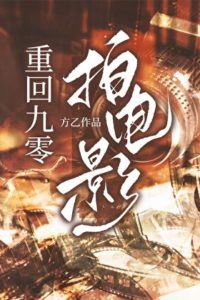
Rebirth 2009: Becoming a Male God.
+Add to Custom List
Genres:
Novel Info

Summary

... Read More

Zhou Muyan, a thirty-year-old man who had achieved professional success and romantic variety, finds himself abruptly transported back to the year 2009. He wakes up in the body of his high school self, standing in the narrow, chaotic alleys of a small county town. The sensory details of the environment are vivid and overwhelming: the crooked low roofs, the humid air, and the specific cultural markers of the era, such as the popularity of the drama Xianjian. Despite the external familiarity, Zhou Muyan feels a profound sense of displacement. He is acutely aware that he is reliving his youth, a phenomenon he attributes to the genre of rebirth novels he may have read, yet the physical reality of his teenage body and the immediate presence of his past peers confirm the impossibility of it being a dream.

His companion on this morning walk is Summer Xiaoxiao, a classmate who has not changed in the twenty years since their youth. She is loud, energetic, and perpetually frustrated by Zhou Muyan’s indifference. In their previous life, she was a persistent presence in his periphery, often latching onto his arm and engaging in rapid-fire chatter. Her affection was masked by aggression; she frequently insulted his appearance, calling him a four-eyes with no charm and no money. Zhou Muyan observes her with a detached amusement, recognizing that her sharp tongue was merely a defense mechanism for a prideful girl who would remain unmarried until her thirties in his past timeline. He remains unmoved by her insults, a reaction that only serves to irritate her further, creating a dynamic that is both exhausting and strangely nostalgic for him.

The narrative delves into Zhou Muyan’s background to explain his current emotional state. His parents divorced when he was in middle school, a traumatic event that shattered his domestic stability. His father was obsessed with career advancement and allegedly kept a mistress, while his mother crumbled under the weight of the betrayal. She pinned all her remaining hopes on Zhou Muyan, forcing him into a grueling academic regimen designed to secure his entry into a prestigious university. For three years, he lived in a state of suffocation, studying from dawn until late at night, viewing education solely as a means of escape from his hostile home environment. This period of intense pressure left him emotionally stunted regarding relationships, causing him to become invisible in social settings and indifferent to the romantic pursuits of his peers.

It was not until his senior year of college that Zhou Muyan experienced his first serious relationship with a woman seven years his senior. She was a polished professional who took pity on his naivety and actively reshaped his identity. She taught him how to dress, how to groom himself, and how to navigate the complexities of adult interactions. Under her guidance, he transformed from a messy, unkempt student into a successful professional. Leveraging his academic credentials and his father’s extensive network, he climbed the corporate ladder with ease. However, despite his outward success and the multitude of younger women who entered his life, he felt an persistent, inexplicable emptiness. The physical intimacy he sought never filled the void left by his fractured childhood and his lack of genuine emotional connection.

As they approach City No.1 High, the setting of his past trauma and eventual escape, Zhou Muyan’s attention is captured by a new variable in his reborn reality. Tang Wan, a girl he barely remembered from his previous life, rides past on a pastel pink bicycle. The description of her is ethereal, bathed in the golden morning light, with a fragrance that is sweet and intoxicating. Her appearance triggers a flood of buried memories. Zhou Muyan recalls a conversation with his older girlfriend from his past life, who had asked him if he had ever liked anyone in high school. He had answered no, but now, seeing Tang Wan, he realizes that his answer was a lie born of repression. The encounter with Tang Wan serves as the inciting incident for his new life, suggesting that his second chance at youth is not merely about repeating past successes, but about confronting the emotional truths he had long suppressed.

The core conflict of the story emerges from the tension between Zhou Muyan’s mature, cynical worldview and the vibrant, chaotic reality of his teenage years. He possesses the knowledge of future events and the emotional maturity of a thirty-year-old man, yet he is trapped in the social hierarchy and academic pressures of high school. His indifference to Summer Xiaoxiao’s provocations highlights his detachment, while his sudden awareness of Tang Wan indicates a reawakening of his capacity for desire and connection. The story moves toward a exploration of whether Zhou Muyan can alter his fate or if he is destined to repeat the patterns of his past. His journey is one of reintegration, forcing him to reconcile the successful but lonely man he became with the neglected and repressed boy he was. The presence of Tang Wan introduces a romantic element that challenges his emotional defenses, promising a narrative arc focused on personal growth, the correction of past regrets, and the discovery of genuine happiness beyond material success.

Latest Release
DateGroupRelease
2026-08-11shanghai fantasy c1

Community Reviews

Rating(3.3 / 5.0, 30votes)
5 stars
5(17%)
4 stars
7(23%)
3 stars
11(37%)
2 stars
7(23%)
1 stars
0(0%)

Popular reviews

... Read More
There's something haunting about this whole setup that goes way deeper than a simple rebirth premise. Let me unpack this because the symbolism is hitting me hard. Zhou Muyan describes himself as "a ghost in the crowd, unnoticed, untouched by the gaze of the world around him." That's not just a personality trait — that's a THEME. He was invisible in his first life, and now he's back in the same body, the same school, the same alleys, but everything feels "both familiar and alien." The rebirth itself becomes a metaphor for second chances at being SEEN — not just by others, but by himself. The camphor trees are interesting too. They flank the school entrance like sentinels, ancient and unmoving, watching generation after generation of students pass through. They've been there since before his first life and will be there after his second. Nature as witness. And Tang Wan — her name literally contains the character for "ten thousand" or "myriad" in Chinese, suggesting vastness, abundance. She appears in a burst of light, fragrance, movement. She is everything he was not: visible, radiant, alive in a way he wasn't. When she rides past on that pastel pink bicycle, she's not just a love interest; she's the embodiment of everything his past life was missing. The older woman's line about student love being different from adult love — "Falling in love as a student and falling in love as an adult—it's not the same, you know~" — this keeps echoing through the text like a ghost. What IS the difference? In his adult life, he had relationships but felt empty. In his student life, he was too broken to feel anything at all. Maybe the theme here is that love isn't about timing or experience — it's about the RIGHT person at the RIGHT moment, and he missed it the first time around. The emptiness he felt despite having everything — success, looks, women — suggests the novel is really about something deeper: what makes a life feel full? Is it achievement? Or is it connection? The rebirth isn't just a plot device; it's an invitation to explore that question.
... Read More
The sensory details in this opening are absolutely immaculate and I need to appreciate them properly. We're in 2009 China — not some generic Asian setting, but a SPECIFIC time and place — and the author doesn't just tell us the year, they MAKE us feel it. Let me just quote this because it's too good: "The newly paved asphalt road was teeming with cars, and the trees lining the streets were lush and green. The sidewalk bustled with activity—elderly vendors pushing tricycles, selling pancakes or stuffed egg pancakes; young women with bleached hair and short skirts, their headphones draped over their necks, walking with an air of urban rebellion; students in matching uniforms, like Zhou Muyan, chatting in pairs or groups." That's not just description, that's a TIME CAPSULE. The Xianjian poster, the specific fashion details, the street food vendors — it's all so specific and grounded. You can SMELL the sesame cakes. You can HEAR the bicycle bells. The narrow alleys described as "a maze, crisscrossing the town in a chaotic tangle" give this place such a vivid, almost claustrophobic texture. And then Tang Wan's entrance — oh, the cinematography here is *chef's kiss*. "A girl glided past Zhou Muyan on a pastel pink Angel bicycle, the early spring breeze lifting strands of her silky black hair, carrying with it a delicate fragrance—sweet, fresh, intoxicating." The light filtering through phoenix tree leaves, the crystalline clarity of her gaze, the way the sun catches her eyes. This isn't just a character introduction; it's a FULL SCENE. I could see this as a film. The school gate with its two towering camphor trees, the pot-bellied director barking orders, students straightening their postures like puppets — even the institutional setting feels alive. Every location serves the mood. The contrast between the cramped, chaotic alleys and the open, ordered school grounds mirrors Zhou Muyan's internal state: trapped in a world he remembers but desperate to break free from. The worldbuilding is so effortless because it's woven into action and memory rather than dumped. I feel like I could navigate this city myself.
... Read More
I need to talk about Summer Xiaoxiao because OH MY GOD. She is absolutely everywhere in this text and I am HERE for it. Like, on one hand she's annoying — relentless, sharp-tongued, clinging to his arm, calling him four-eyes — and on the other hand, she's the most REAL character I've encountered in a rebirth novel so far. Most side characters in these stories are either flat comic relief or mysterious love rivals. Xiaoxiao is NEITHER. She's just... a girl who has spent twenty years caring about this boy and has no idea how to express it except through aggression. "You always walk so fast!" — she's mad at him for leaving her behind and she doesn't even know why. That's not just a cute detail, that's CHARACTER. The author didn't need a single internal monologue from her to make us understand everything. And Zhou Muyan's reaction? He's detached, almost amused. He knows her too well to be hurt by her words. "This silly girl... After all these years, she hasn't changed a single bit." There's so much nostalgia and sadness in that line, even though he's saying it almost dismissively. He remembers her being thirty and still single. He remembers twenty years of her energy directed at him. And now he's back here, hearing the same things, and he can't help but laugh. The dynamic between them is fascinating because it's built on something neither of them has named. She attacks him with words like "No girl will ever like you!" and the irony is absolutely crushing because — well, we know the ending of their past life, don't we? She never found anyone. And he's the one who had relationships but felt empty. I'm also intrigued by how the older woman from his past life is positioned in relation to him. She shaped him, taught him how to be a man, and yet he was still hollow. That says something profound about what he's missing — and I have a feeling Tang Wan's appearance is going to force him to confront exactly what that is. The triangle between these three characters (Xiaoxiao, Tang Wan, and Zhou Muyan's past-life experiences) is already creating this delicious tension. Who will stand by whom? Who will betray whom? I'm already invested.
... Read More
Okay so let me just say — this opening premise is doing SO much work already and I love it. Zhou Muyan wakes up in 2009, high school uniform, familiar alleyways, and he's basically like... wait, is this real? The narrative drops us right into that moment of dawning realization without any heavy exposition dumps, which is honestly a breath of fresh air. Most rebirth novels spend three chapters explaining the mechanics. This one just THROWS you in. The structure here is clever — we get the Xiaoxiao interactions first, which establishes his past-life cynicism and emotional distance, then BAM, Tang Wan appears on that pink bicycle and suddenly everything shifts. The pacing feels deliberate, like the author is letting us settle into this world before pulling the emotional rug out. And that ending? The bicycle bell ringing, the sunlight, the fragrance — it's a classic entrance but it WORKS because we've spent all this time understanding what Zhou Muyan is missing. "Falling in love as a student and falling in love as an adult—it's not the same, you know~" — this line from his past-life girlfriend hits different now, doesn't it? Because clearly, he didn't understand it then, and now he's living the exact moment where he might finally get it. The plot is setting up this beautiful tension between what he knows from his second life and what he's about to experience for the first time. I'm already anticipating how the college entrance exams will factor in — that's always the ticking clock in these stories, right? He has everything to gain and everything to lose. Also, the fact that he's only a few chapters in and already has more backstory depth than most protagonists get in entire arcs? His mother's desperation, the divorce, the eighteen-year-old girls drifting through his life like seasons — the author is layering this carefully. The main storyline feels coherent, the subplots are weaving in naturally, and I genuinely cannot wait to see what he does differently this time around. What will he change? What will he hold onto? And what about Tang Wan — is she the one who got away, or something more?
... Read More
Let's talk about stakes because this story is stacking them early and I'm here for it. On the surface, the obvious conflict is Zhou Muyan vs. his past life — he's trying to navigate a world he's already lived through, which means he has knowledge but also emotional baggage. But the REAL tension comes from what he stands to lose. In his first life, he became successful but empty. He had career, money, women — and yet he couldn't answer a simple question: did he ever love anyone in high school? The fact that he couldn't — that he fell silent when asked — is the most devastating detail in the entire opening. His mother's pressure is another ticking bomb. "Yanyan, just a little longer. Once the college entrance exams are over, I won't pressure you anymore!" But her voice had desperation in it. She's pinning ALL her hopes on him, and that weight is suffocating. In his past life, he used studying as escape — to flee the arguments, the divorce, the battlefield of a home. Now he's back in that same house, facing the same mother, the same pressure, but this time he has foreknowledge. The stakes have shifted from "will he survive" to "will he break differently this time?" And then there's Tang Wan. Her entrance comes right after the line "No girl will ever like you!" — Xiaoxiao's cruel jab that's actually a self-fulfilling prophecy from his past life. But now? Now she's RIGHT THERE, glowing in the sunlight, and he has a second chance to not be invisible. That's the highest stakes of all — not life or death, but the possibility of actually feeling something real. The suspense is maintained masterfully because every conflict is layered. External: the gaokao, his mother's expectations, social dynamics at school. Internal: his emptiness, his fear of connection, his struggle between knowing the future and wanting to live the present. The author doesn't let up — each scene raises the question: what will he do differently? And the answer to that determines everything.
... Read More
please publish your book I Hate you too on goodnovel, plz plz plz
See all reviews

Characters

See all characters

Custom lists

See all custom Lists