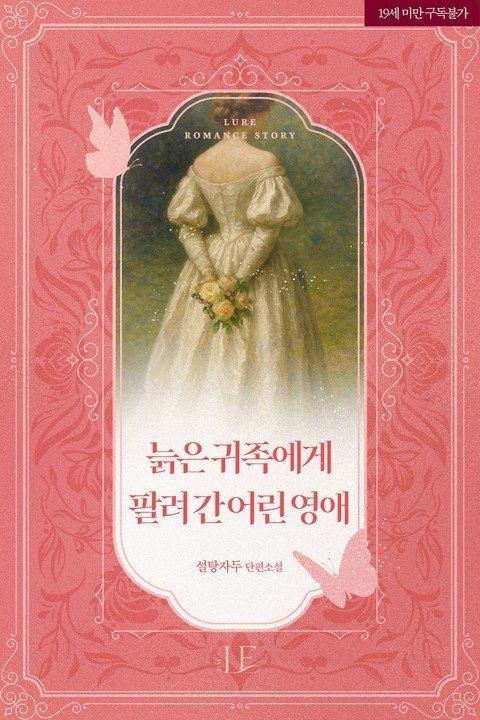
Realm of Savagery
+Add to Custom List
Genres:
Novel Info
  • Author:
  • Status:Ongoing

Summary

... Read More

Riena was a historical novelist working in a modern metropolis, spending her days researching ancient artifacts for her upcoming book. While visiting the isolated inner exhibition hall of a national museum, she examined stone tools and bronze weapons from a forgotten era. The silence of the room was broken when a shadow materialized behind her. Before she could react, a supernatural force seized her, transporting her across time and space.

She awoke in a humid, cavernous hot spring surrounded by twelve naked men. They were muscular, feral-looking warriors with disheveled hair and golden eyes. Their leader, a towering figure named Murat, explained that she was a "gift from the gods" summoned to perform a ritual. The tribe, the last survivors of their village, had been decimated by a beast attack. Their previous chief had sacrificed his life force to cast a spell that would bring a divine savior to rescue them. Riena was that chosen one.

The ritual required Riena to mate with the twelve warriors to bind her presence to this world and strengthen their tribe through sacred union. Initially terrified and confused, Riena struggled against her captors. However, she soon realized that resistance was futile against their overwhelming strength and the surreal nature of her situation. Murat, despite his brutish appearance and possessive nature, showed moments of unexpected gentleness. He protected her from the more aggressive advances of his comrades, insisting that she be treated with reverence rather than consumed like prey.

Riena selected Murat as her primary partner for the first night. The encounter was intense and physically demanding, highlighting the stark contrast between her delicate modern body and the raw power of the prehistoric warriors. During the ritual, Riena discovered that her body had begun to produce milk, a scent that possessed a potent, intoxicating power over the men. The fragrance threatened to drive them into a frenzied, animalistic state, causing them to lose their rationality and turn on one another in their desperation to be close to her.

As the days passed, Riena began to adapt to her new reality. She learned that the tribe was struggling to survive in a harsh, lawless environment. The village was sparse, consisting of mud-brick houses and basic tools. The men, though loyal to Murat, were barely enough to defend their territory against external threats. Murat took on the role of her guardian, carrying her everywhere due to her inability to walk comfortably in their rough sandals. He tended to her needs, feeding her and ensuring her safety, while Riena observed his leadership and the tribe's dynamics.

The central conflict emerged from the dual pressures of survival and desire. The men were constantly battling their instinctual reactions to Riena's milk scent, which acted as a magical aphrodisiac. While Murat remained the most controlled and protective figure, the others, such as Saya and Rud, often struggled to maintain their composure. Riena found herself caught between fear of their primal urges and a growing, complicated dependence on Murat's care.

Riena also grappled with the knowledge that she might never return to her own world. The chief's sacrifice had sealed her connection to this place. As she spent more time with the warriors, the boundary between captor and caretaker began to blur. Murat's jealousy intensified whenever other men showed interest in her, revealing that his feelings extended beyond religious duty. He viewed her as his exclusive possession, a woman he was destined to keep.

The story moves toward a tense coexistence. Riena must navigate the politics of a primitive tribe while dealing with the biological and magical effects of her divine status. The tribe faces ongoing threats from beasts and rival groups, making Riena's presence both a blessing and a burden. Her modern knowledge of history and strategy becomes valuable, yet she remains physically vulnerable. The narrative focuses on the evolving relationship between Riena and Murat, as they balance mutual need, cultural misunderstanding, and an undeniable physical bond in a world where survival is uncertain and desire is a dangerous force.

Latest Release
DateGroupRelease
2026-10-03dusk blossoms c33
2026-10-03dusk blossoms c32
2026-10-03dusk blossoms c31
2026-10-03dusk blossoms c30
2026-10-03dusk blossoms c29
2026-10-03dusk blossoms c28
2026-10-03dusk blossoms c27
2026-10-03dusk blossoms c26
2026-10-03dusk blossoms c25
2026-10-03dusk blossoms c24
2026-10-03dusk blossoms c23
2026-10-03dusk blossoms c22

Community Reviews

Rating(0 / 5.0, 38votes)
5 stars
0(0%)
4 stars
0(0%)
3 stars
0(0%)
2 stars
0(0%)
1 stars
0(0%)

Popular reviews

... Read More
I need to just... I need a moment. The kiss scene. Let me just say it: MAY I... kiss you? After everything — after he's been holding her like she's something fragile, after he's been trembling and grinding his teeth and pretending he's fine, after he looked at her chest bruises and said he tried not to touch her but his hands moved anyway — he ASKS. Like it's the most normal thing in the world. Like he hasn't been fighting himself this entire time. And she says yes, not because she's swept away but because honestly, in that moment, she doesn't want to wipe off the saliva either. That's the emotional core of the entire relationship compressed into two sentences. Let me back up though because the buildup is everything. Remember when he says he'll run outside and stand guard all night if he gets too overwhelmed? He's literally offering to sleep at the door rather than risk hurting her or losing control. That's not restraint — that's devotion dressed up as self-discipline. And then she takes HIS hand and guides it to HER chest. She initiates. She chooses him, knowingly, while he's still in full crisis mode. The author writes: "In her original world, would she really have been able to thrust out her chest and gesture that it was okay?" This line destroyed me. It's Riena acknowledging that THIS place, this man, is changing who she is. She's becoming someone braver than her old self. And Murat? When he finally kisses her properly, the description is almost reverent — his tongue rolled into an oval shape, sucking gently, treating her like something sacred while his whole body is clearly unraveling. "Your body is a mess. There are too many bruises." He notices. He ALWAYS notices. That's the thing that got me — a man who's losing his mind to her scent still has eyes only for her wounds.
... Read More
Here's what keeps me up at night about this story: every single tender moment between Riena and Murat is shadowed by something that could go horribly wrong. Yes, he's protecting her. Yes, he's being careful with her recovering body. Yes, he came up with a clever workaround for the feeding problem. But the stakes are escalating in ways that make every soft scene feel like the calm before something inevitable. The tribe is starting to view her as divine. That sounds like protection, but it's actually a trap—divine beings don't get to make choices, they get used. And Riena knows this deep down, which is why she's so careful about how she manages their expectations. Murat's possessiveness is real and genuine, but possessiveness in a world where she's physically vulnerable and culturally out of place is a double-edged sword. He's her biggest protector and potentially her biggest threat, not because he's malicious, but because his instincts don't always align with her autonomy. Then there's the whole question of whether the milked feeding method will actually work. If it doesn't, she goes back to square one with even more eyes on her. If it does, the precedent is set that her body is a resource the tribe can access through intermediaries—and who controls the intermediary controls her. The author understands that tension is never just about immediate danger. It's about the slow realization that every solution creates new problems, and Riena is walking a razor's edge where misstepping means losing everything she's gained. That's why I can't stop reading.
... Read More
Let's appreciate the atmosphere the author builds in these chapters because the sensory details are INSANE. The ridge cave — located on a mountain ridge, accessed by a thirty-minute walk — is described as a sacred place where the air feels different, where the heat of the hot spring mixes with the cool mountain air. The image of Riena being carried on that wooden chair with shoulder straps, Jair grunting slightly but trying to hide it, Murat walking right behind with his sharp eyes scanning everything... it's so cinematic I could see it as a film. And the contrast between the intimate, almost erotic tension inside the cave and the open mountain air outside is brilliant storytelling. The author also gives us these small worldbuilding gems like the modan grass bags that everyone carries everywhere, used for everything from sandals to mats to gathering herbs. These tiny details make the world feel lived-in and real. Even the cherry scene on the way back — Riena spitting seeds everywhere, Murat swatting them away with a branch like some kind of athletic guardian — it's such a specific, mundane moment that somehow makes the whole world feel more tangible.
... Read More
Okay so let me just say this because I can't stop thinking about it — Murat is the most layered character in this entire book and I am HERE for it. On the surface he's this gentle, patient guy who strokes Riena's head like she's a child, who makes sure she's always in his sight, who serves her and brings her clothes and food. But then you read closer and he's literally the one who left the most traces on her body during that scene in the cave. He ejaculated inside her like he was pouring something deep and meaningful into her. And he says it so casually, like, 'Even without those words, I wanted to hold you from the beginning.' Dude. You cannot drop that kind of line while also acting all sweet and fatherly. It's unhinged and I love it. But then the scene where he loses it over Saya and Rud? That changes everything. He's baring his teeth, growling like a beast, protecting her. And he's not just doing it because she's the 'gift from the gods' — he's doing it because SHE matters to him specifically. The moment his hands are on her, when she mentions she was scared, he immediately pivots and asks HOW HE FEELS. He wants to know about himself too. He's aware of his own reactions and he's trying to understand them alongside her. And here's the thing that really got me — when he pushed the other two away, he didn't care about his own arousal at all. 'He didn't care about his penis that stood erect while swollen.' That's not just protection, that's genuine priority shift. His desire didn't vanish but he chose HER comfort over his own satisfaction. That's a LOT for a character who's supposed to be driven by instinct. Also the contrast between him and the other two is so deliberate. Rud is youthful and 'cute-looking,' his fangs come out when he's overwhelmed. Saya is more calculating, licking around her nipple in circles like he's savoring something precious. But Murat? He's the one who sets the rhythm. He tells Riena 'May I touch this?' like he's asking permission even though everyone already knows what's happening. He's the bridge between her world and theirs.
... Read More
I need to talk about the museum sequence because honestly I did NOT see that coming and it ruined me in the best way. One second we're in this absolutely overwhelming, borderline traumatic sexual scene and then — cut to — Riena in a quiet museum wearing an Edwardian blouse, alone, looking at ancient artifacts. The tonal whiplash was real. I literally had to pause and catch my breath. What makes this work so well is how ordinary Riena seems in that moment. She's just a woman doing research for a novel she hasn't even properly started yet. She's dressed nicely, moving elegantly, reading exhibit descriptions with genuine interest. The author takes their time here — walking us through her slow steps, the silence, the decorative mirror. It's almost meditative compared to everything that came before. And then the figure behind her. Less than a second. A distortion in the mirror. That single moment of realization and the reader's heart drops right along with hers. But here's what actually wrecked me emotionally: the morning after. Riena wakes up body-aching, terrified, trying to process whether last night was a dream or reality. And Murat? He's genuinely sweet about it. He notices her flinch. He sighs with concern when he sees the bite marks. He tries to carry her gently. The emotional complexity of this — her fear and confusion against his genuine tenderness — creates this unbearable tension that I couldn't stop thinking about. There's also something heartbreaking about Riena's internal state. She keeps oscillating between terror and this strange, unwelcome awareness that part of her hadn't wanted to reject him. The author writes: "She couldn't distinguish whether it was truly rational thinking or an unreasonable feeling of wanting to stay in his embrace." That line stays with me. It's not romantic. It's psychologically devastating because it shows how trauma responses don't follow logic.
... Read More
The dialogue in this section is weirdly sparse and I loved every second of it. Most of the conversations are short, almost functional, but they carry so much weight because of what's NOT being said. Take this exchange: 'What does time mean?' He couldn't understand asking what time it was. Two sentences. That's it. And it tells you everything about how alien his entire existence is from hers. Or when she says 'The place I lived isn't the divine world' and he just listens attentively — no response, no challenge, just silence. That silence says more than any argument would. The narrator's voice through Riena is sharp and analytical in a way that feels authentic. She's not some passive victim internally monologuing; she's actively assessing, calculating, comparing. 'My world has cars and newspapers but can't bring people from other worlds.' That line is perfect — matter-of-fact, slightly wry, establishing her voice without any exposition dump. And Murat's dialogue is mostly practical and physical: 'Let me take a look,' 'Wait a moment,' 'I'll have to carry you around.' He doesn't give long speeches. His care is shown through action, not words. The few moments where he does speak emotionally hit harder because they're rare: 'You're so pretty. I didn't know you could eat so prettily too.' It's awkward and earnest and completely inappropriate for the situation, which makes it feel real. The overall tone is understated — nobody is dramatically declaring anything. Even the milk scent revelation comes out through Saya's loose, almost conversational explanation rather than some grand announcement. The author trusts the reader to pick up implications.
See all reviews

Custom lists

See all custom Lists