Summary

... Read More

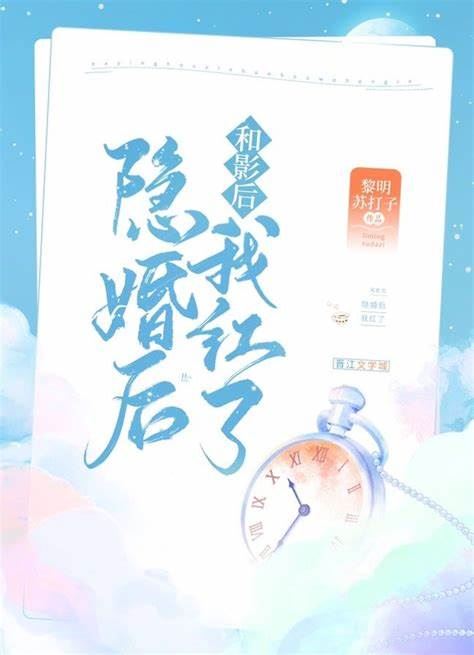
Zong Bolin was the disciplined eldest son of the Zong family, a powerful business empire built over generations. As the designated heir, he managed the conglomerate with ruthless efficiency and cold rationality. His life was a calculated series of controlled interactions, from his role in the boardroom to his casual romantic entanglements with women who appreciated his wealth but never his heart. He viewed love as a game to be played and concluded on his own terms, devoid of sentimentality. His younger brother, Zong Jiqi, had chosen a path in science abroad, remaining outside the family business. Zong Bolin maintained a tight grip on all aspects of his existence, believing that every variable, including people, could be managed and predicted.

On a rainy night, after ending a transactional encounter with an actress, Zong Bolin’s secretary confronted him. The secretary, long harboring unrequited feelings, revealed his desire for more than a professional relationship. When Zong Bolin rejected this emotional demand, maintaining his usual detached demeanor, the secretary confessed to deliberately causing a car accident. The ensuing crash left Zong Bolin critically injured and seemingly dead. However, in a bizarre turn of fate, Zong Bolin’s consciousness did not perish. Instead, he awoke in the body of Ji Ling, a fragile and obscure aspiring actor who had been strangled at the same sleazy club where Zong Bolin was attacked. The original Ji Ling had died just as Zong Bolin’s life ended, creating a shared void that Zong Bolin now inhabited.

Stripped of his fortune, status, and identity, Zong Bolin found himself in a hospital, recovering from throat injuries that left his voice hoarse. The media reported his death as a tragedy, noting that his younger brother Zong Jiqi had returned to inherit the failing empire. Zong Bolin, now known as Ji Ling, faced an impossible reality. He could not reveal his true identity to his former subordinates, nor could he immediately reclaim his position. His new body was weak, impoverished, and trapped in a exploitative entertainment agency. The only connection to his past life was Yan Yixuan, the charismatic and scandal-prone heir of the rival Yan family, who had rescued him from the club and paid for his medical bills.

Yan Yixuan viewed Ji Ling as a new plaything, treating him with a mix of indulgence and dominance. Their interactions were fraught with tension, as Zong Bolin, accustomed to being the one in control, was forced to endure Yan Yixuan’s flirtatious aggression. Despite the humiliation, Zong Bolin recognized Yan Yixuan’s immense wealth and influence as the only resource available to him. After a volatile encounter at a racetrack involving Yan Yixuan’s estranged half-brother, Yan Yili, Yan Yixuan discarded Ji Ling in a remote location. Rather than surrendering to despair, Zong Bolin retreated to Ji Ling’s squalid living conditions and analyzed his situation with cold logic.

Realizing that starting from scratch would take decades, Zong Bolin identified an immediate opportunity. The entertainment company where Ji Ling worked was collapsing under debt, and its owner had absconded before being caught by loan sharks. Seizing the chaos, Zong Bolin negotiated to buy the company from the desperate owner, agreeing to take on the existing debts in exchange for ownership. This gamble required significant capital that he did not possess. Recognizing Yan Yixuan as his only viable lender, Zong Bolin spent a week waiting outside Yan Yixuan’s favorite bar, enduring the man’s mockery and indifference.

Eventually, Yan Yixuan appeared and offered Ji Ling a choice: submit to his romantic advances or leave. Zong Bolin, suppressing his pride, accepted the harsh reality of his dependence. He met Yan Yixuan at a hotel and formally requested a loan to acquire the company, offering no personal favors in return. He framed the interaction not as a transaction of body for money, but as a business loan from a lesser ant to a greater titan. This display of calculated humility and boldness intrigued Yan Yixuan, who had never encountered someone who refused to beg emotionally while still asking for material aid. The story concludes with Yan Yixuan considering the proposal, leaving the future of both men’s intertwined fates uncertain as Zong Bolin attempts to rebuild his empire from the ashes of his former life.

Latest Release
DateGroupRelease
2026-09-26knoxt c78
2026-09-26knoxt c77
2026-09-26knoxt c76
2026-09-26knoxt c75
2026-09-26knoxt c74
2026-09-26knoxt c73
2026-09-26knoxt c72
2026-09-26knoxt c71
2026-09-26knoxt c70
2026-09-26knoxt c69
2026-09-26knoxt c68
2026-09-26knoxt c67

Community Reviews

Rating(4 / 5.0, 388votes)
5 stars
134(35%)
4 stars
128(33%)
3 stars
122(31%)
2 stars
4(1%)
1 stars
0(0%)

Popular reviews

... Read More
These five chapters do something I didn't expect. They don't move forward linearly—they spiral. Ji Ling is literally re-living events but with new knowledge, and the chapter structure mirrors that. You get the charity banquet, then a flashback to the theater rental from the previous timeline, then back to present day where the same scene plays out differently because he's richer now. Same bones, different flesh. The pacing is deceptively slow. Nothing explosive happens here—no betrayals, no fights, no big reveals. But it grips you because every quiet moment is loaded with the weight of accumulated history. When Yan Yixuan asks "Did you rent the entire theater?" and Ji Ling says "I bought the whole theater," that's three chapters of development compressed into six words. The author controls engagement the way a magician controls attention—by making you lean in. Look at this transition: after the big philosophical moment about time and victory, we cut to "Hello, everyone ヾ(^∇^). I hope you enjoyed the story!" And then back to the narrative like nothing happened. It's jarring, sure, but it also creates this breath—a moment where you, the reader, are allowed to exhale before the next emotional hit. There's a scene where Ji Ling kisses Yan Yixuan's hand and I literally sat up straight. After pages of talking around feelings, BOOM. Physical contact. And Yan Yixuan doesn't pull away. The pacing of that moment—quiet, sudden, irreversible—is perfect. The author knows exactly when to let silence do the work.
... Read More
These four chapters move like water—sometimes calm surface, sometimes riptide underneath. Let me break down why the pacing works so well. It opens with a personal encounter (mall reunion), shifts to internal reflection, drops us into business territory with the APP acquisition, pivots to domestic warmth with Yan Yixuan, then crashes back into tension with Zong's investment company swooping in. That's five tonal shifts in roughly 10000 characters and the author never lets the reader get comfortable. Here's what I specifically appreciated: the decision to let the Zong reunion scene end quietly. No dramatic confrontation, no revealed secrets, no tearful reconciliation. Just a business card exchanged and a figure walking away. That restraint is brave. Most authors would force a moment here but this one trusts us to sit with the discomfort. Then the business subplot arrives and immediately raises the stakes—the app deal gets snatched by Zong's company. This is brilliant structural layering because it connects Ji Ling's emotional past (his brother) with his professional present (the app) in a way that makes both plots feel inevitable rather than coincidental. The chapter ends with Ji Ling researching Zong's investments while losing his appetite—which is such a small physical detail but communicates enormous narrative tension. We're left wondering: Is this competition personal? Does Zong know something Ji Ling isn't ready to share? Will the app deal become another battlefield between brothers? The answer to any of these questions could completely reshape the story. I also want to commend the pacing of the Yan Yixuan scenes. They're placed strategically as emotional breather moments between heavier beats. After the mall encounter and before the tension with Zong's company, we get domestic banter that lets readers exhale. It's classic structural breathing—tension relief followed by new tension. The author clearly understands that pacing isn't about speed; it's about rhythm. And this rhythm is making me stay up way too late.
... Read More
There's this one image in the car ride that keeps playing in my head like a film still and I need to talk about it. The text says: "The sun was high, but the winter light wasn't harsh. It streamed through the car windows, warm and comforting." That sentence is doing so much work. It's establishing the season, yes, but it's also setting up the entire emotional temperature of the scene — everything is bathed in this soft golden light, everything feels almost tender. And yet underneath it all, Ji Ling is plotting and Yan Yixuan is exhausted and dying inside. The contrast between the warmth of the light and the cold calculation happening in Ji Ling's head is delicious. Then there's the corporate world-building woven in naturally. The Yan Corporation top-level reshuffle, the stock repurchase strategies, the board member dynamics — none of it feels like an info dump because it's filtered through Ji Ling's actual concerns. He's reading financial news and immediately connecting it to the personal stakes. His office, his employees calling him "Boss" instead of "President," the way they stare when he's late — these small details paint a picture of a man who built something but is constantly aware that appearance matters. The world feels lived-in and real. Every location, from the car to the corporation building to Ji Ling's office corridor, serves the story. Nothing is wasted.
... Read More
There's a whole philosophical layer beneath this passage that I want to pull at. The wolf and rabbit metaphor is doing heavy lifting, but so is everything else. Yan Jisheng raised his children so that 'no one submits to anyone, but everyone wants to control the others'—that's not a family, that's a cold war. Every member is both predator and prey. And then Zhong Mingwei tells Ji Ling that a rabbit runs from a wolf 'even though it knows it's a dead end.' That's the core tension of this entire story, isn't it? The knowing and the running anyway. Love as instinct overriding reason. She also says 'I'm not sure if you understand' when describing her fear of this man who reminds her of Ji Ling, and Ji Ling replies 'Not really.' He genuinely doesn't understand because he's a wolf himself—he's never been the rabbit. But then she turns it around and asks him if he likes someone, and his freeze response tells the whole story. He's become the rabbit in his own life without realizing it. The bitter melon tea is another symbol I can't shake—something bitter consumed deliberately to prevent losing control, to stay cool under pressure. And the film within the film, with its controversial casting and marketing gamble, mirrors the whole setup: bold moves, uncertain outcomes, the performance of confidence masking real vulnerability. Every layer is connected.
... Read More
There's something really cinematic about how this whole sequence is staged. Ji Ling in his office chair, surrounded by financial reports, a news program humming in the background. He's not physically present at the Yan Corporation or anywhere dramatic — he's just sitting there reviewing numbers. But the author makes it feel like a command center. The detail about Ji Ling always keeping an eye on business news, especially anything related to the Zong family, immediately establishes his character without needing exposition. He changed areas of expertise since last seeing his brother, he can't get close to the Zong family core anymore, so he tracks clues from afar. This tiny paragraph tells you everything about his current position and his relationship with his brother. And then the Yan Corporation analysis section — it reads almost like a chess board being laid out for the reader. Chairman Yan Jisheng holds most shares, Yan Yixuan is next in line, Yan Yili has some shares but apparently not enough to threaten. The old emperor writes the will, the crown prince waits. It's all framed through Ji Ling's perspective as he leans back and ponders. The strongest image though has to be Yan Yili on screen — calm, self-assured, smiling at the host — contrasted with Yan Yixuan's hesitant, suspicious tone on the phone. Two different worlds colliding through one man's dual screens.
... Read More
I'm obsessed with how Ji Ling's voice carries through every line. 'If you wanna keep sulking, you won't be able to eat later anyway. Saves me the money.' This is the kind of line that only works when the author truly understands the character—and Ji Ling is clearly somebody who deflects everything with humor and food. Yan Yixuan's voice is totally different. More contained. Even when he's venting, there's a restraint to it. His sentences trail off. He catches himself mid-thought. That's not a writing flaw—that's CHARACTER. This is a guy who's spent his whole life being careful with his words because every word has consequence in a family business. But then Ji Ling drops this: 'Told you—I know everything.' And Yan Yixuan actually laughs. A real one. Not the cold little laugh he gives later. The fact that Ji Ling can make him genuinely laugh after whatever hissing match happened with Yan Yili? That's comedic timing AND emotional intelligence written into dialogue. And the ending exchange? Pure gold: 'All you ever think about is food.' 'You've got no idea. I've been stuck out of town with this event team, living on hotel buffet food. It's been tragic, man.' 'Wouldn't know. Never had that experience.' Yan Yixuan is literally being sarcastic and dry and Ji Ling LOVES it. Their voices complement each other like jazz improvisation—one leads, one follows, and somehow it works every time.
See all reviews

Custom lists

See all custom Lists