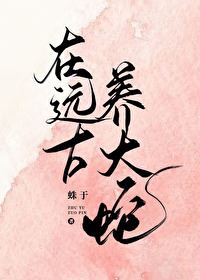
Raising a Big Snake in Ancient Times
Novel Info
  • Author:
  • 蛛于
  • Status:Completed

Summary

... Read More
Song Xu, an eighteen-year-old high school student from Xihai Huating, finds herself transmigrated into the body of a young squirrel beastman named Song on a forest continent. The original Song had just come of age and was captured by the fierce beast tribe, a dominant group of large feline beastmen who raid smaller tribes to expand their population. Taken from her small tribe of thirty members, Song Xu joins a caravan of over a hundred captives, mostly females from various small woodland tribes, being transported to the fierce beast tribe's territory. The captives are malnourished and exhausted, surviving on foraged shoots and insects while the captors feast on roasted meat. During a rest stop, a lion beastman named Shiyou notices Song Xu’s agility and beauty. He attempts to claim her, but Song Xu, unwilling to accept her fate, fakes a seizure to deter him. When the ruse fails to hold, she seizes the opportunity during the night to escape into the dense forest. Shiyou pursues her, driven by pride and the novelty of a captive daring to flee. Song Xu uses her new squirrel abilities to leap through the canopy, eventually leading the lion into the territory of Wu Mu, a half-snake beastman who has been expelled from his tribe for failing to fully transform. Wu Mu, now largely feral and residing in a stone cave, drives Shiyou away with a menacing hiss, causing the lion to retreat. Song Xu takes refuge in Wu Mu’s cave, initially fearing for her life. However, Wu Mu, whose sanity is fading due to prolonged isolation and beastification, does not attack her. Instead, he seems intrigued by her presence, which reminds him of his childhood in the tribe. Song Xu, displaying remarkable adaptability and a modern mindset, begins to settle into her new reality. She explores the forest, learning to identify edible plants, mushrooms, and fruits. She discovers a wetland where she can bathe and hunt for small fish and bird eggs. Her survival instincts are sharpened by her knowledge of basic biology and her previous life as a student. Over time, Song Xu and Wu Mu develop an unusual coexistence. She cleans his cave, lines his sleeping area with dried moss, and attempts to communicate with him. Wu Mu, though slow to respond, begins to show signs of recognition, occasionally repeating words like "fire" and "dance." Song Xu starts a fire using flint stones found in Wu Mu’s belongings, bringing warmth and light to the cave. This act triggers memories of tribal celebrations for Wu Mu, softening his demeanor. He allows her to stay close, and during thunderstorms, she hides under his tail for protection, further bonding them. The narrative shifts as Song Xu witnesses Wu Mu’s hunting prowess. He transforms into his full snake form to capture large prey, such as wild oxen and black panthers. During one hunt, a black panther targets Song Xu, but Wu Mu intervenes, saving her life. This event marks a turning point in their relationship, as Song Xu begins to see Wu Mu not just as a dangerous predator but as a protector. She cares for him during his next shedding, a vulnerable period for snakes, using warm water and wet moss to help him remove his old skin. Her gentle treatment contrasts with the fear and disgust he has experienced from other beastmen. As Song Xu adapts to her life in the forest, she continues to explore her surroundings, digging a tree hole for her own shelter but often returning to the stone cave. She experiments with cooking, seasoning her food with salt crystals found in Wu Mu’s belongings. Her lively personality gradually influences Wu Mu, who becomes less reclusive and more responsive to her presence. The story highlights the stark contrast between the brutal society of the beast tribes and the quiet, developing bond between the transmigrated human and the exiled half-beastman. Song Xu’s journey is one of survival, adaptation, and the unexpected formation of a connection in a hostile world.

Latest Release
DateGroupRelease
2026-08-11shanghai fantasy c58
2026-08-11shanghai fantasy c57
2026-08-11shanghai fantasy c56
2026-08-11shanghai fantasy c55
2026-08-11shanghai fantasy c54
2026-08-11shanghai fantasy c53
2026-08-11shanghai fantasy c52
2026-08-11shanghai fantasy c51
2026-08-11shanghai fantasy c50
2026-08-11shanghai fantasy c49
2026-08-11shanghai fantasy c48
2026-08-11shanghai fantasy c47

Community Reviews

Rating(4.2 / 5.0, 10votes)
5 stars
4(40%)
4 stars
4(40%)
3 stars
2(20%)
2 stars
0(0%)
1 stars
0(0%)

Popular reviews

... Read More
I want to talk about something that surprised me: the emotional core of this story isn't romance (yet) or even survival—it's loneliness. Song Xu is alone in a way that's almost unbearable. She's transmigration-alone, language-alone, species-alone. The original 'Song' had simple memories, like a 'long documentary,' but Song Xu brings her full eighteen years of human experience into a body that the world sees as worthless prey. There's this one moment that really got me. She's crouching among the captives, holding her stomach, watching the well-fed beastmen tear at meat. She's starving, terrified, and completely powerless. But then she makes a choice—she lies down and fakes illness, using her acting skills from childhood. It's a small moment, but it's also her first act of agency in this new world. She's not just surviving; she's choosing HOW to survive. That's emotionally significant. And then there's the scene where she transforms into her squirrel form and climbs into the canopy. For the first time since arriving in this world, she's not being chased or hunted. She's moving freely, tasting nectar, feeling the sun. The text says 'Young people shift their attention quickly' and honestly that's so human. The capacity to find joy even in precarious circumstances—that's the emotional heartbeat of this story. It's not about conquering the world; it's about finding a way to exist in it, to be curious and alive even when everything around you is dangerous. That's what made me care about her, and that's what will keep me reading.
... Read More
Okay so let me just say this: the plot moves FAST and I love it. We go from transmigration to capture to escape to finding a new (dangerous) home in like seven chapters? That is some serious narrative momentum. Most isekai stories take forever to get anywhere, but here Song Xu hits the ground running immediately—literally. She's faking a seizure to avoid being chosen by a lion beastman, then bolts into the forest the next morning. The pacing feels almost breathless, like the author refuses to let the reader catch their breath. The plot structure is interesting because it's built around a series of escalating threats. First it's the fierce beast tribe capturing her. Then it's Shiyou the lion chasing her. Then it's the forest itself—dark, ancient, full of unknown dangers. And then just when you think she's safe, she finds out the cave she's been eyeing is already occupied by a snake half-beastman. Each chapter ends with a little cliffhanger that makes you want to keep going. I literally found myself reading further than I intended because the story just won't let go. One thing I really appreciated: the escape isn't just physical. Song Xu's using her wits. She transforms into beast form, navigates the canopy, finds shelter—all while being actively hunted. The tension is maintained throughout. And the plot has this nice irony where the thing that should be most dangerous (Wu Mu, the snake half-beastman) might actually be the safest place for her. That's a clever subversion that sets up future conflict and resolution nicely.
... Read More
I need to talk about Song Xu because this girl is something else. She's an eighteen-year-old who just got thrown into a world where she's basically prey, and her first instinct isn't to panic—well, she panics internally, but externally? She's calculating. When the lion beastman grabs her, she doesn't fight (she's a squirrel, come on), she doesn't beg. She fakes a seizure. Like, full-on rolling on the ground, twitching, retching. And it WORKS. She even reflects on how she used this same tactic at age twelve to stop her dad from remarrying. That's a character who learns from experience and applies it to new situations. That's smart. But what really made me laugh out loud is her internal monologue. The contrast between her modern high school girl sensibilities and her new squirrel body is hilarious. She's thinking about college entrance exams one moment and whether she's into furries the next. And when she touches the snake's tail and thinks about how beautiful it is, despite knowing it's dangerous—that's such a specific, relatable personality trait. She's a reptile pet enthusiast! Of course she'd be drawn to a giant snake instead of running away screaming. It's the kind of character detail that makes her feel like a real person, not just a generic protagonist. And Wu Mu? Introduced so briefly but already so intriguing. He's a half-beastman who's losing his humanity, driven out of his tribe, now ruling a dark forest territory. He chased off a full-grown lion warrior but doesn't seem to care about the squirrel sneaking into his home. There's something almost tragic about him already, and I'm genuinely curious how their relationship will develop.
... Read More
I'm not even going to pretend this is a story with Shakespearean dialogue or anything. What makes this work is the voice—Song Xu's internal voice, specifically. It's modern, snarky, self-aware, and absolutely hilarious. The narrative doesn't take itself seriously, and that's its greatest strength. Take this moment: the lion beastman dangles meat over the captives' heads for fun, and Song Xu's reaction is basically 'the joys and sorrows of beastmen were not the same. They were noisy, and she thought that the excitement was theirs, and she had nothing.' That's such a perfectly observed, almost literary observation that then immediately gets undercut by her internal scream about not being ready for the adult world. The tonal shift is masterful. And her thoughts after faking the seizure? 'Damn, this place is unbearable.' Short. Punchy. Perfect. Or when she's touching the snake's tail and thinks 'No, how could a hobby be called perverted? Are people who squeeze their cats' paws perverted? This is love!' I literally said out loud 'that's so true' and then felt weird about saying it to an empty room. The dialogue between the fierce beastmen is also well done—rough, crude, but it establishes the threat level without needing a lot of exposition. 'One isn't enough,' another beastman says impatiently, 'At least two.' That's it. Two lines and you understand exactly what kind of world this is. The author trusts the reader to fill in the blanks, and that trust pays off.
... Read More
Let me just say: the worldbuilding in this thing is NOT subtle and I am HERE for it. The author doesn't just describe a forest—they build an entire ecosystem with rules, hierarchies, and dangers that feel genuinely alive. From the very first chapter, you understand the social structure: fierce beast tribe (tigers, lions, leopards, bears) dominates smaller tribes (squirrels, foxes, rabbits, ferrets, badgers). The captives are mostly females. Food is distributed as power. This is established in like three paragraphs and it sets the entire tone. But the real standout is the dark forest that Song Xu ends up in. The description is so vivid I could practically feel the dampness. 'Straight tree trunks covered with green moss, with branches and leaves growing at a height of more than ten meters. The thick canopy blocked the sunlight, making it not very bright even in broad daylight.' The atmosphere is thick—literally and figuratively. You can feel the humidity, see the gray mist, hear the insects and birds chirping from places you can't see. It's sinister but beautiful, and that duality is exactly what makes it work. The upper canopy versus the forest floor being 'two different worlds' is such a smart detail. Up above, there's sunlight, birds, nectar. Down below, it's dark, mysterious, dangerous. Song Xu literally has to climb to survive, to find light and safety. And then the cave—the triangular gap between boulders, the snake's tail tip in the slanted sunlight—that scene is almost cinematic. You can SEE it. The way the light falls on that dark red tail tip, the length of the snake disappearing into the cave... it's haunting and alluring at the same time. The world feels lived-in and dangerous, and that's exactly what keeps you turning pages.
... Read More
Okay, I need to think out loud about something the text keeps circling around: what does it mean to belong, and what happens when you don't? The half-beastmen are the most interesting symbol here. Wu Mu was expelled from the fierce beast tribe because his evolution was 'incomplete.' He can't fully become human, can't fully control his beast form, and now he's wandering the forest, losing his reason, becoming more animal with each passing day. But here's the thing—the text also tells us that young beastmen can't control their transformations either, and that's normal. It's only when they reach adulthood and still can't fully transform that they're called 'defective.' So the line between 'normal' and 'defective' is just... age and expectation. It's arbitrary. It's social, not biological. And Song Xu? She's in a similar position but in reverse. She's fully human in mind but trapped in a beast body. She doesn't belong to the fierce beast tribe, she doesn't belong to the small tribes, and the forest itself seems to reject her initially (the vines that felt 'strangely slippery'). She's a half-thing in a world that demands you be one thing or another. The snake tail she touches—that's also symbolic. Beauty and danger intertwined. The tail is 'smooth and soft, more resilient than silk, and softer than leather.' It's beautiful, but it's also a weapon. Wu Mu himself is like that: dangerous but possibly sympathetic, a monster but also a victim of the same system that captured Song Xu. The world this story builds doesn't have clear heroes and villains—it has survivors, outcasts, and people trying to figure out where they fit. And honestly, that's the theme that's going to stick with me.
See all reviews

Characters

See all characters

Custom lists

See all custom Lists