Radiant Sun - Reviews

Radiant Sun
+Add to Custom List
Sort
Add review
... Read More
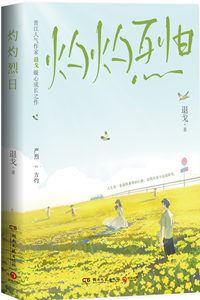
Let me just talk about how this whole sequence flows because the pacing here is genuinely impressive. It starts in the classroom — lunch, the cake box mystery, the math teacher getting pranked, test papers handed out. It's noisy, chaotic, full of dialogue and laughter. The energy is light and fast. Then Yan Lie asks about Fang Zhuo not staying at her uncle's house last week, she pretends not to hear, and he calls her out on it. Small tension, quickly defused. Then the holiday approaches, papers everywhere, Fang Zhuo squeezing in homework. The pace slows slightly — we get her internal monologue about Ye Yuncheng, the moth-to-flame metaphor. This is where the author lets us breathe and feel her anxiety before the scene shifts entirely. The market scene is pure comedy — fast, punchy, Yan Lie being ridiculous with that bald chick. Then the bus ride, the sunset description, the flashlight handoff, the unspoken words. The pace drops again into something quieter, almost melancholic. And then — she's alone on the road at night. The darkness closes in. The prose becomes sparser, more fragmented, matching her disorientation. "She made a couple of turns, trying to confirm her direction." Short sentences. No humor. Just the sound of chicks chirping and her own breathing. And then the cicadas give way to rolling wheels, a voice calls her name, and Ye Yuncheng appears. The tension releases but doesn't fully resolve — he takes her flashlight, brushes her cold fingers, hangs the flashlight... and the chapter ends on that intimate but unresolved note. The author knows exactly when to speed up, when to slow down, and when to let silence do the work.
... Read More
There are so many layers to unpack here and I barely know where to start. Let's talk about the central symbol: the golden light at the end of the path home. In Fang Zhuo's dream, she walks through the woods for so long that "it felt as if the sun was about to rise, to illuminate the empty, quiet road." This is her entire life metaphor — always walking toward a light that hasn't arrived yet. University is that light. Knowledge is that light. The promise that if she just keeps walking, eventually something will change. But the grandmother's words cut through this optimism like a knife: "Reality is an unbearable burden, a high wall that comes crashing down. It's a future with no choices, a wandering with no place to rely on." This is the thematic core of the entire novel, isn't it? The tension between the golden path (hope, education, escape) and the high wall (poverty, abandonment, determinism). Fang Zhuo's grandmother is a fascinating symbolic figure. She weaves clothes — an act of creation and care — but only gives them to others, never to Fang Zhuo. She is physically present but emotionally absent. The grandmother represents a specific kind of Chinese familial love: available but conditional, nurturing but distant. When she throws the schoolbag into the water field, she's not just punishing rebellion — she's performing a ritual of breaking Fang Zhuo's spirit so it can be rebuilt along acceptable lines. The infirmary scene adds another layer. Fang Zhuo wakes to sunlight through a window — the golden light returns, but now it's artificial, clinical. She's been saved, but not by the warmth of family. By Yan Lie, by the school system, by the sheer force of her own will to survive. And Yan Lie's home — clean, spacious, cold — is the physical manifestation of emotional availability without emotional depth. He can offer a blanket and a banana and a ride home, but he can't offer the kind of love that doesn't require performance. Fang Zhuo's question "Why were you looking for me?" isn't just about that night. It's about whether anyone has ever looked for her before.

Leave a comment

You must be logged in to leave comments. or
