Radiant Sun
Novel Info
  • Author:
  • 退戈
  • Status:Ongoing

Summary

... Read More

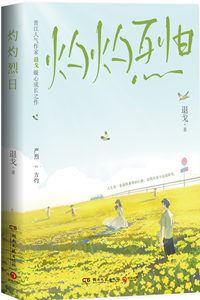
Fang Zhuo is a high school student who has spent her life navigating a precarious existence. Orphaned by the death of her grandmother and estranged from her father, Fang Yiming, she lives with her father’s new wife, Madam Lu, and her younger half-brother. Her childhood was marked by neglect and emotional coldness from her grandmother, who viewed her as a burden. Fang Zhuo’s only path to a better future is through academic excellence, yet she faces severe financial constraints and social isolation at A High, where she is perceived as aloof and unapproachable. Her relationship with her father’s family is transactional and hostile; Madam Lu views Fang Zhuo as a drain on resources meant for her son, while Fang Yiming remains passive and indifferent.

The central conflict arises when Fang Zhuo confronts her family about unpaid tuition. Madam Lu attempts to manipulate her into transferring to a lower-performing school under the guise of receiving special attention, but Fang Zhuo refuses. The confrontation escalates when Madam Lu throws money at her feet in a humiliating display of dismissal. Fang Zhuo responds not with tears, but with a cold, calculated threat to expose her family’s neglect publicly, forcing her father to pay her tuition and living expenses. She accepts the money as a buyout fee, severing her emotional ties to the household, and leaves to live independently, sleeping in convenience stores and fast-food restaurants to save costs.

At school, Fang Zhuo’s deskmate is Yan Lie, a popular and wealthy student who initially observes her with detached curiosity. Unlike other classmates who are intimidated or dismissive of her, Yan Lie begins to notice the disparities in her life. He discovers she has no smartphone, eats sparingly, and lives in poverty. His interest shifts from casual observation to protective concern. He leaves anonymous gifts, such as shoes and food, which Fang Zhuo initially rejects due to her pride but eventually accepts when she realizes his intentions are genuine and non-judgmental. Yan Lie becomes a consistent presence in her life, offering rides, help with navigation, and a safe space when she is lost or exhausted.

A significant turning point occurs when Fang Zhuo receives a letter from her late mother’s brother, Ye Yuncheng, who has been sending money and letters to her grandmother for years. The letter reveals that her mother, Ye Yaoling, died on July 16th, a date Fang Zhuo had never known. Driven by curiosity and a desire to understand her origins, Fang Zhuo travels to a rural village to meet Ye Yuncheng. She finds him bedridden and disabled, living in squalor. The meeting is awkward and brief; Fang Zhuo leaves money and departs without forming a deep bond, but the encounter cracks her emotional armor, revealing her hidden vulnerability and desire for connection.

Following this trip, Fang Zhuo collapses at school due to exhaustion and malnutrition. Yan Lie rushes her to the infirmary and stays by her side, showing a level of care that surprises her. During her recovery, they share a moment of genuine connection, discussing her dreams of university and her lack of direction. Yan Lie’s support becomes a stabilizing force in her chaotic life. Meanwhile, the boys in their class, including Shen Musi and Zhao Jiayou, become aware of Fang Zhuo’s financial struggles and attempt to help her discreetly, though she remains wary of pity. The story concludes with Fang Zhuo continuing her studies with renewed determination, supported by Yan Lie’s quiet presence, as she navigates the challenges of her final year of high school while maintaining her independence and pride.

Latest Release
DateGroupRelease
2026-08-11shanghai fantasy c5
2026-08-11shanghai fantasy c4
2026-08-11shanghai fantasy c3
2026-08-11shanghai fantasy c2
2026-08-11shanghai fantasy c1

Community Reviews

Rating(4.1 / 5.0, 14votes)
5 stars
6(43%)
4 stars
4(29%)
3 stars
4(29%)
2 stars
0(0%)
1 stars
0(0%)

Popular reviews

... Read More
Okay so I have to talk about this one scene because it genuinely gave me chills. You know how some books describe sunsets and it's just... there? Like decorative wallpaper? This one was different. The text says: "Today's sunset wasn't vibrant at all. After the sun sank, it only left a layer of grayish-white mist along the horizon. Dark clouds floated above the ink-washed mountains in the distance, like a hasty stroke from a drunken painter." That description. That line about the ink-washed mountains. I could literally see it. It's not a pretty sunset, it's a dying one, and it perfectly mirrors what's happening to Fang Zhuo emotionally. She's about to enter this dark stretch of road where she gets lost, and the author sets it up with this gray, swallowed light. It's not just atmosphere, it's foreshadowing dressed as scenery. And then the village road at night — "the heavy darkness pressed down like a giant black cloth, covering her vision." That word "pressed" is doing so much work. It's not just dark, it's oppressive. It's physical. The darkness has weight. And then the cicadas, the rolling wheels, the flashlight beam cutting through — suddenly the world goes from vast and swallowing to intimate and narrow, just a cone of light and the sound of someone calling her name. The classroom scenes are also surprisingly vivid. The potted plants multiplying in the corners, the succulents in recycled plastic bottles, the math teacher with his thinning hair spinning around with a cake box like he's on a game show. These aren't just background details, they make the world feel lived-in. You can imagine this classroom. You can picture the teacher's Mediterranean hairline. That's good worldbuilding — it doesn't announce itself, it just quietly makes everything real.
... Read More
Okay so Yan Lei is genuinely one of the most persistent characters I've encountered in this genre, and I have mixed feelings about it. The guy literally cannot stop trying to get Fang Zhuo's attention. First he asks her to watch his match, gets sidetracked into an anime conversation, then later he's showing off medals like a peacock. "Want it?" he asks about the gold medal and she just says she'll have one tomorrow—she's not even impressed by his achievements, and I respect that. But here's what really gets me: Yan Lei notices everything about her. He catches her looking at the medal with fondness. He remembers she signed up for the 1500m. He's the one who contacts the infirmary proactively when he finds out she's the "malnourished student who fainted last time." That's not just a crush, that's genuine care. Fang Zhuo on the other hand—she's this wall of calm indifference. She watches him from ten meters away, gives one-word answers, and when he waves at her after his jump, she just "calmly met his gaze." But then she has this entire internal monologue about sunlight and flowers. The contrast is everything. She's not immune to him, she's just not going to show it. And Yan Lei? He keeps showing up. He gets second place and still sneaks glances at her while being dragged around by his friends. The dynamic between them is so asymmetrical and it's making me genuinely invested in what happens when that asymmetry finally shifts.
... Read More
There's this one detail that keeps coming back to me and I think it's doing a lot of thematic work. Yan Lei has both a silver medal (from high jump, second place) and a gold medal (from the 100m race), and he puts them on the desk like they're nothing. "Although I didn't get champion in high jump, luckily I also signed up for the 100-meter race." The word "luckily" is doing so much heavy lifting here. He's not proud of the silver, he's just... accepting it. And he's not bragging about the gold, he's just mentioning it like it's a fact. Meanwhile Fang Zhuo is about to run the 1500m, an event nobody expected her to sign up for, and her class teacher is having an actual crisis. The medals represent achievement and recognition—the visible results of effort. But Fang Zhuo's 1500m represents something else entirely. It's not about winning or medals. It's about showing up. She pinned her number tag inside her school jacket and walked back and forth warming up while everyone else was surrounding the other runners with discouraging words. The number tag is her symbol here, not a medal. It's the quiet dignity of participation in a culture that only values winning. And Yan Lei, who already has the medals, is the one asking "Is there anything I can do to help you?" He doesn't need to prove anything. She does. That's the real story underneath the sports meet facade.
... Read More
Okay so let me just say this: the fainting scene. The absolute audacity of the author to have Fang Zhuo just COLLAPSE during a school cleaning day. Not during a dramatic confrontation, not during a rainstorm, but while mopping the corridor. The class teacher is actively praising her efficiency right before she drops. That contrast is brutal. One second she's the model student, the next she's being carried to the infirmary on Yan Lie's back. But what I love about this plot move is how it ties together every loose thread. The skipped meals, the late-night studying, the emotional exhaustion from her grandmother situation — it all culminates in this physical breaking point. The plot doesn't just throw drama at her for no reason; it's the logical endpoint of someone who has been running on fumes for years. And then there's the dream sequence. Oh god, the dream sequence. It's not just a flashback dump — it's structured like a memory unraveling. The grandmother, the weaving, the running away, the schoolbag thrown into the water field. Each memory hits harder than the last, and the golden light at the end of the path home? That's the author whispering: this is the moment she learned survival. The plot here is doing heavy lifting — showing us why Fang Zhuo can't stop, why she can't let anyone help, why the idea of crying somewhere is more terrifying than any exam. The sports meet signup subplot is also doing clever work. They want to put her in the cheerleading squad because she looks malnourished. The irony is almost comedic, but it's not played for laughs. It's the school system trying to manage her like a problem to be solved rather than a person. And Yan Lie's text conversation with Mousse Cake about whether Shen Musi should give her food? That's subplot threading that connects the romantic tension without making it obvious. The plot is layered in a way that rewards careful reading.
... Read More
"What else can I do? Find a place to cry?" I have been sitting with this line for an hour. I cannot get it out of my head. Fang Zhuo says it so casually, with a smile, while folding up the hospital blanket like she's just finished a minor inconvenience instead of collapsing from exhaustion. And Yan Lie's reaction — he gives her a strange look, and when she catches him, he "casually turned away, pretending nothing had happened." But we KNOW something happened. We felt it. That moment between them where she let him see the crack in her armor and he didn't know what to do with it. This entire chapter is about the emotional cost of being the strong one. Fang Zhuo's entire identity is built on not needing anything from anyone. Her grandmother taught her that — literally threw her schoolbag into a field and told her to grow up and accept her place. The rebellion died in that moment, replaced by a fierce, lonely independence. "She shouldn't beg for someone else's affection." That's not a lesson learned; that's a wound that became a strategy. And Yan Lie? He's the first person who seems to genuinely see her without trying to fix her. He doesn't offer pity. He offers banana and puzzle games and a ride home on his bike. The sunlight scene — she leans against his back, head dizzy, and he just pedals. No grand gesture, no dramatic music, just... presence. The emotional core of this passage isn't in the big moments. It's in the spaces between words. The things Yan Lie doesn't say. The things Fang Zhuo can't say. The porridge Shen Musi gives and she refuses not because she's not hungry but because accepting it would mean admitting she needs something. That's the tragedy and the beauty of it.
... Read More
I need to talk about Yan Lie for a minute because this boy is a whole emotional puzzle and I am obsessed. Let's start with the walking-home scene. Fang Zhuo asks him directly: "Why were you looking for me?" And you can SEE him freeze. The text says it perfectly — "a trace of regret flashing in his eyes, mixed with a bit of confusion, but it was quickly hidden by his lowered eyelids." He HAD been looking for her. He'd been bored, wandered to the bus stop, saw her not get off the bus, and then found her wandering. He was worried. But he can't say that. So he covers it with a joke about pathfinding functions and she hits him with "Then I'd rather not meet you." And he just... chuckles. Doesn't push. Doesn't pry. This is a boy who has figured out how to love someone without suffocating them. Then in the infirmary, he's playing a puzzle game with her. Not talking about feelings, not making it a big deal, just... being there. And when she asks about universities, he makes that joke about eyes being windows to the soul and university being the window to knowledge. It's so Yan Lie — deflecting sincerity with wit, then immediately feeling guilty about it. But the Shen Musi angle is what really complicates things. The porridge scene! Shen Musi inching the bottle across the desk like it's a diplomatic negotiation, then Yan Lie's text to Mousse Cake: "It depends on who's giving it." WHO IS GIVING IT. Yan Lie knows exactly what that means and he's drawing a line he'll never cross out loud. The three of them — Fang Zhuo caught between two boys who care about her in different ways, Yan Lie who protects her silently and Shen Musi who wants to give her everything but doesn't know how to approach her — this triangle isn't dramatic in the traditional sense. It's quiet, aching, and real.
See all reviews

Characters

See all characters

Custom lists

See all custom Lists