Quick Transmigration: Lucky Pregnancy Koi, The Beauty Has a Childbearing System
Novel Info

Summary

... Read More
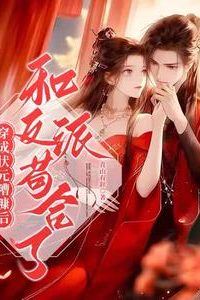
Wen Liyu is a five-hundred-year-old koi spirit who failed her thunder tribulation and was rescued by the Director of the Quick Transmigration Bureau. For years, she lived in the Bureau's Wishing Pool, granting luck to agents before being drafted into active missions due to a surge in workload. During her first assignment, a transmission error leaves her trapped in the body of a small koi fish in ancient China. She is nearly boiled into soup for a concubine but escapes when a white cat snatches her and drops her near Chu Shaoyao, a sickly and despised prince living in the Cold Palace. Chu Shaoyao, the emperor's first son, was once favored but was abandoned to the Cold Palace at age four after his mother died and his younger half-brother, Chu Shaohua, rose in status. Framed at sixteen, he was exiled to guard the imperial mausoleum, where he transformed into a ruthless tyrant who would eventually seize the throne and commit suicide. Wen Liyu’s mission is to survive, build affection with Chu Shaoyao, and bear his child to stabilize the world’s collapsing energy. The system assigns her daily tasks such as watering vegetables and mending clothes, rewarding her with points that can be used in a shop to buy transformation pills, healing medicines, and other items. Wen Liyu uses a transformation pill to take human form and cares for the feverish prince, feeding him medicine and finding his lost jade pendant. She discovers a hidden crossbow trap set by his enemies and warns him, helping him avoid the assassination attempt. Her actions alter the original plot, earning her significant points and unlocking a higher-level shop. She learns that a transmigrator female lead is aligned with the antagonist, Chu Shaohua, and that her primary goal is to prevent Chu Shaoyao’s tragic fate. As Wen Liyu spends more time with Chu Shaoyao, their relationship deepens. She uses invisibility cards to spy on the palace and warns him of a poisoning plot against Consort Wen, which he successfully counters. Chu Shaoyao, initially suspicious of her strange behavior, begins to trust her and relies on her insights. Wen Liyu’s bold and affectionate nature disarms his cold exterior, leading to intimate moments that blur the line between mission and genuine emotion. The story follows Wen Liyu’s efforts to complete her missions while navigating the dangerous political landscape of the palace. She balances her duties as a koi spirit with her growing attachment to Chu Shaoyao, using her system-given abilities to protect him from various threats. As she earns more points and unlocks new capabilities, she prepares for the challenges ahead, knowing that her success is crucial not only for her own ascension to dragonhood but also for the survival of the world itself.
Latest Release
DateGroupRelease
2026-08-11shanghai fantasy c11
2026-08-11shanghai fantasy c10
2026-08-11shanghai fantasy c9
2026-08-11shanghai fantasy c8
2026-08-11shanghai fantasy c7
2026-08-11shanghai fantasy c6
2026-08-11shanghai fantasy c5
2026-08-11shanghai fantasy c4
2026-08-11shanghai fantasy c3
2026-08-11shanghai fantasy c2
2026-08-11shanghai fantasy c1

Community Reviews

Rating(4.5 / 5.0, 6votes)
5 stars
3(50%)
4 stars
3(50%)
3 stars
0(0%)
2 stars
0(0%)
1 stars
0(0%)

Popular reviews

... Read More
"Your eyes are so beautiful." — and that's it, that's the line that broke me. Wen Liyu sees the God of Light in all his divine glory and her first instinct is to cry because she thought he was someone else. Someone she loved. And then when she realizes it's not him, she does the most Wen Liyu thing possible: she acts spoiled and asks for a hug to calm him down. The God of Light, who came to punish her irreverence, ends up with his hand on her waist and her asleep in his arms. The character dynamics here are absolutely delicious. Wen Liyu is this irreverent koi spirit who treats the entire religious system like a joke but somehow keeps accidentally being holy. The God of Light is supposed to be cold and distant, but every interaction chips away at that. He watches her through the statue, he flicks her forehead through divine light, he stands behind her when she doesn't know he's there. And that ending—her spinning around in her black robe asking if He's still there, and His golden gaze deepening as he pulls her close. The tension between them is built on this absurd premise (she's the saintess, he's the god she's supposed to worship) but it feels genuinely charged because neither of them is playing their assigned role correctly. She's not devout enough. He's not detached enough. And the Pope? Oh, the Pope is watching from the sidelines with ambition in his eyes, and I have a feeling he's going to be trouble. The dynamic between all three of them is going to be fascinating to watch unravel.
... Read More
The stakes in this arc are escalating in ways that keep me on edge. On the surface, Wen Liyu's conflict is simple: she needs to maintain her cover as the saintess while figuring out why she lost her powers. But the external threats are real and immediate. This is a soul transmigration world, not a buggy one like her previous experience. If people doubt her, she gets branded a fallen saintess and burned at the stake. That's not dramatic flair—that's the stated rule of the world. The Pope is another threat entirely. He's not evil, necessarily, but he's ambitious and he sees Wen Liyu as a tool for his own political gain. When Father God warns him with that needle-like pain, it shows that even the church's hierarchy is subject to divine intervention, and the Pope now knows he's being watched. The internal conflict is equally tense. Wen Liyu doesn't believe in this god she's supposed to serve, yet he's the one who keeps saving her, protecting her, watching her. Every interaction with him undermines her skepticism and rebuilds something she didn't expect. And the God of Light? He came to punish irreverence and ended up placing a protective hand on the saintess's shoulder. His conflict is between divine duty and something he can't name. The suspense is maintained brilliantly because neither character knows where this is leading. Wen Liyu keeps trying to "strategize" the male lead like he's a game objective, but he's responding in ways no strategy could predict. The healing spell was supposed to be a power moment, but it also raises the question: what happens when she can't control what she's capable of? The stakes aren't just about survival anymore—they're about identity, faith, and the dangerous space between duty and desire.
... Read More
The symbolism in this text is richer than I initially gave it credit for. Wen Liyu is a koi spirit—a creature of water—who has lost the ability to control water. That's not accidental. She's a being out of her element, literally and metaphorically. She's transmigrated into a world of light and faith, forced to pretend to be devout while internally believing in nothing but herself. The water she can't control represents her true nature, her origin, the part of her that doesn't fit this world. Meanwhile, the God of Light is all light and fire and authority, yet he's drawn to her in ways that contradict his divine nature. The statue cleaning scene is deeply symbolic too—she's literally touching the god's earthly vessel with a dripping cloth, bathing him, climbing on him. It's irreverent and intimate and wrong in every way, and that's exactly what makes it powerful. The healing spell that erupts from her is light-based, not water-based, which means her power is being transformed to fit this world. But at what cost? The recurring motif of eyes is striking—her blue eyes described as "sky-bright," his golden eyes full of ethereal brilliance, the Pope's cloudy eyes gleaming with ambition. Eyes are windows to truth in a story where everyone is performing. Wen Liyu pretends to pray. The God of Light pretends to be distant. The Pope pretends to be pious. Only their eyes reveal what they're actually feeling. And the black robes—Wen Liyu's dark robes against the white palace, against the golden light, against the pale translucence of her skin. She's darkness in a world of light, and the text keeps emphasizing that contrast.

... Read More
Okay, so this arc is doing something really clever. On the surface it looks like a fluffy transmigration romance, but the plot mechanics are actually layered. Wen Liyu loses her water magic because she lacks faith—that's a great inciting incident because it forces her into dependency on the very god she's pretending to serve. Then the cleaning scene happens, which seems like comedy relief but is actually the real turning point. She climbs the statue, touches the God of Light's earthly vessel, and he comes to punish her in her dream. But instead of punishment, they have this weird intimate moment where she mistakes him for Shaoyao and he can't bring himself to be angry. That's the pivot. From there, the plot accelerates: she accidentally casts a high-level healing spell, the Pope gets a divine warning, and the God of Light reveals himself physically behind her. Every chapter ends on a note that makes you want to keep going. The Pope subplot is especially smart—his ambition gives the church politics real weight, and when Father God warns him, it raises the stakes from "romantic comedy" to "political thriller with divine consequences." The healing spell scene is the kind of moment that makes you slap the table. She's been failing at everything, and then suddenly this massive miracle happens, and everyone—including the God of Light himself—seems surprised. What does that mean for her power? Is she a vessel? A test? The plot is setting up mysteries faster than it's resolving them, and honestly, that's exactly how I like it.
... Read More
I have read this scene five times and I still cannot process it. The way Wen Liyu throws herself into the God of Light's arms crying for Shaoyao—it's devastating because it's not manipulation, it's genuine grief for someone she lost. She's alone in a foreign world, pretending to be a holy figure she doesn't believe in, and the first time she sees a face that reminds her of home, she just collapses. And the God of Light—this being of pure light and power who should be furious—feels his rage melt away when he looks into her eyes. That's the moment. That's the exact moment where something shifts between them. He tells himself she's a deceitful liar, but his body betrays him every time. The dream sequence is intimate in a way that has nothing to do with romance and everything to do with vulnerability. She falls asleep in his arms. She trusts him without knowing who he is. And then back in the waking world, she's mouthing nonsense instead of praying, and he flicks her forehead through the statue like a flustered teenager. The comedy of it! The tenderness! And then the Pope gets warned and Father God places a protective hand on her shoulder, and she has no idea he's there, and he's watching her with this expression that's impossible to read. The emotional architecture of this relationship is built on misunderstandings and near-misses and the God of Light slowly realizing he's been watching her for days and can't look away. I'm not okay.
... Read More
The pacing in these chapters is masterful. Chapter 24 starts almost slapstick—Wen Liyu failing at water magic, complaining about her food, then accidentally bathing the statue like it's a fish tank. The comedic beats land hard. She tosses the dripping cloth on the statue's face and the system just gives up. "It's over." Perfect. But then Chapter 25 shifts the tone completely. The dream sequence slows everything down, becomes almost lyrical with the white palace and water vapor and golden light. That contrast is intentional—the comedy makes the tenderness hit harder. Then Chapter 26 accelerates again with the healing spell, the Pope's ambition, the divine warning, and that cliffhanger ending. The author controls the reader's heartbeat through these shifts. One moment you're laughing at a fish girl climbing a statue, the next you're holding your breath because the God of Light is pulling a woman toward him. The chapter breaks are well-placed too. Each one ends on a note of revelation or tension—the system panicking, the Pope being warned, the God of Light's gaze deepening. There's no filler. Even the prayer scenes, which could be boring, are used to show Wen Liyu's internal monologue and the God of Light's secret observation. The structure serves the story: comedy establishes character, the dream sequence establishes emotion, and the climax establishes stakes. By the end of Chapter 26, we know this isn't just a rom-com anymore. There's politics, divine intervention, and a saintess who accidentally became the most powerful person in the church.
See all reviews

Characters

See all characters

Custom lists

See all custom Lists