Summary

... Read More

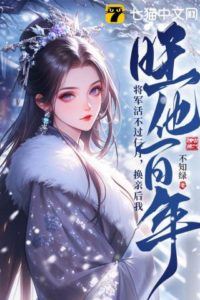
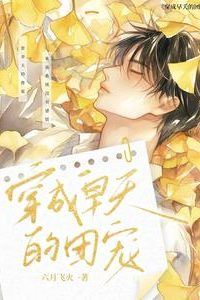
Ning Wanguan is a jade rabbit spirit who, after being caught stealing carrots from the Immortal Alliance, is forced to descend to the mortal realm and bind herself to a childbirth system. Her punishment is to help the destined son, General Wei Chenheng, produce offspring and change his tragic fate. In the original timeline, Wei Chenheng dies on the battlefield without an heir, leaving his concubine, a songstress named Ning Wanguan, to suffer a humiliating death. The system grants her a treasure pouch filled with various magical pills designed to ensure conception and healthy childbirth. Disguised as a lowly concubine sent by the treacherous Prime Minister Ma to spy on and undermine the Wei family, Ning Wanguan enters the Wei mansion on her wedding night with a clear mission: win the general's favor, conceive a child, and prevent his death.

Wei Chenheng is the renowned Hundred-Victory General of the Great Jin, a man of few words and immense combat prowess who has been shunned by political rivals. Upon his wedding night, he is initially distant and reserved, having been manipulated into marrying a courtesan by Prime Minister Ma. However, Ning Wanguan’s delicate beauty and calculated affection quickly disarm him. Despite his initial reluctance to take advantage of her, her persistent charm and vulnerability evoke his protective instincts. Their first night together results in a passionate encounter, though Ning Wanguan fails to take her fertility pill in the chaos. Undeterred, she continues her efforts as Wei Chenheng prepares to depart for the northern border to quell barbarian invasions.

When Ning Wanguan learns of Wei Chenheng’s imminent departure, she insists on accompanying him, fearing that if she remains behind, she will be bullied by the Wei family’s hostile relatives, particularly the scheming Second Aunt and Wei Chenheng’s cousin, Gu Qingyi. During a confrontation where Gu Qingyi attempts to frame her, Ning Wanguan cleverly turns the tables, causing Gu Qingyi to injure herself while pretending to be the victim. Wei Chenheng, fiercely protective of his wife, confronts his family and decides to take Ning Wanguan to the border with him, defying his mother’s wishes. This marks a significant shift in their relationship, as he begins to treat her with genuine care and respect rather than mere duty.

During their journey, the couple travels through the Twin Peaks and stops in Lotus Town. Here, Ning Wanguan discovers her true love for food, particularly wild peaches and local delicacies, which endears her further to Wei Chenheng. He reveals that he previously cleared bandits from the area, earning the town’s gratitude. Their bond deepens as they share intimate moments, including bathing in a hidden hot spring. Meanwhile, political threats loom; Lin Yuehe, the daughter of a local magistrate, attempts to seduce Wei Chenheng with drugged wine, but he rejects her and exposes her scheme, reaffirming his loyalty to Ning Wanguan. The general’s steadfast devotion contrasts sharply with the manipulative tactics of the court politicians who sought to control him.

As they approach the northern border, Ning Wanguan continues to use her system-provided pills to ensure pregnancy, while also navigating the dangers of the military camp. She learns that Wei Chenheng faces not only external enemies but also internal betrayal. The story follows their life at the frontier, where Ning Wanguan balances her role as a supportive wife with her secret mission to secure the Wei family’s future. Her actions begin to alter the predetermined tragic fate, as Wei Chenheng’s growing affection for her motivates him to survive and protect their growing family. The narrative explores the dynamics of their marriage, the political intrigue of the Great Jin court, and Ning Wanguan’s determination to succeed in her task while genuinely falling in love with her husband.

Latest Release
DateGroupRelease
2026-08-11shanghai fantasy c140
2026-08-11shanghai fantasy c139
2026-08-11shanghai fantasy c138
2026-08-11shanghai fantasy c137
2026-08-11shanghai fantasy c136
2026-08-11shanghai fantasy c135
2026-08-11shanghai fantasy c134
2026-08-11shanghai fantasy c133
2026-08-11shanghai fantasy c132
2026-08-11shanghai fantasy c131
2026-08-11shanghai fantasy c130
2026-08-11shanghai fantasy c129

Community Reviews

Rating(3.7 / 5.0, 22votes)
5 stars
4(18%)
4 stars
10(45%)
3 stars
5(23%)
2 stars
3(14%)
1 stars
0(0%)

Popular reviews

... Read More
The stakes in this story are layered in the best way. On the surface, Ning Wanguan's mission is simple: survive, complete her assignment, get close to Wei Chenheng. She framed Gu Qinyi to escape the Wei household. She used an aphrodisiac to ensure intimacy. She played the part of the devoted wife. Every action is calculated. But the real conflict isn't external—it's the growing impossibility of keeping her emotions separate from her strategy. Watch what happens in the carriage. She starts by counting hours: 'the effect of the aphrodisiac still had five hours to go.' She's monitoring time like a stopwatch. But by the end of that same scene, she's the one pleading 'No more' and calling him 'husband' with a voice that's 'soft and sticky, playfully yielding.' When did the performance become indistinguishable from the real thing? The stakes escalate beautifully when you consider what she stands to lose. If Wei Chenheng discovers she orchestrated the whole framing incident, if he realizes her affection was partly calculated, everything collapses. But here's the terrifying part: even if he found out, would it matter? The text keeps asking this question without ever answering it directly. Every tender moment is shadowed by the knowledge that it began as a scheme. And Wei Chenheng—he's not a passive participant. He's a general. He notices things. He watched her drink that strong liquor without flinching and registered surprise. He saw the scratches on his own back and didn't comment when she stared at them. He's playing his own game, and the question is whether their games are compatible or whether they'll collide.
... Read More
I need to talk about Wei Chenheng's dialogue because this man says SO LITTLE but every word hits. His lines are short, direct, and somehow funnier than any comedic character I've read this year. Take this exchange: 'What if they look like you?' 'Hearing her say this, he seriously thought for a moment and regretfully said, 'If they look like me, that would be a shame; Wanwan is prettier.' This man is a GENERAL. He's traveled across the country disguised as a merchant. He has soldiers following him. And his response to a hypothetical about his future children's appearance is basically 'mine would be an aesthetic disappointment.' I laughed out loud. The author has created this intimidating, cold exterior and then let it crack just enough to reveal a man who is completely, hopelessly smitten. And Ning Wanguan's voice is equally distinct. She switches between sweet ('Husband, you treat me so well'), sassy ('To meet me is actually your blessing!'), and genuinely playful ('These two mountains connected together look a bit like two big buns placed side by side'). The 'buns' line made me cackle because it's such a casual, modern observation in what should be a serious historical setting. It tells us everything about her personality—she's observant, she has a sense of humor, and she's not taking any of this too seriously even though her life depends on it. The dialogue between them has this incredible rhythm where she teases and he responds with deadpan warmth. Like when she complains about his armor hurting her and he immediately takes it off. No dramatic speech, no grand gesture—just action. 'I'll take it off.' That's their love language.
... Read More
The pacing in these chapters is absolutely relentless and I mean that as the highest compliment. Chapter 7 basically contains: a public framing incident, a confrontation with the matriarch, a marriage declaration, a carriage ride, and a full intimate scene. That's a lot of plot for one chapter, and yet it never feels rushed because each moment has emotional weight behind it. What I love is how the author uses physical movement as a pacing device. They leave the Wei residence → get in the carriage → travel through the night → stop at an inn → continue the next day → camp at a temple → go to a stream. Every location change marks a new beat in their relationship development. The journey itself IS the structure. It's like the author is saying: we don't need a hundred chapters of sitting around talking about feelings; we'll just put them on a horse and let the road do the work. The transition from Chapter 7 to 8 is particularly smooth. We go from the heated intimacy of the first night to the practical reality of buying men's clothes and traveling in disguise. It grounds the romance in something tangible. And then the roasted boar scene in Chapter 9—this is where the pacing breathes. After all that tension and movement, they just... eat. They sit by a fire. Ah Sheng cuts the meat. Wei Chenheng feeds her piece by piece. It's a quiet moment that makes the relationship feel real because it's not about drama anymore; it's about two people sharing a meal in the wilderness. The chapter endings are also doing heavy lifting. Chapter 7 ends mid-intimacy with '...'. Chapter 8 ends with her looking at the Twin Peaks and asking about having children. Chapter 9 ends with her face turning red from the cold AND something else. The author knows exactly when to cut and when to linger.
... Read More
The Twin Peaks scene kept echoing in my head long after I finished reading. Two round mountains standing side by side, looking identical, connected together. Ning Wanguan immediately notices them and compares them to 'two big buns placed side by side'—which is hilarious on the surface but also kind of profound when you think about it. These two people are both performing roles. She's playing the delicate, wronged cousin. He's playing the doting husband. But underneath those performances, they're both actually... fine with each other? The mountains are separate entities that happen to be connected, just like they're two individuals who've chosen to be together. And Ning Wanguan's question—'If I were to give birth to twins, would you be happy, husband?'—is almost testing whether he'll say the right thing, whether he'll perform the role of the loving husband as well as she's performing the role of the devoted wife. His answer reveals everything: 'As long as they are your children, I will like them.' He's not performing. He's just... sincere. Which is funny because he's also the man who immediately follows up with 'But I actually prefer daughters, especially if they look like you'—which is equal parts genuine and strategically flattering. Then there's the armor. She complains it's too hard and hurts her, and he takes it off without a word. The armor is his public identity—general, protector, cold authority. Inside the carriage, inside the relationship, he removes it. He wears a gray robe instead. He lets himself be soft. The armor on his back later becomes a visual symbol of his history—'scratches of varying depths, both new and old'—the accumulated evidence of a life spent fighting, while she traces them with her eyes and says nothing. Some things don't need to be spoken.
... Read More
Okay so let me just say this: Ning Wanguan is the most interesting kind of protagonist because she's not pretending to be innocent about her motives. When she thinks 'To meet me is actually your blessing! Wei Chenheng!' after all that sweet talk, I literally screamed. The author just completely flips the script on us. She's not some naive girl swept away by romance—she's a woman who staged a whole dramatic framing incident just to escape a toxic household, and somehow it worked. But here's what actually got me: the moment in the carriage when she says 'To meet you is my blessing' and the narration tells us 'Hearing her say this brought him some joy.' For once, the manipulation and the genuine emotion are tangled up together. Is she happy? Is she relieved? Is she just playing her part? The text doesn't tell us, and that's what makes it so good. Wei Chenheng wraps her in his arms and feels 'lucky to have her by his side' while she's internally doing a victory dance. That dramatic irony is chef's kiss. And then the whole aphrodisiac plot—she's counting hours, calculating exactly when to push him over the edge. 'As long as she had intimate relations with him within these five hours, she would definitely complete her mission perfectly.' Mission. Like he's a quest objective. And yet, somewhere between the physical intimacy and the carriage banter and the roasted boar and the stream scene, something shifts. He starts noticing things—her tolerance for strong liquor, her playful spirit, the way she calls him 'husband' with genuine warmth mixed in with the performance. By the time they're at the Twin Peaks and she's joking about having children, the line between strategy and affection has completely blurred. I kept re-reading those scenes trying to figure out when it became real for her, and I honestly can't pinpoint it. Maybe that's the point.
... Read More
Another great finding that had been neglected by the Qidian. Just like It's Lonely to be Invincible. Why do you want to publish it when you are going to throw it away?
See all reviews

Characters

See all characters

Custom lists

See all custom Lists