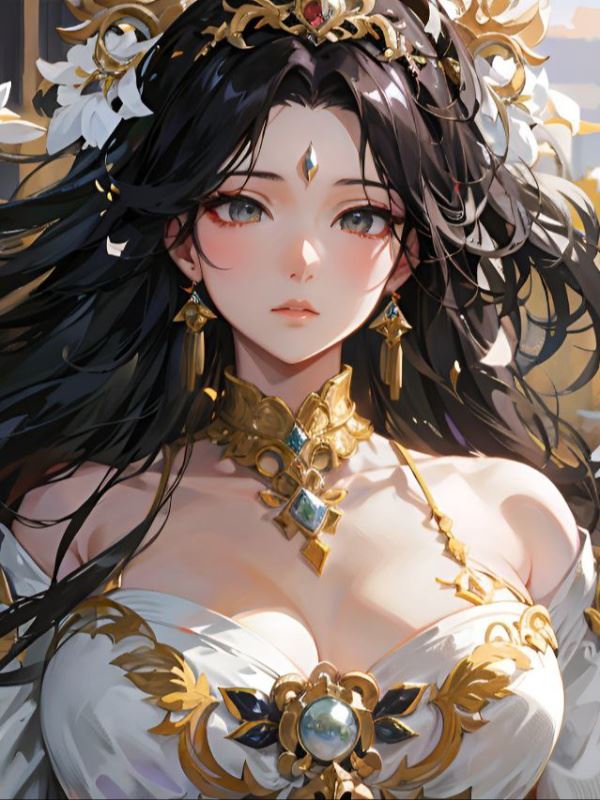
Tong Jiaying, a modern office worker who died from exhaustion after working consecutive 997 shifts, awakens in the body of Noble Consort Tong, a cousin of Emperor Kangxi in the Qing Dynasty. The original host, ambitious and desperate to become Empress, had collapsed from overexertion while managing the funeral rites for the late Successor Empress. Tong Jiaying inherits not only the body but also the complex memories and political entanglements of the palace. Recognizing the original host’s fatal ambition and the precarious position of the Tong family, she decides to abandon the path to the empress throne. Her primary goal shifts from political advancement to survival and a peaceful, long life, leveraging her knowledge of history to navigate the dangerous imperial harem.
The story unfolds against the backdrop of the Rebellion of the Three Feudatories, which has consumed the Emperor’s attention. With the Successor Empress dead, the internal governance of the Six Palaces is in disarray. Tong Jiaying’s first major challenge comes from Sumalagu, a trusted confidante of the Grand Empress Dowager, who visits to gauge Tong Jiaying’s stance on palace management and hints at bringing the Successor Empress’s younger sister into the harem. Tong Jiaying feigns illness and weakness to deflect responsibility, refusing to be drawn into the Grand Empress Dowager’s schemes. Her refusal surprises Sumalagu but ultimately earns a grudging acknowledgment from the Grand Empress Dowager that Tong Jiaying has grown wiser, though it also confirms her exclusion from the inner circle of power.
Tensions rise when Tong Jiaying receives a gift from the Neiwufu containing a phoenix hairpin adorned with nine pearls, a symbol reserved exclusively for the Empress. Recognizing this as a framed attempt to accuse her of treasonous ambition, she immediately reports the item to Emperor Kangxi. Kangxi, already suspicious of the consecutive illnesses that nearly killed his cousin, orders an investigation. This incident marks a turning point, as Kangxi begins to see Tong Jiaying not as an ambitious rival but as a victim of palace intrigue, strengthening his protective stance toward her.
Further complications arise when Consort Wu, who is pregnant with the future Yongzheng Emperor, visits Tong Jiaying despite being refused an audience. Shortly after, Consort Wu falls ill with symptoms similar to Tong Jiaying’s fever. Rumors spread that Tong Jiaying deliberately infected the pregnant consort to harm her child. Tong Jiaying’s maids suspect a conspiracy, possibly orchestrated by the Grand Empress Dowager to eliminate Tong Jiaying’s influence. Tong Jiaying, however, remains focused on maintaining her low profile and avoiding any direct confrontation. She decides to distance herself from Consort Wu and the future emperor, rejecting the original host’s plan to raise the child.
As Tong Jiaying recovers, she dedicates herself to simple pleasures, such as gardening and enjoying the palace’s natural beauty, symbolizing her rejection of the cutthroat politics that defined the original host’s life. Her interactions with Kangxi become more relaxed and genuine, as he appreciates her lack of ambition and her willingness to rely on him for protection. The narrative establishes a new dynamic where Tong Jiaying’s survival strategy hinges on her ability to remain invisible yet indispensable, navigating the treacherous waters of the Qing court with caution and modern pragmatism.
The story continues to explore the delicate balance of power between Kangxi, the Grand Empress Dowager, and the various factions within the harem. Tong Jiaying’s refusal to engage in traditional palace intrigue sets her apart from other consorts, creating both opportunities and dangers. While Kangxi’s favor provides a shield, it also makes her a target for those who wish to undermine the Emperor’s trust. The narrative highlights the psychological toll of living in a feudal society where a woman’s worth is tied to her rank and offspring, contrasting Tong Jiaying’s modern sensibilities with the rigid expectations of the Qing court.
Throughout these early chapters, Tong Jiaying’s internal monologue reveals her struggle to adapt to her new reality. She mourns the loss of her modern life but finds solace in the autonomy she can carve out for herself within the constraints of her position. Her decisions are driven by a desire for self-preservation rather than power, a stance that challenges the conventional tropes of palace drama. The story sets the stage for future conflicts as Tong Jiaying’s attempts to remain neutral are tested by the escalating political and personal threats surrounding her.
| Date | Group | Release |
|---|---|---|
| 2026-08-11 | shanghai fantasy | c10 |
| 2026-08-11 | shanghai fantasy | c9 |
| 2026-08-11 | shanghai fantasy | c8 |
| 2026-08-11 | shanghai fantasy | c7 |
| 2026-08-11 | shanghai fantasy | c6 |
| 2026-08-11 | shanghai fantasy | c5 |
| 2026-08-11 | shanghai fantasy | c4 |
| 2026-08-11 | shanghai fantasy | c3 |
| 2026-08-11 | shanghai fantasy | c2 |
| 2026-08-11 | shanghai fantasy | c1 |