Summary

... Read More

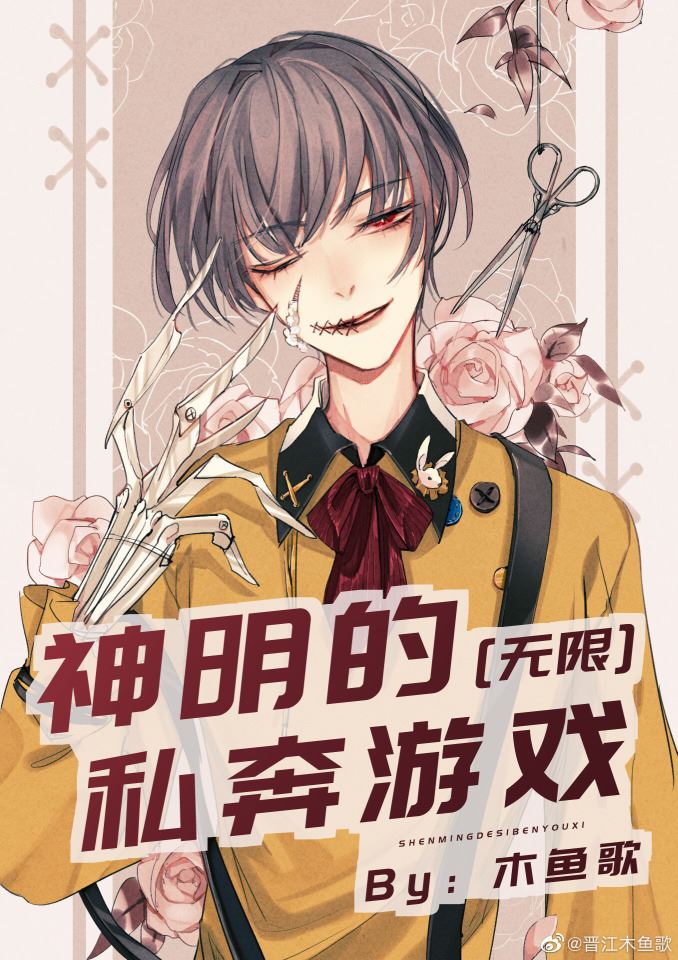
Lu Qingwu is a Divine Lord from the divine realm who transmigrates into the body of a Golden Core cultivator in a cultivation world. Upon awakening in Fenghe Village, he quickly digests the memories of his new host and realizes he has entered the plot of a harem novel he once read. In this story, a protagonist named Ming Jinghui rises to power with the help of various beauties, while the original Lu Qingwu serves as an early-stage obstacle destined for defeat. The host’s junior sister, Shen Xinling, is one of Ming Jinghui’s future consorts and harbors hidden resentment toward the original Lu Qingwu due to an arranged engagement with him. Lu Qingwu resolves to survive by maintaining a power advantage over the protagonist and avoiding the fate scripted for him.

During a disciple recruitment mission, Lu Qingwu demonstrates his superior divine sense, navigating the village with ease and surprising Shen Xinling, who had hoped to assert dominance over him. On the return journey via flying boat, the group is ambushed by a late-stage Golden Core demonic cultivator. While the original plot dictated a mutual defeat, Lu Qingwu’s experience as a Divine Lord allows him to effortlessly defeat the enemy. He protects the new disciples, including Ming Jinghui, and kills the cultivator in a single strike. Shen Xinling, who had planned to take credit for the kill using a teleportation talisman, is forced to accept Lu Qingwu’s intervention, deepening her frustration and secret hostility.

Upon returning to the Rainbow Light Sect, the elders evaluate the new recruits. Ming Jinghui is identified as possessing a mutated heavenly lightning root and a Pure Yang Physique, making him a target of intense competition among the sect’s elders. Lu Hongyuan, the sect leader and Lu Qingwu’s father, wishes to take Ming Jinghui under his tutelage to protect him and prevent his premature death, as foretold in the novel. However, Shen Xinling manipulates the situation by expressing a desire to mentor Ming Jinghui alongside Lu Qingwu, aiming to draw him away from Lu Qingwu’s influence. Lu Qingwu, aware of her schemes, publicly offers to let Ming Jinghui choose his own master, inadvertently pushing the protagonist toward Elder Li Jiamao, a reclusive refiner who was also his original master in the novel.

Ming Jinghui accepts Elder Li’s offer, securing a powerful patron and altering the immediate trajectory of his apprenticeship. Lu Qingwu observes these developments with detachment, knowing that while he cannot change every plot point, his presence and strength provide a buffer against the fatal dangers that originally befell the character. The narrative establishes a tense dynamic where Lu Qingwu must navigate the political intrigues of the sect and the growing influence of the protagonist, all while concealing his true identity as a transmigrated Divine Lord and managing the complex, hostile relationship with Shen Xinling.

Latest Release
DateGroupRelease
2026-08-11shanghai fantasy c40
2026-08-11shanghai fantasy c39
2026-08-11shanghai fantasy c38
2026-08-11shanghai fantasy c37
2026-08-11shanghai fantasy c36
2026-08-11shanghai fantasy c35
2026-08-11shanghai fantasy c34
2026-08-11shanghai fantasy c33
2026-08-11shanghai fantasy c32
2026-08-11shanghai fantasy c31
2026-08-11shanghai fantasy c30
2026-08-11shanghai fantasy c29

Community Reviews

Rating(4 / 5.0, 4votes)
5 stars
1(25%)
4 stars
2(50%)
3 stars
1(25%)
2 stars
0(0%)
1 stars
0(0%)

Popular reviews

... Read More
Okay so this whole chapter is basically one massive political maneuver disguised as a social gathering and I am HERE for it. Let me break down what just happened because the layers are insane. Chang Shu, this outer disciple we've been following, literally engineers the entire situation. He knows Lu Qingwu hates banquets, right? The text literally says so. But instead of letting him skip it, Chang Shu feeds him a hook—"the City Lord has household registration info on all the missing people"—and suddenly Lu Qingwu is walking into a trap of his own making. Well, not a trap, but a setup. And the best part? Shen Xinling notices immediately. She's like, oh, you just redirected him from a social event to an investigation. Classic move. Then there's the missing persons subplot that's clearly the main plot driver here. First disappearance was three months ago—a hooligan named Liu Wu who was out drinking and having fun. That's already suspicious because why would a drunkard just vanish? And the City Lord has been quietly collecting info on all the missing people, which is wild because the text says cultivators usually ignore mortal affairs once they realize it's beyond their pay grade. But Yan Ling, this City Lord, he's been proactive. Meticulous even. That tells me something about his character or his agenda. The seating arrangement scene is also a plot masterclass. No main seat, everyone on the sides, cultivators on the left (superior position in this world), mortals on the right. It LOOKS egalitarian but it's actually a rigid hierarchy. And Chang Shu arranged it. Of course he did. Every detail traces back to him. What I love is how the plot keeps peeling back layers. First you think this is about missing persons, then you realize it's about power dynamics, then you realize Chang Shu is playing a longer game where he needs Lu Qingwu to notice him so he can get promoted to the inner sect. The text even explains his motivation explicitly—outer disciples with low cultivation potential often choose city guard positions because they've given up on immortality and want worldly power instead. But Chang Shu is different. He's gambling everything on this opportunity. And Lu Qingwu? He sees through all of it but plays along anyway. When Shen Xinling tries to claim closeness with him by suggesting reward-sharing, he shuts it down with this calm "task rewards are distributed based on merit" line. Not angry, not defensive, just... factual. That's the kind of response that makes you realize he's three steps ahead of everyone in the room. The plot is tight. Every scene advances either the mystery or the character dynamics, sometimes both. I'm hooked.
... Read More
Can we just talk about how DANGEROUS the dialogue is in this chapter? Every conversation is a battlefield and I'm obsessed. Let me start with Shen Xinling. Her voice is this perfect blend of warmth and calculation. When she says "Senior Brother, after the task is completed, we should share some of the rewards with Junior Brother Chang," she sounds genuinely generous. But the narration tells us it's manipulation—she's trying to establish closeness with Lu Qingwu by positioning herself as his advocate. And the worst part? It almost works. Lu Qingwu agrees to share rewards, which means her words had an effect. That's skilled writing. Then there's Chang Shu, and his voice is completely different. Notice how he's always the first to speak when tension rises? "No need, no need"—he's scrambling, trying to defuse the situation before it explodes. His dialogue is reactive, anxious, but also strategic. He knows if he hesitates, Lu Qingwu might think he's being greedy or manipulative. So he overcorrects, and in doing so, reveals everything about his position. Ming Jinghui's contribution is devastating in its simplicity: "Speaking of generosity, few can compare to Senior Sister Shen." On the surface, it's a compliment. But the narration immediately undercuts it—"Ming Jinghui's words at this moment made things a bit awkward." He's playing along, but he's also testing the waters, seeing how Shen Xinling's claim will land. His voice is smooth, polished, dangerous. And Lu Qingwu? His dialogue is sparse but devastating. "Task rewards are distributed based on merit. Not only Junior Brother Chang, but if any of you help with this matter, you'll also get a share." That's it. Four sentences. But in those four sentences, he establishes three things: he's in control, he's generous (which makes him unpredictable), and he's not going to let Shen Xinling frame the narrative. His voice is calm, authoritative, and completely unemotional—which makes every word hit harder. The City Lord's dialogue is also worth noting. "These arrangements were thanks to Senior Chang's guidance. I dare not take credit!" He's deflecting praise, but also making a political statement. By publicly crediting Chang Shu, he's elevating an outer disciple in front of senior cultivators. That's either genuine gratitude or a calculated move, and I can't tell which. What really stands out is how the author uses dialogue to reveal character without exposition. We learn everything about Shen Xinling's ambition through her words. We understand Chang Shu's desperation through his reactions. Lu Qingwu's power is communicated through what he DOESN'T say. The narrative voice itself is interesting too—it's omniscient but leans heavily into character perspectives, especially Chang Shu's. We get his internal panic, his calculations, his fear of Golden Core and Nascent Soul cultivators. This close third-person perspective makes the dialogue feel even more charged because we're constantly aware of the gap between what characters say and what they mean. Some dialogue exchanges are so layered I had to reread them. The reward-sharing conversation alone contains at least four different agendas playing out simultaneously. That's not just good writing; that's craft.
... Read More
There's a recurring theme in this chapter that I can't stop thinking about—the tension between appearance and reality, and how power structures hide in plain sight. The most obvious symbol is the banquet hall seating arrangement. The text explicitly tells us: "In this world, the left was considered superior." But the City Lord removed the main seat, creating an arrangement that "seemed to have no hierarchy, but in fact, the hierarchy was clear." This is literally the entire political structure of this world in miniature. Everyone pretends cultivators and mortals coexist peacefully, but the seating tells the truth. Cultivators on the left, mortals on the right. The illusion of equality is just that—an illusion designed to make the hierarchy palatable. And Chang Shu arranged it. Of course he did. He's a man who understands that power isn't just about strength; it's about perception. By creating this false egalitarianism, he's positioning himself as someone who can navigate both worlds—the mortal city and the cultivator sect. He's literally building bridges between hierarchies while trying to climb them himself. The jade slips are another symbol I find fascinating. They're described as "the most common form of book preservation in the cultivation world, much more common than the memory crystal." But here's the thing—the City Lord chose jade slips over memory crystals specifically because they're more accessible. Memory crystals record images and require special equipment; jade slips record text and can be made by Foundation Establishment cultivators. This choice reveals Yan Ling's priorities: he wants information to be shareable, portable, understandable. He's democratizing knowledge in a world where cultivators typically hoard information. The missing persons themselves are symbolic. Liu Wu, the first victim, was "a hooligan" who spent his days "eating, drinking, and having fun." His disappearance is almost invisible to society—he had no one who would miss him. But the City Lord tracked him anyway. This suggests that in this world, the most vulnerable people disappear first, and the powerful rarely notice until it's too late. The investigation becomes a metaphor for seeing the unseen. There's also the recurring motif of gaze and observation. Lu Qingwu glances at people, studies expressions, meets eyes briefly. Shen Xinling's gaze shifts from dismissal to evaluation of Chang Shu. Ming Jinghui watches Lu Qingwu watch everyone. The entire chapter is about who is looking at whom, who has the power to observe, and who is being observed. In a cultivation world where divine sense can read minds, observation is power. The City Lord's name, Yan Ling, might also be significant. "Yan" can mean smoke or mist, and "Ling" can mean spirit or intelligence. A city lord who is both elusive and perceptive—someone who operates in the shadows but sees everything. That fits with his characterization as someone who investigates without fanfare. What really strikes me is how all these symbols connect to the central theme: the gap between what is visible and what is real. The banquet looks friendly but is politically charged. The seating looks equal but is hierarchical. The missing persons seem insignificant but their disappearance reveals systemic corruption. Chang Shu seems humble but is calculating. Lu Qingwu seems indifferent but is hyper-aware. This isn't just a mystery plot about missing people. It's a meditation on power, perception, and the structures that govern both the mortal and cultivator worlds. And the author never states this explicitly—they let the symbols speak for themselves.
... Read More
I need to talk about how this chapter PACES things because honestly it's a masterclass in controlled tension. The chapter opens with what seems like a simple observation—Lu Qingwu's reputation for hating social gatherings. But within three paragraphs, we're already into a full geopolitical breakdown of why the Rainbow Light Sect can't just ignore mortal politics. The author doesn't rush this explanation; they let it breathe, letting us absorb the worldbuilding naturally before dropping the next beat. Then Chang Shu makes his move. This is where the pacing shifts. Everything before felt like setup, but now the engine kicks in. He proposes the banquet investigation angle, Lu Qingwu agrees, and suddenly we're moving. The transition from philosophical worldbuilding to active plotting happens so smoothly you barely notice it. But here's what I love—the author knows when to SLOW DOWN. The entire banquet hall description is a perfect example. Instead of rushing through the seating arrangement, the narrative lingers on every detail: the disappearance of the main seat, the left-right hierarchy, the maids moving silently. This isn't filler; it's building atmosphere and tension simultaneously. You feel the weight of every unspoken rule in that room. The dialogue sections are equally well-paced. Notice how the conversation about rewards creates this awkward tension? Shen Xinling suggests sharing, Ming Jinghui adds a backhanded compliment, Chang Shu panics internally, and Lu Qingwu delivers his calm response. It's a complete dramatic arc in just a few exchanges, and the pacing feels natural because each character responds in character. What really works is the chapter structure itself. We start with exposition (Chang Shu's background, sect politics), move into action (arriving at the banquet), then settle into investigation mode (the jade slips, the missing persons data). By the time we hit the cliffhanger about Liu Wu's last known activities, I was already leaning forward. The author also uses scene transitions brilliantly. There's no jarring jump from one moment to the next. Even the shift from outdoor arrival to indoor banquet feels seamless because the narrative maintains momentum throughout. And those little details—like Chang Shu noticing Shen Xinling's gaze change, or Lu Qingwu briefly meeting Ming Jinghui's eyes—add texture without slowing things down. Some might argue the middle section drags slightly with all the political maneuvering, but I'd argue it's necessary. You need to understand the power dynamics before the investigation plot can land properly. The pacing serves the story, not the other way around. Honestly, if more web novels had this level of pacing control, I wouldn't have so many abandoned reading lists.
See all reviews

Characters

See all characters

Custom lists

See all custom Lists