Summary

... Read More
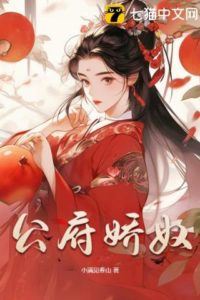
Yu Huai, a burned-out graduate student in traditional Chinese medicine from the twenty-first century, dies of sudden cardiac arrest and awakens in 1984 inside the body of a twenty-year-old peasant girl with the same name. The original Yu Huai was abused by her parents, forced into labor since childhood, and was about to be sold to an elderly cripple for a bride price of two hundred yuan. Unable to accept her fate, the original owner had run into the mountains, only to hit her head on a rock. Yu Huai uses her medical knowledge to treat her own injuries and decides to escape rather than submit to her family's plans. After hiding in Pine Mountain for five days, Yu Huai emerges disguised as a wildling and encounters Chi Xu, a dangerous man hiding from smugglers who are pursuing him. Chi Xu has been bitten by a snake, and the wound has become infected, threatening his leg. Although he initially threatens her with a pistol, Yu Huai negotiates a deal: she will treat his infection for one hundred yuan. She successfully drains the abscess and applies medicinal herbs, saving his leg. In return, Chi Xu pays her and later asks her to help him descend the mountain and make a phone call. After completing the task, Yu Huai attempts to travel to the city but realizes she lacks the identification documents required to buy train tickets or stay in hotels. Stranded in Yunzhou City, Yu Huai finds temporary shelter under a bridge and takes a job as a dishwasher in a private restaurant. During this time, she encounters Fang Mingqiang, a lame man begging with his asthmatic grandson, Xiaoyu. Yu Huai treats the boy's acute asthma attack with acupuncture and provides the man with a prescription for his knee osteoarthritis, even giving him money for medical supplies. Her actions are witnessed by Chi Xu, who has returned to the city. Impressed by her medical skills and resourcefulness, Chi Xu offers her a position as a live-in nanny in Lin'an City, promising to help her obtain legal identity documents in exchange for her services. Yu Huai accepts the offer and moves into Chi Xu's luxurious home, where she is introduced to his subordinate, Lu Qiyuan. Chi Xu reveals that he is involved in both legitimate trade, running a foreign trade company, and illegal smuggling operations, including firearms. The narrative establishes a complex dynamic between Yu Huai and Chi Xu, who is cold, domineering, and haunted by past traumas involving his family's persecution during the Cultural Revolution and a woman named Wen Yetong. Despite his initial disdain for her appearance and background, Chi Xu finds himself drawn to Yu Huai's independence and lack of fear. Meanwhile, Yu Huai remains focused on her goal of establishing a traditional Chinese medicine clinic, viewing her employment with Chi Xu as a means to an end rather than a romantic entanglement. The story sets the stage for Yu Huai to navigate the dangerous world of 1980s Chinese crime and commerce while using her medical expertise to survive and thrive.

Latest Release
DateGroupRelease
2026-08-11shanghai fantasy c39
2026-08-11shanghai fantasy c38
2026-08-11shanghai fantasy c37
2026-08-11shanghai fantasy c36
2026-08-11shanghai fantasy c35
2026-08-11shanghai fantasy c34
2026-08-11shanghai fantasy c33
2026-08-11shanghai fantasy c32
2026-08-11shanghai fantasy c31
2026-08-11shanghai fantasy c30
2026-08-11shanghai fantasy c29
2026-08-11shanghai fantasy c28

Community Reviews

Rating(3.8 / 5.0, 6votes)
5 stars
1(17%)
4 stars
3(50%)
3 stars
2(33%)
2 stars
0(0%)
1 stars
0(0%)

Popular reviews

... Read More
I need to talk about this bicycle ride scene because it is THE most tender moment in this entire batch and I am not okay. "In the right season, at the right temperature, you don't have to worry about where to work to earn a living tomorrow, or whether the cases from the past few days have been figured out. You are just carried around, feeling the breeze, the warm sun, and the streets full of people." This is Yu Huai at her most vulnerable and most hopeful, and it breaks my heart. She's a woman who has spent her entire life calculating, weighing, making sure every interaction has equal exchange. And here she is, being carried on a bike by a guy who just wants to be nice, and she can't quite process it. She feels "unexpectedly satisfied" and then immediately questions whether she deserves that satisfaction. The cedar perfume detail is so important too. Xu Jiangshu's scent is described as "gentle like a gurgling stream" while Chi Xu's is "oppressive like the sun at noon in midsummer." One is refreshing, the other is suffocating. And then later in the study, Chi Xu's smell becomes something that "penetrates through her pores, tearing every nerve in her body." The author is using scent as an emotional barometer and it is SO effective. But the real gut punch comes when Yu Huai thinks about how she grew up being "kicked around like a rolling ball" by her parents, and how boyfriends only came for her youth or her connections. She literally calls herself a burden. And yet — and this is the thing that made me sit with my phone for a solid five minutes — she still longs for "pure, passionate and deep love." Despite everything. Despite knowing she's been hurt before. She still hopes. That's not naive. That's brave.
... Read More
Okay so this whole section is basically a study in contrasts and I am HERE for it. Xu Jiangshu is literally just... being nice. He gives her a bicycle, offers to give it to her for free, takes her home. No hidden agenda, no power play. Just a genuinely kind guy who happens to be handsome and doesn't seem to want anything in return. And then you cut to Chi Xu, who is watching from the window like a literal predator, cigar smoke wrapping around him like spider silk. The man is a whole different species of human. But what really gets me is how Yu Huai reacts to each of them differently. With Xu Jiangshu, she's warm, she jokes around, she lets herself feel satisfied just riding on the back of his bike. But then there's this moment where she sees tenderness in his eyes and it completely undoes her. Not because she doesn't like it, but because she's never experienced that kind of unconditional warmth before. She literally thinks about how that look used to appear only when her parents were alive. That hit me like a truck. And Chi Xu? She's constantly on guard with him. The contract scene is peak power imbalance. He pulls her back by the collar. He makes her sit on his thigh. He gaslights her about a clause she doesn't remember. This man is weaponizing everything. The fact that he notices she's sweating and says 'it's hot' instead of offering her air or water or basic human decency? Chilling. Actually chilling. I keep thinking about that line: 'the biggest dividing line between people is amniotic fluid.' It's so bleak but also so accurate to how Yu Huai sees herself. She feels like she's permanently behind because of where she came from. But the story seems to be asking whether that's really true.
... Read More
I need to talk about the ending of this batch because it is a MASTERCLASS in thematic storytelling. The contract clause — "Party B shall strictly comply with any reasonable requirements proposed by Party A" — is the symbol that ties everything together. Chi Xu didn't include it. He made it up. He watched Yu Huai read the contract, knew she wouldn't catch a lie, and then used that fabricated clause to trap her. It's a metaphor for the entire power dynamic between them. He writes the rules. She follows them. And when she questions the rules, he tells her she imagined them wrong. This connects to so many other symbols in the text. The bicycle — Xu Jiangshu gives it to her freely, no strings attached, and tells her he'll come get it later. It's a promise, not a transaction. Chi Xu's world is all transactions and control. The study itself is a symbol of his domain — elevated, enclosed, where he sits and she kneels. The contract is literally the instrument of her submission. And then there's that line about amniotic fluid being the biggest dividing line between people. Yu Huai believes her worth is determined by her birth, her family, her starting point. But the story keeps putting her in situations where that shouldn't matter — she's brilliant with medicine (the old doctor called her prescription "brilliant"), she's kind, she's resilient. The system tells her she's less than, but her actions prove otherwise. The food is another symbol — Chi Xu barely touches it, leaves it for Yu Huai to eat. She eats his leftovers and feels it's wasteful to cook them again. She's literally consuming what he discards, both food and attention, and calling it a good deal because the salary is high.
... Read More
This study scene is one of the most tense sequences I've read in a while and I need to unpack why it works so well. Let's start with the physical stakes. Chi Xu makes Yu Huai wait ten minutes before acknowledging her. She's standing, getting uncomfortable, and he just... watches. Then he tells her to organize contracts. She starts to leave and he PULLS HER BACK BY THE COLLAR. Not gently. He hooks her collar and yanks her back like she's a dog. And then he makes her sit on his thigh. His actual THIGH. While he works. This is not a romantic moment — this is a power display. He's showing her that he can touch her, control her position, and she has to comply. The psychological stakes are even higher. He watches her sweat. He leans in and SNIFS HER NECK. She's terrified — "her hair stood on end" — and he comments that she smells bad. He's tormenting her and she can't leave, can't protest, can't even fully understand why he's doing it. The worst part? She spends the entire time trying to figure out WHAT SHE DID WRONG. She doesn't realize she's being manipulated. She thinks she's just bad at her job. And then the contract clause lie. She goes back to her room, heart pounding, and checks the contract herself. The clause ISN'T THERE. But Chi Xu told her it was. This is the ultimate power move — he's made her doubt her own memory, her own reading, her own certainty. If he can make her question a contract she literally signed, what else can he make her question? The external stakes are clear: she needs this job. High salary, good food, shelter. But the internal stakes are what keep you turning pages — will she figure out what's happening? Will she find the courage to push back? Or will she keep shrinking herself to fit his expectations? I am NOT okay with this man.
... Read More
The dialogue in this batch is doing SO much heavy lifting and I want to talk about how each character's voice is distinct. Xu Jiangshu's dialogue is light, teasing, natural. "How is it? Does it fit well?" "Then I'll give it to you." He's playful without being pushy. When he asks where she lives, it's casual. When he says "wait for me to come back and get it in two days" and waves at her with that dazzling smile, it feels like a real person being genuinely friendly. His dialogue doesn't have an agenda — which is exactly what makes it feel authentic. Chi Xu's dialogue, on the other hand, is all control. Every line is a test or a trap. "Can't you even wait for this little while?" — he makes her wait ten minutes just to say that. "Where are you going?" when she tries to leave. "No, get out if you don't come up" — he pretends to dismiss her, but the moment she moves, he's the one who keeps her there. And the masterstroke: "Whether it is there or not, you will know when you go back and take a look." He LIED about the contract clause and he KNOWS she'll go check. He's gaslighting her in real time and she's too polite to even fully realize what's happening. Yu Huai's voice is interesting because she's constantly code-switching. With Xu Jiangshu, she's relaxed, she jokes, she whispers about her boss being weird. With Chi Xu, she's formal, deferential, constantly apologizing — "Mr. Chi, it's not that I don't want to stand, it's just that my useless body can't stand." She minimizes herself. And yet, internally, her voice is sharp and observant. She notices everything. She just doesn't feel safe expressing it outwardly around Chi Xu. The author's narrative voice also shifts tone depending on which character's perspective we're in. It's subtle but effective.
... Read More
Let me just say this: the author's ability to paint a scene with words is genuinely cinematic. The image of Chi Xu standing at the window, cigar burning down, smoke wrapping around his face like spider silk, amber pupils flashing with cold light — I literally had to pause and re-read that paragraph because it was so vivid. It reads like a film director's shot list. Close-up on the smoke. Cut to his eyes. Slow zoom on his Adam's apple rolling as he puffs. This man is framed like a villain in a noir film and I am obsessed. Then you have the contrast of the bicycle ride through Pingjiang Road. Magnolia blossoms in the air, warm sun, the gentle breeze catching Xu Jiangshu's white shirt. The world feels alive and open and full of possibility. You can feel the temperature, smell the flowers, hear the city around them. It's a whole different universe from the study. And the study itself! The author spends time making us feel the physical space. The clean floor that Yu Huai has to kneel on. The contracts piled on the table. The keyboard clicking. The pen scratching on paper. Eight o'clock in the evening and they're still there, trapped in this room. The atmosphere shifts from slightly uncomfortable to genuinely oppressive over the course of that scene. When Chi Xu throws the contracts on the floor and says "what the hell is this," the whole room seems to shrink. The house at No. 99 Pingjiang Road is also interesting — big yard, ten cars of different colors (where did he even get so many in this era?), Aunt He alone downstairs, and Chi Xu upstairs like a king in his tower. It's a world of wealth and isolation, and Yu Huai is the only outsider navigating it.
See all reviews

Characters

See all characters

Custom lists

See all custom Lists