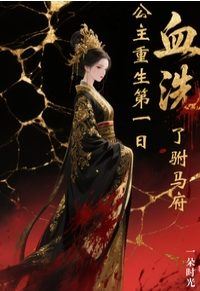
Princess Reborn: The Bloodbath of the Prince Consort's Mansion
+Add to Custom List
Novel Info

Summary

... Read More

Princess Zhaohua, born Baili Jun, is the beloved daughter of Emperor Yongming and the late Empress. Beneath her gentle exterior, she secretly trained in martial arts under the guidance of her maternal uncle, General Xiao Yan, and her cousin, Deputy General Xiao Lin, who command the Crimson Flame Army on the northern frontier. On her wedding night to Prince Consort Ji Huai’an, a man she chose and defended, she discovers his true nature. Ji Huai’an, having watched her for five years, reveals he knows her secret training. He is joined by her younger half-sister, Baili Yue, who harbors deep resentment over their different mothers and her own low status. Together, they drug Baili Jun and prepare to carve out her heart for the Crown Prince, Baili Zhang, who believes her unique heart pulse holds the key to a ritual involving the dragon veins of the empire. As Ji Huai’an pierces her heart and Baili Yue taunts her about the impending framing of her uncle and cousin for treason, Baili Jun dies in agony, cursing them to hell.

Time reverses, and Baili Jun awakens on her wedding night, moments before the drugged wine is consumed. Realizing she has returned to the past, she switches the cups, forcing Ji Huai’an to drink the poison meant for her. She then pins him to the bed with a golden hairpin and brutally kills him, extracting revenge for his betrayal. When Baili Yue arrives, expecting to collect the heart, she finds Baili Jun alive and blood-soaked, emerging from the burning bridal chamber. Terrified, Baili Yue flees. Baili Jun then rescues her loyal maids, Qingwu and Qingluan, who were imprisoned by Ji Huai’an, and uses her hidden elite force, the Crimson Feather Guard, to slaughter everyone in the consort’s mansion. She discovers a secret study containing forged evidence of treason against her uncle, military defense maps leaked to the northern tribes, and a ledger detailing the embezzlement of grain supplies meant for the frontier soldiers. The grain was being diverted to Quanzhou, the stronghold of the Crown Prince’s maternal clan.

Baili Jun intercepts Deputy General Sun Yun’guang, the traitor delivering the forged evidence to the capital, at the city gate. She captures him and brings him to court, presenting the incriminating documents before Emperor Yongming. In the throne room, she exposes Ji Huai’an’s collusion with Sun Yun’guang and reveals the Crown Prince’s involvement through secret correspondence. The Crown Prince attempts to deflect blame onto the Third Prince, Baili Jing, by claiming the leaked maps were part of a plot orchestrated by his rival. However, Baili Jun’s evidence is overwhelming, detailing the grain corruption and the framing of the loyal General Xiao Yan. The Emperor, suspecting the Crown Prince’s faction but wary of destabilizing the realm, orders a full investigation. He confines the Crown Prince to his residence and places Baili Jun under house arrest for a month, using her as a temporary blade while keeping her from gaining too much power.

Behind the scenes, the Crown Prince frantically attempts to destroy all evidence, including the original payroll records in the Ministry of Revenue and the stolen silver hidden in Youzhou. He also tries to frame the Third Prince by forging letters and manipulating the imprisoned Sun Yun’guang. The Third Prince, in turn, launches a counterattack to protect himself. Baili Jun, though confined, continues to orchestrate events from the shadows, directing her agents to monitor the Crown Prince’s movements and protect the northern frontier from further betrayal. She learns that her heart’s unique pulse is tied to a mystical ritual the Crown Prince seeks to complete, and she must uncover the full extent of this conspiracy while navigating the treacherous political landscape of the capital. The story ends with Baili Jun poised to strike again, having survived her death and begun her relentless pursuit of justice and vengeance against those who wronged her.

Novel Items

More
Weapon
A dagger with a ruby hilt used by Ji Huai'an to attempt to carve out Baili Jun's heart. In the reborn timeline, Baili Jun takes this same dagger and uses it to stab Ji Huai'an four times in revenge, each cut corresponding to a betrayal in their past life.
Container
A jade box carried by Baili Yue into the bridal chamber. It was used to receive and store Baili Jun's carved-out heart in the past life. The heart continued to tremble inside the box even after being removed from her body.
Treasure
A golden hairpin displayed at the ceremony, symbolizing wealth and status.
Item
The drugged wedding cup that Ji Huai'an intended to give Baili Jun to incapacitate her. In the reborn timeline, Baili Jun switches the positions of the two cups, causing Ji Huai'an to drink the poisoned wine himself, which burns in his veins like knives to the bone.
Item
A jade pendant engraved with twin lotuses worn at Ji Huai'an's waist. It strikes against the chain on his wrist, ringing crisply when he moves.
Item
Candles burned in the bridal chamber on the wedding night. Their wax drips like blood and congeals into dark red scabs upon the stand, casting a crimson glow over the chamber.
Latest Release
DateGroupRelease
2026-08-11shanghai fantasy c37
2026-08-11shanghai fantasy c36
2026-08-11shanghai fantasy c35
2026-08-11shanghai fantasy c34
2026-08-11shanghai fantasy c33
2026-08-11shanghai fantasy c32
2026-08-11shanghai fantasy c31
2026-08-11shanghai fantasy c30
2026-08-11shanghai fantasy c29
2026-08-11shanghai fantasy c28
2026-08-11shanghai fantasy c27
2026-08-11shanghai fantasy c26

Community Reviews

Rating(4.1 / 5.0, 16votes)
5 stars
7(44%)
4 stars
4(25%)
3 stars
5(31%)
2 stars
0(0%)
1 stars
0(0%)

Popular reviews

... Read More
There's so much layered meaning in these chapters and I can't stop thinking about it. The central symbol is obviously the heart—both literally and metaphorically. Baili Zhang wanted to take her heart 'alive,' which is this grotesque image of extraction, of turning the very seat of emotion and life into a political trophy. But the novel keeps flipping this symbol. The emperor's heart is breaking over his sons' treason. Baili Jun's heart is hardening into something colder. And then there's the military funds—four point six million taels of silver that represent the blood and sweat of two hundred thousand soldiers. The theme here is clear: power in this world is always extracted from someone's suffering. The defense maps, the guard rosters, the command token—all of these are symbols of control, of who holds the net and who is the bird in the cage. But the deepest theme, the one that got me right in the chest, is the father-daughter silence. The emperor knew about the plot against his daughter and said nothing. He chose the throne over his child. And Baili Jun, in her quiet way, understands this now. When she says 'Your daughter nearly died. Do I not even have the right to know the truth?' she's not just asking about her own life—she's asking about the fundamental contract between parent and child, between ruler and subject. The story is asking: what do we owe each other when power is involved? And the answer so far seems to be: nothing. Which is why Baili Jun is doing this herself.
... Read More
I need to talk about Zhaohua's scene in her study. Just her and Qingluan. Candlelight. Tea. The world is burning outside, and she's sitting there like a general surveying a battlefield from a tent. Qingluan is furious. She's angry on her mistress's behalf. She wants to trace the rumor sources, to silence the storytellers, to fight back. And Zhaohua? She asks one question: 'Why silence it?' That's it. That's the entire emotional pivot of the scene. No rage. No tears. No dramatic declaration of vengeance. Just a calm, almost clinical assessment that fear is a tool, and tools can be turned. What moves me about this isn't the strategy—it's the emotional discipline. Zhaohua has just been accused of being a monster in front of the entire capital. Her name is being used to frighten children. Her confinement is being justified as protection from a 'demoness.' And her first instinct isn't to lament her fate or beg for justice. It's to calculate how to make that fear work for her. The emotional complexity here is in what's NOT shown. We don't see her shaking. We don't see her alone and vulnerable. We don't see her process the humiliation or the anger. But the fact that the author withholds all of that makes it feel more real, doesn't it? Because some people don't fall apart. They fold the pain into something usable and keep moving. There's also the quiet tragedy of Sun Yun'guang's death. The man who was about to speak the truth, whose lips were trembling, whose eyes were filled with desperate pleading—killed by a wax pellet before he could finish. Jiang Hui's frustration is almost palpable. He had the Crown Prince by the throat, and the throat was removed. And the Third Prince, gazing toward Zhaohua's residence, wondering if she'll accept his alliance. There's something almost tender in his ambition, in the way he murmurs her name. Not romantic tenderness—political tenderness, the kind that recognizes another sharp thing in a world of dull blades. The emotional core of these chapters isn't love or friendship or family. It's the cold, clean fury of someone who has been painted as a monster and decides to become one on their own terms.
... Read More
This section of the novel is a masterclass in pacing that refuses to let you catch your breath. Chapter 15 opens with the Ministry of Justice in full investigative mode—officials rushing, archives being sealed, Deputy Li confronting Vice Minister Xu Chao. It's procedural, methodical, almost bureaucratic. Then the ledgers are gone. Ash in a crack. The first blow lands. Chapter 16 immediately pivots to the prison, where Sun Yun'guang is being tortured, on the verge of speaking the Crown Prince's name, and then—poison. The pacing here is brutal in its efficiency. The guard approaches, the pellet flies, the man convulses and dies. From full breath to silence in three paragraphs. Jiang Hui's reaction—'Triple the guards—seal this place inside and out'—is the only thing that slows the chapter down, and even that feels like a desperate attempt to regain control. Then Chapter 16's second half does something remarkable. It shifts from the claustrophobic prison to the open streets, from individual torture to collective hysteria. The rumor spreads through teahouses, taverns, alleys. The pacing accelerates—not through action, but through contagion. Each snippet of dialogue is a new infection point. By the time we reach the children's rhyme, the entire capital is sick. And Chapter 17? It cuts to black. Inside Zhaohua's study. Quiet. Candlelight. Tea. After the chaos of the previous chapters, this stillness is almost jarring. But it's the right choice. Zhaohua doesn't panic. She doesn't rage. She sits, she thinks, and she decides to let the fire burn. The structure here is deliberate: investigation → destruction → rumor → calm calculation. Each section is a different temperature, a different rhythm, and the transitions are seamless. The author trusts the reader to move from the prison's cold dread to the teahouse's warm hysteria to the study's icy clarity without needing hand-holding. If there's a complaint, it's that the Ministry of Revenue archive scene feels slightly rushed compared to the prison and teahouse sequences. But that might be intentional—the destruction of evidence is swift and efficient, just like the Crown Prince's operations. The pacing doesn't drag. It doesn't rush. It breathes.
... Read More
Okay, I need to talk about this whole throne hall scene because holy shit. The way the evidence drops one item at a time is just chef's kiss. First the ledger with 4.6 million taels—BOOM. Then the defense map—BOOM AGAIN. Then the guard roster—OH MY GOD. And finally the command token with that golden Zhang character gleaming under candlelight. Each reveal is like a hammer blow and the Crown Prince just gets more and more cornered. But what really got me was the timing of Jiang Hui's entrance with those carts of silver. Just when you think the Crown Prince is the only one in the crosshairs, the Third Prince gets dragged in too. The plot doesn't just move forward, it EXPLODES outward. And the emperor spitting blood after hurling that inkstone? That's not just dramatic flair—that's the story telling us the old man is crumbling from the inside. The whole thing feels like a house of cards being kicked over, except the cards are people's lives and the kick comes from a princess who spent two years planning this. One thing that bugged me slightly though—the transition from the public scene to the private father-daughter moment felt a bit abrupt. Like, one second there's chaos and the next it's just them in a quiet hall. I get that it's necessary for the next beat, but the shift could've been smoother.
... Read More
This stretch of chapters is pure chess. The Crown Prince moves first—destroying the northern payroll ledgers, poisoning Sun Yun'guang mid-interrogation, and launching a full-scale rumor campaign to paint Zhaohua as a heart-eating demon. Every single move is designed to choke the investigation before it can breathe. And yet—the Third Prince is simultaneously maneuvering on another board, trying to ally with Zhaohua while she's technically confined. Three factions, all circling the same prey, and the reader is caught in the crossfire. What struck me most is how the plot refuses to give us a single clear protagonist for these chapters. Zhaohua is confined, the Third Prince is scheming in the shadows, Jiang Hui is desperately trying to keep Sun Yun'guang alive, and the Crown Prince is everywhere but never seen. It's like watching a spiderweb vibrate from multiple points of impact and trying to figure out which fly got caught where. The rumor arc is particularly clever plot design. Instead of having the Crown Prince send assassins or bribes, he weaponizes gossip itself—children's rhymes, teahouse whispers, the kind of thing that spreads faster than any edict. 'Zhaohua, Zhaohua, marries her consort, Red veil hides her fangs of doom'—that nursery rhyme gave me actual chills. It's not just a plot device; it's a narrative virus. And then Zhaohua's response? She doesn't fight the rumors. She leans into them. 'Since they call me a demon, I will show them a demon.' That's not a plot twist—it's a plot detonation. The Crown Prince expected her to beg for clarity or try to suppress the stories. Instead, she turns his own weapon against him. Fear becomes power. The monster becomes the hunter. But here's what keeps me up at night: Sun Yun'guang is still alive, barely. Jiang Hui ordered triple guards. The poison didn't kill him. That means the secret he was about to spill—the one that points directly at the Crown Prince—is still out there, floating in that broken body somewhere. When he wakes up, or when he doesn't, the entire plot pivots on that single breath. Who is really winning this round? The Crown Prince has silenced the witness and poisoned the evidence. But Zhaohua now controls the narrative in the streets, and the Third Prince is at her door with an olive branch wrapped in political necessity. Three players, one board, and the next move could shatter everything.
... Read More
Let me be honest — I did not see the coup coming until the command token hit me like a freight train. The author spent these chapters building this slow, careful tension. Baili Jun refuses the Third Prince. The Wu brothers sneak into ruins. An ambush happens. Qingluan retrieves the box. We open it page by page, revelation by revelation: First the ledger — embezzled military funds. Okay, corruption, bad but not world-ending. Then the letters — secretly winning over guard commanders. Hmm, that's more serious. Then the silk sheet with a thousand names, graded A and B. This is systematic. This is an army within an army. Then the palace defense map with seven posts circled in red. "Double the manpower required." And finally — the command token. The black token with the golden character "Zhang." The key to everything. Each reveal escalates the stakes without a single action scene. The author understands that information is more dangerous than swords. By the time Baili Jun connects the token to the replacement list and realizes "Act by the command token, obey orders not edicts" — I was literally holding my breath. The pacing here is masterful because it mirrors Baili Jun's own process. She's not reacting to danger, she's connecting dots. And the reader connects them with her, piece by piece, until the full picture crashes into view. The chapter ends on what feels like a cliffhanger but is really just the beginning of the real storm. Because now we know. And knowing is dangerous.
See all reviews

Characters

See all characters

Custom lists

Oops…There is nothing here.