Summary

... Read More

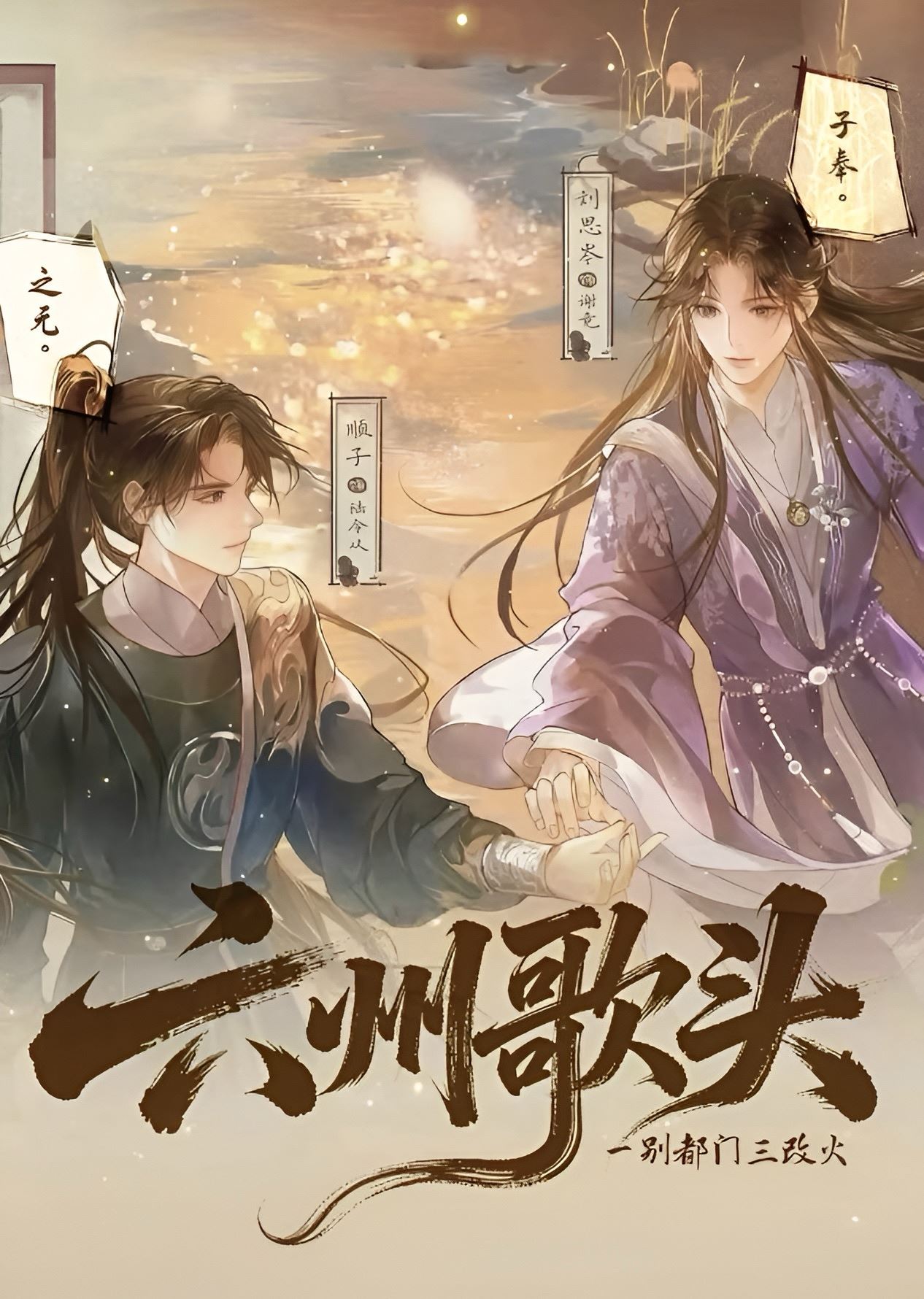
Lu Lingcong, the Highness Prince Zhao of Great Qi, is a legendary military commander who leads the elite Tiger Division. Despite his youthful success as the youngest Triple Crown examinee and his renowned status as one half of the 'Twin Jades of Jade Terrace,' his life is defined by political maneuvering and military duty. He is married to Xie Jing, a brilliant but proud scholar from a prestigious family, in a union arranged by the late emperor. Their relationship begins with friction; Xie Jing is aloof and sharp-tongued, famously overturning a table at a restaurant when a dish is prepared incorrectly, while Lu Lingcong is initially amused by his arrogance but also challenged by his indifference. As they navigate court politics and personal differences, their dynamic evolves from one of reluctant tolerance to deep affection, culminating in a marriage that produces two children: a son, Lu Shuqing, and a daughter, Lu Shuning.

The narrative shifts significantly with the death of the former emperor and the ascension of the young Emperor Jingyu. Political tensions rise as the emperor's maternal uncle, Prime Minister Wang Chu, consolidates power. Rumors circulate that Lu Lingcong, the emperor's elder half-brother, is harboring ambitions for the throne due to his military successes and disputed lineage. To avoid suspicion and protect his family, Lu Lingcong voluntarily exiles himself to the borders, leaving his son in the capital under the care of the consort dowager. Meanwhile, Xie Jing's family is implicated in a political scandal, leading to their execution and Xie Jing's own exile to the frontier city of Yongzhou. Forced to flee with their young daughter, Xie Jing assumes the alias 'Wu Zhi' and lives in obscurity, working as an accountant for the local prefect, He Gao, while raising Lu Shuning alone in harsh conditions.

Three years pass, and the story returns to the present in Yongzhou, a strategically vital border city under constant threat from the Northern Desert tribes. Xie Jing, now emaciated and weathered by the cold, still possesses his sharp intellect and contributes to the city's defense through strategic advice. When Lu Lingcong arrives with the Tiger Division to relieve the siege of Yongzhou, a dramatic reunion unfolds. Lu Lingcong, having never forgotten Xie Jing, keeps a jade disc given by him as a token of remembrance. Upon spotting the distinctive horn signals used to command the Tiger Division—a system originally devised by them together during their time in the capital—Lu Lingcong realizes his former husband is alive and in Yongzhou. The reunion is charged with unresolved pain and lingering love; Lu Lingcong is devastated by Xie Jing's bowed posture and humble greeting, recognizing the toll exile has taken on him.

The core conflict revolves around the tension between their past intimacy and the current reality of separation and societal stigma. Lu Lingcong struggles with guilt over their forced parting and resentment toward the political forces that separated them, while Xie Jing maintains a guarded detachment, focused solely on the safety of his children. Despite the icy exterior, subtle gestures reveal their enduring bond: Lu Lingcong climbs onto the roof to see his daughter, shares silent moments washing clothes, and cooks plum blossom dumplings—a traditional New Year delicacy—to remind Xie Jing of their past. The story explores themes of loyalty, sacrifice, and the persistence of love against political adversity, as Lu Lingcong seeks to protect Xie Jing and their daughter while navigating the dangerous political landscape of the Great Qi dynasty.

As the narrative progresses, Lu Lingcong's presence in Yongzhou brings both relief and renewed tension. He recruits the talented 'Wu Zhi' for his strategic mind, unknowingly working alongside his estranged husband. The arrival of a mysterious Han general serving the northern tribes adds further complexity, hinting at deeper conspiracies within the capital. Lu Lingcong's determination to uncover the truth behind the political maneuvers that destroyed Xie Jing's family drives the plot forward, as he balances his military duties with his personal quest to restore his family. The story sets the stage for a confrontation with the powers that be, as Lu Lingcong prepares to return to the capital and challenge the existing order, risking everything to reunite with Xie Jing and secure a future for their children.

Latest Release
DateGroupRelease
2026-09-25knoxt c129
2026-09-25knoxt c128
2026-09-25knoxt c127
2026-09-25knoxt c126
2026-09-25knoxt c125
2026-09-25knoxt c124
2026-09-25knoxt c123
2026-09-25knoxt c122
2026-09-25knoxt c121
2026-09-25knoxt c120
2026-09-25knoxt c119
2026-09-25knoxt c118

Community Reviews

Rating(0 / 5.0, 29votes)
5 stars
0(0%)
4 stars
0(0%)
3 stars
0(0%)
2 stars
0(0%)
1 stars
0(0%)

Popular reviews

... Read More
Okay so let me just say this battle scene has some of the tightest plotting I've read in months. The author sets up this initial encounter where Prince Zhao faces the barbarian vanguard, and on the surface it looks like a straightforward defensive battle. But then Xie Jing drops this entire analysis about how the Tiger Division is actually already moving north to cut off retreat routes, and I literally sat up straight. The layering here is chef's kiss. What really sold me though was the wind. The whole thing builds to that moment where the sandstorm hits and suddenly everyone's blind. The barbarians planned for this weather—Xie Jing even says so—and then Prince Zhao makes a call that puts his center formation directly into the thick of it while the flanks retreat. Brilliant tactical risk. And then the horn signals come through. Three different blasts, each giving a different command, and Lu Lingcong hears it across the battlefield and immediately responds. The fact that these two are separated by dust and distance but still coordinate like they've got some invisible thread between them? The plot doesn't even need to show them together to make their partnership feel alive. I kept waiting for the trap to spring and honestly I was holding my breath the entire time.
... Read More
I need to talk about this one moment. Lu Lingcong is riding at the front of his cavalry after winning a major victory, and he just... stops. Turns around. Looks back toward a teahouse window. And strokes the jade disc hidden inside his lapel. No warning. No reason given. Just this sudden palpitation that sends him turning his horse. And Xie Jing was literally right there on the second floor watching him, half-consciously searching for that same jade between the silver armor and red robe before catching himself. Three years. Three years of not seeing each other and the first time Lu Lingcong feels something in his chest, he turns toward him. The unsaid thing between these two is so loud it's basically screaming. Xie Jing politely declines the banquet invitation saying he went to sleep—not that he was secretly watching the entire procession from a window with his hair half-tied. Of course he was. And when He Gao asks which general Prince Zhao killed to provoke this revenge attack, Xie Jing answers from memory of scavenging through spoils of war like some devoted ghost. He remembers the quality of the armor. The dull blade. The weak warhorse. All details he collected alone in the dark. I'm not even the type to cry over fictional romance but my heart actually hurt a little reading this. They're standing ten feet apart in different worlds and neither can look away.
... Read More
The stakes in this section are so subtly raised and I love it. On the surface, it's Winter Solstice in a cold frontier city. But underneath? Everything is about to shift. Xie Jing's internal conflict hits me the hardest. She thinks she wronged Lu Shuning—"at her age, she should have been pampered in Prince Zhao's Mansion." This woman sent her own daughter to grow up in the cold northern frontier while the girl could've been living like a noble. That guilt is real, and it's layered with whatever political disaster brought them here. She doesn't name it directly, but the subtext screams: this wasn't voluntary. The "blessing" her mother spoke of is clearly bitter irony now. Then the Tiger Division arrives. Over a thousand light cavalry, silent as one, and the entire street falls quiet. The external stakes are skyrocketing—Prince Zhao is coming to Yongzhou, and He Gao is already plotting introductions. Wu Zhi could get promoted out of this frozen wasteland. Lu Shuning might actually get to see Jinling. But power moves like this always come with danger. When the court's most influential players start intersecting in a frontier city, someone is going to pay. The suspense is maintained beautifully because we don't know what happened three years ago that exiled them here. Every warm moment between Xie Jing and Lu Shuning has this undercurrent of What will happen when Prince Zhao actually arrives? What will Wu Zhi's talent cost him? The author isn't rushing—the quiet conversations about mutton soup dumplings and chess games make the tension sneak up on you. By the time the Tiger Division rides in, my pulse was already elevated.
... Read More
I need to just stop and appreciate the visual storytelling in the Qinhuai Chun scene because the author is a menace with descriptions. You've got this guy Xie Jing—crimson silk, long hair tied high, jade-like figure—standing over an overturned table, and Lu Lingcong leaning against the stairwell watching like it's his personal theater. The owner of the establishment is doing this frantic internal panic attack between the two of them, muttering Buddhist phrases, completely aware he's caught between a plague god and a prince. And then there's the procession scene later—Xie Jing in his official court robes walking at the front of the golden-list candidates, and the whole Yongxiang lane must've been packed with people staring. The contrast between the cramped, tense staircase confrontation and the wide, ceremonial street scene is chef's kiss. One feels like a knife fight in a hallway, the other like a parade of power. Both make you FEEL the weight of this world—the gossip networks, the rumors, the way every public space is a battlefield of status and reputation. The author doesn't tell you the rules of this society; you learn them by watching people navigate it.
... Read More
The opening contrast between these two bedrooms is chef's kiss. The Prince's Mansion—'draped with multiple layers of thick curtains, let them indulge for half the night, while the maids would still enter the next morning with their cheeks flushed, to serve them without daring to glance twice'—versus the Prefect's Mansion with its 'almost no soundproofing between the two rooms.' One is opulent isolation, the other is cramped transparency. But then you get Yongzhou City itself and it's a whole different beast. This border town where 'many different groups live and mix together,' where a hundred tearooms produce a hundred different versions of the same rumor, where the Emperor is so far away that political intrigue becomes dinner theater for commoners. And then the visual of the Tiger Division—'over a thousand light cavalry in silver armor and red robes patrolling throughout the city'—gives people a 'sense of safety.' You can SEE this. The East Market scene with Lu Lingcong in civilian clothes guiding Lu Shuning through vegetable stalls, the natural closeness between them making onlookers quietly astonished. No one dares to think too deeply about whether the girl resembles him. The world feels genuinely alive here—not just a backdrop but a pressure system that shapes every character's behavior. Everyone in Yongzhou is performing some version of truth while carefully avoiding the real one.
... Read More
This passage is a masterclass in tonal whiplash done right. We open in an intimately configured bedroom—thick curtains, no maids witnessing, physical closeness—and within a few paragraphs we're suddenly on the frontier watching Prince Zhao lose his helmet to a legendary archer named Ding Jian. Then it pivots to political maneuvering in the capital, then to street-level gossip in Yongzhou tea houses, then to a sweet father-daughter moment at a vegetable market. The author doesn't linger too long on any single tone before pivoting, which keeps the energy electric. But here's what I love: the transitions aren't jarring because they're connected by character. Lu Lingcong is in the bedroom, then we learn about his military reputation, then we see him as a father figure. Xie Jing's family tragedy underpins everything—the reason they're in exile, the reason rumors exist, the reason the political landscape is so fragile. The Winter Solstice timeframe gives us a seasonal anchor, and the approaching New Year adds a subtle urgency—like the calm before whatever storm is coming. The chapter ends on what feels like a cliffhanger setup with 'Inside the Prefect's Mansion. He Ga' cutting off mid-sentence. I needed to know what happened next immediately. The pacing between intimate, political, and domestic scenes creates a rhythm that feels almost musical.
See all reviews

Custom lists

See all custom Lists