Pregnant with His Child, She Overshadows the Wife and Melts the Heir’s Heart
+Add to Custom List
Genres:
Novel Info

Summary

... Read More

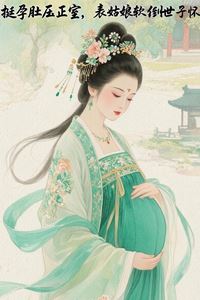
Lin Yaoniang was a maidservant in the household of Su Wanrou, the virtuous wife of Pei Jingnian, the Marquis Jingyuan. Driven by her mother’s illness and Su Wanrou’s manipulation, Lin Yaoniang entered the marquis estate as a concubine to bear an heir. Su Wanrou, unable to conceive due to a cold womb caused by a childhood accident, secretly poisoned Lin Yaoniang’s mother and forced her into the household. During Lin Yaoniang’s pregnancy, Su Wanrou disguised herself as a caring mistress, feeding her rich tonics and herbs that were actually designed to make the baby grow too large, ensuring a fatal labor. When Lin Yaoniang went into labor, Madam Wang and Su Wanrou chose to save the child, letting Lin Yaoniang die in agony. Her soul attached itself to a silver bracelet, witnessing the subsequent neglect and death of her son, Zhan’er, at the hands of Su Wanrou’s negligence. Consumed by resentment, her spirit lingered until the bracelet was pawned and eventually bought by a girl named Lingdang, who studied medicine. Through Lingdang’s knowledge, Lin Yaoniang discovered the full extent of the conspiracy and died with her hatred unresolved.

Lin Yaoniang was reborn as Shen Yunshuang, the frail and beautiful cousin of Madam Wang. Shen Yunshuang had originally died of grief and illness three months after arriving at the Pei residence, but in this new life, she retained all her memories and a deep desire for revenge. She understood that Su Wanrou was the true mastermind behind her suffering and that Madam Wang, though complicit in her death, was still a necessary ally. Shen Yunshuang resolved to win Madam Wang’s affection while systematically dismantling Su Wanrou’s position within the household. She presented herself as a delicate, grieving niece, earning Madam Wang’s sympathy and protection. Her first move was to subtly undermine Su Wanrou’s reputation by pointing out her carelessness with a rare orchid gifted to Madam Wang, causing the older woman to lose trust in her daughter-in-law’s competence and sincerity.

Meanwhile, Su Wanrou, desperate to secure her status and produce an heir, proposed taking a concubine for her husband, Pei Jingnian. She selected a house-born maid named Rouge, chosen for her fertile appearance, and promoted two other maids, Linglan and Ruichu, who had been sterilized by Su Wanrou’s contraceptive herbs. Pei Jingnian, initially cold toward Su Wanrou after discovering her deception, agreed to the arrangement under pressure from his mother. However, his attitude toward Shen Yunshuang began to shift. Their first meeting was marked by an accidental touch that left him unsettled, and subsequent encounters revealed her intelligence and grace. Shen Yunshuang carefully cultivated a relationship with Pei Jingnian, using her medical knowledge to aid his mother’s health and presenting herself as a thoughtful and capable cousin.

The arrival of Rouge and the promoted concubines caused further tension. Rouge’s first night with Pei Jingnian was ruined by an unexpected menstrual cycle, leading Su Wanrou to punish her harshly by making her kneel overnight. This cruelty angered Madam Wang, who saw it as a sign of Su Wanrou’s unworthiness as a mistress. Shen Yunshuang observed these events with cold calculation, knowing that every mistake Su Wanrou made weakened her position. She continued to gather information, learning about Rouge’s background and her connection to a scholar cousin, which she planned to exploit. As Shen Yunshuang integrated herself into the household, she prepared to turn Pei Jingnian’s affection toward herself, aiming to strip Su Wanrou of her husband’s love and her own dignity, fulfilling her vow of revenge one step at a time.

Novel Items

More
Treasures
A silver bracelet stripped from Su Jianjun's hand by Yang Guixiang. Part of the stolen family fortune hidden in a box under the floorboards.
Pills
Herbal medicine that Feng Yi requested from Yunniang to prevent pregnancy. Yunniang brewed it, and Jiang Xingzhou mistakenly brought it to Feng Yi at school, thinking it was stomach medicine prescribed by He Yun.
Poison
A prescription disguised as medicine that was given to Lin Yaoniang's mother, which was actually slow poison. Su Wanrou used it to poison Lin Yaoniang's mother, forcing her into the Pei household as a tool to bear children.
Medicine
A prescription given to Lin Yaoniang during her pregnancy, along with rich greasy foods and nourishing soups, all carefully designed by Su Wanrou and Madam Zhou to make the baby grow too large, ensuring a fatal and difficult labor.
Item
A hairpin belonging to Consort Chun that she removed from her hair and placed gently upon the frozen surface of the lotus pond in Zhongcui Palace. She did so without any trace of reluctance, symbolizing complex emotions.
Accessory
A coral bracelet worn by Shiliu on her wrist, part of her elegant attire as a senior maid of Madam Wang.
Latest Release
DateGroupRelease
2026-08-11shanghai fantasy c3
2026-08-11shanghai fantasy c2
2026-08-11shanghai fantasy c1

Community Reviews

Rating(3.8 / 5.0, 12votes)
5 stars
4(33%)
4 stars
2(17%)
3 stars
6(50%)
2 stars
0(0%)
1 stars
0(0%)

Popular reviews

... Read More
I want to talk about the deeper themes and symbolism in this section, because beneath the surface plot of concubines and revenge, there's something much richer going on. Let me start with the most obvious symbol: the cold womb. Su Wanrou's infertility isn't just a plot device — it's a symbol of everything that's wrong in this world. In a society where a woman's value is tied to her ability to produce heirs, her cold womb makes her vulnerable, powerless, dependent. But here's the thing: the text also suggests that Pei Jingnian's emotional coldness is a kind of spiritual infertility. He's physically capable of producing an heir, but emotionally he's barren. He can't connect with his wife, he can't resist manipulation, he can't assert his own desires. The cold womb and the cold heart are mirrors of each other. Then there's the Buddhist scripture, which is probably the richest symbol in this section. Shen Yunshuang copies scriptures not out of piety but as a strategic move to win Madam Wang's favor. The scriptures — objects meant to represent purity, devotion, and spiritual cultivation — become tools of manipulation. This is deeply ironic, and I think the author is making a point about how religious devotion can be performed rather than felt. The text even mentions that the scriptures carry "a faint, indescribable fragrance" — a sensory detail that suggests something pure and holy, even as the object itself is being used for impure purposes. The concept of rebirth itself is a major theme. Shen Yunshuang has lived this life once before, and she's using her knowledge of the future to shape her present. But the text raises a question: is she truly changing her fate, or is she just repeating the same patterns in a slightly different form? In her previous life, she was inferior and afraid. In this life, she's confident and calculating. But her goal is the same — to possess Pei Jingnian. Has she really grown, or has she just become more effective at the same destructive pursuit? I also want to talk about the theme of performance. Every character in this section is performing a role: Su Wanrou performs the devoted wife, Shen Yunshuang performs the filial niece, Madam Wang performs the suffering mother, Pei Jingnian performs the dutiful son. The question the text seems to be asking is: when everyone is performing, who is the real person underneath? And more importantly — does it matter? The final theme I want to mention is the nature of desire. Shen Yunshuang's motivation is explicitly stated: she wants to make Su Wanrou suffer. But the text also suggests that her desire for Pei Jingnian is more complicated than pure revenge. She says she doesn't love him, but she's willing to manipulate him, deceive him, and potentially destroy him to have him. Is this love? Is this hatred? Or is it something else entirely — a desire so intense that it has become indistinguishable from self-destruction? These themes are woven into the narrative without being heavy-handed. The author trusts us to pick up on the symbolism and draw our own conclusions. That's what makes this section so rewarding to read — there's always something more beneath the surface.
... Read More
Let me just say this: the stakes in this story are absolutely massive, and the author establishes them in the first chapter without ever breaking tension. On the surface, the conflict is simple—revenge. A woman was murdered, her child was killed, her mother was poisoned, and now she's been given a second chance to make it right. But the genius of how the author structures the stakes is that everything is happening inside the lion's den. Shen Yunshuang isn't outside the Pei household plotting from afar—she's INSIDE it, in the body of a girl everyone already pities and underestimates. Her enemy is the matriarch's favorite daughter-in-law. Her enemy's ally is the mother-in-law who raised her. And the man she might eventually ally with—Pei Jingnian—is the husband who looked at his dying concubine with only 'a flicker of pity' before moving on. But here's what really makes the conflict so tense: the ticking clock. The original Shen Yunshuang died three months after arriving at the Pei residence. That means our protagonist has approximately three months before her new body gives out, unless she can figure out what killed the original and prevent it. Is it the grief? The exhausting journey? An illness that Su Wanrou is deliberately allowing to progress? The author hasn't revealed this yet, but the implicit deadline is creating this incredible pressure that makes every scene feel urgent. And the power imbalance is staggering. Shen Yunshuang is physically frail, socially powerless, and surrounded by people who would kill her without blinking. Su Wanrou has been running this household for years, has already killed multiple people through indirect means, and has the full backing of the matriarch. For someone so physically weak to be going up against someone so strategically powerful—that's the kind of conflict that keeps you turning pages at 2 AM. What I find most compelling is that the author hasn't just raised the stakes externally—Shen Yunshuang is also fighting an internal war. She's a vengeful ghost in a living body, carrying the trauma of death and powerlessness. Every step she takes toward revenge is also a step toward reclaiming her own humanity. That dual conflict—external and internal— is what makes this story feel so much bigger than a simple revenge tale.
... Read More
Okay so this section is where the plot really starts to click into place and honestly I'm already invested. Let me break down what's happening because there's a lot layered in here. On the surface, the main plot thread is about Su Wanrou agreeing to bring Yanzhi into the household as a concubine. But the REAL plot — the one that actually matters — is Shen Yunshuang's entrance and her secret agenda. The author is playing with dramatic irony here, which I absolutely love. We know what Shen Yunshuang is planning, but Su Wanrou has no idea. That gap between what the reader knows and what the character knows is where all the tension lives. Let me trace the plot mechanics: Su Wanrou decides to take Yanzhi as a concubine (act 1), Shen Yunshuang arrives at the manor (act 2), Shen Yunshuang engineers a fateful encounter with Pei Jingnian (act 3), and then she feeds information to Madam Wang about Pei Jingnian's mood to position herself as the empathetic niece (act 4). Each step is deliberate, calculated, and moves the plot forward without feeling rushed. The twist I found most interesting — and this is the kind of thing that made me sit up — is that Shen Yunshuang's motivation isn't love. The text literally says: "It wasn't because she loved him." She's doing this to make Su Wanrou suffer, to strip her of everything she holds dear. That's a revenge plot disguised as a romance plot, and the author is letting us in on the secret from page one. This changes how you read every single interaction Shen Yunshuang has — every smile, every gentle word, every act of devotion to Madam Wang is a move on a chessboard. I also want to talk about the subplot of the heir issue. Madam Wang's pressure on Pei Jingnian about having a child isn't just background noise — it's the mechanism that enables Shen Yunshuang's plan. Without that pressure, Pei Jingnian might never have agreed to take a concubine, and the whole plot falls apart. The author is weaving multiple threads together: the family's need for an heir, Su Wanrou's infertility, Shen Yunshuang's revenge, and Pei Jingnian's reluctant compliance. All of these converge in this section, and it sets up what I expect to be a very satisfying (and very painful) trajectory. One thing I will say — the plot is moving deliberately, not frantically. The author isn't throwing events at us; they're building a slow-burn setup where every small action has consequences. I'm curious whether the plot will maintain this level of coherence as it escalates, or whether it'll start throwing in convenient coincidences. So far, so good.
... Read More
I need to just say this upfront: Su Wanrou is hands down the most terrifying villain I've encountered in a long time, and the reason she's so effective is that she never once drops the mask. She's smiling the entire time. The scene where she personally selects Lin Yaoniang to become a concubine—pretending to be virtuous and generous while secretly orchestrating the woman's death—is genuinely chilling. And Madam Wang? Don't even get me started. She's complicit in every single atrocity, and the worst part is how natural it all seems to her. This is a system that produces monsters like Su Wanrou, and the author makes that clear without ever preaching. But what really fascinates me is Pei Jingnian. On the surface he's the sympathetic husband—grieving his concubine's death, furious when his son dies, investigating the servants. But the text keeps dropping little hints that something is deeply wrong with him. He 'knew better' about Su Wanrou's negligence but couldn't bring himself to act against her because of their one-year-old son. He 'thoroughly investigated' everyone except his wife. His compassion for Lin Yaoniang vanished 'almost immediately.' That's not grief—that's calculation. The author is planting seeds here that I am absolutely certain will bloom into devastating revelations later. Then there's the relationship between Lin Yaoniang and her own mother, which is honestly the most heartbreaking thread in the entire opening. Her mother was poisoned so she'd be desperate enough to enter the marquis's household. The silver bracelet engraved with crabapple flowers—commissioned by her mother before she entered—becomes the very object that traps Lin Yaoniang's soul for years. The mother's love was real, but it was also weaponized against her daughter. That's a level of family tragedy that goes way beyond simple villainy. And Shen Yunshuang—our protagonist in her new body—has this fascinating duality. She's physically the same fragile, beautiful girl everyone pities, but inside she's a woman who has watched her entire family be systematically destroyed and has spent years as a powerless ghost. The contrast between how others see her and what she actually is? That's going to make for some incredible scenes when she starts making her moves.
... Read More
Okay so let me just start by saying this opening is absolutely brutal and I cannot stop thinking about it. The entire first chapter is basically one long flashback told through the POV of a dead woman's soul, and the structure is genius because we're getting all this exposition but it doesn't feel like exposition—it feels like a ghost slowly piecing together the full scope of what happened to her. That's a really hard balance to strike and the author nails it. Here's what really got me: the nested reveals. First we learn Lin Yaoniang died in childbirth. Then we learn her son died a year later. Then we learn her mother was poisoned. Then we learn the pregnancy was deliberately sabotaged to cause a fatal delivery. Each reveal builds on the last like layers of a nightmare, and by the time you realize Su Wanrou planned EVERYTHING from the start, you're absolutely fuming. That's tight plotting right there. And then Chapter 2 hits you with the rebirth twist—she's now Shen Yunshuang, the same cousin whose existence once kept Su Wanrou awake at night. The dramatic irony is absolutely delicious because we know what Shen Yunshuang is capable of, what she's survived, what she's planning, while everyone else in the story still sees her as just a frail, pretty girl. I literally did a double-take when I realized the timeline overlap. The original Shen Yunshuang died three months after arriving, and now our protagonist is occupying that same body at that same moment, which means she has exactly three months before the original cause of death would have killed her. That's a ticking clock the author doesn't even need to announce explicitly—I can feel it from page one. The only thing I'm slightly unsure about is whether the exposition-heavy first chapter might lose some readers who prefer to be dropped into action. But honestly, I think it works because the emotional stakes are so immediate. You're not learning facts about a plot—you're watching a woman's soul get shattered in real time. And that ending where she vows revenge? Chef's kiss.
... Read More
I need to talk about Shen Yunshuang because this character is absolutely fascinating and I have so many feelings about her. Let me start with the most striking thing: she's a reborn character who has already lived through this exact scenario once before. And what does she decide to do? She doesn't try to change her fate. She doesn't try to avoid pain. She doubles down on manipulation. In her previous life, she was "intimidated by him because of her own inferiority." In this life? She's learned to master every emotion, to read people, to weaponize kindness. That's not growth — that's evolution into something far more dangerous. The text gives us this line that completely defines her: "As long as he was a man, he still possessed the most primitive instincts of love... and desire." She's reducing an entire human being to a set of biological impulses. That's chilling, and the author writes it with such casual detachment that it hits even harder. Now let's talk about her relationship with Su Wanrou, because this is where it gets really interesting. Su Wanrou is wary of her — the text says "Su Wanrou's wariness and dislike toward her cousin" — and honestly? I can't blame her. Shen Yunshuang is radiating this fake warmth that's so convincing that even the servants are won over. Nanny Tian literally thinks she's a "heavenly beauty." But we, the readers, see the calculation behind every smile. The encounter scene between Shen Yunshuang and Pei Jingnian is a masterclass in character dynamics. Watch what happens: she drops her scriptures on purpose (or pretends to), their fingers brush, she flushes pink, he gets flustered and walks away. This is a woman who has studied men across two lifetimes, and she's using every tool at her disposal. The fact that Pei Jingnian — described as "aloof and ethereal" — is the one who gets unsettled says everything about her competence. But here's what I find most compelling about Shen Yunshuang: she's not evil in a cartoonish way. She's not cackling about her schemes. She's calm, composed, almost serene in her cruelty. The text says she felt "whether she felt relieved—or heartbroken for the woman whose fate would mirror her own from her past life." There's a flicker of something human there, a moment of empathy for Su Wanrou, before she composes herself and continues with her plan. That tiny crack in her armor makes her infinitely more interesting than a pure villain would be. I also want to mention Madam Wang, because her relationship with Shen Yunshuang is being set up in a really clever way. Madam Wang's affection is genuine — it stems from love for Shen Yunshuang's dead mother. But Shen Yunshuang knows that "even such affection required careful nurturing. After all, she was only a niece—not a daughter." She's managing her aunt's affection like a portfolio, investing carefully to maximize returns. Meanwhile, Su Wanrou is trying to win her mother-in-law over through traditional wifely duties, and Shen Yunshuang is doing it through calculated emotional intelligence. The contrast is delicious.
See all reviews

Characters

See all characters

Custom lists

Oops…There is nothing here.