Post-Apocalyptic Rebirth: Back to the Late 70s
Novel Info

Summary

... Read More

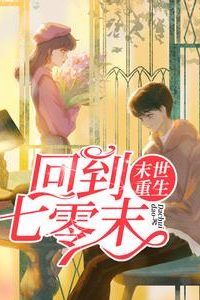
Wu Xiaoxiao, a powerful ability user in a post-apocalyptic world, dies after sacrificing herself to destroy a Zombie King. She awakens in the body of a young woman with the same name in 1970s rural China. The original Wu Xiaoxiao had drowned after falling into a river while trying to retrieve a borrowed math notebook from Wu Ningfang, the village chief’s daughter. Wu Ningfang, jealous of the original owner’s intelligence and beauty, had pushed her into the water and fled without calling for help. The protagonist, retaining her memories and wood-based abilities, decides to navigate this peaceful but politically complex era while seeking justice and improving her family’s dire financial situation.

Wu Xiaoxiao’s family is impoverished following the death of her father, a soldier who sacrificed himself two years prior. Her mother, Zhang Fang, is a gentle but traditional woman who believes education is futile for a girl and prioritizes marriage prospects over academic achievement. The household struggles to earn sufficient work points from the commune to secure enough food. Wu Xiaoxiao realizes that to survive and thrive, she must contribute labor and secure a stable income. She confronts the Wu family, demanding the return of the notebook and exposing Wu Ningfang’s negligence, though the lack of witnesses prevents immediate punishment. The Wu family offers a basket of eggs as a superficial apology, which Wu Xiaoxiao accepts strategically while planning future retribution.

Determined to change her fate, Wu Xiaoxiao decides to work in the fields to earn labor points. Her mother is initially reluctant, fearing for her daughter’s health and reputation, but neighbors and the village captain encourage the decision. Captain Huang, aware of her father’s status as a martyr, agrees to assign her full work points despite her gender. Wu Xiaoxiao begins working alongside other villagers, including her aunt Ning Mei and cousin Wu Ningfang, who view her ambition with hostility and suspicion. Ning Mei attempts to sabotage Wu Xiaoxiao by assigning her to easy tasks and gossiping about her character, but Wu Xiaoxiao uses her supernatural abilities to complete weeding tasks at an impossible speed, outperforming seasoned laborers.

As she works, Wu Xiaoxiao discovers that her wood-based abilities function differently in this era. She can accelerate plant growth and sense the health of crops, allowing her to cultivate a private vegetable plot that yields abundant harvests. This secret advantage enables her to improve her family’s diet and create surplus food to trade or gift, strengthening her social standing. She also learns about the educated youths sent to the village for re-education, including Gu Zhenghong, who lent the original owner the notebook. Gu Zhenghong is polite and respectful, distinguishing him from the other villagers, and Wu Xiaoxiao maintains a professional distance while leveraging his resources for knowledge.

The narrative shifts focus to Wu Xiaoxiao’s integration into the village’s political and social structure. She visits the brigade office to understand local policies and gather information about potential opportunities, such as machinery repair work. Her literacy and mathematical skills, honed during her previous life, make her a valuable asset to the commune. She navigates the complex web of village relationships, balancing kindness toward allies like Dr. Chen and Aunt Dong with calculated resistance against the antagonistic Wu family. The story establishes her long-term goal of using her abilities and knowledge to secure her family’s future while preparing for the eventual restoration of the college entrance exam, which she knows is on the horizon.

Wu Xiaoxiao’s actions begin to disrupt the established hierarchy. Her efficiency in the fields draws attention and envy, particularly from Wu Ningfang, who feels overshadowed by her cousin’s sudden prominence. The protagonist remains focused on her objectives, using her abilities to enhance agricultural output and her social acumen to build alliances. She rejects the traditional path of early marriage, instead prioritizing education and economic independence. The story concludes with Wu Xiaoxiao firmly established in her new role, leveraging her unique position to protect her mother and lay the groundwork for a prosperous future in a time of transition.

Latest Release
DateGroupRelease
2026-08-11shanghai fantasy c72
2026-08-11shanghai fantasy c71
2026-08-11shanghai fantasy c70
2026-08-11shanghai fantasy c69
2026-08-11shanghai fantasy c68
2026-08-11shanghai fantasy c67
2026-08-11shanghai fantasy c66
2026-08-11shanghai fantasy c65
2026-08-11shanghai fantasy c64
2026-08-11shanghai fantasy c63
2026-08-11shanghai fantasy c62
2026-08-11shanghai fantasy c61

Community Reviews

Rating(3.7 / 5.0, 41votes)
5 stars
9(22%)
4 stars
15(37%)
3 stars
13(32%)
2 stars
4(10%)
1 stars
0(0%)

Popular reviews

... Read More
So this batch covers roughly chapters 26 through 28, and honestly? The pacing is weirdly excellent. You'd think a chapter that starts with walking around a market looking at eggs and tofu would be the kind of thing that makes you want to skip ahead, right? But the author uses it as a perfect setup. Wu Xiaoxiao's observation about the market—how nothing from their village would be profitable to sell because they're too far away, that they'd need high-value goods—this isn't filler. This is the foundation for everything she's going to build later. The author is planting seeds (pun intended) and I'm here for it. Then it cuts to the lunch scene, which could've been pure filler, but instead we get Zhang Yan's cosmetics obsession and the Gu Zhenghong staring incident. Two birds, one stone. World-building AND character development in a scene that's literally about eating noodles. The pesticide spraying sequence is where the pacing really shines though. It starts practical—measuring chemicals, mixing solutions—and then Wu Xiaoxiao uses her ability to strengthen the trees. The author doesn't over-explain it. We get: "tiny strands of energy weave into the peach trees, strengthening their internal defenses" and then a quick analogy comparing it to human immune systems. Efficient. No info-dump. And then the emotional beat: "Feeling this connection with the trees brought Wu Xiaoxiao a deep sense of relaxation." She's been carrying so much—surviving, planning, leading—and for a moment she just... belongs somewhere. The chapter ends on her proposing organic pesticide and compost pits, which opens up the next arc without a hard cliffhanger. It's a breath, not a gasp. I respect that.
... Read More
I've been thinking about the notebook. Not just the physical object - though that detail about it being a math notebook borrowed from an educated youth is significant - but what it represents in this story. For the original Wu Xiaoxiao, that notebook was her lifeline. In a village where girls are told their education doesn't matter because they'll 'just marry anyway,' that notebook represents something radical: the belief that she deserves to learn, to grow, to have a future beyond the fields and the kitchen. When Wu Ningfang snatches it and tries to throw it into the river, she's not just destroying paper - she's trying to destroy Wu Xiaoxiao's hope. And the river itself is such a loaded symbol. Water in Chinese literature has always been about transformation, about crossing from one state of being to another. The original Wu Xiaoxiao falls into the river and drowns. The transmigrated Wu Xiaoxiao rises from it - not literally, but spiritually. She's reborn in this body, with all her memories and skills from the apocalypse intact. There's this moment where Wu Xiaoxiao presses her hand against her heart and feels it beating. 'She had just woken up and hadn't figured out what was happening yet.' But she knows. She knows she's alive when she shouldn't be. The river took one Wu Xiaoxiao and gave back another. That's not just plot mechanics - that's thematic resonance. The educated youth motif is also doing a lot of heavy lifting here. Gu Zhenghong represents the old world's intellectual elite - people who were 'sent down' to the countryside, who are treated as second-class citizens but still hold knowledge that ordinary villagers crave. The fact that Wu Ningfang can't borrow his notebook while Wu Xiaoxiao can is significant. It's not just about jealousy - it's about who deserves access to knowledge, who is seen as worthy of it. Zhang Fang's repeated dismissal of education is another layer. 'Those educated youths won't stay here forever. Why make such a fuss?' She's internalized the system's devaluation of learning, especially for girls. But Wu Xiaoxiao - both the original and the transmigrated version - refuses to accept this. The notebook is small, but it's a weapon. It's proof that she won't be erased. The eggs are interesting too. They represent the Wu family's attempt to buy silence, to reduce a near-murder to a simple transaction. But Wu Xiaoxiao takes them anyway. Not because she accepts the apology, but because she's being strategic. She's playing the long game. And the title of this chapter - well, there isn't really a title, but the imagery of the notebook, the river, the eggs, the eggs, the darkness of the village at night - it all comes together to create this sense of a world where everything is layered with meaning, where every object and action carries weight beyond its surface. This story isn't just about a girl getting her notebook back. It's about a girl who survived the end of the world coming back to fight for something as simple and as important as the right to learn.
... Read More
I need to just sit with this for a moment because the emotional weight of these chapters is absolutely crushing in the best way. This isn't melodrama - it's something far more powerful, which is the quiet, daily love between a mother and daughter who are both trying to protect each other from a world that won't stop hurting them. The scene where Zhang Fang eats half the noodles before realizing her daughter hasn't eaten yet - that broke me. Not because it's tragic, but because it's so normal. This is what love looks like when you're poor and tired and the sun is beating down on you and you've been working since dawn. You don't get grand gestures. You get a mother who accidentally eats all the good food because she's so hungry she can't think straight, and then feels embarrassed about it. And Wu Xiaoxiao's response? She doesn't complain. She doesn't say "I was hungry too." She just pulls the bowl over and starts eating. That's not just filial piety - that's a child who has learned, through some terrible experience in a previous life, that her needs come last. That love means making sure the people you care about are fed before you are. But here's what really gets me - the mint water. Wu Xiaoxiao adds mint and salt to the water because she knows her mother will be thirsty, because she's thought ahead, because she's calculating how to keep her mother healthy in a world where getting sick might mean dying. That's love as logistics. That's love as survival planning. And Zhang Fang's refusal to let her daughter work? That's love as fear. She's seen what happens to young people in this world. She lost her husband. She won't lose her daughter too. Every "no" is really a prayer. Every restriction is really a hug that says "I'm afraid I can't keep you safe." The emotional peak for me was Aunt Dong's speech about the dowry. It sounds practical, even harsh, but underneath it is this raw terror - a woman who knows that in this world, a girl without a dowry is a girl without protection. She's not being greedy; she's being desperate. She's trying to ensure Wu Xiaoxiao won't be abandoned or exploited because her mother couldn't save enough money. And Wu Xiaoxiao thanking Aunt Dong for changing her mother's mind? That's the most heartbreaking moment. She's grateful for the help, but she's also acknowledging that her own voice wasn't enough to convince her mother. She needed an outsider because her mother can't bear to hear "no" from her daughter. That's the weight of grief - it makes even love feel like a negotiation.
... Read More
There's a theme running through this batch that I can't stop thinking about: the idea that skills once deemed useless become everything when the world changes. Wu Xiaoxiao's post-apocalyptic experience — repairing cars, tower cranes, military equipment — is the perfect metaphor for this. In her previous life, those skills kept her alive among zombies. Here, they're the key to escaping a different kind of slow death: starvation, powerlessness, being controlled by a village chief who decides how many points your family gets. The labor point system itself is rich with meaning. It mirrors a capitalist structure where your worth is quantified and controlled by whoever holds the ledger. But unlike capitalism, where you can theoretically move between jobs and markets, the educated youth are trapped — no clear end date, no guarantee of return. The machinery repair opportunity represents something deeper than just extra points: it's about knowledge as power. Professor Liang, the former mechanical engineering professor, has the theoretical knowledge but not the physical ability. The village has the practical need but not the expertise. Wu Xiaoxiao sits at the intersection of both. And then there's the food symbolism — the corn cakes with eggs, the cucumbers, the green beans. Food here isn't just sustenance; it's currency, it's social capital, it's the language through which Xiaoxiao builds alliances. Every meal shared is a thread of connection in a world that wants her isolated.
... Read More
I need to talk about the quiet ache in this chapter, because it's there even though nobody is saying it out loud. Gu Zhenghong hasn't seen Wu Xiaoxiao for over two weeks, and when he spots her, he literally can't contain himself. The way he lists all the things he's noticed—'Weren't you weeding in the fields a while ago? That must have been exhausting, especially with the sun being so hot these past few days'—this is someone who has been thinking about her, tracking her movements, worrying about her wellbeing from a distance. And then he can't stop talking. He offers books, offers food, offers a meal, offers everything he has because apparently that's the only language he knows for saying something else. Wu Xiaoxiao's response is so tender in its own way. She doesn't embarrass him, she doesn't reject him harshly, she just gently redirects: 'The package your family sent must have been carefully prepared.' She acknowledges his generosity without feeding into whatever this growing thing between them might become. And Uncle Changfa's quiet question—'Xiaoxiao, you and that educated youth, Gu…'—that's the most human moment in the whole chapter. He's not being nosy, he's being protective. He knows these educated youths don't stay forever. He knows the world outside their village operates on different rules. The fact that Wu Xiaoxiao immediately shuts it down isn't necessarily sad—it might just mean she's focused on survival right now. But there's a bittersweetness to it all, like the author is showing us that some things can't happen yet, not when the ground beneath them is still shifting.
... Read More
There's this one line that's been stuck in my head since I finished this batch: "It was as if they were thanking her." Wu Xiaoxiao channels her energy into the peach trees and feels them respond. On the surface it's just a cultivation/system ability doing its thing, but I think the author is doing something deeper here. The whole book keeps coming back to this idea of nurturing versus surviving. Wu Xiaoxiao could've just let the orchard fail. She could've focused entirely on her own advancement, her own power. But instead she's mixing pesticides by exact measurements, identifying scale insects that nobody else noticed, proposing organic alternatives, digging pits for compost. She's not just trying to live—she's trying to make something grow. The peach trees, the grapevines, the herb garden she wants to plant in the backyard... these are all acts of faith. She's investing in a future she's not sure she'll have. And the counterfeit cosmetics subplot? That's not random either. Zhang Yan spending 30 yuan on a fake product that's essentially perfume in a fancy bottle—it's about how people in this era (and maybe always) chase appearances, chase the signal of value, when the real thing might be something much simpler. Wu Xiaoxiao sees through it immediately. She knows the brand from the apocalypse, knows it became worthless. The fake is almost... honest, in a weird way. It's pretending to be something it's not, which is what a lot of this society is doing with its rationing system and its shifting political winds. Meanwhile the real magic isn't in imported French cream. It's in a girl standing in an orchard, sharing energy with trees.
See all reviews

Characters

See all characters

Custom lists

See all custom Lists