Player B’s Survival
+Add to Custom List
Genres:
Novel Info
  • Author:
  • Status:Ongoing

Summary

... Read More

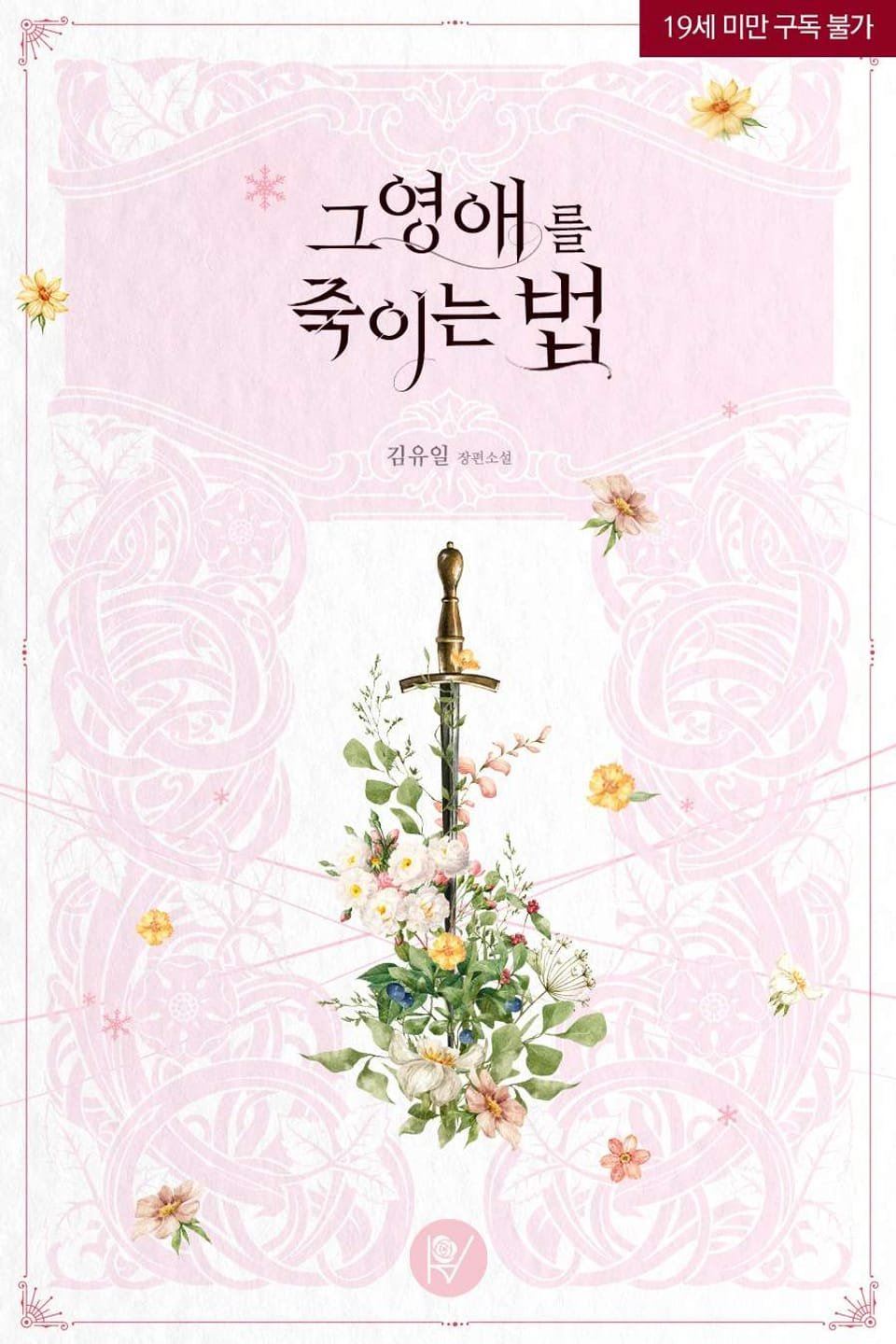
Anais Everhart is a twenty-something woman who lives a quiet, secluded life as an assistant to a small-time private detective named Mr. Fred. Her existence is defined by isolation and a deep-seated fear of intimacy, stemming from the traumatic loss of her parents to war when she was twelve. She wears thick glasses that belonged to her mother, an inheritance she treasures because they are the only physical connection she has to her deceased family. However, the glasses cause her severe headaches, and without them, she suffers from auditory hallucinations—mocking voices that remind her of her loneliness and worthlessness. Despite these burdens, Anais finds comfort in her routine, believing that her obscurity is the safest way to survive in a world that has already taken everything from her.

The narrative shifts when a high-ranking mafia figure, Mr. Cortez, arrives at the detective agency with a urgent request. He provides photographs of his two adopted sons, Harry and Roderick Cortez, who have disappeared six months prior. Anais notes the stark contrast between the brothers in the photos: Harry appears rebellious and delinquent, while Roderick seems well-behaved but harbors a lethal glare. Mr. Fred accepts the case, and during the investigation, Anais receives a mysterious red envelope addressed initially to her boss but mysteriously changing to her name. The invitation summons her to participate in a deadly game called "Survival and Betrayal." Before she can process the threat, she collapses and is forcibly transported to a dense, hostile jungle.

Anais awakens in the jungle to a surreal interface displaying game rules: she is Player B and must form a pair with a Player A within six hours or face death. Terrified and unarmed, she encounters two other players, Harper and Mason, who claim to be experienced survivors. They appear kind and offer to protect her, but their hospitality is a calculated trap. They steal her inventory items—her weapons, food, and healing medicine—while feigning friendship. When a monster approaches, Harper shoots Anais in the leg, using her bleeding body as bait to lure the creature. Left to die, Anais drags herself through the jungle until she collides with a man who casually destroys the monster with dynamite and a shotgun. This man is Roderick Cortez, the younger brother from the photograph. Recognizing him, Anais begs for mercy, and Roderick, intrigued by her identity as the assistant who saw his father, formally requests to pair with her.

As Player A and Player B, Roderick and Anais begin their journey toward the citadel, the game's central objective. Their dynamic is fraught with tension; Roderick is cold, cynical, and emotionally abusive, viewing Anais as a liability, while Anais is fearful yet desperately dependent on him for survival. Roderick reveals he has completed this brutal game multiple times, suggesting he is trapped in a loop unable to escape permanently. During their trek, Anais discovers that her vision has naturally improved to perfect clarity, rendering her mother's glasses obsolete. This realization brings both relief and profound grief, as removing the glasses also silences the mocking voices, forcing her to confront her bare, unprotected self. However, the game introduces a new complication when Anais notices a strange, rising gauge in her vision, indicating an unknown physiological change or infection spreading from her earlier wound. The story concludes with Anais and Roderick navigating increasingly dangerous terrain, their fates inextricably linked by the game's cruel mechanics and their shared history outside of it.

Latest Release
DateGroupRelease
2026-10-03dusk blossoms c48
2026-10-03dusk blossoms c47
2026-10-03dusk blossoms c46
2026-10-03dusk blossoms c45
2026-10-03dusk blossoms c44
2026-10-03dusk blossoms c43
2026-10-03dusk blossoms c42
2026-10-03dusk blossoms c41
2026-10-03dusk blossoms c40
2026-10-03dusk blossoms c39
2026-10-03dusk blossoms c38
2026-10-03dusk blossoms c37

Community Reviews

Rating(0 / 5.0, 34votes)
5 stars
0(0%)
4 stars
0(0%)
3 stars
0(0%)
2 stars
0(0%)
1 stars
0(0%)

Popular reviews

... Read More
"There were guys who acted all cute to the director to get one more of those." Roderick calling his fellow orphans "guys who sold their souls for chocolate" is the funniest line in these chapters and I needed to start here because the tonal whiplash that follows is genuinely masterful. Let me just lay out the sequence because the author is playing 4D chess with pacing: Tickling comedy → chocolate confrontation → Roderick almost lets Anaëls get gutted → screams in the distance → Round 3: HUNT → Anaëls vomits → flashback to Mr. Fred's office → back to Roderick's philosophy That's SEVEN major beats across roughly five pages and NONE of them feel rushed. The tickling scene is short and breezy, the chocolate conflict has actual tension with the jackknife threat, then the screams hit and the genre flips from rom-com to survival horror in about two paragraphs. Anaëls physically can't handle it—she retches, her stomach churns, she's panting with eyes closed leaning against him. And then the author DOES THE MOST BRAVE THING: instead of pushing forward into the hunt immediately, we get a FULL FLASHBACK to how Anaëls ended up in this world. Mr. Fred's detective office, the pregnant wife, the green sofa, General Ron's sayings she copied for six years. It's tender and warm and domestic—the exact opposite of everything that just happened. It gives us breath. It makes the return to the present hurt more because we've just seen what she's missing. "If you don't kill, you'll die, Everhart." The metallic voice and Roderick's voice OVERLAP in her head. That's the chapter's structural climax—a hallucination and reality becoming indistinguishable. Then the text just ENDS on "Having good eyes is a talent" with no resolution, no comfort, nothing. She swayed, fumbled for glasses she no longer has, and the voices kept coming. I had to put the book down for a full minute.
... Read More
there's a line that keeps bouncing around in my head: "a gun is no different from your life. especially here! do you hand your life over to someone else?" rodinick says this furious and furious is right to be. but I think the story is digging deeper than just "don't be naive." it's asking what makes survival worth surviving for, and whether any of us would make the same choices anaïs made if we were dropped into this world. she gave harper everything—her gun, her supplies, herself—and got shot for it. now she's with rodinick who treats her like cargo but keeps accidentally caring. the book keeps circling back to this question of what you trade and what you keep. rodinick has three guns. anaïs has nothing but a crowbar and a slowly filling gauge. the power imbalance isn't just practical, it's existential. the gauge itself is the symbol that gets me. it fills invisibly, you can't see the damage until it's past the red line, and even healing medicine doesn't stop it. this feels like a metaphor for something—betrayal trauma, the slow accumulation of bad choices, the way damage sometimes happens below the surface. anaïs hid her worsening condition from rodinick because she knew he'd abandon her. so she kept walking, kept smiling, kept going until she could barely move. that's not weakness, that's a different kind of survival instinct. and the disappearing ground? everything dissolves except the castle. the entire world is being erased and there's only one destination that remains. isn't that basically the human condition in crisis? everything around you falls apart, you keep moving toward one point, and you have no idea what's waiting there. the voice that keeps talking to her—that's the theme made audible. it's the accumulated voice of every person who's warned her, every experience she's had, every fear she's suppressed. or is it rodinick's voice internalized? the book won't tell us, and I love that.
... Read More
This passage is a masterclass in using micro-moments to drive emotional pacing. Let me walk through why it works so well. It opens mid-conflict — Anaïs ignoring Roderick, the slap, the chin grab. We're already inside the tension. No setup, no preamble, just: she's punished, she's afraid, her body is responding anyway. Immediate engagement. Then the author pulls back. The kiss conversation. This is where most writers would either rush through it or stretch it into melodrama. Instead, it lands perfectly — short, sharp, devastating. He says kissing is dirty. Her face falls. She tries to hide it. He sees through it. She admits she thought he might kiss her. He refuses, but then considers it pragmatically rather than romantically. The pacing here is deliberate; each beat gets exactly as much space as it needs. The turning point comes when she says "I don't hate it!" after he threatens to pull away. That's the structural pivot — the moment where her desperation becomes visible, and his power over her (and ours, as readers) is confirmed. He responds by deepening what they're doing, hooking her leg, pushing inside. The escalation feels earned because we've watched her struggle to maintain composure throughout. Then — and this is where I think the author really earns their keep — they stop. Not because of drama, but because of the gauge. A practical reason to pause, which somehow feels more emotionally honest than any grand dramatic moment would. And then the second round begins. "Let's do it once more." Short. Decisive. No explanation needed. The pacing accelerates here, almost breathlessly, matching Anaïs's overwhelming physical response. The ending lands softly after all that intensity. The cigarette scene. The hug. The gauge filling again. The kiss on the cheek. The secret touch of her hand against his. It's a cascade of diminishing returns that somehow feels like an emotional climax — not because of sex, but because of tenderness disguised as indifference. My only question: does the transition from the first round to the cigarette scene feel too quick? A paragraph break might help signal the shift from physical to emotional time. But maybe that's just me wanting more air between beats.
... Read More
The prologue is GRIEF wrapped in nostalgia. A Christmas night, snow piled to knee height, Father nodding off after eating Mother's cooking—with his belly held in both hands, smacking his lips even in sleep. This is THE most tender domestic moment I've read in forever and then—boom—both parents dead by war, twelve-year-old orphan, fast forward to being tied up with rope by the man she loves in some frozen present. The fireplace bookends the whole thing. Same fire, same cold, but now she can't even hug herself because her wrists are bound. That detail wrecked me. She wants to wrap her arms around her knees for warmth, for the phantom sensation of being held, and she physically can't. The image of her curling into herself like that while Roderick tends the fire—adding wood, warming the air, being calculatedly kind—it's all so visual. I could see this as a film: the orange light, the snow outside the window she never got to play in, the rope cutting into her skin. The world itself feels hostile. Cold everywhere. Firewood is rationed. There's an infection gauge that measures sexual excitement and if it fills up, you die. The setting isn't just backdrop—it's actively trying to kill them, which makes every intimate moment between Anaïs and Roderick both desperate and tragic.
... Read More
I have to talk about how distinct these characters sound because it's genuinely impressive. Anaïs's internal voice is this anxious, self-deprecating mumble — 'Why did it become like this?' she thinks, and it's instantly endearing. Her external dialogue is just as good: stuttery, apologetic, always hedging. 'Um, I'm called Anaïs!' 'Is it really okay?' She sounds like someone who apologizes to furniture when she bumps into it, and I love her for it. Then there's Harper, who absolutely owns every sentence she speaks. 'Welcome to hell,' she grins. She's bright, forward, almost annoyingly cheerful given the circumstances. But it's not one-note — when she says 'I'm scared too' about the gun, there's real vulnerability underneath the bravado. Her dialogue has rhythm, it bounces, it jokes, but the author doesn't let it become caricature. Mason is the trickiest one and the author nails it. He barely speaks — 'Mason just nodded without responding,' 'Mason pretended not to hear' — and yet he feels completely present. His silence is a voice. When he points at the box and breaks it open, that action speaks louder than any dialogue could. The contrast between Harper's warmth and Mason's stoicism against Anaïs's nervous energy creates this gorgeous triangular dynamic in every scene they share. The narration itself has a great tone too — it stays tightly anchored to Anaïs's perspective without becoming purple or overwrought. Sentences like 'She wished her eyes would worsen to match these glasses' are devastating in their simplicity. The author's voice knows exactly when to be clinical ('The wooden box was sealed on all sides with nails') and when to be intimate ('Her heart sank at that casual remark by Mr. Fred'). No pretension, no showing off, just clean empathetic storytelling.
... Read More
Let me just say — the author understands pacing like a surgical instrument. The first half of this batch feels almost deliberately slow. You've got Anaïs and the duo moving through the jungle, opening boxes, finding scraps of stuff. It's methodical. You can feel the exhaustion building through Anaïs's perspective — her hands are sore, she's almost out of strength, she's embarrassed about only finding matches. Harper's making jokes, Mason stays silent, and there's this comfortable rhythm of survival gameplay. Then Harper spots the cabin and everything accelerates. Five wooden boxes instead of one or two — suddenly there's resources, there's hope, there's food. Anaïs's wound from the torn wood is barely mentioned, almost brushed aside. And then Harper says let's eat, and Mason gets up to help her choose a chair, and the text flashes: MONSTER APPROACHING! In large RED letters apparently visible to everyone. Bang. Gunshot. And now we're in full survival mode. The transition is so sharp it feels like the floor dropped out. What's brilliant about this pacing choice is that the author doesn't slow down after the betrayal either. Anaïs is shot, abandoned, bleeding, the monster appears, she tries to run, the monster breaks its own legs to keep pace, she COLLIDES with Roderick, he blows up the monster, she begs for help, he asks if she's Player A, she says B, the pairing text appears, and Round 2 begins — all within what feels like twenty pages. There's no breathing room. No pause to process the horror of what just happened. She's already walking toward a citadel with a dangerous stranger while bleeding from a gunshot wound. And yet, despite the relentless pace, the author inserts these tiny moments that make you stop. Like when Anaïs realizes the smoke was coming from Harper's gun, not Mason's. One sentence. One realization. The whole betrayal crystallizes in a single line. Or when Roderick throws the healing medicine at her — not gently, not kindly, but efficiently. These micro-pauses prevent the reading experience from becoming numb from constant action. The chapter breaks themselves seem designed to land on peaks too. That shift from "Round 1" to "Round 2: Center" with the instruction to join forces and head to the citadel — it's a structural heartbeat that tells you the game is evolving, not just continuing. I stayed up way too late reading this batch because I couldn't stop.
See all reviews

Custom lists

See all custom Lists